


MenAreGood
MenAreGood is a channel for men, boys, fathers, new fathers, grandfathers and women who want to learn about men and masculinity.  Are you tired of the false narrative of toxic masculinity?  Did you know there is a huge amount of research that shows the positive aspects of men, boys and fathers?  That is what we focus on here, being a source of good information and also a place to connect.   Join us!
Interested? Want to learn more about the community?
November 15, 2023
The Truth About Male Suicide: Part Two

Part two looks into the connection of a man's biology, his hierarchical nature and the devaluation of men and how this impacts his greater likelihood of committing suicide.

If you haven‘t seen part one, you can see it here. https://menaregood.locals.com/post/3606115/the-truth-about-male-suicide-part-1

00:13:13
Interested? Want to learn more about the community?
What else you may like…
Videos
Posts
Articles
September 03, 2026
False Allegations - What the Numbers Don't Tell Us

We are getting a head start on International Falsely Accused day on Sept 9th!

How many false allegations of sexual abuse are there? We are often told they are extremely rare—perhaps only one to three percent. But those numbers depend on an extraordinarily narrow definition of what qualifies as a false allegation. They usually count only allegations proven to have been deliberately fabricated. Mistaken identity, contaminated memories, misunderstandings, suggestive interviewing, unsupported accusations and even recanted allegations may not be included.

In this conversation, Janice Fiamengo and I speak with Dr. Felicity Goodyear Smith, a physician, forensic medical examiner and professor at the University of Auckland who has studied wrongful allegations for more than three decades. Felicity explains the many different ways an innocent person can be accused, separating deliberate fabrications from allegations that are sincerely believed but untrue.

We also examine how “believe the victim” has ...

01:09:20
July 15, 2026
The Women's Health Narrative Meets the DATA

What if one of the most common claims in health policy simply isn’t true?

We’ve all heard the refrain: women are underfunded, under-researched, and left behind by the medical establishment. It’s repeated so often that most people never stop to ask for the evidence.

In this roundtable, Jack Kammer, Ed Bartlett, Ed Stephens, Jim Nuzzo, and I compare that narrative with the available data. We examine research funding, clinical trial participation, life expectancy, and the unintended consequences of policies that consistently prioritize one sex while neglecting the other.

This isn’t an argument against women’s health. It’s an argument for evidence, fairness, and a healthier future for everyone.

Link to the Feminist pdf that calls for 20 Billion dollars for women’s health!
https://drive.google.com/file/d/1IKEEZMGXtRNxU4n5K_M1d6k2w-ZP_wVT/view

Jim Nuzzo

The Nuzzo Newsletter on Substack http//jameslnuzzo.Substack.com
X: https://x.com/JamesLNuzzo

Jack Kammer

Jacks Substack Men’s ...

00:35:24
July 11, 2026
Mantoon: A Visit to the Doc

A visit to the Doc.

00:00:14

It seems that one famous plaster body of mother and child was wrong. The “mother” is actually a man and the child is not related to him.
For years the famous image of a mother protecting a child was projection. The DNA shows a man protecting a child that is not related to him.

As I stated before women who actually see men’s rights and general fairness as valid, tend to be the mothers of boys. This video is a great example of them pushing back and it is great to see.

August 10, 2026
Feminism Cannot Be Reformed: It Must Be Destroyed Root and Branch

Janice Fiamengo’s new book is out, and this excerpt from the Foreword gives you a pretty good idea of what to expect. Janice goes straight to the heart of feminism and gives ample reasons for its demolition.

This is an important book. I hope you’ll get a copy for yourself—and maybe send one to someone who is even a little bit open to seeing the reality of feminism rather than the equality mask presented by feminists and so much of the media.

https://fiamengofile.substack.com/p/feminism-cannot-be-reformed

11 hours ago
post photo preview
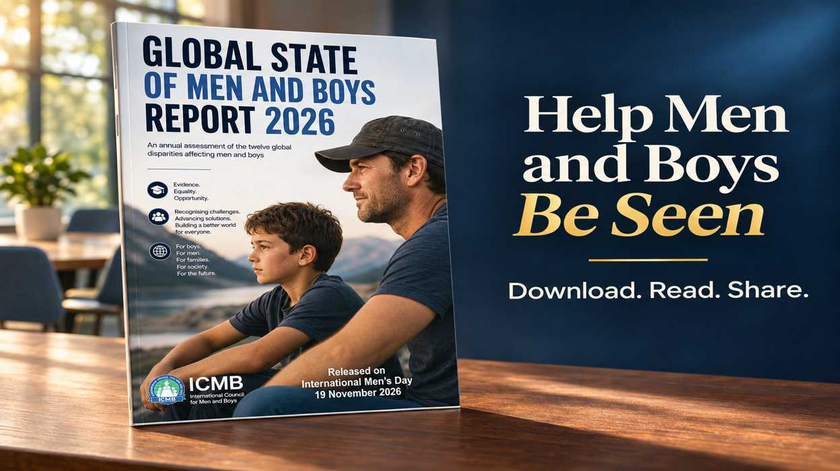
A Landmark Report on Men and Boys—Let’s Help It Reach the People Who Need to Read It
ICMB has given us an important tool. Men and women everywhere can help put it to work.


A Landmark Report on Men and Boys—Let’s Help It Reach the People Who Need to Read It

ICMB has given us an important tool. Men and women everywhere can help put it to work.

Many of us have had the experience of trying to explain the problems facing men and boys, only to discover how little the person listening has heard about them. Boys struggling in school. Men dying by suicide. Fathers losing meaningful relationships with their children. Male victims of abuse finding few places to turn.

These conversations can be difficult, especially when we are expected to produce the research, explain the background, and answer every objection on the spot. Having a substantial report to share can make a real difference.

The International Council for Men and Boys has taken an important step with its inaugural Global State of Men and Boys Report 2026. Drawing on evidence from more than 50 countries and research from governments, international organizations, and universities, this 36-page report brings together twelve major areas of disadvantage affecting men and boys.

I want to congratulate ICMB and everyone who contributed to this effort. Bringing this material together, organizing it into an accessible report, and identifying practical priorities is valuable work. It deserves our appreciation—and our help getting it into circulation.

Download the Global State of Men and Boys Report 2026 here.

The report describes a troubling picture. Boys lag behind girls in literacy and educational attainment across much of the world. Men live shorter lives and face substantially higher suicide rates. Men and boys account for 81 percent of intentional homicide victims worldwide. Across the countries examined, men make up approximately three-quarters of people experiencing homelessness.

Its scope also includes fatherhood, partner abuse, criminal justice, workplace deaths, false allegations and parental alienation, adoption and reproductive issues, and the media.

Behind these categories are people we know: the boy who has begun to believe school has nothing for him, the father whose children are slipping out of his life, the abused man who doubts anyone will believe him, and the older man whose isolation goes unnoticed.

A report like this helps make their circumstances visible.

One of its most useful features is the effort to assess institutional responses alongside the problems themselves. ICMB asks about fairness, access to services, accountability, and demonstrated progress. These ratings are the council’s evidence-informed policy judgments, rather than purely statistical measurements. They provide a baseline against which future progress can be assessed.

The report also includes seven case studies of promising reforms and interventions. That matters. We need to document what is going wrong, and we need examples of what people can do about it.

For me, one of the central questions is whether our institutions can recognize male vulnerability and respond with compassion. When a boy falls behind, do we examine whether his school understands his needs? When a man seeks help, do services make room for the ways he experiences and expresses distress? When a father struggles to remain involved, do institutions recognize the importance of that relationship to his children?

These are questions that schools, healthcare providers, churches, governments, and community organizations should be asking.

ICMB’s recommendations give them somewhere to begin: improve boys’ educational outcomes; address male suicide and premature mortality with services responsive to men’s needs; support male victims of violence, abuse, and homelessness; strengthen fatherhood and family wellbeing; and establish measurable goals with public accountability.

Those priorities deserve serious consideration.

But publishing a report is only part of the work. Its influence will depend in part on whether people read it, discuss it, and place it before those who can respond.

That is where you and I come in.

Please download the report, read it, and send it to people within your own circle of influence. That might include:

  • Elected officials: your local council members, mayor, school board, state legislators, governor, members of Congress, or equivalent representatives outside the United States.

  • Churches and faith communities: clergy, ministry leaders, pastoral counselors, and people organizing family or community support.

  • Schools and colleges: teachers, principals, counselors, administrators, and those responsible for student wellbeing.

  • Health and social services: therapists, physicians, public health officials, domestic abuse services, and homelessness organizations.

  • Community and professional groups: charities, civic associations, employers, unions, veterans’ organizations, and professional bodies.

  • People who help shape public discussion: journalists, editors, podcasters, and other writers.

  • Your personal community: friends, relatives, neighbors, and colleagues.

  • Local TV and radio stations, and public libraries: send it to news directors, producers, talk-show hosts, and librarians. Suggest a news segment, an interview, a community discussion, or making the report available to library patrons.

I especially encourage women to participate. Mothers, wives, sisters, daughters, friends, and colleagues can all help bring these concerns into conversations where they have received too little attention. This effort needs men and women willing to speak up.

You do not need a large audience to contribute. Start with three people. Choose one public official, one person in a local institution, and one friend or family member. Add a sentence about why this matters to you, and ask them to read and share it.

If you write to an official or organization, ask for a response: Which of these findings relates to your work, and what practical action could you take? A courteous follow-up can help turn an email into a conversation.

ICMB has done something worth celebrating. It has given us a shared resource for making the needs of men and boys harder to overlook. Let’s help this work reach beyond those of us who already care about these issues.

Download the report, choose your first three recipients, and pass it on.

Below are two notes you can copy, paste, and adapt.


For public officials, churches, and organizations

I’m sharing the International Council for Men and Boys’ Global State of Men and Boys Report 2026. It brings together international evidence on twelve areas affecting male wellbeing, including education, health, suicide, violence, fatherhood, and homelessness, and offers practical priorities for action.

Please consider reviewing the report and sharing it with the relevant people in your office or organization. I would appreciate hearing which findings relate to your work and what steps you could take to address them.

The report is available here: https://www.menandboys.net/foundations/

Thank you for giving these concerns your attention.

For friends, family, and neighbors

I thought this report deserved a wider audience. ICMB’s Global State of Men and Boys Report 2026 brings together evidence about problems affecting men and boys, from difficulties in school to suicide, homelessness, abuse, and barriers facing fathers.

These issues touch families and communities, including people we know and love. Please take a look, and consider passing it along to someone who would benefit from reading it—or who is in a position to help.

You can download it here: https://www.menandboys.net/foundations/

Men Are Good.
Read full Article
November 05, 2026
post photo preview
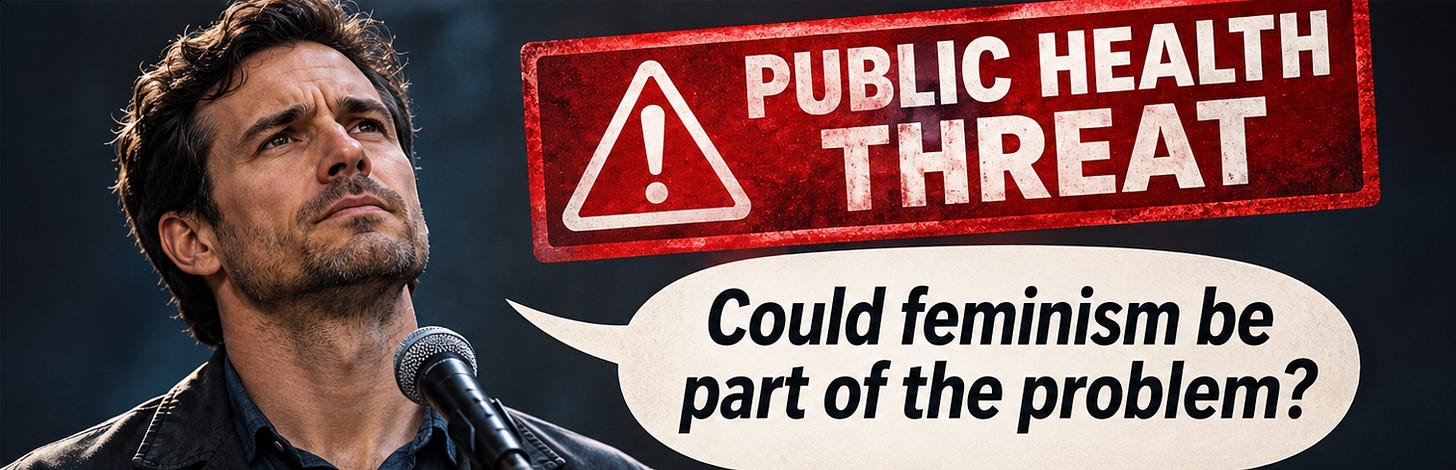
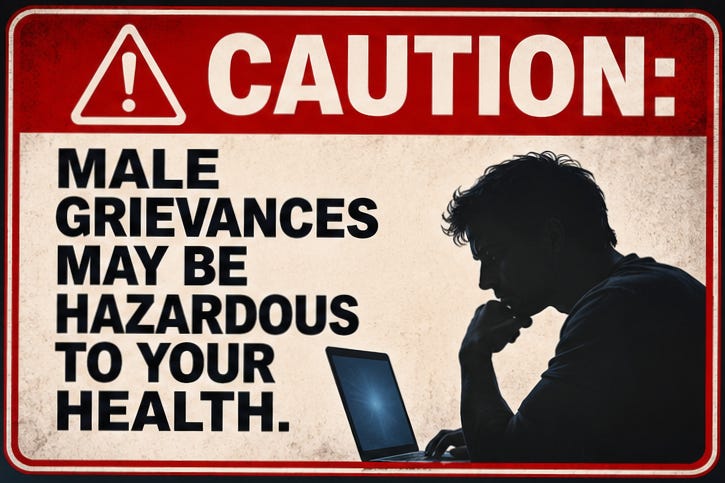
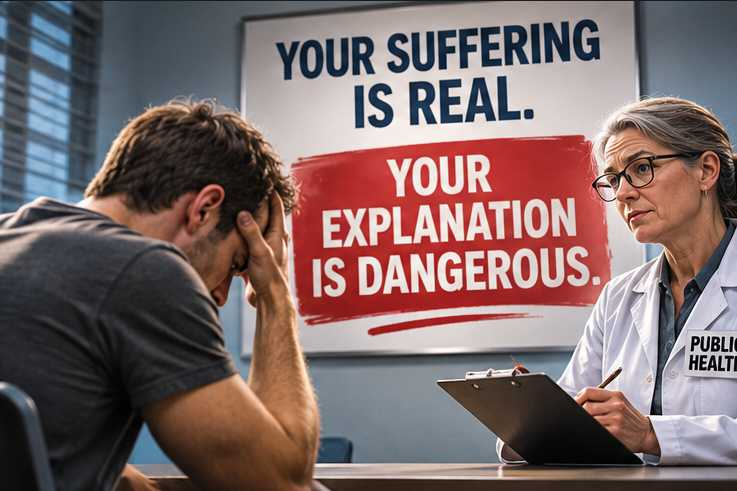
When Men’s Grievances Become a Public Health Threat
The Lancet acknowledges men’s suffering, but what happens when men question the causes of that suffering?


When Men’s Grievances Become a Public Health Threat

The Lancet acknowledges men’s suffering, but what happens when men question the causes of that suffering?

In a remarkable article published October 29, 2026, in The Lancet, one of the world’s most prestigious medical journals, authors Sarah Hawkes and Kent Buse make this extraordinary claim:

“The manosphere, a diffuse commercial ecosystem and loose collection of online communities united by shared beliefs about masculinity, misogyny, and male victimisation, is an under-recognised determinant of health harms.”

Think about that. The manosphere is now being described as a public-health harm. Not just a collection of websites where men talk about their problems, but something that supposedly damages people’s health. And as we will see, the authors make this claim while admitting that they have very little solid evidence that the manosphere actually causes these harms.

Something interesting is happening in the way our institutions respond to the problems facing boys and men. For decades, these problems were largely ignored. Boys fell behind in school. Men died by suicide at dramatically higher rates than women. Fathers struggled with family courts and separation from their children. Male victims of domestic violence often found little help. Yet these problems rarely received the attention given to similar difficulties facing women and girls.

But things are changing. The problems facing boys and men have become too obvious to ignore. There is simply too much evidence, and too many people are talking about it.

So what happens now? Instead of ignoring men’s problems, institutions are beginning to acknowledge them. But there’s a catch. They seem quite willing to recognize that men are suffering, as long as men don’t question the accepted explanations for that suffering.

The Lancet article is a perfect example. The authors acknowledge boys’ educational difficulties, men’s loneliness, economic insecurity, and social isolation. These are real problems, and the authors recognize them. But when men suggest that feminism or institutional discrimination might have something to do with these problems, things change.

The authors say that misogyny, or hatred of women, is what unites the manosphere. But they also identify criticism of feminism as one of its defining beliefs. This raises a troubling question: Are they treating criticism of feminism as hatred of women? They acknowledge that men have real problems, but when men question whether feminism has contributed to those problems, their complaints risk being treated as part of the very problem the authors want to eliminate.

The article, titled Reframing the manosphere: a public health response to a commercial ecosystem, compares the manosphere to industries such as tobacco. The authors go on to recommend public-health campaigns, government involvement, stronger content moderation, and using algorithms to promote what they consider positive messages.

In other words, they aren’t simply telling us that the manosphere is dangerous. They are proposing ways to change what people see and hear online. And that raises some very serious questions.


They Admit the Evidence Is Scarce

One of the most astonishing passages in the article begins with these words:

“Although rigorous causal evidence is currently scarce”

Read that again. The authors admit that they don’t have much rigorous evidence showing that the manosphere actually causes the harms they are describing.

You might think that would lead them to be cautious. Perhaps they would say more research is needed before reaching conclusions. But that’s not what happens.

Instead, they go on to associate the manosphere with misogyny, violence against women, rape-myth acceptance, sexual aggression, and online harassment. The reader is left with the impression that the manosphere is responsible for a long list of serious problems.

But where is the proof?

Suppose researchers find that men who visit certain websites are more likely to hold negative attitudes toward women. Does that mean the websites caused those attitudes? Or might men who already hold those attitudes be more likely to visit those websites?

Those are two very different possibilities. And there are others. Perhaps men who have experienced rejection, mistreatment, or isolation are drawn to communities where they find people who understand their experiences.

None of this means that genuinely hateful online communities are harmless. But if you are going to claim that something causes a public-health problem, shouldn’t you be able to demonstrate that it actually causes the problem?

Apparently, the authors believe the available evidence is sufficient to begin proposing solutions. And some of those solutions involve regulating what people are allowed to see online.


A “So-Called” Crisis?

The authors describe manosphere communities as being concerned with a “so-called crisis of masculinity.”

Why “so-called”?

That phrase is a subtle way of casting doubt on something without directly denying it. By referring to a “so-called crisis of masculinity,” the authors signal skepticism about the crisis before even examining the evidence.

Boys are struggling in school. Men account for most suicides, workplace deaths, and prisoners. Fathers face serious challenges following family separation, and male victims of violence often struggle to be taken seriously. These problems are real, whether or not someone wants to call them a crisis of masculinity.

The authors also tell us that manosphere communities share the belief that feminism has systematically disadvantaged men.

But what if that belief is true?

Could feminist ideas have influenced policies that disadvantage boys? Could feminist theories of domestic violence have contributed to the neglect of male victims? Could decades of portraying masculinity as toxic or dangerous have affected how boys see themselves?

Why aren’t these possibilities being investigated?

So if you believe feminism has harmed men, does that make you part of a dangerous online movement? Is questioning feminism now evidence of a dangerous ideology?


Men’s Problems Are Real, but Their Explanations Are Wrong

Here is another revealing statement from the article. The authors say that the manosphere redirects blame for men’s problems toward women and feminism rather than the structural and economic forces responsible.

Notice what they are doing.

They acknowledge that men have problems, but they seem quite certain about what is causing them. Economics and social structures are acceptable explanations. Feminism apparently isn’t.


But why can’t feminism be part of those structural forces?

Feminist organizations have influenced laws, government policies, schools, universities, domestic violence services, and the way we think about men and women. These are not minor influences. They are part of the institutions that shape our lives.

Could some of these influences have harmed boys and men? Isn’t that worth investigating?

Of course, blaming women as a group for men’s problems is different from criticizing feminist ideas or policies. But the article does not clearly explain how it separates those two things when discussing the broader manosphere.

And that is a serious problem.

The authors describe men in these communities as trapped in narratives of grievance and hopelessness. But what exactly is wrong with having a grievance?

Women had grievances about discrimination. Black Americans had grievances about segregation. Workers had grievances about unsafe conditions and unfair treatment. Those grievances helped produce important social changes.

Why should men’s grievances be viewed differently?

Surely the question should be whether the grievance is justified, not whether the person expressing it is a man.


Nine Out of Ten People Are Biased Against Women?

Here’s another jaw-dropper.

The authors tell us that nearly nine out of ten people hold at least one fundamental bias against women. That’s an extraordinary number, and it certainly makes the world sound overwhelmingly hostile toward women.

But let’s look at where it comes from.

The source is the United Nations Development Programme’s 2023 Gender Social Norms Index. Researchers used seven measures involving attitudes about political leadership, education, employment, and gender roles. If someone crossed the researchers’ threshold on just one of those measures, that person was counted as having at least one bias against women.

And here’s the part the Lancet authors don’t mention in that passage.

According to the UNDP, approximately 90% of men and 87% of women were classified as holding at least one bias against women.

Yes, you read that correctly. By this measure, almost nine out of ten women also have at least one bias against women.

Does that mean almost every woman is a misogynist?

Of course not. It means the researchers have created a very broad definition of bias. Someone who believes men make better political leaders, or college education is more important to men, or being strongly anti abortion, can each be counted as having at least one bias against women, even though these attitudes are very different and seemingly not so directly connected to bias against women .

The statistic is not made up. But presenting it without explaining what it measures can give readers a very misleading impression. Is this an attempt to frame a narrative or is it just sloppy writing. You be the judge.

And here’s something else worth considering. What would happen if researchers created a similar index measuring negative attitudes toward men?

What percentage of people would be classified as biased against males if they were asked whether men are dangerous, emotionally deficient, less deserving of sympathy, or responsible for society’s problems?

Would we get another enormous number?

We don’t know. But wouldn’t it be interesting to find out?

Even a 2024 UN Women discussion paper recognized important problems with the way gender norms are measured, including unclear definitions and weak links between some measurements and policy recommendations.

The larger point is simple. When researchers present an extraordinary statistic, we need to know exactly what they measured before accepting the story they attach to it.


When Complaining About the System Becomes Suspicious

The authors cite a survey of domestic violence workers who reported that some men expressed ideas associated with the manosphere.

Among those ideas was the belief that the legal system is stacked against men.

Now think about that.

A man complains that the legal system treats men unfairly. Instead of asking whether his complaint might be justified, the researchers include that belief among examples of manosphere-associated thinking.

What if the man has actually experienced unfair treatment?

What if he is a father who believes he was treated unfairly in a custody dispute? What if he is a male victim of domestic violence who could not find help? What if his experiences have given him good reasons to question the system?

Are those experiences evidence of a dangerous ideology?

The survey may tell us what workers reported hearing, but it does not establish whether the men’s complaints were true or false. Nor does it demonstrate that the manosphere caused those beliefs.

Yet this is how a legitimate grievance can begin to look like a symptom of something unhealthy.

Instead of asking whether the system is unfair, we begin asking what is wrong with the man who thinks it is unfair.

That is quite a reversal.


From Ignoring Men’s Pain to Explaining It Away

I have written before about what I see as a change in the way our culture handles male suffering.

For years, the suffering of boys and men was largely invisible. Men were expected to endure difficulties, solve their own problems, and keep going. Their pain simply did not attract the same concern as women’s pain.

I have described this through the idea of gynocentrism, the tendency to place women and their experiences closer to the center of our moral concern.

But something changed as the problems facing boys and men became harder to ignore.

Now we hear much more about boys falling behind in school, men’s loneliness, male suicide, and other disadvantages. That’s good. These problems deserve attention.

But look at how they are often explained.

Boys struggle in school because of restrictive masculinity. Men are lonely because they lack emotional skills. Men die by suicide because they won’t ask for help.

Sometimes these explanations identify real contributing factors. But why do they so often focus on what is supposedly wrong with men?

What about the institutions serving them? What about policies that may disadvantage them? What about the possibility that some feminist ideas have influenced how society responds to male suffering?

The Lancet paper fits this pattern remarkably well.

The authors acknowledge the problems. But when men question whether feminism or institutional discrimination might be contributing to those problems, their explanations become suspect.

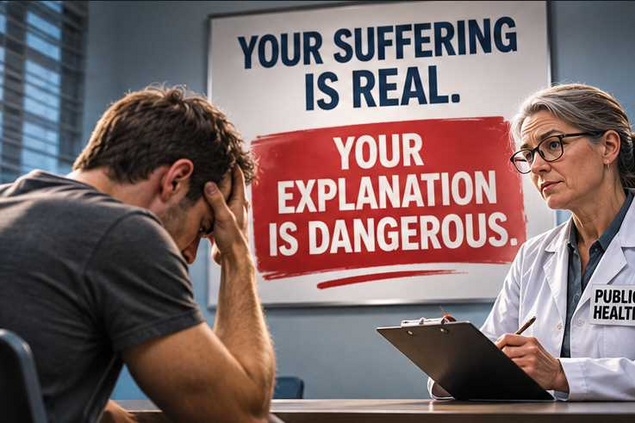
The suffering is real. The explanation becomes the problem.

This is a significant change from simply ignoring men’s pain. Now the pain is recognized, but the discussion about what causes it may be steered away from certain possibilities.


Six Strategies to Combat the Manosphere

Having acknowledged that rigorous causal evidence is scarce, the authors nevertheless propose six priorities for responding to the alleged health harms of the manosphere.

Some of their recommendations are sensible. They want to address boys’ educational problems, loneliness, and social isolation. They even warn against portraying masculinity as inherently toxic.

I welcome those ideas.

But their fourth recommendation is especially troubling.

The authors compare regulating the manosphere to regulating the tobacco industry. They argue that public-health efforts should target the structures and incentives that promote harm rather than simply blaming the people exposed to them.

They acknowledge that the comparison is imperfect. The manosphere is not a single product, its harms are harder to demonstrate, and online communities can serve useful purposes.

Nevertheless, they recommend stronger content moderation and using algorithms to promote positive messages and norms.

Think about what that means.

They want online platforms to do more to limit certain kinds of content while promoting other kinds of content.

But who gets to decide what is harmful and what is positive?


Who Gets to Decide What Men Can Say?

Suppose a man argues that feminist policies have contributed to boys’ educational difficulties. Suppose he believes family courts disadvantage fathers or that male victims of domestic violence receive inadequate support.

Are these legitimate subjects for discussion?

Or are they examples of the harmful grievance narratives the authors want platforms to address?

Now consider someone arguing that patriarchy and toxic masculinity are responsible for men’s problems.

Would that message be treated as harmful? Or would it be promoted as positive and constructive?

The authors don’t explicitly say that criticism of feminism should be censored. That’s important to recognize. Their stated goal is to reduce harmful online environments.

But they also identify criticism of feminism as a central belief within the manosphere, which they describe as a public-health harm.

So where exactly is the line?

There is an enormous difference between threatening women and criticizing feminism. There is an equally enormous difference between encouraging violence and questioning whether institutions treat men fairly.

Any system that fails to make those distinctions risks suppressing legitimate criticism along with genuinely harmful behavior.

And remember, ideas don’t have to be banned to disappear from public view. Algorithms can make some messages more visible and others much harder to find.

If platforms are encouraged to promote approved messages about masculinity while limiting supposedly harmful ones, who decides which ideas deserve to be heard?

That should concern anyone who values open discussion.


What If Feminism Is a Public-Health Harm?

Here is a question the Lancet authors don’t appear to consider.

What if we turned their argument around?

They believe that ideas circulating within the manosphere can contribute to poor mental health, harmful attitudes, and social problems.

Fine. Let’s examine that possibility.

But why not apply exactly the same standards to feminism?

What happens to boys who grow up hearing that masculinity is toxic? What happens to male victims of domestic violence when services are organized around theories that primarily identify men as perpetrators and women as victims? What happens when boys repeatedly encounter messages portraying males as privileged, dangerous, or responsible for society’s problems? What happens to fathers who are unjustly removed from their children’s lives?

Could these messages and institutional practices have consequences for male mental health and well-being?

Why wouldn’t we investigate them?

If researchers believe that ideological environments can damage health, then feminist ideas and institutions should be examined just as carefully as the manosphere.

The authors acknowledge that rigorous causal evidence connecting the manosphere to some of the alleged harms is scarce. Yet they propose a broad public-health response.

Would they support the same level of investigation into the possible harms of feminist-influenced policies and cultural messages?

Or would asking that question itself be considered another example of dangerous manosphere thinking?

That’s the question I would like to see answered.

If the manosphere can be investigated as a possible public-health harm, why should feminism be exempt from the same examination?


What Exactly Is the Manosphere?

Another problem runs through the entire article. What exactly do the authors mean by the manosphere?

The term is used to describe a remarkably broad collection of online communities. A minority may have misogynistic views. Others sell questionable dating advice. Still others discuss fathers’ rights, male victims of domestic violence, boys’ educational difficulties, or men’s mental health.

Are all these groups really the same?

Does a man become part of a dangerous movement because he believes fathers deserve fair treatment in court? Is someone promoting misogyny because he questions a feminist theory? What about a psychologist who believes traditional masculine characteristics can sometimes be healthy and useful?

The label doesn’t tell us whether any of these people are right or wrong.

Yet when very different groups are placed under one negatively charged label, the worst behavior associated with that label can cast suspicion on everyone else.

That’s particularly troubling when researchers begin proposing interventions that could affect what people are allowed to say or how widely their ideas are shared.

Before deciding how to regulate the manosphere, shouldn’t we be clear about what it actually includes?


A Better Way to Help Boys and Men

There is an irony in this Lancet article. The authors recognize that boys and men have serious problems. They acknowledge loneliness, educational difficulties, insecurity, and social isolation. They even warn against treating boys and men themselves as the problem.

Those are welcome observations.

But what if one reason some men turn to online communities is that they believe established institutions are unwilling to listen to them?

What if some of their complaints are justified?

And what happens when researchers describe those complaints as part of a harmful ideology?

Wouldn’t that make some men even less likely to trust the institutions supposedly trying to help them?

A better approach would be to take men’s experiences seriously without requiring them to accept a predetermined explanation for their suffering.

Investigate their complaints. Examine the evidence. Challenge false claims, but don’t assume a complaint is false simply because it criticizes feminism or another influential institution.


From Ignoring Men’s Pain to Managing Men’s Grievances

I think we may be witnessing a new stage in the way our culture responds to the suffering of boys and men.

First, their problems were largely ignored. Then, as the evidence became harder to dismiss, those problems began receiving more attention, but were often explained in ways that placed responsibility back on men themselves.

Now we may be entering a third stage.

Men’s problems are acknowledged, but some of the explanations men offer for those problems are treated as potentially harmful narratives that need to be corrected or controlled.

The Lancet paper is an example of why this development deserves attention.

The authors may genuinely want to help boys and men. Some of their recommendations suggest that they do. But good intentions do not replace solid evidence, and concern about harmful online behavior should not become an excuse to discourage legitimate criticism of powerful institutions.

The question is not whether some corners of the manosphere contain hateful or dangerous material.

The question is whether we can address genuine harm without treating men’s complaints about feminism and institutional unfairness as evidence of something unhealthy.

Men deserve more than acknowledgment of their suffering. They deserve to have their explanations taken seriously, examined fairly, and challenged when the evidence warrants it.

And they deserve the freedom to question the causes of their problems without having those questions treated as a public-health threat.

Sources

Read full Article
October 31, 2026
post photo preview
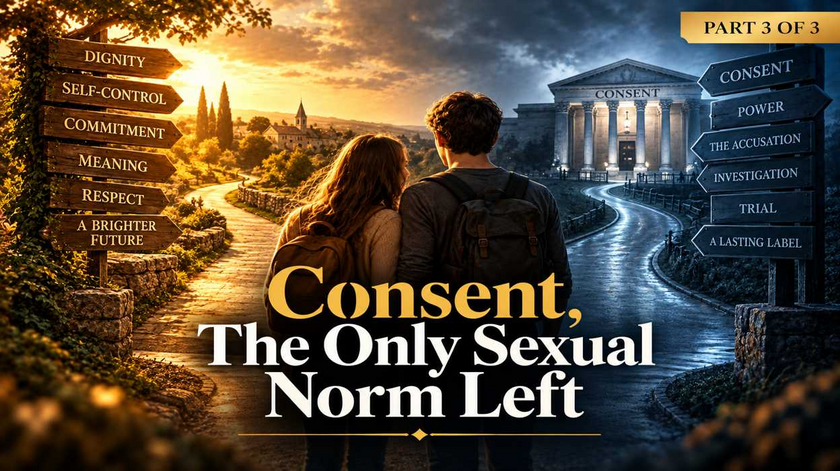
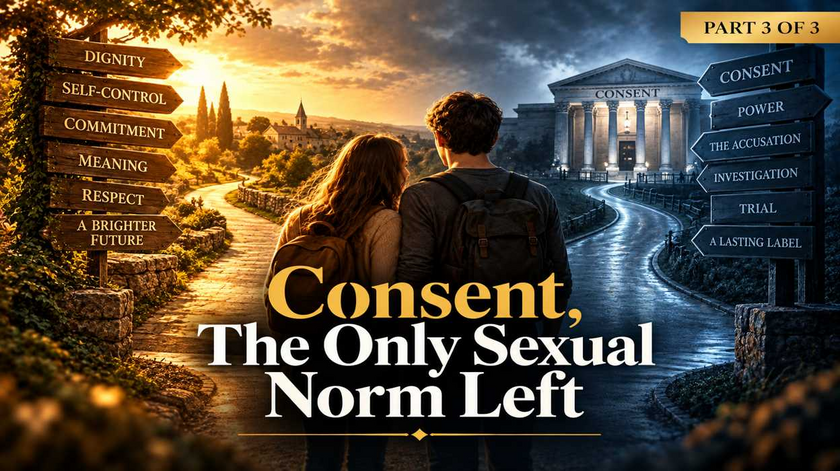
Part 3: Consent, the Only Sexual Norm Left


Part 3: Consent, the Only Sexual Norm Left

Follow the public argument over the Cornell case, or almost any campus sexual assault case, and you’ll notice something. It turns on a single question: was there consent? Other moral questions about the same night barely come up. When someone raises them, they’re usually heard as irrelevant, or as blaming the victim.

Why is consent the only question we can see?


Three ideas, briefly

The Family Archetype is the moral logic of a family: protect the vulnerable, care before proof. The Society Archetype is the moral logic of public life: fair procedure, evidence before judgment, individuals responsible for what they did. Matrisensus is the family’s logic taking over public life. It treats groups as victims or villains, and it keeps those it sees as vulnerable innocent by placing all the guilt elsewhere.


Consent, and one other

Consent isn’t quite alone. One other sexual norm still gets attention: power. Universities ban relationships between professors and students even when both consent, and #MeToo focused heavily on bosses and subordinates. But power and consent have the same shape. Both put all the moral responsibility on one person’s conduct toward the other: the one who initiated, the one with more power, the one who didn’t get a clear yes.


What disappeared

The norms that have faded have the opposite shape. Dignity, sobriety, modesty, fidelity, prudence and self-respect are norms of self-governance. They ask what each person owes to herself, as well as to the other: Did I keep my judgment clear? Does this honor what sex is meant to be? Am I protecting my own worth?

For most of history, these norms did most of the work of sexual morality, and they applied to both people. They didn’t wait for harm and then assign blame. They shaped behavior beforehand, so harm was less likely.


Why only consent survives

Here’s the key. Consent is the only sexual norm that fits Matrisensus, because it’s the only one that keeps the protected person completely innocent.

A norm like sobriety or dignity can’t do that. It looks at the choices of the person Matrisensus wants to protect: what she drank, what she risked, what she agreed to. Even mentioning such a norm puts some responsibility on her, so the norm simply stops being seen. Nobody argues against it. It just becomes invisible. Consent passes the test perfectly. Whatever happened, the moral question becomes what the other person did to her. An ethics of consent alone is the only sexual ethics in which innocence and guilt always belong to different people.

There’s a second reason. Consent is the only sexual norm decided by feeling. Sobriety and fidelity are about what you do, which others can see. Consent is about an inner state: did she want it? No one else can check that, and it can be reassessed afterward, as feelings about a night change. When consent is the only standard, what an encounter meant is no longer fixed by what happened. It depends on how one person later feels about it.

And there’s an irony. Consent actually comes from the Society Archetype. It’s a kind of contract: a mutual agreement between adults, judged by what each did and said at the time, with each responsible for their part. What Matrisensus keeps is a version stripped of what made it fair. The mutual agreement becomes one person’s inner state, the time of agreement becomes any later moment, and the shared responsibility falls on one person.


How we got here

This isn’t mysterious. The sexual revolution rejected marriage, chastity, modesty and courtship as tools of control. Consent was what was left, because both sides of the new culture could accept it. For those who wanted freedom, it was the limit: anything goes between consenting adults. For those who wanted protection, it was also the limit: no harm without consent. Consent is where “anything goes” and “protect the vulnerable” meet.


Three levels of desire

It helps to see desire as working on three levels, each meant to guide the one below it. The first is appetite: wanting pleasure, comfort, recognition. The second is self-control: the desire for order and mastery over ourselves. The third is meaning: the desire for purpose and for contributing to something beyond ourselves. A healthy life doesn’t abolish appetite. It puts appetite under self-control, and self-control in service of meaning.

Consent is permission between two appetites. It lives entirely on the first level. The older sexual morality guided that appetite from both levels above. Chastity, sobriety, modesty and prudence belong to the second level: they’re practices of self-control. Dignity, fidelity and the sense that sex is sacred belong to the third. They place sex inside something larger than one night: a committed relationship, the beginning of families and generations, the worth of a person and not just her pleasure.

An ethics built on consent alone has thrown out both upper levels at once. Self-control is dismissed as repression, and meaning as superstition. What’s left is appetite, with nothing above it but permission.


What this costs

The older norms protected in advance. Staying sober, taking time, staying among friends, all made harm less likely before any question of permission came up. Consent only protects after the fact, by judging what went wrong. Women lost protective norms and were given a courtroom norm in their place.

Harms that aren’t consent violations — degradation, being used with your agreement at the time, the emptiness of a night both people regret — no longer have any moral language. The only way to name them is to call them a consent violation. So ambiguous encounters get forced into two boxes: assault, or nothing. That’s why cases like Cornell become battlegrounds, and why the definition of consent keeps stretching to cover harms it was never built to carry.

This isn’t only a conservative argument. Christine Emba, in Rethinking Sex, argues that consent is necessary but not enough, and that a consent-only ethics has failed women. Louise Perry makes a similar case in The Case Against the Sexual Revolution.

To be clear: consent matters, and violating it is a serious wrong. The point isn’t that consent is unimportant. It’s that a culture that can see only consent has lost the norms that protected women before consent was ever in question, and has lost the language even to notice what that has cost.


One pattern

Across this series, the same thing has happened three times. Hard cases become battlegrounds because their meaning is open, and open meaning is where the fight between protective feeling and fair judgment gets fought. Juries falter in exactly those cases, because a shared moral story produces the shared blind spot that defeats the reason juries exist. And sexual morality has shrunk to consent, because consent is the one norm that keeps the protected person innocent.

Each time, feeling has moved from signal to verdict. The answer isn’t less feeling. A culture that stopped caring about the vulnerable would be worse than ours. The answer is putting feeling back where it belongs: the first word, not the last. Mercy after truth, not instead of it. And judgment that can still see a particular person and a particular act, rather than the story they seem to fit.

David Shackleton

____________________________

David Shackleton is a writer and cultural commentator whose work focuses on identity politics and gender. His books, Matrisensus, The Hand That Rocks the World: An Inquiry Into Truth, Power and Gender, and Daughters of Feminism: Women Supporting Men’s Equality, are available on Amazon. His website is genderhealing.com.


Sources for the series

Part 1

  • Charles G. Lord, Lee Ross, and Mark R. Lepper, “Biased Assimilation and Attitude Polarization,” Journal of Personality and Social Psychology 37, no. 11 (1979): 2098–2109.

Part 2

  • Marquis de Condorcet, Essai sur l’application de l’analyse à la probabilité des décisions rendues à la pluralité des voix (1785).

  • Franz Dietrich and Kai Spiekermann, “Jury Theorems,” Stanford Encyclopedia of Philosophy.

  • Christian List and Robert E. Goodin, “Epistemic Democracy: Generalizing the Condorcet Jury Theorem,” Journal of Political Philosophy 9, no. 3 (2001): 277–306.

  • Reporting on the Clancy jury by NBC10 Boston, CBS News, NBC News, and the Boston Globe, August–September 2026.

Part 3

  • Jesse Graham, Jonathan Haidt, and Brian A. Nosek, “Liberals and Conservatives Rely on Different Sets of Moral Foundations,” Journal of Personality and Social Psychology 96, no. 5 (2009): 1029–1046.

  • Nick Haslam, “Concept Creep,” Psychological Inquiry 27, no. 1 (2016): 1–17.

  • Christine Emba, Rethinking Sex: A Provocation (Sentinel, 2022).

  • Louise Perry, The Case Against the Sexual Revolution (Polity, 2022).

Read full Article
See More
Available on mobile and TV devices
google store google store app store app store
google store google store app tv store app tv store amazon store amazon store roku store roku store
Powered by Locals