MenAreGood
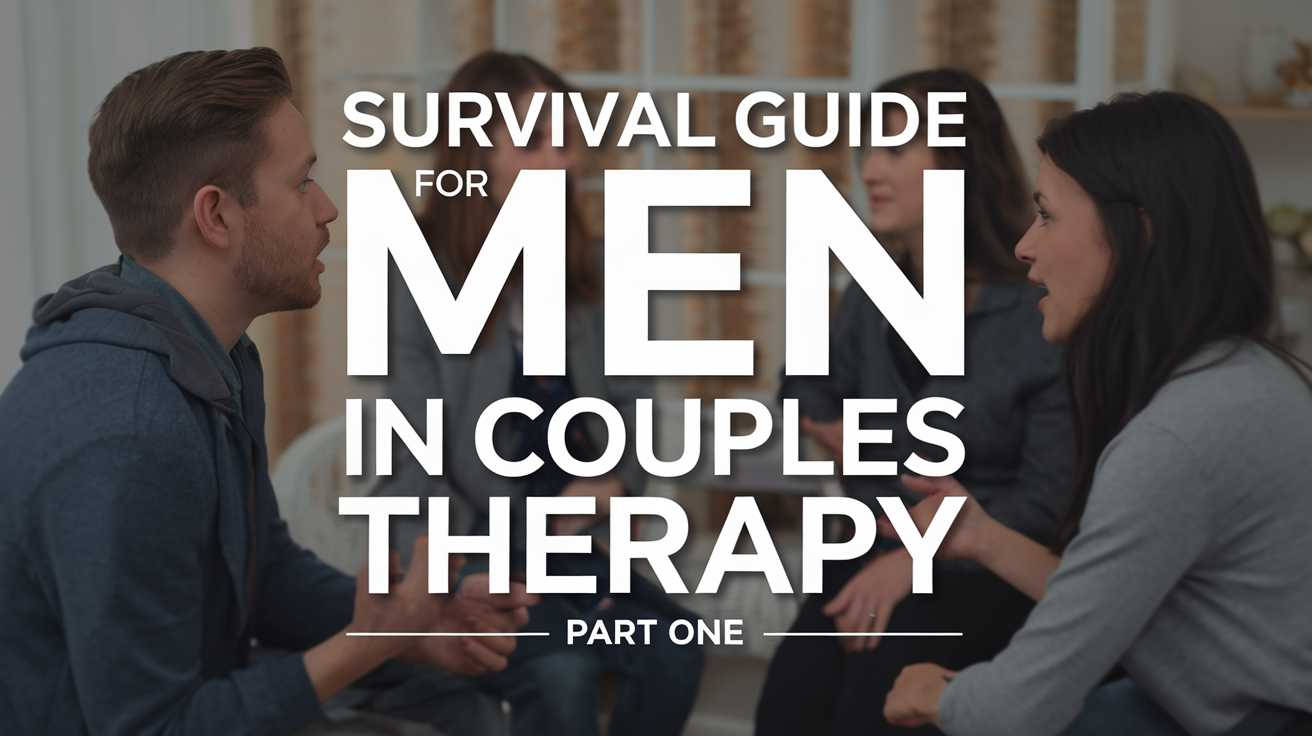
A Survival Guide for Men in Couples Therapy
Part One
April 16, 2025
post photo preview


A Survival Guide for Men in Couples Therapy - part one


When men enter couples therapy with their wives or significant female partners, it often feels like stepping into foreign territory. The dynamics can be confusing, the language unfamiliar, and it can seem like their needs are far less addressed than those of their partners. Many men feel "out of place."

The first section of this article serves as a primer for men, helping explain why they might feel this way. The second half offers practical ideas and tips for getting the most out of the experience. It’s worth noting that about 1 in 5 men are likely to feel more at home in the typical couples therapy environment due to biological and temperamental factors—and about 1 in 5 women might more closely resemble the typical male experience. When this article refers to “men,” it’s addressing that 80% majority of men (and that 20% of women who are similar).

Bottom line? We’re all different, but if you’re a man—or a woman trying to understand one—this article might be useful. (For more on these differences, see my book The Way Men Heal on Amazon.)


1. Why Is Couples Therapy Hard for Men?

A Different Style of Processing

The idea of sitting face-to-face and talking about emotions and hurt is foreign to many men. They might be more comfortable addressing difficult topics while doing something side-by-side—like playing a game of basketball or golfing—rather than sitting across from someone in a therapist’s office. But that’s not how couples therapy is set up, and this mismatch is just one of many reasons men may find the experience challenging.


Language Barriers

Couples therapy has its own language—a language most women speak fluently, but most men do not. This imbalance can deeply affect the process.

Imagine visiting France: your wife speaks fluent French, and you only know a little. A local invites you to his table for conversation. Who’s he going to talk to? Naturally, your wife. You’re left relying on translations and educated guesses. You probably won’t be judged harshly for your lack of fluency, but you’ll still feel like an outsider.

Now picture couples therapy. Your wife and the therapist are fluent in the language of feelings—you’re not. But in therapy, unlike France, you are likely to be judged. Not knowing this language can lead to assumptions: that you’re emotionally immature, cold, uncaring, or resistant. Many therapists believe men should be fluent in emotional expression and that it’s just a matter of effort.

“Just try a little harder, honey. It’s not that hard.”

What these therapists often don’t realize is that male biology plays a role. Men’s brains are more geared toward systems and action than emotional articulation. There’s even evidence that testosterone can impair verbal emotional expression, even when the feelings are present. Men often process emotions differently—but those differences are rarely acknowledged or respected in therapy. Instead, men’s unique approaches are often misinterpreted as deficiencies.


The Fluency Bond

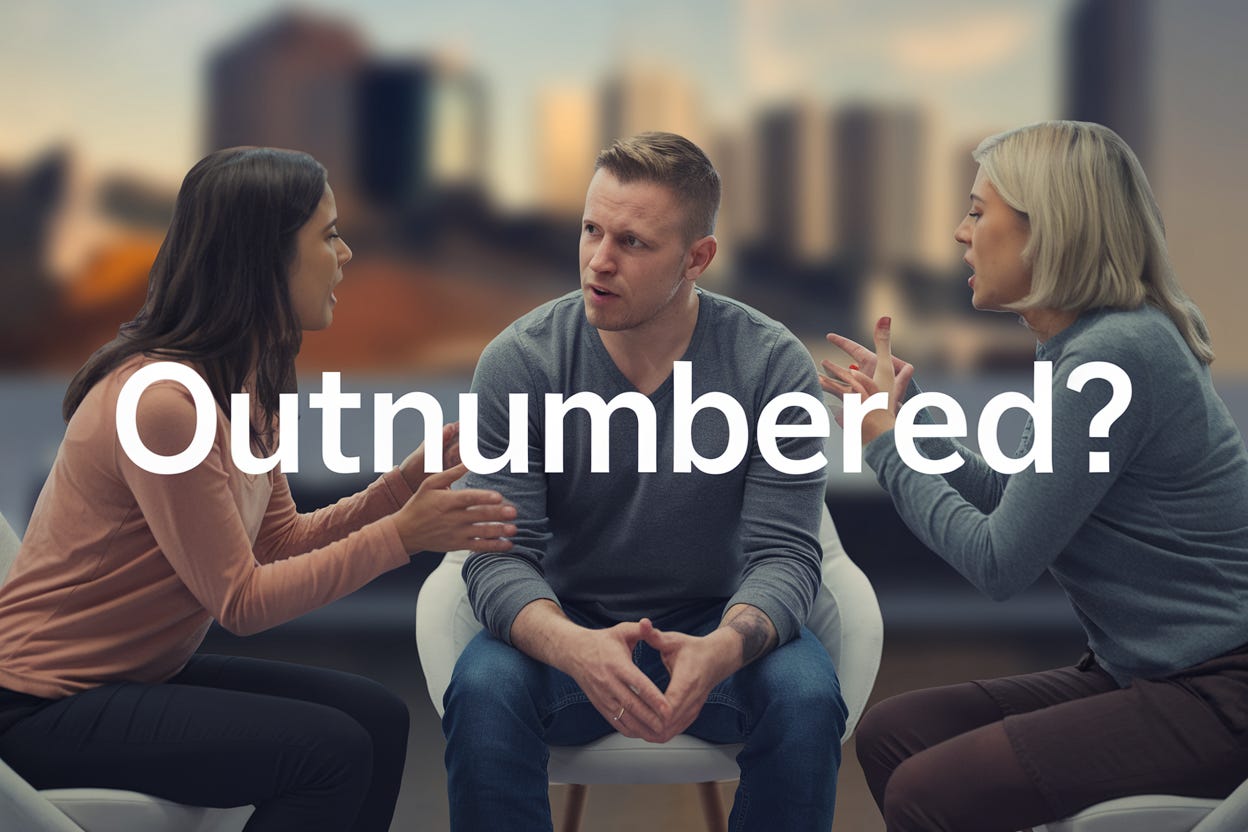
This fluency gap also affects how alliances form in therapy. Just like at that French dinner, you rely on your wife to "translate" or mediate, but in therapy, your interests may be in conflict with hers. She may not be motivated to give you a fair translation. In fact, she might use her emotional fluency to bolster her position and cast you as the problem.


Details, Memory, and the Scorecard

Another challenge for men is how women tend to remember relationship details with far greater precision. Your wife may recall the time in 2007 when you called her fat—but you don’t. In therapy, she can quickly list a long series of your alleged missteps, while you’re still trying to figure out if what she said even happened.

Why is this? Maybe men treat relational upsets like fishing—if the fish is too small, you throw it back and move on. Men don’t tend to keep score. Women often do. So when therapy starts, she brings a bucket of old hurts. You bring nothing. It can feel like you have no case.

Could it be that men let go of the small stuff out of forgiveness or practicality, while women store it up to make a case? Maybe. You be the judge. (Your mileage may vary.)


Avoiding Men’s Emotional Pain

Another critical factor is the cultural discomfort with male emotional pain. In our society, a man’s tears often evoke suspicion—while a woman’s tears inspire compassion and action. Men know this. That’s why most avoid public vulnerability. They’re not dumb.

This bias shows up in therapy too. I’ve seen cases where a man had just experienced major surgery, the death of a parent, and job loss—all in one month—and yet the session focused on why he hadn’t been more attentive to his wife’s emotional needs.

Therapists—especially female ones—may simply relate more naturally to the woman’s experience and overlook the man’s pain. If that happens, the man walks away feeling invisible, bewildered, and alone.


2. The Role of Traditional Sex Roles

Traditional male roles emphasize providing and protecting—especially for a spouse. Women’s traditional roles focus on nurturing children and maintaining the home. In this model, her happiness depends on his performance, but not the other way around. He’s judged on how well he provides and protects. She’s rarely judged on how she treats him. His needs? No one’s responsibility but his own.

This dynamic plays out in therapy. Her needs become the agenda. His needs are secondary—if addressed at all. It’s not just the therapist; many men don’t even think to bring up their own needs. They’re conditioned to care for others, not themselves.


Independence vs. Vulnerability

The male role of provider and protector requires independence. Dependency and neediness are seen as weaknesses. Yet in therapy, men are asked to reveal vulnerabilities, admit struggles, and show emotional need. That’s a 180-degree turn from how they’re wired and socialized.

Imagine asking a woman to speak in a way that shows she’s not nurturing and caring. Would that be easy for her? Probably not. And yet we expect men to do the emotional equivalent without blinking. It’s time we showed more compassion for the bind men are placed in.


Therapy Is a Feminine Space

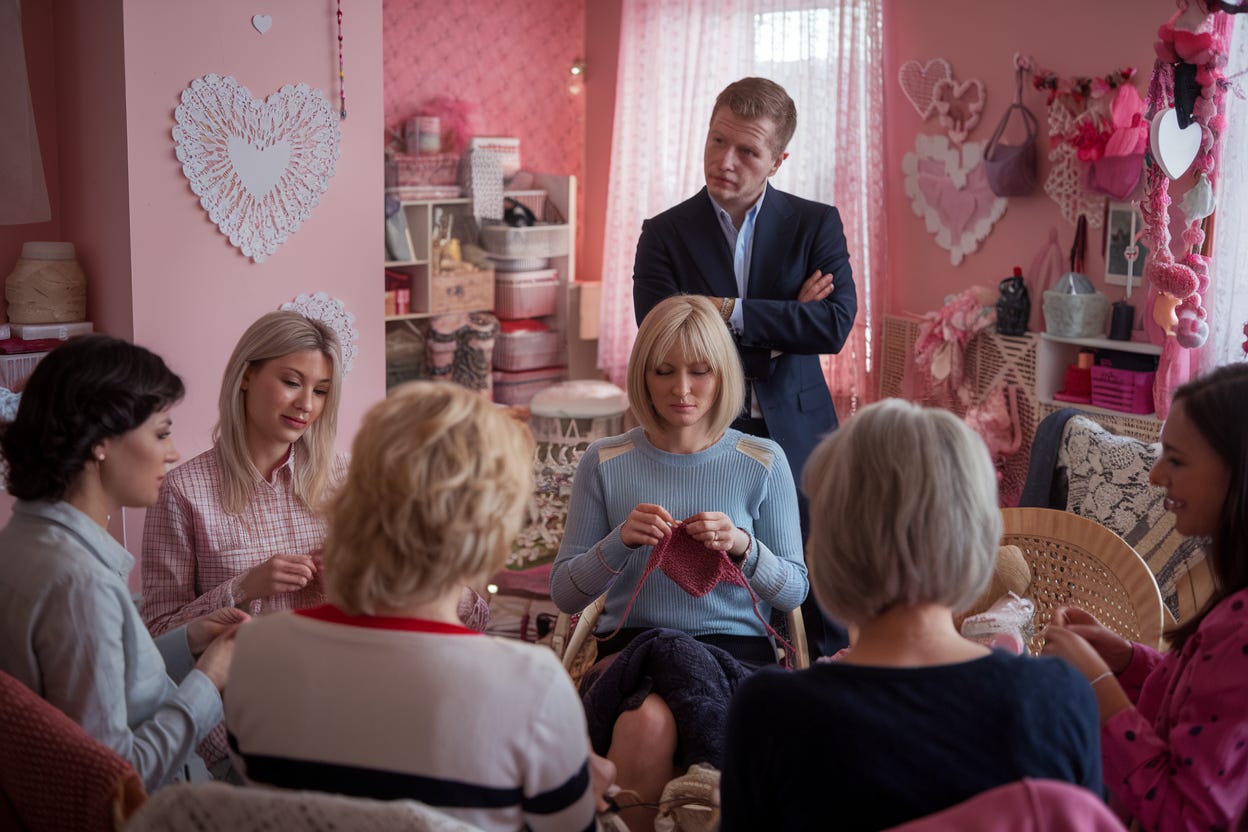
Therapy has evolved to be female-friendly—for the simple reason that women are the ones who tend to show up. The currency of therapy is emotional care and connection—more aligned with feminine norms than masculine ones, which emphasize respect, autonomy, and honor.

In therapy, the woman often claims, “He doesn’t care about me,” then lists examples of his supposed indifference. The therapist helps her unpack her pain. The man, meanwhile, scrambles to defend himself against the accusations and rarely gets to voice his own needs or perspective. He’s too busy putting out fires.

This dynamic reinforces a centuries-old pattern: women voice needs and complaints, men respond. He’s expected to improve. She’s expected to be heard.


The "Yelling" Trap

Another common issue is volume. Men and women often have very different thresholds for what counts as yelling. Two men might have an energetic, respectful argument—but if that same tone is used with a wife, she may accuse him of yelling.

He says, “I’m not yelling.” And objectively, he might be right. But remember—therapy operates by different rules. Feminine rules.

This accusation of yelling can be weaponized. When a man is making a valid point that’s hard to refute, shifting the focus to his "tone" or "volume" derails the discussion. Suddenly, the conversation is about her pain and his supposed insensitivity—not the issue he raised. This leaves him feeling ambushed, powerless, and unheard. And conveniently, it lets her off the hook.


If you’ve read this far, you already know: men face an uphill climb in couples therapy. The structure, language, and expectations often don't align with male psychology or experience. But understanding these dynamics is the first step toward navigating them—and maybe even shifting the conversation.


community logo
Join the MenAreGood Community
To read more articles like this, sign up and join my community today
0
What else you may like…
Videos
Posts
Articles
December 20, 2025
Bias Against Men and Boys in Mental Health Research

This video is a summary of the three studies we have examined the last three Saturdays. It’s a brief and relaxed look at the high points of those articles. Here’s a summary:

This video examines a pattern I’ve seen repeatedly in psychological research: when data complicates the familiar story of men as perpetrators and women as victims, the data about boys and men often disappears. Using three real studies—on teen dating violence, reproductive coercion, and “masculine norms”—I walk through how boys’ suffering is minimized, misrepresented, or erased as research moves from full reports to media headlines and public policy. What emerges is not just sloppy science, but a troubling bias that shapes how we see boys, men, and masculinity itself.

00:10:31
August 07, 2025
Are Men Great of Good? Yes!

Time for a male-positive message. I created this video a while back, but its message remains as important and timeless as ever. I’d love for it to reach boys who’ve been told—explicitly or implicitly—that there’s something wrong with being male. After so much negativity about men and masculinity, they need to hear something different. They need to hear something true, strong, and affirming.

00:04:59
July 21, 2025
AI Books

We now have a new section that is accessible in the top navbar of the substack page titled AI Books. It contains links to numerous books on men's issues that each have an AI app that is able to answer detailed questions about the book. The above video gives some ideas of how to use these.

https://menaregood.substack.com/s/ai-books

The Myth of Male Power - Warren Farrell
Fiamengo File 2.0 Janice Fiamengo
Taken Into Custody - Stephen Baskerville
The Empathy Gap - William Collins
The Empathy Gap 2 - Williams Collins
The Destructivists - William Collins
Who Lost America - Stephen Baskerville
The New Politics of Sex -- Stephen Baskerville
Understanding Men and Boys: Healing Insights - Tom Golden
Boys' Muscle Strength and Performance - Jim Zuzzo PhD
Sex Bias in Domestic Violence Policies and Laws - Ed Bartlett (DAVIA)
The Hand That Rocks The World - David Shackleton

Links below

Myth of Male Power - Warren Farrell

The Myth of Male Power - documents how virtually every society that survived did so by persuading its sons to be disposable. This is one of the most powerful books...

00:11:44

Something men seem to do all the time that women seem to find extreamaly unlikely or impossible.

Made me laugh!!

https://www.facebook.com/share/v/1AKtUoYg8x/?mibextid=wwXIfr

https://www.facebook.com/share/r/1FwqtFuR2Z/?mibextid=wwXIfr

I have often made this connection. It’s a little too on point to not research and derstand better. I am fairly sure there is something to it.

January 15, 2026
post photo preview
Why Would Boys Choose AI Over a Real Human?

It’s easy to blame technology. It’s harder to ask why a boy might feel safer talking to a machine than to a person.


Why Would Boys Choose AI Over a Real Human?

An article recently published by The Tyee raises alarms about boys and young men turning to AI companion chatbots for emotional support. The piece is framed as a thoughtful exploration of risk: misinformation, emotional dependency, radicalization, misogyny, and the danger of boys rehearsing their inner lives in the company of a machine rather than a human being.

On the surface, it sounds compassionate. Reasonable, even. Who wouldn’t want to protect young people from harm?

But when you slow the article down and look carefully at how boys are portrayed—what is assumed, what is omitted, and what is quietly feared—a different story begins to emerge. This is not really an article about boys’ needs. It is an article about adult discomfort with boys finding support outside approved channels.

And yes, there is misandry here—not loud, not crude, but woven into the framing itself.


Boys Are Being Explained, Not Heard

The article asks why boys and young men might be drawn to AI companions. That’s a fair question. But notice something immediately: no boy ever speaks.

There are no quotes from boys.
No first-person accounts.
No testimony that is treated as authoritative.

Instead, boys are interpreted through:

  • academic research

  • institutional language

  • risk models

  • public opinion polling

Boys are not subjects here. They are objects of concern.

This is a familiar pattern. When girls seek connection, we listen. When boys do, we analyze.


Male Emotional Life Is Treated as a Deficit

Early in the article, we’re told that boys face pressure to conform to emotional toughness, limiting their empathy and emotional literacy. This is a common trope, and it does important rhetorical work.

It subtly establishes that:

  • boys are emotionally underdeveloped

  • their distress is partly self-inflicted

  • their coping strategies are suspect

What’s missing is just as important.

There is no serious acknowledgment that boys:

  • are punished for vulnerability

  • are mocked or shamed for emotional honesty

  • quickly learn that expressing confusion or hurt can backfire socially

To me, it seems this omission matters. Boys don’t avoid emotional expression because they lack empathy. They avoid it because it is often unsafe.

AI doesn’t shame them.
AI doesn’t roll its eyes.
AI doesn’t correct their tone.
AI doesn’t imply that their feelings are dangerous.

That alone explains much of the appeal.


Male Pain Is Framed as a Threat

One of the most telling moves in the article is the escalation from loneliness to danger:

“Over time, isolation and loneliness may lead to depression, violence and even radicalization.”

This sentence does enormous cultural work.

Male suffering is not simply tragic—it is potentially menacing. The implication is clear: we must intervene, regulate, and monitor because these boys might become dangerous.

Notice how rarely female loneliness is framed this way. Women’s pain is treated as something to be soothed. Men’s pain is treated as something to be managed.

That asymmetry is not accidental. It reflects a long-standing cultural reflex: male distress is tolerated only insofar as it does not alarm us.


AI Is Cast as the Problem, Not the Symptom

The article repeatedly warns that AI companions provide a “frictionless illusion” of relationship. They affirm rather than challenge. They comfort without conflict. They validate rather than correct.

All of that may be true.

But the article never asks the most important question:

Why does a machine feel safer than a human being?

If boys are choosing AI over people, that tells us something uncomfortable about the human environments we’ve created:

  • schools where boys are disciplined more than understood

  • therapies that privilege verbal fluency and emotional disclosure

  • cultural narratives that frame masculinity as suspect

  • media portrayals that associate male grievance with moral danger

AI did not create these conditions. It simply exposed them.


The Misogyny Panic

At one point, the article imagines a boy frustrated in a relationship with a girl, and worries that a chatbot might echo his resentment and guide him toward misogynistic interpretations.

Pause there.

The boy’s frustration is immediately framed as a moral hazard.
His emotional pain is treated as something that must be challenged, corrected, or redirected. The girl’s role in the relational dynamic is never examined.

This is a familiar cultural rule:

  • men’s hurt must be monitored

  • women’s hurt must be believed

That is not equality. That is a hierarchy of empathy.


The Telltale Reassurance

The article includes this sentence:

“It is important to note that boys and young men are not inherently violent or hypermasculine.”

This kind of reassurance only appears when the reader has already been nudged toward suspicion. It functions less as a defense of boys and more as a rhetorical safety valve.

“We’re not saying boys are dangerous,” it implies.
“But we need to be careful.”

Careful of what, exactly?
Of boys speaking freely?
Of boys forming interpretations that haven’t been pre-approved?


What This Article Is Really About

Beneath the stated concern about AI is a deeper anxiety: boys are finding connection without adult mediation.

They are:

  • seeking reassurance without moral correction

  • exploring their inner lives without being pathologized

  • forming narratives without institutional oversight

That is unsettling to systems that have grown accustomed to managing male emotion rather than trusting it.

The solution offered, predictably, is not listening.
It is regulation.
Restriction.
Monitoring.
Expert oversight.

Boys are once again framed as problems to be handled, not people to be heard.


The Sentence That Cannot Be Written

There is one sentence the article cannot bring itself to say:

“Boys are turning to AI because they do not feel safe being honest with adults.”

If that were acknowledged, responsibility would shift.
Away from boys.
Away from technology.
And onto a culture that routinely treats male emotional life as suspect.


A Different Way to Read This Moment

From where I sit, boys turning to AI is not evidence of moral decay or technological danger. It is evidence of relational failure.

When a machine feels safer than a human being, the problem is not the machine.

The question we should be asking is not:
“How do we stop boys from using AI?”

But rather:
“What have we done that makes human connection feel so risky?”

Until we are willing to ask that question honestly, boys will continue to seek spaces—digital or otherwise—where their inner lives are not immediately judged.

And I can’t fault them for that.

Read full Article
January 12, 2026
post photo preview
How Gynocentrism Masquerades as Maturity, Empathy, and Love


How Gynocentrism Masquerades as Maturity, Empathy, and Love

One of the reasons gynocentrism is so difficult to challenge is that it rarely announces itself. It does not arrive as hostility toward men. It does not require anyone to say, “Men matter less.” In fact, it often appears wearing the language of virtue.

It looks like maturity.
It sounds like empathy.
It feels like love.

And that is precisely why so many decent, conscientious men live inside it without ever naming it.

1. Gynocentrism as “Emotional Maturity”

From a young age, boys are taught that maturity means emotional restraint. That part is not necessarily wrong. But somewhere along the way, restraint quietly turns into self-erasure.

A “mature” man is expected to:

  • De-escalate conflict, even when he didn’t start it

  • Absorb criticism without defensiveness

  • Yield when emotions run high

  • Take responsibility for relational tension

When a woman is upset, maturity means responding quickly and carefully. When a man is upset, maturity means questioning himself.

Over time, men learn a subtle rule:

If she is distressed, something must be wrong.
If he is distressed, he must be wrong.

This double standard is rarely stated outright, but it is widely enforced. Men who challenge it are described as immature, fragile, or emotionally stunted. Men who comply are praised for being “evolved.”

The result is not balance. It is a moral asymmetry.

2. Gynocentrism as Empathy

Empathy is meant to be mutual. But under gynocentrism, empathy becomes directional.

Men are encouraged—often relentlessly—to attune to women’s feelings:

  • to anticipate them

  • to prioritize them

  • to protect them

Meanwhile, men’s emotional experiences are treated as less legible and less urgent. A woman’s distress is seen as meaningful data. A man’s distress is treated as noise, defensiveness, or latent pathology.

Notice how often men are told:

  • “Listen to how she feels.”

  • “You need to understand the impact.”

  • “Her emotions are valid.”

And how rarely they hear:

  • “Your experience matters too.”

  • “You’re allowed to be affected.”

  • “Let’s be curious about what you feel.”

Men internalize the idea that empathy means placing themselves second. They become skilled at reading others while becoming strangers to themselves.

This is not empathy. It is emotional labor performed in one direction.

3. Gynocentrism as Love

Perhaps the most powerful disguise gynocentrism wears is love.

Many men come to believe that love means:

  • sacrificing without limit

  • suppressing their own needs

  • avoiding anything that might cause female discomfort

They learn that a good man protects the relationship by absorbing tension rather than expressing it. Harmony becomes the highest value—even when it comes at the cost of honesty.

What makes this especially insidious is that no one has to demand it.

Men assume it.

They assume that:

  • her needs are more fragile

  • her pain carries more moral weight

  • his endurance is part of the deal

So when a man goes quiet, he tells himself he is being loving. When he lets go of something that mattered to him, he calls it compromise. When he feels invisible, he frames it as strength.

Love, under gynocentrism, becomes a test of how much a man can endure without complaint.

4. Why It Feels “Normal”

Gynocentrism persists not because men are coerced, but because the assumptions feel reasonable.

After all:

  • Women do express distress more openly.

  • Men are often physically and emotionally stronger.

  • Conflict does escalate when men push back.

But reasonable observations quietly turn into unreasonable conclusions.

Strength becomes obligation.
Sensitivity becomes entitlement.
Peace becomes the man’s responsibility alone.

What began as care turns into hierarchy.

5. The Cost to Men—and to Relationships

The tragedy of gynocentrism is not just that men lose themselves. It’s that relationships lose honesty.

When men cannot safely express frustration, sadness, or fatigue, intimacy becomes one-sided. When men are praised for silence rather than truth, connection becomes performative.

Eventually, men either:

  • disappear emotionally

  • erupt unexpectedly

  • or leave quietly, confused about how love turned into loneliness

None of these outcomes serve women either.

6. Seeing It Is the First Step

The most important thing to understand is this:

Gynocentrism does not require bad intentions.
It thrives on good ones.

It feeds on men’s desire to be kind, fair, and loving—and quietly redirects those virtues into self-neglect.

Naming it is not about blame.
It is about restoring balance.

Because maturity includes self-respect.
Empathy includes the self.
And love that requires one person to disappear is not love—it is compliance.

Once men see this pattern, many feel something unexpected.

Not rage.

Relief.

Relief that the unease they felt had a name—and that fairness does not require their erasure.

Read full Article
January 08, 2026
post photo preview
The Reasonable Man


The Reasonable Man

Evan liked to think of himself as fair.

He listened. He adjusted. He didn’t raise his voice. When there was tension, he assumed he had missed something—some emotional nuance, some unspoken need. That, he believed, was maturity.

When his wife, Laura, came home upset from work, Evan canceled his plans without mentioning them. It seemed obvious that her day mattered more. When she criticized his tone, he apologized—even when he wasn’t sure what he had done wrong. If she was unhappy, the situation required fixing, and fixing required him.

This wasn’t resentment. It was love.

At least, that’s what Evan told himself.

When decisions came up—where to live, how to spend money, which friendships to maintain—Evan instinctively deferred. Laura had stronger feelings, clearer opinions. He told himself that intensity meant importance. If something mattered more to her, then it mattered more, period.

When his friend Mark complained about feeling sidelined in his own marriage, Evan felt embarrassed for him.

“You just have to be more emotionally aware,” Evan said. “Women carry more of that burden.”

Mark didn’t argue. He just looked tired.

At work, Evan was the same way. When female colleagues spoke, he nodded, encouraged, amplified. When men expressed frustration, Evan subtly distanced himself. He didn’t want to be that guy—the one who failed to notice women’s struggles. If there was a conflict, he assumed the woman had been wronged, even if the facts were unclear. Experience had taught him that neutrality was risky.

Better to err on the side of empathy.

At home, Evan grew quieter over the years. Not withdrawn—just careful. He edited himself mid-sentence. He learned which opinions created friction and which disappeared smoothly. He stopped bringing up his exhaustion. He told himself it wasn’t that bad. Other men had it worse.

When Laura once asked why he seemed distant, Evan froze. The question felt dangerous, like stepping onto thin ice. He reassured her quickly, explaining that he just needed to “work on himself.” She nodded, relieved. The conversation moved on.

Evan felt oddly proud of that moment. He had protected the relationship.

It wasn’t until much later—after a sleepless night, after rereading an old journal entry he barely remembered writing—that something shifted.

The entry was simple:

I don’t know where I went.

That sentence unsettled him.

He started paying attention—not to Laura’s emotions, but to his own patterns. He noticed how quickly he assumed women’s distress carried moral weight while men’s distress required explanation. How often he treated female discomfort as an emergency and male discomfort as a character flaw. How rarely he asked whether his needs were reasonable, and how often he assumed they were negotiable.

He realized something uncomfortable: none of this had been demanded outright.

He had assumed it.

He had assumed that women’s feelings were more fragile, more important, more deserving of protection. That men should absorb impact quietly. That harmony depended on male self-erasure. That good men yield first—and keep yielding.

Only then did Evan have a word for what he had lived by.

Not kindness.
Not empathy.
But a quiet, invisible prioritization—so ingrained it had felt like morality itself.

Gynocentrism.

He didn’t feel angry when he named it. He felt sad. Sad for how natural it had seemed. Sad for how reasonable it had felt to place himself last without ever calling it a choice.

For the first time, Evan wondered what fairness would look like if it included him.

And the question, once asked, refused to go away.

Read full Article
See More
Available on mobile and TV devices
google store google store app store app store
google store google store app tv store app tv store amazon store amazon store roku store roku store
Powered by Locals