MenAreGood
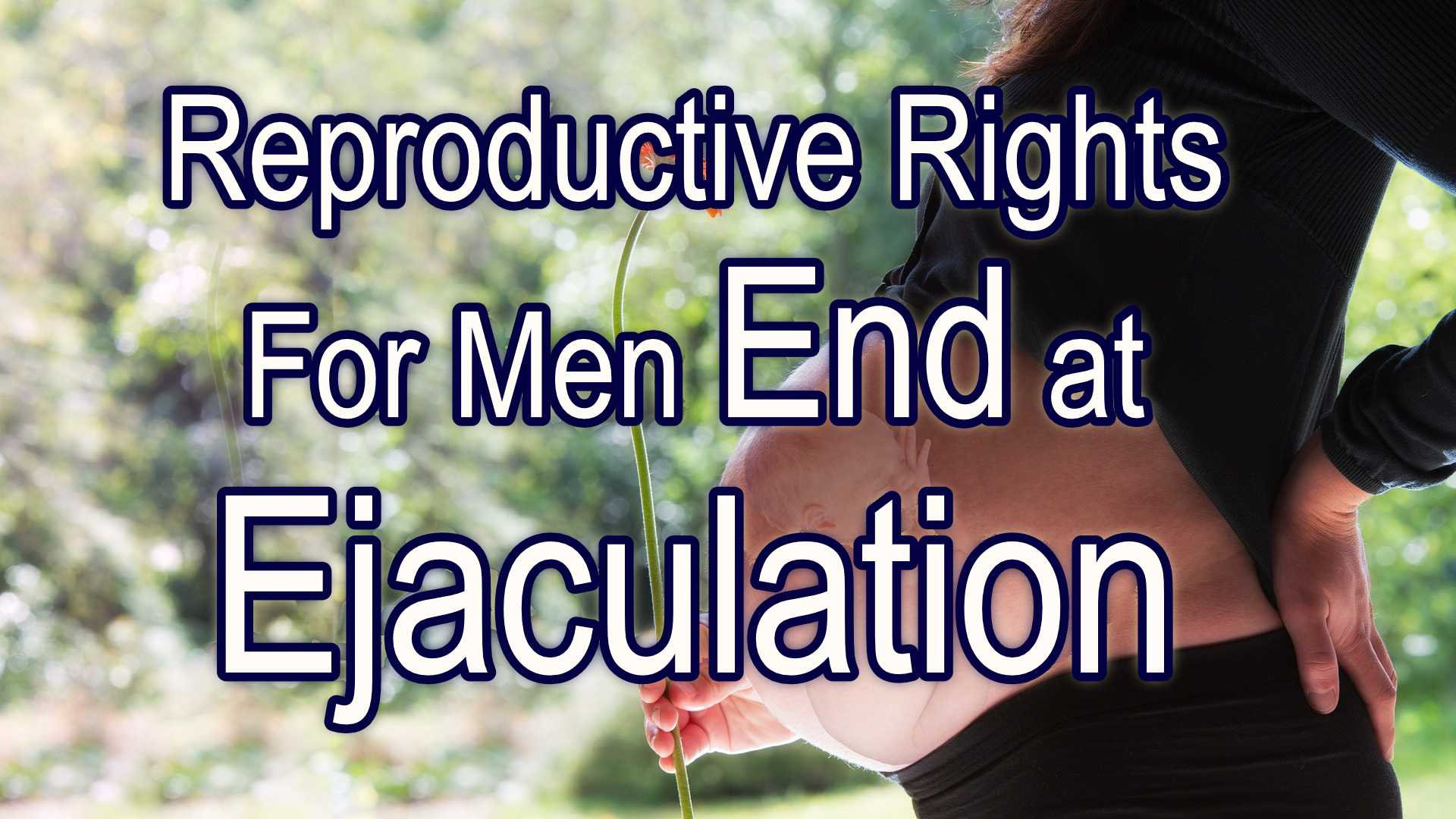
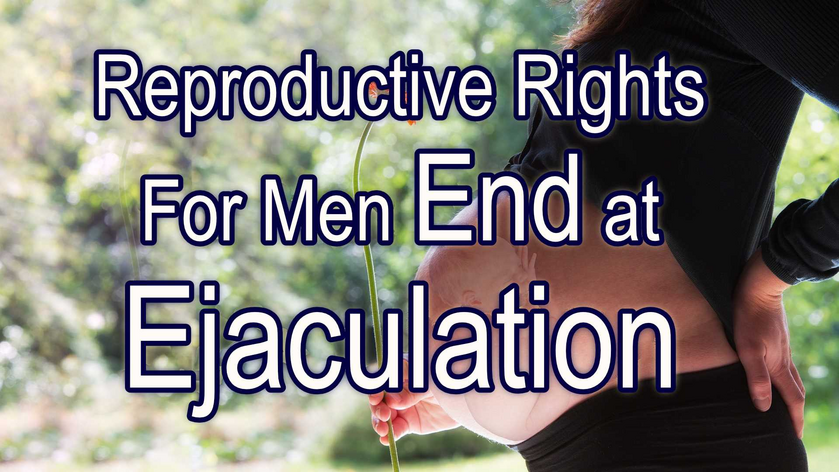
Reproductive Rights End at Ejaculation: How Men Lost Control Over Parenthood
October 20, 2025
post photo preview


Reproductive Rights End at Ejaculation: How Men Lost Control Over Parenthood

It’s one of the most unspoken truths in modern life: once conception occurs, men have no reproductive rights. A woman can choose to keep a pregnancy or end it. She can decide to raise the child or place it for adoption. A man, on the other hand, is bound—socially, legally, and financially—to whatever decision she makes.

That imbalance is so normalized that few even notice it. When the topic arises, most people reflexively defend the status quo. “Well, it’s her body.” Of course it is. But what’s rarely considered is that while women have control over their bodies, men have no control over their futures.

“The man’s genetic material, his emotional capacity, his finances, and his lifelong identity as a father or a stranger—all of it hangs on someone else’s choice. A woman’s responsibility is conditional; a man’s is absolute.

And this asymmetry is defended not as a moral dilemma to be resolved, but as a settled truth.


The Silent Consent Trap

We’ve been taught to think that when a man consents to sex, he consents to everything that might follow. But when a woman consents to sex, she still retains the right to decide afterward whether to become a mother.

This moral sleight of hand is stunning once you notice it. One person’s consent is treated as final and binding; the other’s is treated as provisional and revocable.

And yet this assumption—so old it feels invisible—forms the bedrock of modern reproductive law.

If a pregnancy occurs and the man doesn’t want to be a father, the system tells him, “Too bad. You should have thought of that earlier.” If the woman doesn’t want to be a mother, society says, “She has a right to choose.”

Both positions can’t be reconciled under any serious notion of equality.


The Price of Powerlessness

For many men, the consequence isn’t only financial—it’s existential.

Imagine discovering that someone chose to bring a child into the world with your DNA, against your will, and that you’ll now spend 18 years paying for the decision you didn’t make. Imagine learning that a partner deceived you about contraception, or tampered with protection, and you’re told by the court that none of that matters.

Your body, your consent, your word—irrelevant.

The state considers you responsible for what someone else decided to do with your biology.

The irony is brutal: men are lectured about “taking responsibility,” but responsibility without consent is not morality—it’s servitude.

And while precise numbers are impossible to know, the scale of this problem is enormous. Countless men quietly accept pregnancies they would have preferred to avoid—not because they chose fatherhood, but because the law left them no voice in the matter. For every man who speaks out, many more simply submit to a fate decided by someone else. And this imbalance cuts both ways. Just as some men are forced into fatherhood they didn’t choose, others are denied fatherhood they deeply want. Many have stood by helplessly as a pregnancy they hoped to cherish was ended—not because they were careless or uncommitted, but because the law gave them no voice. For them, “her choice” becomes their grief, and that grief is treated as if it doesn’t exist.

And beneath that larger injustice lies an even starker reality: a measurable percentage of pregnancies begin with deliberate deception. Studies conservatively estimate that 1–3% of fathers are unknowingly raising children who are not biologically theirs. Men who uncover the truth and challenge paternity are often ordered to keep paying anyway, because “it’s in the best interest of the child.”

In other words, the legal system tells men that even being lied to about fatherhood doesn’t matter—your wallet still belongs to the child, and by extension, to the mother who deceived you. It’s her body, her choice—and your wallet, her choice too.


Moral Courage and the Empathy Gap

Why is there so little outrage about this? Because when men suffer, empathy tends to vanish.

We can see this in how society responds to female pain—mobilizing instantly, funding shelters, rewriting laws—and how it responds to male pain—with indifference, mockery, or moral lectures.

A man who feels trapped by fatherhood he didn’t choose is told he’s irresponsible or immature. A woman who feels trapped by motherhood she didn’t choose is seen as courageous for seeking control. And when a man feels trapped by abortion—when he longs to protect the life of his own child but is powerless to stop its ending—his pain is dismissed as interference in someone else’s right.

This empathy gap runs so deep that even discussing male reproductive rights feels taboo. People worry it undermines women’s freedom, as if equality for one sex must come at the other’s expense.

But fairness isn’t a zero-sum game. Equality doesn’t mean less compassion for women—it means more honesty for everyone.


The “Financial Abortion” Idea

One idea, sometimes called “paper abortion” or “financial abortion,” proposes that men should be able to relinquish legal parenthood within a set time early in pregnancy—mirroring a woman’s right to choose abortion or adoption.

Critics say it lets men “walk away from their responsibilities.” But this criticism misses the point: responsibility must follow consent. You can’t demand moral or financial duty from someone who had no voice in the decision that created it.

If women can legally choose parenthood, men should at least be able to choose not to be one.

Otherwise, what we call equality is really a kind of gendered servitude—freedom for one sex, obligation for the other.


Consent and Control

At its heart, the issue of reproductive rights for men isn’t about sex. It’s about consent, autonomy, and the meaning of equality.

In every other area of life, consent without control is invalid.
If someone borrows your car without permission, you don’t owe them gas money because “the trip already happened.” If a doctor performs a surgery you didn’t consent to, it’s malpractice—even if they believed it would help.

Yet when it comes to reproduction, we abandon that principle completely.

Men’s consent ends at ejaculation. From that moment on, everything that follows—the pregnancy, the birth, the lifelong obligation—is out of their hands.

And society calls this justice.


The Deeper Consequence

When men feel they have no control over one of life’s most defining events—whether or not they become a father—it fuels a quiet kind of despair. It teaches them that their choices don’t matter, that their voices are disposable, that their role in reproduction is purely mechanical.

It also weakens trust between men and women. True partnership depends on mutual agency and mutual accountability. When one side holds all the power, resentment grows.

This isn’t just a legal problem; it’s a relational one. Many young men today fear relationships precisely because they sense this imbalance—because they know that in the eyes of the law and culture, they have no reproductive rights, only responsibilities.


A Culture That Values Both Sexes

Reproductive fairness shouldn’t be controversial. If we truly believe in equality, then both sexes deserve the same moral and legal respect for their choices.

That means we need to have the courage to ask hard questions:

  • Should men have the right to decline fatherhood when women can decline motherhood?

  • Should paternity testing be standard, to protect both fathers and children from deception?

  • Should reproductive coercion—like lying about birth control—be treated as seriously as forcing a woman into pregnancy?

Equality isn’t about punishing women or freeing men from moral duty. It’s about aligning rights with responsibilities, and recognizing that both sexes have an equal stake in the creation of life.

Until that happens, we’ll keep pretending that justice exists where it doesn’t—and men will keep paying the price for choices they didn’t make.

Because in our culture, reproductive rights still end at ejaculation.

community logo
Join the MenAreGood Community
To read more articles like this, sign up and join my community today
0
What else you may like…
Videos
Posts
Articles
December 20, 2025
Bias Against Men and Boys in Mental Health Research

This video is a summary of the three studies we have examined the last three Saturdays. It’s a brief and relaxed look at the high points of those articles. Here’s a summary:

This video examines a pattern I’ve seen repeatedly in psychological research: when data complicates the familiar story of men as perpetrators and women as victims, the data about boys and men often disappears. Using three real studies—on teen dating violence, reproductive coercion, and “masculine norms”—I walk through how boys’ suffering is minimized, misrepresented, or erased as research moves from full reports to media headlines and public policy. What emerges is not just sloppy science, but a troubling bias that shapes how we see boys, men, and masculinity itself.

00:10:31
August 07, 2025
Are Men Great of Good? Yes!

Time for a male-positive message. I created this video a while back, but its message remains as important and timeless as ever. I’d love for it to reach boys who’ve been told—explicitly or implicitly—that there’s something wrong with being male. After so much negativity about men and masculinity, they need to hear something different. They need to hear something true, strong, and affirming.

00:04:59
July 21, 2025
AI Books

We now have a new section that is accessible in the top navbar of the substack page titled AI Books. It contains links to numerous books on men's issues that each have an AI app that is able to answer detailed questions about the book. The above video gives some ideas of how to use these.

https://menaregood.substack.com/s/ai-books

The Myth of Male Power - Warren Farrell
Fiamengo File 2.0 Janice Fiamengo
Taken Into Custody - Stephen Baskerville
The Empathy Gap - William Collins
The Empathy Gap 2 - Williams Collins
The Destructivists - William Collins
Who Lost America - Stephen Baskerville
The New Politics of Sex -- Stephen Baskerville
Understanding Men and Boys: Healing Insights - Tom Golden
Boys' Muscle Strength and Performance - Jim Zuzzo PhD
Sex Bias in Domestic Violence Policies and Laws - Ed Bartlett (DAVIA)
The Hand That Rocks The World - David Shackleton

Links below

Myth of Male Power - Warren Farrell

The Myth of Male Power - documents how virtually every society that survived did so by persuading its sons to be disposable. This is one of the most powerful books...

00:11:44

Something men seem to do all the time that women seem to find extreamaly unlikely or impossible.

Made me laugh!!

https://www.facebook.com/share/v/1AKtUoYg8x/?mibextid=wwXIfr

https://www.facebook.com/share/r/1FwqtFuR2Z/?mibextid=wwXIfr

I have often made this connection. It’s a little too on point to not research and derstand better. I am fairly sure there is something to it.

January 08, 2026
post photo preview
The Reasonable Man


The Reasonable Man

Evan liked to think of himself as fair.

He listened. He adjusted. He didn’t raise his voice. When there was tension, he assumed he had missed something—some emotional nuance, some unspoken need. That, he believed, was maturity.

When his wife, Laura, came home upset from work, Evan canceled his plans without mentioning them. It seemed obvious that her day mattered more. When she criticized his tone, he apologized—even when he wasn’t sure what he had done wrong. If she was unhappy, the situation required fixing, and fixing required him.

This wasn’t resentment. It was love.

At least, that’s what Evan told himself.

When decisions came up—where to live, how to spend money, which friendships to maintain—Evan instinctively deferred. Laura had stronger feelings, clearer opinions. He told himself that intensity meant importance. If something mattered more to her, then it mattered more, period.

When his friend Mark complained about feeling sidelined in his own marriage, Evan felt embarrassed for him.

“You just have to be more emotionally aware,” Evan said. “Women carry more of that burden.”

Mark didn’t argue. He just looked tired.

At work, Evan was the same way. When female colleagues spoke, he nodded, encouraged, amplified. When men expressed frustration, Evan subtly distanced himself. He didn’t want to be that guy—the one who failed to notice women’s struggles. If there was a conflict, he assumed the woman had been wronged, even if the facts were unclear. Experience had taught him that neutrality was risky.

Better to err on the side of empathy.

At home, Evan grew quieter over the years. Not withdrawn—just careful. He edited himself mid-sentence. He learned which opinions created friction and which disappeared smoothly. He stopped bringing up his exhaustion. He told himself it wasn’t that bad. Other men had it worse.

When Laura once asked why he seemed distant, Evan froze. The question felt dangerous, like stepping onto thin ice. He reassured her quickly, explaining that he just needed to “work on himself.” She nodded, relieved. The conversation moved on.

Evan felt oddly proud of that moment. He had protected the relationship.

It wasn’t until much later—after a sleepless night, after rereading an old journal entry he barely remembered writing—that something shifted.

The entry was simple:

I don’t know where I went.

That sentence unsettled him.

He started paying attention—not to Laura’s emotions, but to his own patterns. He noticed how quickly he assumed women’s distress carried moral weight while men’s distress required explanation. How often he treated female discomfort as an emergency and male discomfort as a character flaw. How rarely he asked whether his needs were reasonable, and how often he assumed they were negotiable.

He realized something uncomfortable: none of this had been demanded outright.

He had assumed it.

He had assumed that women’s feelings were more fragile, more important, more deserving of protection. That men should absorb impact quietly. That harmony depended on male self-erasure. That good men yield first—and keep yielding.

Only then did Evan have a word for what he had lived by.

Not kindness.
Not empathy.
But a quiet, invisible prioritization—so ingrained it had felt like morality itself.

Gynocentrism.

He didn’t feel angry when he named it. He felt sad. Sad for how natural it had seemed. Sad for how reasonable it had felt to place himself last without ever calling it a choice.

For the first time, Evan wondered what fairness would look like if it included him.

And the question, once asked, refused to go away.

Read full Article
January 05, 2026
post photo preview
The Quiet Lie Behind Male Loneliness


How Male Loneliness Is Commonly Explained


🔹 1. “Men Deserve the ‘Male Loneliness Epidemic’”

“The male loneliness epidemic exists because men want to control women instead of respecting them… Most of the single men I’ve seen complaining about how lonely they are don’t see women as someone to connect with, but rather as a ‘game’ they must win.”
— from Men Deserve the “Male Loneliness Epidemic” (Medium) Men Deserve the “Male Loneliness Epidemic” (Medium)


🔹 2. Her Campus: “Why the ‘Male Loneliness Epidemic’ Is Men’s Fault”

“…this epidemic is typically used to describe the recent increase in male isolation… There are many potential reasons — especially with the rise of social media — which can detract from human interaction.”
— from Why the “Male Loneliness Epidemic” Is Men’s Fault (Her Campus) Why the “Male Loneliness Epidemic” Is Men’s Fault (Her Campus)


🔹 3. Psychology Today: Framing Loneliness via Men’s Emotional Defense Patterns

“Men are often encouraged to be stoic instead of vulnerable, which makes it difficult for them to open up and form emotional connections…”
— from Is Male Loneliness a New Epidemic or an Age-Old Struggle? (Psychology Today) Is Male Loneliness a New Epidemic… (Psychology Today)


🔹 4. Elephant Journal: Blaming Choices for Loneliness

“The male loneliness epidemic isn’t an epidemic, it’s the consequence of poor choices. Companionship isn’t a right, it’s something you earn.”
— from The Male Loneliness Epidemic — Real Talk. (Elephant Journal) The Male Loneliness Epidemic — Real Talk. (Elephant Journal)


🔹 5. Salon: Explicit Mention of Blame in the Discourse

“…some may acknowledge male loneliness… but then insist it’s self-inflicted — a failure of men to take personal responsibility.”
— from Don’t Blame Women for Men’s Loneliness. Blame Capitalism. (Salon) Don’t Blame Women for Men’s Loneliness (Salon)


🔹 6. Medium: Claim that the “Male Loneliness Epidemic” Is a Myth

“Although researchers have been exploring loneliness as a societal epidemic… Stories abound about how men deserve to be lonely, while others contend that they’re not really lonely; they’re just wallowing…”
— from Is Male Loneliness a Sexist Myth (Medium) The Male Loneliness Epidemic Is a Sexist Myth (Medium)


The Quiet Lie Behind Male Loneliness


It Is the Predictable Result of a Culture That Eliminated Male Space


Before men were lonely, there were places.

Places where men showed up without an agenda. Where conversation happened sideways, not face-to-face. Where no one asked men to perform vulnerability, explain themselves, or justify their presence.

Those places didn’t disappear because men rejected connection. They disappeared because our culture decided male-only spaces were no longer acceptable. And once they were gone, men were told that their resulting loneliness was a personal failure.

There has been a noticeable shift in recent months. A growing number of articles now
acknowledge male loneliness and even gesture toward men’s emotional needs. On the surface, this looks like progress — and in one narrow sense, it is. For decades, male loneliness was either ignored or mocked.

But many of these pieces commit the same quiet betrayal.

After briefly acknowledging that men are lonely, many articles abandon subtlety altogether and place responsibility squarely on men themselves. Men don’t open up enough. Men don’t try hard enough. Men don’t build friendships properly. Men resist emotional growth.

What is missing is the most obvious factor of all: our culture systematically dismantled the spaces where men and boys once formed friendships.


Men Did Not “Forget” How to Connect,
They Lost the Places Where Connection Happened

Male friendships have never primarily formed through structured emotional disclosure. They formed through shoulder to shoulder shared activity, regular presence, and low-pressure companionship. Men bonded by working alongside one another, not by facing one another across a table and “processing.”

For generations, this happened naturally in male-only spaces:

  • Service clubs

  • Fraternal organizations

  • Trade guilds and apprenticeships

  • Male sports leagues

  • Scout troops

  • Men’s religious groups

  • Informal gathering places like barbershops and workshops

These environments weren’t about exclusion. They were containers — places where boys learned how to be men from men, and where adult men maintained connection without self-consciousness or surveillance.

Now consider what has happened.

  • Barbershops are co-ed and transactional.

  • Service clubs are now largely co-ed, and the informal freedoms that supported male bonding in male-only environments have largely disappeared.

  • Community sports are co-ed or heavily regulated.

  • Even the Boy Scouts are co-ed.

One by one, male spaces disappeared — not because men abandoned them, but because our culture increasingly viewed male-only environments as suspicious, outdated, or morally problematic.


The Asymmetry No One Wants to Name

At the same time male spaces were dismantled, female-only spaces proliferated.

Women-only gyms are accepted.
Women-only scholarships are celebrated.
Women-only commissions exist at every level of government.
Women-only networking events, parking, subway cars, retreats, and support groups are commonplace.

“Women-only” is understood as necessary, protective, and empowering.
“Men-only,” by contrast, is treated as exclusionary at best and dangerous at worst.

The result is an unspoken rule that everyone knows but few admit:

Women may gather without men. Men may not gather without women.

This is not equality. It is a double standard — and it has consequences.


Then Comes the Blame

Once the social infrastructure that supported male friendship is gone, men are told to adapt. To reinvent themselves emotionally. To “do the work.”

When they fail — when loneliness deepens — the problem is framed as internal. A defect of character. A failure of emotional literacy.

This is, by feminism’s own definition, blaming the victim: holding responsible the very people who have been placed at a disadvantage by cultural change.

Women’s suffering is explained structurally.
Men’s suffering is explained morally.

Layered onto this is something rarely acknowledged — the hostile cultural judgment directed at men and boys themselves. When boys grow up hearing that masculinity is “toxic,” that they are potential oppressors, that their instincts are suspect, it quietly erodes any sense that their sex is something to take pride in or even trust. Under those conditions, isolation is not just social — it is existential.

What often goes unnamed is that this pattern does more than misdiagnose the problem. It functions as a form of relational aggression.

Men’s suffering is acknowledged, but only in a way that subtly relocates responsibility back onto the man himself. No one (well, nearly no one) says outright that his loneliness is his fault, yet the implication is unmistakable: if he were more emotionally literate, more open, less defensive, less “toxic,” he would not be alone. Compassion is offered alongside correction; empathy is made conditional on change.

From a clinical perspective, this is precisely how relational aggression operates — through implication rather than accusation, through moral positioning rather than open attack. Shame is induced without being named. Validation is withheld without explanation. Social standing and legitimacy are quietly eroded. The result is not connection, but deeper isolation — all while those perpetuating the narrative retain a posture of concern and moral superiority.


This Is Not a Clinical Mystery

For many men, isolation is not just about having fewer friends. It is about losing a sense of place, purpose, and belonging. When the environments that once affirmed male identity disappear, men don’t just feel lonely — they feel unnecessary.

Men do not primarily heal through talk.

They heal through:

  • Shared purpose

  • Physical presence

  • Action

  • Solitude

  • Humor

  • Loyalty

  • Time spent together without scrutiny

Remove the environments that make this possible and replace them with verbal, emotionally performative models — then criticize men for not thriving — and you create an impossible bind.

Add to this a culture that repeatedly tells men their nature is dangerous or defective, and the bind tightens further. It is difficult to seek connection when one’s very maleness is framed as something that must be apologized for, corrected, or kept under supervision.

This is not men refusing connection. It is men being asked to connect in ways that violate how they naturally bond — after their native environments have been dismantled and their worth has been publicly questioned.


Anticipating the Pushback

“Men can still form friendships if they want to.”
Yes — just as plants can still grow in poor soil. The question is not whether it’s theoretically possible, but whether the conditions support it.

“Male-only spaces exclude women.”
So do female-only spaces — and no one pretends otherwise. The question is why exclusion is framed as protective when women do it and pathological when men do it.

“Some male spaces were unhealthy.”
Some families are unhealthy. We don’t abolish families. We improve them. Eliminating all male spaces because some were flawed is collective punishment disguised as progress.

“Men should just adapt.”
Adaptation is not a moral obligation when the environment itself has been intentionally stripped of what once made adaptation unnecessary.


The Real Question

If we are serious about addressing male loneliness, we have to stop blaming men for failing to thrive in conditions that were engineered to prevent male bonding.

Male loneliness is not a personal failure.
It is a cultural outcome.

Until we are willing to say that out loud — and rebuild spaces where men and boys can gather without apology — these articles will continue to sound compassionate while quietly reinforcing the very problem they claim to address.

Read full Article
December 31, 2025
post photo preview
Happy New Year!

As we close out 2025, I want to extend my heartfelt thanks to all the supporters at menaregood.locals.com. Your encouragement, engagement, and belief in this work have meant more than I can say. Whether you've joined discussions, supported financially, or simply taken the time to read and reflect, you've helped create a space where men’s issues can be explored with honesty and depth. I’m deeply grateful for your presence here, and I look forward to continuing this important work together in the year ahead.

Let's hope that 2026 is indeed the year of men!

Happy New Year!

Read full Article
See More
Available on mobile and TV devices
google store google store app store app store
google store google store app tv store app tv store amazon store amazon store roku store roku store
Powered by Locals