MenAreGood
The Psychology of Collective Victimhood
Part 2 of 3 in the series “The Victim Trap: How a Culture of Helplessness Took Hold”
November 13, 2025
post photo preview


The Psychology of Collective Victimhood

Part 2 of 3 in the series “The Victim Trap: How a Culture of Helplessness Took Hold”

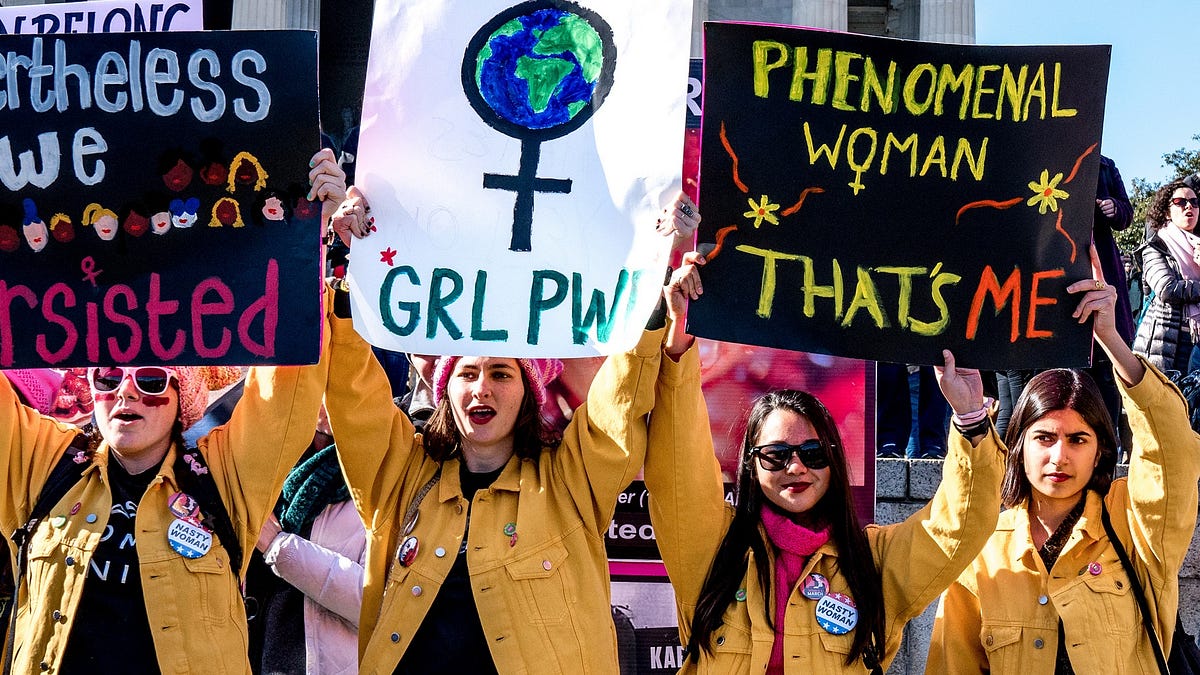
When the mindset of victimhood spreads from individuals to entire groups, something powerful — and dangerous — begins to happen.

The sense of personal injury becomes a shared moral identity.
Suffering, once private, becomes political.

At first, this can bring solidarity and even healing. A wounded community finds its voice. People who once suffered in silence finally feel seen. But over time, the same force that unites can also divide. The story that once offered meaning starts to reshape how people see themselves, their nation, and even morality itself.


1. The Birth of a Moral Identity

When groups define themselves by what was done to them, they gain not only empathy but a sense of moral righteousness. The logic is simple — and intoxicating:

“We have suffered, therefore we are good. They have power, therefore they are bad.”

This moral binary simplifies a messy world. It provides clarity and belonging, offering the comfort of a single story where virtue and vice are clearly assigned. But it also freezes both sides into unchanging roles: one forever the victim, the other forever the oppressor.

These roles are psychologically powerful because they remove complexity — and with it, responsibility. Once a group becomes identified with innocence, it no longer needs to question its own motives. Its cause is automatically just.

Modern politics thrives on these fixed roles. They provide ready-made moral drama: heroes and villains, innocence and guilt. But like all drama, they require constant rehearsal to stay alive. Without conflict, the script falls apart.


2. The Emotional Rewards of Group Victimhood

Collective victimhood feels empowering at first. It transforms personal pain into a larger moral purpose. What was once chaos becomes coherence.

Being part of a group that has “suffered together” gives life meaning and creates unity. It offers protection from isolation. There’s comfort in saying, “We’re not crazy; we’ve been wronged.”

In social movements, this dynamic can quickly become a badge of belonging — a way to prove loyalty to the cause. Those who display the most outrage, or carry the most visible wounds, often gain the highest moral status.

Psychologists call this competitive victimhood: when groups begin to compete for recognition as the most wronged. The greater the suffering, the greater the virtue. But moral status can become addictive. Once a group learns that pain equals virtue, it begins to search for more pain — and when real injustices run out, it may start to manufacture offense to sustain its moral authority.

It’s a strange paradox: the more a group celebrates its wounds, the less it can afford to heal them.


3. Biases that Keep the Wound Open

Victim thinking doesn’t just change beliefs — it changes perception itself.
It amplifies cognitive biases that keep the wound raw and prevent ​healing.

  • Confirmation bias: Interpreting every disagreement or policy change as proof of oppression. The mind filters the world for evidence of persecution.

  • Attribution bias: Assuming malice rather than misunderstanding — reading intent where there may be none.

  • Availability bias: Because the media highlights what shocks and wounds, stories of cruelty stay vivid in our minds while quiet acts of goodwill fade from view. We remember every injustice, not because it’s most common, but because it’s most visible.

  • Moral typecasting: Once a group is labeled “the victim,” society struggles to see it as capable of harm — while the supposed “oppressor” becomes incapable of innocence.

This last bias deserves a closer look.

Social psychologists Kurt Gray and Daniel Wegner discovered that people intuitively divide the world into moral types: those who act (moral agents) and those who suffer (moral patients). Once someone is cast in one role, our minds tend to freeze them there.

That means when a group is seen as a victim, their actions are interpreted through a moral filter that excuses wrongdoing. Their pain becomes proof of virtue — and even when they cause harm, observers tend to explain it away as justified or defensive.
Conversely, those seen as oppressors carry a kind of permanent moral stain. Even their good deeds are reinterpreted as self-serving or manipulative.

The tragedy is that this bias prevents genuine empathy in both directions.
It denies accountability to those labeled as victims and compassion to those labeled as villains. In the end, everyone’s humanity gets flattened into a single moral role — and the cycle of grievance stays alive.


4. When Empathy Becomes a Weapon

Empathy is one of humanity’s most precious traits. But when victimhood becomes sacred, even empathy can be weaponized.

Claims of harm begin to override discussions of truth. Feelings become the final arbiter of morality. The question shifts from “Is this accurate?” to “Does this offend?”

The result is what might be called moral coercion: when guilt replaces persuasion and compassion becomes a tool of control. People censor themselves not because they’re wrong, but because they fear being seen as cruel.

You can see this dynamic almost anywhere today — in classrooms, offices, or online. A teacher hesitates to discuss a controversial historical event because one student might feel “unsafe.” A coworker swallows an honest disagreement during a diversity training, not because they’ve changed their mind, but because they dread being labeled insensitive. On social media, someone offers a mild counterpoint and is flooded with moral outrage until they apologize for the sin of questioning the narrative.

In each case, guilt ​ or shame ​becomes a weapon. The emotional threat of being branded heartless silences discussion more effectively than any argument could. And so compassion, meant to connect us, begins to control us.

Ironically, the groups that appear most powerless often become the most influential, because they wield the moral authority of suffering. When pain becomes proof of virtue, disagreement starts to look like aggression.

It’s a subtle but devastating inversion: empathy, meant to heal division, becomes a tool that enforces it.


5. The Emotional Toll on the Group

Living inside a collective grievance feels purposeful, but it’s emotionally draining.
Righteous anger brings a surge of meaning — a sense of clarity and mission — but like any stimulant, it requires constant renewal.

A group addicted to outrage cannot rest. It needs a steady supply of offenses, real or imagined, to keep its story alive. When none appear, it begins to see insult in the ordinary and oppression in mere difference.

Without new conflict, the group’s identity weakens. This is why peace, paradoxically, can feel threatening to movements built on pain. Reconciliation robs them of their reason to exist.

The emotional cost is high: anxiety, exhaustion, paranoia, and isolation. The group’s members live in a permanent state of alert, bonded by fear rather than love.


6. How Collective Victimhood Divides Society

The tragedy of group grievance is that it unites within but divides between.
Shared suffering bonds members of the in-group, but it hardens their hearts toward outsiders. Empathy becomes conditional — reserved only for those who share the same scar.

Once compassion is limited to “our people,” understanding dies. Dialogue collapses. Each side becomes trapped in its own moral narrative, convinced that it alone is righteous.

The cultural result is polarization — a society where everyone talks about justice while practicing vengeance, and where reconciliation feels like betrayal.

In such a climate, even kindness can be misinterpreted as manipulation. Every gesture is filtered through suspicion. Healing becomes nearly impossible because the wound has become the identity.


7. Toward a Healthier Collective Story

The way out is not to deny injustice but to transcend it.
Nations, communities, and movements can honor their suffering without making it their defining story.

That transformation begins with language.
Saying “We have suffered” keeps us anchored in the past.
Saying “We have endured” honors the same pain but adds strength.

The first sentence describes injury; the second describes resilience.
The difference seems small, but psychologically it’s immense — one keeps the wound open, the other begins to heal it.

Healthy cultures, like healthy people, move from grievance to growth. They tell stories not just of what was lost but of how they rose. They stop competing for sympathy and start competing for excellence.


Final Word

Victimhood once served a sacred purpose — to awaken empathy for the mistreated. It was meant to open our hearts, to remind us of our shared humanity and the moral duty to protect the vulnerable. When a culture witnesses suffering and responds with compassion, something profoundly good happens: justice grows, cruelty is restrained, and dignity is restored.

But somewhere along the way, that sacred purpose was replaced by something transactional. When victimhood becomes a currency, empathy turns into a market, and suffering becomes a brand.

You can see it in the way public life now rewards outrage and emotional display. A single personal story of harm, once told for healing, can now become a platform — drawing attention, sympathy, and sometimes even profit.
Organizations compete to showcase their pain as proof of virtue; individuals learn that expressing offense earns social status; corporations adopt slogans of solidarity not from conscience, but because compassion has become good marketing.

Imagine a town square where people once gathered to comfort the wounded. Over time, the square becomes a stage. The wounded are still there, but now they must keep their wounds visible, even open, because the crowd has learned to applaud pain more than recovery. The very empathy that was meant to heal now demands performance.

When compassion becomes currency, its value declines. What once flowed freely from the heart is now rationed, manipulated, and traded for attention or power.

The true mark of strength is not how loudly we proclaim our pain, but how gracefully we move beyond it. Real empathy — the kind that changes lives — begins when we stop spending suffering and start transforming it.

Our challenge now, as individuals and as a culture, is to remember that compassion and accountability must grow together — or both will die apart.

In the next and final part of this series, we’ll explore how modern institutions — academia, media, and politics — have learned to reward and monetize victimhood, and what that means for the future of honest conversation and human resilience.

Men Are Good.

community logo
Join the MenAreGood Community
To read more articles like this, sign up and join my community today
0
What else you may like…
Videos
Podcasts
Posts
Articles
December 20, 2025
Bias Against Men and Boys in Mental Health Research

This video is a summary of the three studies we have examined the last three Saturdays. It’s a brief and relaxed look at the high points of those articles. Here’s a summary:

This video examines a pattern I’ve seen repeatedly in psychological research: when data complicates the familiar story of men as perpetrators and women as victims, the data about boys and men often disappears. Using three real studies—on teen dating violence, reproductive coercion, and “masculine norms”—I walk through how boys’ suffering is minimized, misrepresented, or erased as research moves from full reports to media headlines and public policy. What emerges is not just sloppy science, but a troubling bias that shapes how we see boys, men, and masculinity itself.

00:10:31
November 19, 2025
The Relentless War on Masculinity

Happy International Men's Day! It's a perfect day to acknowledge the relentless war on masculinity? Here we go!

In this video I sit down with four people I deeply respect to talk about a book I think is going to matter: The Relentless War on Masculinity: When Will It End? by David Maywald.

Joining me are:

Dr. Jim Nuzzo – health researcher from Perth and author of The Nuzzo Letter, who’s been quietly but steadily documenting how men’s health is sidelined.

Dr. Hannah Spier – an anti-feminist psychiatrist (yes, you heard that right) and creator of Psychobabble, who pulls no punches about female accountability and the mental-health system.

Lisa Britton – writer for Evie Magazine and other outlets, one of the few women bringing men’s issues into women’s media and mainstream conversation.

David Maywald – husband, father of a son and a daughter, long-time advocate for boys’ education and men’s wellbeing, and now author of The Relentless War on Masculinity.

We talk about why David wrote this book ...

01:05:19
November 17, 2025
Cancel Culture with a Vengeance

Universities and media love to brand themselves as champions of free speech and open debate. But what happens when those same institutions quietly use legal tools to gag and erase the very people who challenge their orthodoxies?

In this conversation, I’m joined by two of my favorite thinkers, Dr. Janice Fiamengo and Dr. Stephen Baskerville, to dig into a darker layer beneath “cancel culture.” We start from the case of Dr. James Nuzzo, whose FOIA request exposed a coordinated effort by colleagues and administrators to push him out rather than debate his research, and then go much deeper.

Stephen explains how non-disclosure agreements, non-disparagement clauses, and mandatory arbitration have become a hidden system of censorship in universities, Christian colleges, and even media outlets—silencing dissenters, shielding institutions from scrutiny, and quietly stripping people of their practical First Amendment rights. Janice adds her own experience with gag orders and human rights complaints, and ...

00:57:23
February 07, 2023
The Way Boys Play and the Biological Underpinnings

My apologies for the last empty post. My mistake. Let's hope this one works.

Tom takes a stab at using the podcast function. Let's see how it goes.

The Way Boys Play and the Biological Underpinnings
May 13, 2022
Boys and Rough Play

This is a short excerpt from Helping Mothers be Closer to their Sons. The book was meant for single mothers who really don't know much about boy's nature. They also don't have a man in the house who can stand up for the boy and his unique nature. It tries to give them some ideas about how boys and girls are different. This excerpt is about play behaviors.

Boys and Rough Play

A Gay woman explaining women and its very insightful!

https://www.facebook.com/share/v/1FJbbqPRde/?mibextid=wwXIfr

It’s sad that it’s is this way. But she is right.

She is right and it’s going to happen

December 22, 2025
post photo preview
What Men Bring to Christmas


Women are often the heartbeat of the social side of Christmas — the cards, the gatherings, the baking, the presents, the details that make everything glow. But what men bring to Christmas is just as essential, even if it’s quieter and less visible.

Men bring structure. They’re the ones hauling the tree, hanging the lights, fixing what’s broken, driving through the weather, making sure there’s wood for the fire and fuel in the car. They create the framework that holds the celebration up — the unspoken foundation that allows everything else to happen.

They bring steadiness. When things get tense or chaotic — when someone’s late, or the kids are bouncing off the walls — it’s often the calm presence of a man that settles the moment. That quiet “it’s all right” energy grounds the room and restores a sense of safety and ease.

They bring tradition and meaning. Many men are the keepers of ritual: the same breakfast every Christmas morning, the drive to see the lights, the reading of ’Twas the Night Before Christmas. Their constancy ties the present to the past. It gives children a sense that they belong to something enduring.

And men bring humor — the kind that doesn’t just entertain but heals. When the wrapping paper piles up or the cookies burn, it’s a man’s grin or a playful remark that resets everyone’s mood. Men’s humor carries wisdom; it says, let’s not take ourselves too seriously. It reminds us that Christmas isn’t about perfection — it’s about joy.

Finally, men bring quiet joy. They find it not in the spotlight but in watching the people they love — a partner’s smile, a child’s laughter, the flicker of the tree in the dark. Their satisfaction is in knowing they helped create that warmth, often without needing credit for it.

When I worked as a therapist with the bereaved, I saw this again and again after a father’s death. Families would describe a subtle shift — not just grief, but a loss of containment. Without dad, things felt looser, more chaotic, less certain. The house might look the same, but the emotional gravity had changed. What they were missing was that quiet, stabilizing force men bring — the invisible boundary that holds the family together without needing to be named.

It’s one of the paradoxes of men’s contribution: you don’t notice it when it’s there, only when it’s gone.

Women make Christmas sparkle, but men make it stand. Together they form the harmony that makes the season whole — love expressed in different languages, both necessary, both beautiful.

Read full Article
December 18, 2025
post photo preview
Men's Strengths Are Treated as Flaws
Why the Masculine Way Keeps Getting Misunderstood


Why the Masculine Way Keeps Getting Misunderstood

I’ve been thinking lately about men and the quiet burden they carry in today’s world.
Not just the obvious burdens — responsibility, provision, protection — but something deeper and harder to name.

It’s the burden of being misunderstood in the very places where men are strongest.

And I don’t mean misunderstood in a poetic way. I mean misinterpreted, pathologized, and often dismissed — simply because men do things differently than women.

You see this most clearly with emotions. Men have a distinct, consistent way of handling feelings. It’s not random, and it’s not a flaw — it’s a pattern rooted in biology, social roles, and testosterone. But rather than recognizing these differences, the modern lens tends to treat the male way as “deficient.”

Women talk to process.
Men act or withdraw to process.

Women regulate through expression.
Men regulate through doing.

Yet the male way is almost never acknowledged as legitimate. Instead, it’s measured against a female template — and found wanting.

And once you see this pattern, you start noticing it everywhere.


1. Emotional Life: Men as “Defective Women”

We tell men that their way of dealing with emotion is wrong. Not just different — wrong.

When men get quiet, we call it “shutting down.”
When they problem-solve as a way to soothe themselves, we call it “fixing instead of feeling.”
When they regulate through solitude, we call it “avoidance.”

In other words, men are told they’re unhealthy if they don’t process emotions like women.

The absurdity is breathtaking: the male way of processing emotion works — and has worked across millennia. But because it doesn’t resemble the female way, it’s treated as defective.


2. Fatherhood: The Strengths That No One Sees

The same pattern shows up in fatherhood.

Fathers do certain things instinctively:

  • Rough-and-tumble play

  • Boundary-setting

  • Encouraging independence

  • Pushing challenge and risk in manageable doses

All of these have strong empirical backing as enormously beneficial for children, especially boys.

But fathers rarely get credit. Instead, their natural strengths are reframed as:

  • Too rough

  • Too distant

  • Not nurturing enough

  • Not “tuned in”

  • Toxic

Meanwhile the mothering style — relational, verbal, protective — becomes the default standard, and fathering is viewed as a flawed version of mothering.

But fathering isn’t “mom minus something.”
It’s a different, vital system.


3. Communication: Male Directness Pathologized

Men tend to speak more directly.
Shorter sentences.
Less emotional detail.
More focus on solutions, hierarchy, and efficiency.

This is not inferior communication — it’s optimized communication for male social structure and cooperation.

But in mixed-sex environments it’s often framed as:

  • Cold

  • Abrupt

  • Lacking empathy

  • Emotionally immature

Men’s communication works beautifully in the settings it evolved for — teams, tasks, crisis response, collaboration. But again, the female style becomes the gold standard, and the male style becomes the pathology.


4. Stress Responses: Women “Tend and Befriend,” Men “Fight, Focus, and Fix”

Shelly Taylor described how women handle stress: connect, talk, seek support.

Men, however, tend to:

  • Narrow their focus

  • Move toward action

  • Systemize

  • Get quiet

  • Scan for solutions

This is not emotional deficiency — it’s biology. Testosterone, competition, and precarious manhood all channel men toward action in the face of stress.

And these responses are what make men effective in crisis-intensive fields: firefighting, military, surgery, rescue work, engineering, construction.

But instead of recognizing this, the male stress response is labeled as repression.

Again: men measured by a female template.


5. Moral Psychology: Duty Recast as Toxicity

Men have a moral framework built around:

  • Duty

  • Sacrifice

  • Responsibility

  • Endurance

  • Protection

These are profoundly other-focused values — the moral foundation that keeps families and communities standing.

And yet today, we reframe these as:

  • Stoicism = unhealthy

  • Duty = patriarchy

  • Provision = control

  • Protection = toxic chivalry

The very virtues that once held society together have become targets.


6. Male Social Structure: Hierarchies Seen as Oppression

Male friendship and bonding grow out of:

  • Shared tasks

  • Friendly competition

  • Banter

  • Hierarchies based on competence

  • Cooperative shoulder to shoulder action

These are healthy, functional systems.

But modern culture calls them:

  • Bullying

  • Toxic

  • Aggressive

  • Immature

  • Exclusionary

Even hierarchies — which men rely on to keep group conflict down — are reframed as power structures that must be dismantled.


7. Male Sexuality: Normalized for Women, Pathologized for Men

Women’s sexuality is described as relational, emotional, expressive.

Men’s is described as:

  • Dangerous

  • Primitive

  • Immature

  • Objectifying

Men’s sexual wiring — visual, compartmentalized, spontaneous — is treated as a moral failing rather than a normal biological pattern.

Once again, the female pattern is the normative human pattern.
The male pattern is a deviation from health.


The Pattern Underneath It All

Here’s the core insight:

Any domain where men differ from women is reinterpreted as a domain where men are deficient.

If women communicate one way, that becomes the “healthy” style.
If women grieve one way, that becomes the “healthy” style.
If women bond one way, that becomes the “healthy” style.
If women parent one way, that becomes the “healthy” style.

Men become defective humans rather than fully developed men.

This is gynocentrism at its quietest but most powerful: the female mode becomes the normative template for being a good person, a good partner, a good parent, even a good human.

And anything that lies outside that template is viewed as suspect.


Why This Matters

Because men internalize it.
They feel awkward, confused and even ashamed of the very strengths that once grounded them.

  • The father who plays rough feels judged.

  • The man who gets quiet under stress feels broken.

  • The husband who solves problems instead of emoting feels scolded.

  • The young boy who competes or wrestles is told he’s aggressive.

  • The man who expresses duty is told he’s part of a system of oppression.

The message is everywhere:

“Be less of yourself.”
“Do it the women’s way.”
“Your instincts are suspect.”
“Your strengths are flaws.”

And the result?
Men stop trusting their nature.
And when men distrust their nature, they lose their anchor.

And we all lose something essential.


But Here’s the Truth

Men’s ways are not just legitimate.
They are necessary.

For families.
For communities.
For society.
For children.
For order and safety.
For stability.
For love.

We don’t need men to be more like women.
We need men to be fully and unapologetically men — and to be recognized for the good they bring.

And that starts with saying clearly and without hesitation:

Men’s ways aren’t deficiencies.
They’re strengths — and we should honor them.

Men Are Good!

Read full Article
December 15, 2025
post photo preview
Did CNN Lie About Boys?
The Study That Was Twisted: How CNN Turned “Exposure” Into “Toxic Masculinity”


The Study That Was Twisted: How CNN Turned “Exposure” Into “Toxic Masculinity”

In October, 2025, CNN ran a commentary by communication professor Kara Alaimo claiming that boys exposed to “digital masculinity” online have lower self-esteem, are lonelier, and that such content fuels offline violence against women. The problem? None of that is what the data actually show.

Alaimo based her argument on a Common Sense Media survey titled “Boys in the Digital Wild: Online Culture, Identity, and Well-Being.” After reading both the CNN piece and the full 88-page report, the contrast couldn’t be sharper. What she presented as a story of crisis looks, in the actual data, like a story of ordinary adolescent life — with a few predictable patterns and a lot of healthy boys.

What the Survey Really Found

The 2025 report surveyed 1,017 boys ages 11–17 across the U.S., asking about their online habits, exposure to “masculinity-related” content (posts about fighting, fitness, dating, or making money), and indicators of well-being such as self-esteem and loneliness.

Here are the key numbers:

  • 86 % of boys with “high exposure” ​to masculine themed content had normal self-esteem. Only 14 % showed low self-esteem — a small minority.

  • Over half reported feeling belonging and liking who they are online.

  • 68 % said this content “just appeared” in their feeds; they weren’t seeking it.

  • “Boys still embrace caring behaviors, with 62% believing in being friendly even to those who are unfriendly to them, 55% putting others’ needs before their own, and 51% caring about others’ feelings more than their own.”

  • Strong offline mentorship predicted the healthiest outcomes.

  • Fathers ranked highest as the most admired and trusted role models — more than celebrities, influencers, or athletes — showing that boys still look to their dads for guidance and identity.


In short, the majority of boys are fine. A small group shows some struggles. The strongest predictor of resilience isn’t censorship or re-education — it’s healthy offline relationships.

What the Survey Didn’t Measur​e

This part matters most: The survey never asked whether boys believed or endorsed the content they saw. It only asked if they had encountered it. Exposure does not equal endorsement.

Seeing a video about boxing, entrepreneurship, or dating advice says nothing about whether a boy admires or rejects it. Yet Alaimo’s article blurs that crucial distinction. She assumes that viewing equals internalizing — that the algorithm shows, and the boy obeys. That’s not science; it’s projection.

How CNN Distorted the Findings

Alaimo’s piece takes mild statistical associations and turns them into moral certainties. Here’s how:

  • What the report actually said: 86 % of high-exposure boys did not have low self-esteem.

  • What CNN claimed: “Boys with higher exposure have lower self-esteem and are lonelier.”

  • Why that’s misleading: It turns a small correlation into a blanket statement.

Here’s the image from the survey:


Note that the study itself said most boys had healthy self-esteem, and that 14% of high-exposure boys reported low self-esteem—which means 86% did not. Alaimo’s claim would have been accurate if she had written that a slightly higher percentage of high-exposure boys reported low self-esteem compared to moderate- and low-exposure groups. But she didn’t. Instead, she stated flatly that high-exposure boys have lower self-esteem. That isn’t honest reporting—it’s a distortion that misleads readers into believing the data showed something it didn’t. Here’s the quote from the CNN article:


She did the same thing with the loneliness issue. The survey showed that 70% of high exposure boys were not shown to be lonely. But this didn’t keep Alaimo from claiming that higher exposure to masculine content made boys more lonely. Here’s the graphic from the survey:


In another part of the article Alaimo says the following:


When you follow the link she labels as “my research,” there’s no actual study showing that negative messages about women and girls cause offline violence. The link leads instead to another article summarizing her opinions on the topic. While she refers vaguely to a “wide body of research,” none of the studies she mentions establish a causal connection between online content and real-world violence against women. In fact, the evidence she cites is general research on media violence, not on misogyny or social media behavior.

Alaimo seems intent on frightening parents into believing that if their sons spend time online, they’ll absorb misogyny like secondhand smoke—emerging damaged, insecure, and primed for violence against women. It’s a manipulative narrative built on fear, not evidence. What parent wouldn’t feel alarmed by such a claim? And yet, that fear is precisely the tool being used to steer boys away from open spaces where they might think and speak freely.

Here are some more distortions:

• What the researchers cautioned: “The study cannot prove causation.”
→ What CNN implied: Digital masculinity causes low self-esteem—and even violence against women.
→ Why that’s misleading: It ignores the study’s explicit caveats.

• What the study measured: Exposure, not belief.
→ What CNN wrote: As though boys automatically absorbed misogynistic messages.
→ Why that’s misleading: It substitutes ideology for data.

• What the report also noted: Online spaces provide connection, belonging, and skill-building.
→ What CNN left out: The most positive findings.
→ Why that’s misleading: It works to create a one-sided moral panic.


What the Study Actually Emphasized

The Common Sense Media team didn’t call for censorship or surveillance. Their conclusion was strikingly balanced:

“With thoughtful intervention from parents, educators, policymakers, and industry, we can help boys navigate these digital environments while maintaining the human connections essential to their well-being.”

In other words, mentorship matters most. They recommend encouraging offline friendships, sports, robotics, and other group activities — spaces where boys can build confidence and identity without online distortion.

Alaimo’s takeaway? By the end of the article, she does encourage offline group activities—but the damage was already done. Readers were left with the clear impression that the manosphere is a dangerous place. This fits neatly with what appears to be her larger goal: to discourage parents from allowing boys to engage with those online spaces and to steer them back toward environments where the narrative is safely controlled.

A Pattern of Ideological Storytelling

This is not the first time feminist commentary has blurred the line between seeing and believing, between association and causation.

It’s part of a broader cultural reflex: assume that anything linked to masculinity must be toxic. When an adolescent boy shows interest in strength, competition, or success, the narrative pathologizes it as “hypermasculine.”

But strength, drive, and mastery are not dangerous traits. They are the same impulses that lead boys to protect, to build, and to grow — when guided by good mentors.


The Real Story: Boys Need Connection, Not Correction

What the data actually tell us is simple and deeply human:
Boys are online, yes. Some of what they see is rough, crude, or confusing. But most are fine. What they need most are adults — fathers, coaches, teachers, uncles, community leaders — who can talk with them about what they see, help them think critically, and model a balanced kind of strength.

When commentators like Kara Alaimo twist research into another attack on masculinity, they don’t protect boys — they alienate them further. They feed the very disconnection the data warn against.

Bottom Line

The Common Sense Media report offers a nuanced view of how boys navigate digital life. The CNN piece that claimed to summarize it turned that nuance into ideology.

The study: “Most boys are doing fine; let’s support them.”
The article: “Masculinity is toxic; it’s making boys and women unsafe.”

That’s not journalism. It’s advocacy in disguise — and it’s time readers started calling it what it is.


Why Feminist Commentators Fear the Manosphere

When CNN commentator Kara Alaimo warned that “digital masculinity” is harming boys, her real anxiety wasn’t about boys at all. It was about control.

The loss of gatekeeping power

For decades, feminist scholars and journalists held near-total control over how gender was discussed in mainstream culture. University departments, newsrooms, and social-media policy boards all spoke from the same script: masculinity is a problem to be corrected; feminism is the solution.

Then the internet happened. Podcasts, YouTube channels, Substack pages, and online forums created an uncontrolled space where men could speak to one another about purpose, rejection, fatherhood, meaning​ and a host of other topics that were forbidden in traditional places. Some of those voices are clumsy or angry, but many are thoughtful and compassionate—addressing needs the establishment had ignored.

To academics like Alaimo, that independence looks like rebellion. What she calls “the manosphere” isn’t a hate movement; it’s a marketplace of ideas she can’t supervise.

Shaming as a tool of control

When direct censorship fails, moral shaming becomes the fallback. The labels—toxic, dangerous, extremist—are meant to end the conversation before it starts.
Alaimo’s CNN piece is a textbook case: she takes a mild statistical correlation from a Common Sense Media survey and turns it into a moral warning that “masculinity online” makes boys lonely and violent.

This isn’t social science; it’s social conditioning. The goal is to make boys feel guilty for showing interest in strength, fitness, or ambition—traits that once defined healthy manhood. Curiosity becomes complicity. Click on a video about discipline, and you’re suddenly part of a “radicalization pipeline.” It also sends a message to parents that they need to control their boys online activity or face his loneliness, low self-esteem, and violence.

Projection and double standards

What often goes unnoticed is how these writers display the very hostility they accuse men of harboring. They generalize, moralize, and treat half the population as a threat in need of supervision. When men question feminist orthodoxy, it’s labeled hate. When women condemn men collectively, it’s celebrated as activism.

This double standard isn’t born of hatred so much as fear—the fear of losing moral authority. The manosphere’s unforgivable sin isn’t misogyny; it’s disobedience.

The real reason the manosphere exists

Men aren’t gathering online to plot against women. They’re doing it because they’ve been shut out of the cultural conversation. Schools tell them they’re privileged; therapy often tells them they’re defective; the media tells them they’re dangerous. The online world, for all its rough edges, at least lets them talk back.

The healthiest parts of that space offer something our institutions once did naturally: mentorship, brotherhood, challenge, and purpose. Those are not extremist ideas—they’re human needs.

What this panic reveals

When writers like Kara Alaimo insist that masculinity itself is the problem, they reveal more about their ideology than about boys. The panic over “digital masculinity” is the sound of a monopoly losing its grip. As soon as men can define themselves without approval from the establishment, the establishment cries harm.

But the truth is simpler: boys are searching for models of competence and belonging, and they have every right to look for them wherever they’re found.

The path forward

We don’t need another crusade against masculinity. We need more honest conversation—without the gatekeepers, without the shame, and without the moral panic. Let the data speak, let the boys speak, and let men continue the long-overdue work of reclaiming a healthy sense of who they are.

M​en and Boys are Good

Read full Article
See More
Available on mobile and TV devices
google store google store app store app store
google store google store app tv store app tv store amazon store amazon store roku store roku store
Powered by Locals