MenAreGood
2026 The Year of Men
December 29, 2025
post photo preview

This post is dedicated to my friend Mark Sherman, PhD., his sons, and his grandsons. Mark and I share a quiet hope — that we will live to see meaningful progress in the status of boys and men.



Every movement begins as an act of imagination. Before anything changes, someone has to picture what fairness would look like if we truly meant it. I wrote this piece to imagine that world — one where men are finally seen in full, with all their depth, strength, and vulnerability. Maybe we’re not there yet. But maybe 2026 could be the year we start to be.


2026 The Year of Men

Imagine that. 2026 becomes the year of men — a year when the conversation shifts from accusation to understanding. For the first time in half a century, men are discussed not as a problem to fix but as people to know. Their genius, their quirks, their flaws, and their quiet strengths are spoken of with the same nuance once reserved for others. College campuses devote programs to exploring men’s lives — their needs, their distinct ways of solving problems, their inner drives. Professors begin to ask questions that once felt off-limits: How have we misunderstood men? What happens when we stop pathologizing masculine traits and start appreciating them for what they are?

The change begins almost accidentally. A viral documentary follows several men through their daily lives — a father fighting for custody, a veteran mentoring fatherless boys, a young man navigating college under a cloud of suspicion.The film ignites something. People start talking about the thick wall of stereotype threat that has been built around men for the last fifty years, and how it quietly shapes everything — from the classroom to the courtroom. The wall doesn’t fall overnight, but it begins to crack.

Soon, the media joins in. Morning shows run thoughtful discussions about men’s emotional lives — how men experience feelings deeply but process them through action, purpose, and silence. Reporters highlight research showing that men’s stoicism, logic, and devotion to service are not deficiencies in empathy but expressions of it. Family court reforms begin to take shape; male victims of domestic violence are no longer turned away simply because they are male. It feels like a cultural exhale — the long-suppressed conversation finally given air.

At first, people are disoriented. After decades of being told that men’s pain doesn’t count, even fairness feels radical. But something shifts. Women, too, begin to see their fathers, husbands, sons, and brothers with fresh eyes. The conversation isn’t about blame anymore — it’s about balance. A new curiosity replaces old resentment. The year of men doesn’t erase anyone; it invites everyone to understand half of humanity that’s been caricatured for too long.

Could it happen? Could a culture so comfortable blaming men ever turn toward truly seeing them? Maybe not all at once. But every change in history begins the same way — with the simple act of imagining it.


What Changes During the Year of Men

The first signs of change come from the ground up. Teachers start noticing boys again — not as potential problems to manage, but as minds to cultivate. Schools experiment with programs that fit how boys learn best: movement, competition, hands-on projects, and purpose. Reading lists begin to include stories of male courage and vulnerability that go beyond superheroes or villains. Teachers are trained to see how boys’ energy isn’t disobedience — it’s engagement looking for direction. For the first time in decades, boys begin to feel that classrooms were made with them in mind.

On college campuses, the tone shifts from suspicion to curiosity. “Men’s Studies” — long a taboo phrase — finds a foothold. Seminars explore how fatherlessness, male shame, and status pressure shape young men’s mental health. Professors dare to say what was once unspeakable: that men have suffered, too. A handful of women’s studies professors even cross over, lending their voices to help create a balanced understanding of gender that includes both sides of the human story. The conversations are messy but alive — and that’s the point. Truth is finally allowed to be complicated again.

The media, too, begins to rediscover men. Documentaries appear about the quiet heroism of everyday fathers, about men mentoring boys in forgotten neighborhoods, about the millions of men who keep the world turning through labor, repair, and service. Morning talk shows, once filled with segments ridiculing male behavior, start inviting men to speak for themselves. The tone softens. People listen. A viral story circulates about a construction crew that raised money to send a coworker’s son to college after his dad’s death. “This,” one host says on air, “is masculinity too.”

Relationships begin to heal in small but powerful ways. Wives notice that when their husbands go quiet, it’s not distance but effort — a man trying to manage his emotions in the only way that feels safe. Sons start asking their fathers for advice again, and fathers rediscover how much they have to give. In counseling offices, therapists begin learning what clinicians have long said — that men process emotions through action, that their silence isn’t absence but presence in another form. Couples therapy starts to meet men halfway instead of treating them as defective women.

And then there’s mental health. The great unspoken epidemic of male despair finally becomes speakable. Instead of shaming men for not seeking help, society asks why the help offered has so little to do with how men heal. Clinics start experimenting with men’s groups centered around work, movement, humor, and camaraderie — not confession circles that make them feel judged. Suicide prevention campaigns stop using guilt and start using respect. The message shifts from “talk more” to “we see you.” And something remarkable happens: men begin to respond.


The Resistance

Of course, not everyone welcomes the Year of Men.
The early months bring a predictable storm. Certain media outlets call it a backlash. Activist groups issue statements warning that focusing on men will “set back progress.” Think pieces appear overnight insisting that “men already have enough,” as if empathy were a limited resource that must be rationed. A few universities cancel events after protests claim that discussing men’s needs “centers privilege.” But this time, something is different: the public doesn’t buy it. Ordinary people — men and women alike — begin asking simple, disarming questions: How is fairness a threat? How can caring for men possibly hurt women?

The resistance grows louder before it grows weaker. It feeds on fear — fear that empathy for men might expose hypocrisy, that the old narratives might not survive open scrutiny. For decades, the culture has run on a quiet formula: men are the problem, women the solution. Challenging that myth threatens a moral economy that has funded entire industries — from grievance studies to gender bureaucracies to the political machinery that profits from division. When men begin to speak, those who built careers speaking about men feel the ground shift beneath them.

In talk shows and social media debates, the same tired accusations resurface: that compassion for men means indifference to women, that noticing male pain is a form of denial. Yet the tone of the conversation has changed. This time, people have seen too much. They’ve seen fathers emotional pain outside family courts. They’ve seen male victims of abuse turned away from shelters. They’ve watched boys fall behind in schools that call them “toxic” for being active, assertive, or proud. The moral logic of exclusion begins to collapse under its own weight.

And then something unexpected happens: some of the loudest critics begin to soften. A few prominent feminists admit that they never intended for fairness to become a zero-sum game. Others, quietly at first, confess that they are mothers of sons — and they now see what men have endured through their children’s eyes. The resistance doesn’t disappear, but it loses its moral certainty. It becomes clear that opposing compassion for men requires something unnatural: denying reality itself.

The Year of Men doesn’t crush opposition; it transforms it. It doesn’t argue so much as invite. It reminds people that love of men isn’t hatred of women — it’s love of humanity. The movement doesn’t demand anyone’s permission to exist. It simply tells the truth with calm persistence until the shouting fades and listening begins again.


The Renewal

By the end of the Year of Men, something subtle yet profound has changed. The culture feels calmer, more honest, more whole. The anger that once filled every gender conversation has lost its fuel. People have begun to see men not as adversaries or caricatures but as essential parts of the human story — the builders, protectors, thinkers, and dreamers whose lives are as sacred as anyone’s.

The public learns what therapists have known for decades: that men’s silence is often love in disguise. That the man fixing the leaky faucet before anyone wakes is saying thank you in his own language. That the husband who works overtime, the son who restrains his tears at a funeral, the firefighter who risks his life for strangers — all are expressing something profoundly emotional, though the culture has lacked the ears to hear it.

In this new climate, men begin to relax their shoulders. They laugh more easily, reconnect with friends, and find meaning again in work, fatherhood, and service. Fathers feel free to be the masculine dad that they are, and boys no longer learn that masculinity is something to apologize for.

The walls that once separated men and women begin to crumble, replaced by curiosity, gratitude, and humor — the natural bonds of people who have finally stopped competing for moral high ground and started building a shared one.

Women, too, find a surprising sense of relief. Freed from the burden of constant grievance, they rediscover what they always loved about men — their steadiness, their generosity, their willingness to stand in harm’s way. The battle of the sexes gives way to partnership. In homes and classrooms and workplaces, people start asking a forgotten question: What are men for? And the answers are not defensive anymore. They are joyous.

By the time December arrives, commentators summarize 2026 as “the year empathy grew up.” It’s not the end of the story, only the beginning — the moment when society realized that healing half of humanity heals the whole. The Year of Men becomes not just a cultural milestone but a mirror, reminding us that progress isn’t about trading one group’s dignity for another’s. It’s about finally understanding that men are good — and always have been.

Men Are Good.

community logo
Join the MenAreGood Community
To read more articles like this, sign up and join my community today
0
What else you may like…
Videos
Posts
Articles
January 22, 2026
Something Wicked

Today’s conversation is with three women who share something rare: they can see through the fraud of feminism—and they’re willing to say so out loud.

Hannah Spier, M.D. (a psychiatrist from the mental-health world) breaks down how feminist ideology has seeped into therapy culture and quietly turned “help” into a kind of self-worship—often at the expense of families and men.
https://hannahspier.substack.com/

Janice Fiamengo, Ph.D, brings the historical lens, showing that feminism has never really been about “equality,” but about power—and how the story has been rewritten so effectively that even critics sometimes repeat the mythology.
https://fiamengofile.substack.com/

And Carrie Gress, Ph.D., author of Something Wicked (releasing now), lays out the argument that feminism and Christianity aren’t compatible—because feminism functions like a shadow religion: its own moral framework, its own commandments, its own “sins,” and its own sacred cow (female autonomy). ...

01:13:49
December 20, 2025
Bias Against Men and Boys in Mental Health Research

This video is a summary of the three studies we have examined the last three Saturdays. It’s a brief and relaxed look at the high points of those articles. Here’s a summary:

This video examines a pattern I’ve seen repeatedly in psychological research: when data complicates the familiar story of men as perpetrators and women as victims, the data about boys and men often disappears. Using three real studies—on teen dating violence, reproductive coercion, and “masculine norms”—I walk through how boys’ suffering is minimized, misrepresented, or erased as research moves from full reports to media headlines and public policy. What emerges is not just sloppy science, but a troubling bias that shapes how we see boys, men, and masculinity itself.

00:10:31
August 07, 2025
Are Men Great of Good? Yes!

Time for a male-positive message. I created this video a while back, but its message remains as important and timeless as ever. I’d love for it to reach boys who’ve been told—explicitly or implicitly—that there’s something wrong with being male. After so much negativity about men and masculinity, they need to hear something different. They need to hear something true, strong, and affirming.

00:04:59

If only if our society could just acknowledge this and celebrate it more it would be a hudge step in valuing men more!!

February 05, 2026
post photo preview
Institutional Sexism: The Bias We’re Not Allowed to See


Institutional Sexism: The Bias We’re Not Allowed to See

For half a century, the term institutional sexism has been used as a club — a way to shame or reform male-dominated systems accused of disadvantaging women. Universities built entire departments around it. Governments shaped funding priorities by it. The media repeated it like a moral mantra: if women lag anywhere, it must be because the system is rigged against them.

But what if we’ve been looking in the wrong direction?

The deeper irony is that institutional sexism is real — just not the way we’ve been taught to see it. Across education, mental health, family courts, criminal justice, and even public health, there are consistent, measurable biases that disadvantage men and boys. Yet these are ignored or rationalized away under a powerful cultural assumption: that sexism only flows one way.

It’s a peculiar blindness, one that reveals how moral reflexes — not data — often shape our perception of fairness. The same academics and policymakers who tell us to “follow the evidence” become strangely incurious when the evidence points toward male disadvantage. The result is a quiet but pervasive structural bias, woven through the institutions that claim to serve us all.

We can see it most clearly in the places where boys and men come into early contact with those institutions: schools, courts, and the helping professions.


1. The Invention of “Institutional Sexism”

The phrase institutional sexism was born out of the same sociological moment that gave us institutional racism. In the late 1960s, civil rights thinkers like Stokely Carmichael and Charles V. Hamilton argued that prejudice wasn’t just about individual bigots — it was about systems that favored one group over another, often invisibly.

Feminist theorists quickly applied that framework to gender. Books like The Female Eunuch and The Second Sex were reinterpreted through the new structural lens: patriarchy, male privilege, and institutional sexism were said to keep women in subordinate roles regardless of men’s intentions.

In principle, this was a useful insight. Systems do create patterns that individuals may not see. But in practice, the analysis hardened into dogma. “Institutional sexism” became a one-way accusation — never a tool for understanding the whole picture.

No one asked whether those same systems might, in some areas, evolve to favor women. After all, institutions don’t have consciences; they reflect the moral winds of their time. As society began to view women as a protected class and men as a potential threat, those winds shifted. Institutions followed — first in tone, then in policy.

Today, half a century later, nearly every major Western institution — from education to healthcare to media — operates under an implicit assumption of female moral priority. And yet we still use the same 1970s vocabulary, as if men were the default oppressors.

If the sociologists of that era were alive today, they might recognize what has happened: the frame they built to expose bias has itself become biased.


2. Education: The First System to Tilt

If we want to see institutional sexism in action, we need look no further than our schools.

Over the past four decades, classrooms have quietly become ground zero for male disadvantage. The gender gap that once concerned feminists has flipped — and then some. Boys now lag behind girls in virtually every measure of educational success: reading proficiency, GPA, graduation rates, and college enrollment. Yet almost no one calls this an emergency.

The data are unambiguous. By fourth grade, boys are already behind in reading and writing. By high school, they make up two-thirds of the students at the bottom of the class. In college, women earn roughly 60% of degrees, a gap wider than the one that once favored men in the 1970s.

But what’s driving this? The answer lies partly in who’s teaching. Roughly three out of four teachers in primary and secondary education are women. Research by economists like Camille Terrier and David Card has found that female teachers are more likely than male teachers to grade boys lower than their standardized test scores predict — a clear sign of unconscious bias. The same studies show that this bias is strongest in language arts, where subjective grading plays a larger role.

A boy who scores well on a standardized exam might receive a lower classroom grade simply because his behavior or communication style doesn’t align with a teacher’s expectations — expectations shaped by feminine norms of cooperation, compliance, and verbal expression.

Add to this the way schools have restructured around emotional safety and verbal processing — sitting still, group sharing, and “feelings-based” pedagogy — and the institutional disadvantage deepens. We’ve built an educational environment that rewards traits more common in girls, then pathologizes boyish energy as “disorderly” or “defiant.”

A few years ago, psychologist Michael Thompson remarked that schools have become places where “boys’ physicality is seen as a problem to be managed.” He’s right. In many classrooms, a boy’s natural movement, competitiveness, or risk-taking is treated not as developmental difference but as moral failing.

And so the system disciplines rather than accommodates him. Boys are far more likely to be suspended, expelled, or diagnosed with behavioral disorders — outcomes that compound over time. Yet the institutional response is always the same: create more programs to “help girls.”

That’s not compassion. That’s ideology.

When researchers and journalists discuss these trends, they rarely use the language of institutional sexism. They speak instead of “engagement gaps” or “learning style differences.” The vocabulary of bias suddenly disappears the moment it might implicate institutions as anti-male.

But the logic is exactly the same as the one used to define systemic discrimination against women: when a group’s consistent disadvantage stems from the structure and norms of an institution, that’s systemic bias — whether it favors women or men.

By every honest standard, our education system fits that definition.

Men Are Good

Read full Article
February 02, 2026
post photo preview
Manufacturing a Boy Crisis
Show me the data

Educators, journalists, and researchers say boys are becoming more aggressive. But when you look for the trend data, the evidence quietly disappears.


When “Concern” Replaces Evidence: A Look at Claims About Rising Aggressive Masculinity

Recently I read an article titled Reading how to be male: Boys’ literature reflects the rise of aggressive masculinity. The title alone makes a strong empirical claim: that aggressive masculinity is rising. Not perceived as rising. Not debated. Rising.

That’s a measurable claim. Which means it should be supported by measurable data.

Because I take these questions seriously — especially when they concern boys — I wrote to the author, who happened to be a Gender Studies professor, and asked a straightforward question:

What is the empirical evidence that masculine aggressiveness is increasing?

He kindly replied and sent two links — one a media report about educator concerns, and the other an article about a qualitative research project describing how some teachers perceive changes in boys’ attitudes and behavior.

But neither source provided what the title of the article clearly implies:
trend data showing that male aggressiveness is increasing over time.

In fact, the qualitative study he referenced was one my colleagues Janice Fiamengo, Hannah Spier, and I had previously examined in detail in a video discussion. We found it relied largely on interviews, interpretations, and ideological framing rather than measurable behavioral trends. The other link was simply journalism — anecdotes, opinions, and stories about educator worries.

Neither constitutes longitudinal evidence of an actual increase.


Concern Is Not Trend Data

We are living in an era of heightened cultural anxiety about boys and men. Teachers report concern. Journalists report concern. Researchers report concern. Administrators report concern.

But concern is not the same as longitudinal behavioral evidence.

If we are going to say aggression is rising, we should expect to see:

  • multi-year behavioral datasets

  • crime trend comparisons

  • school violence trend data

  • disciplinary pattern shifts

  • cross-regional replication

Instead, what we often see are:

  • perception reports

  • educator interviews

  • interpretive frameworks

  • ideological lenses applied to selected cases

Those can be useful — but they are not trend measurement.

When perception is presented as trajectory, readers are misled.


The Framing Problem

Notice how the framing works in pieces like this:

Step 1 — Start with a cultural fear
Step 2 — Gather qualitative impressions consistent with that fear
Step 3 — Interpret those impressions through a gender-ideological lens
Step 4 — Present the conclusion as a social pattern

No explicit falsification test appears anywhere in the process.

It’s not that the researchers are fabricating observations. It’s that the interpretive frame is doing most of the work.

When boys are already positioned culturally as a risk category, almost any troubling behavior becomes evidence of a broader male pattern — while contradictory evidence gets treated as an exception.

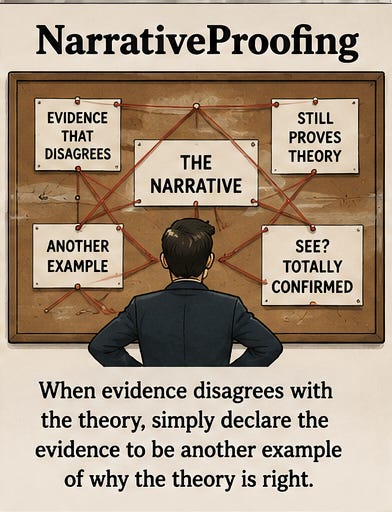
That’s not science. That’s narrative selection.


What Would Real Evidence Look Like?

If aggressive masculinity were truly rising, we would expect at least some of the following indicators to be trending upward:

  • male youth violent crime rates

  • school assault rates by sex

  • disciplinary removals for violent behavior

  • male-perpetrated injury incidents

  • cross-decade behavioral comparisons

But in many regions, long-term violent crime trends among youth have actually declined from historical peaks — not risen.

So if the claim is increase, the burden of proof belongs with the claimant.

Not with the skeptic.


Why This Matters for Boys

When cultural institutions repeatedly publish claims that boys are becoming more dangerous, more misogynistic, more aggressive — without strong trend evidence — boys absorb that message.

Teachers absorb it.
Parents absorb it.
Clinicians absorb it.
Policy absorbs it.

And boys are treated accordingly.

Suspicion becomes the baseline.
Interpretation becomes gendered.
Normal roughness becomes pathology.
Developmental conflict becomes ideology.

I have worked with boys and men for decades. They are not becoming monsters. They are becoming confused — and often very discouraged — under a steady stream of moral suspicion.

That distinction is critical.


My Exchange With the Author

To his credit, the author responded politely to my inquiry and shared his sources. I wrote back and clarified that my question was specifically about measured increase over time, since the article’s title clearly implies that trajectory.

I never heard back after that follow-up.

That silence doesn’t prove bad faith — but it does highlight something important:
The evidentiary foundation under these claims is often thinner than the confidence of the headlines.


A Better Standard

If we care about boys — truly care — we should insist on a higher evidentiary standard before declaring them socially dangerous.

We should:

  • separate perception from measurement

  • separate ideology from data

  • separate anxiety from trend

  • separate narrative from proof

And most importantly:

Assess harm by power and leverage, not gender.

Because when gender becomes the shortcut explanation, truth is usually the casualty.

And this is exactly where conversations like this often go wrong. Part of the disconnect may simply be methodological. The author comes from Gender Studies, a discipline that leans heavily on narrative interpretation, interviews, and thematic impressions rather than longitudinal behavioral measurement. Those tools can tell us how people feel about boys. They cannot tell us whether boys are actually becoming more aggressive over time. That requires hard trend data.

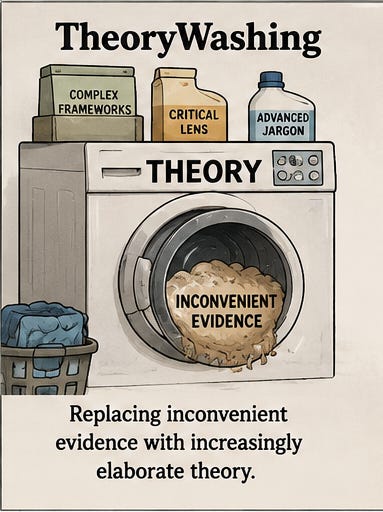
When interpretive methods are presented as empirical proof, perception quietly substitutes for evidence and ideology slips in wearing the costume of science. We’ve seen this pattern before — in inflated domestic violence narratives and other feminist boondoggles where worst-case anecdotes are treated as trends and fear is treated as fact. At that point, we’re no longer measuring reality; we’re constructing a story.

And once that story takes hold, boys aren’t studied — they’re blamed, regulated, and pathologized to solve a crisis the numbers never actually showed.

Men Are Good.

Read full Article
January 29, 2026
post photo preview
Accountability 2: What Equal Accountability Would Actually Look Like
Does Gynocentrism Masquerade as Justice?


What Equal Accountability Would Look Like in Practice

If accountability were truly equalized, several familiar institutions would begin to look—and behave—very differently.


Therapy Would Stop Pathologizing Male Restraint

Today, many men enter therapy already on the defensive.

A man who pauses before speaking, who thinks before he feels, who regulates himself under stress is often labeled avoidant, emotionally unavailable, or disconnected. His restraint is treated as pathology rather than capacity.

Meanwhile, emotional flooding, volatility, or verbal escalation—more often expressed by women—are framed as authenticity, trauma responses, or justified expressions of pain.

Equal accountability would mean: Therapy would stop trying to turn men into more emotionally verbal women—and start helping couples understand different but equally valid regulation styles.


Schools Would Begin to Recognize Female Aggression and Social Cruelty

In schools, aggression is still defined almost entirely in male terms.

Boys who shove, yell, or act out are disciplined.
Girls who exclude, humiliate, gossip, provoke, manipulate friendships, or orchestrate social punishment are often ignored—or worse, excused as “drama.”

Teachers routinely intervene in boys’ conflicts while dismissing girls’ relational aggression as normal social behavior.

Equal accountability would mean:

  • Recognizing ostracism, rumor-spreading, and reputational harm as real aggression

  • Intervening when girls weaponize friendships or authority

  • Teaching that cruelty doesn’t require physical force to be damaging

  • Holding girls to the same behavioral standards of fairness and restraint

This wouldn’t punish girls.
It would protect children—especially quieter boys who are often invisible victims.


Workplace Policies Would Acknowledge Relational Aggression

Most workplace harassment policies are built around overt misconduct: yelling, threats, sexual advances.

What they rarely address is relational aggression:

  • Undermining colleagues through insinuation

  • Using complaints as leverage

  • Social exclusion and coalition-building

  • Reputational sabotage framed as “concerns”

Men are often blindsided by HR actions because they don’t recognize these tactics as aggression until it’s too late.

Equal accountability would mean:

  • Scrutinizing patterns of complaint-making, not just the accused

  • Distinguishing harm from discomfort

  • Requiring evidence rather than emotional assertion

  • Acknowledging that social power can be weaponized quietly

A fair workplace doesn’t protect feelings at the expense of truth.
It protects process.


Media Narratives Would Stop Moral Typecasting

Our media runs on a familiar script:

Men are agents.
Women are victims.

When men do harm, it’s framed as character.
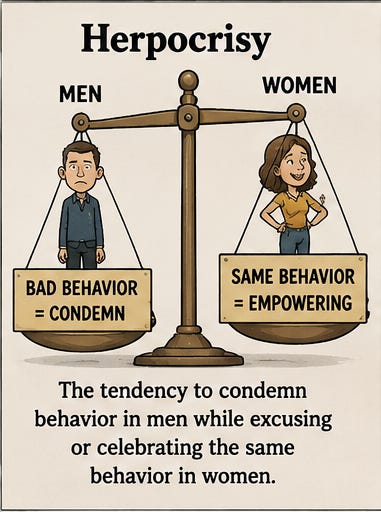
When women do harm, it’s framed as context, trauma, or reaction.

Female wrongdoing is softened.
Male wrongdoing is essentialized.

Equal accountability would mean:

  • Reporting women’s abuse, coercion, and manipulation without euphemism

  • Allowing men to be complex without default suspicion

  • Ending the reflexive framing of women as morally passive

  • Assess harm by power and leverage, not gender.

Only then could we speak honestly about female power—social, emotional, institutional—without pretending it doesn’t exist.


Why This Matters

A culture that refuses to hold women accountable does not elevate women.

It keeps them morally frozen—protected, but not respected.

And it leaves men carrying responsibility without authority, regulation without recognition, and restraint without credit.

Equal accountability wouldn’t erase difference.

It would finally allow truth to replace myth—and adulthood to replace ideology.

Where the Accountability Gap Becomes Impossible to Ignore

The absence of equal accountability isn’t just theoretical. It shows up most starkly in the places where power, fear, and consequences converge—domestic violence systems, family courts, and criminal sentencing.

These are not edge cases.
They are the places where unequal accountability changes lives.


Domestic Violence: When Relational Aggression Is Erased

Domestic violence is often framed as a simple morality play: violent men, endangered women.

But anyone who has worked clinically with couples—or listened carefully to men—knows the reality is more complex.

Relational aggression frequently plays a role in violent episodes:

  • Chronic shaming

  • Threats of abandonment or child loss

  • Provocation followed by moral reversal

  • Escalation without physical contact until a breaking point is reached

None of this excuses violence.
But ignoring it prevents understanding.

Yet domestic violence services are almost entirely gynocentric—built on the assumption that women are victims and men are perpetrators. Services for men are rare, underfunded, or nonexistent. Male pain is treated as either irrelevant or dangerous to acknowledge.

Equal accountability would mean:

  • Acknowledging relational aggression as part of the violence ecosystem

  • Offering services for male victims—not as an afterthought, but as a necessity

  • Providing off-ramps before desperation turns into catastrophe

  • Replacing ideology with reality

A system that cannot see male suffering cannot prevent violence.
It can only react after it’s too late.


Family Courts: Presumed Guilt, Invisible Loss

Family courts operate on one of the most damaging accountability asymmetries in modern life.

Men are routinely presumed responsible—even when they have done nothing wrong.

Fathers are:

  • Separated from their children without evidence of harm

  • Treated as risks rather than resources

  • Required to prove innocence rather than have wrongdoing proven

  • Held accountable for outcomes they do not control

Women, by contrast, are rarely held accountable for:

  • Gatekeeping

  • False or exaggerated allegations

  • Alienation behaviors

  • Using the system itself as leverage

Equal accountability would mean:

  • Evidence-based decisions rather than gendered assumptions

  • Consequences for false allegations

  • Recognition of children’s need for fathers as a developmental necessity

  • Treating parenting as a shared responsibility, not a maternal entitlement

When courts fail to hold women accountable, children lose fathers—not because those men are dangerous, but because the system cannot imagine female misuse of power.


Criminal Courts: The Sentencing Gap No One Wants to Discuss

In criminal courts, the accountability gap becomes numerical—and undeniable.

Women receive significantly lighter sentences than men for the same crimes. Judges routinely cite:

  • Caretaking roles

  • Emotional distress

  • Perceived vulnerability

  • Likelihood of rehabilitation

Men committing identical offenses are treated as more dangerous, more culpable, and more disposable.

Equal accountability would require:

  • Sentencing based on behavior, not gender

  • Acknowledging that harm caused matters more than who caused it

  • Ending the practice of moral leniency rooted in infantilization

Holding women accountable in criminal courts wouldn’t be anti-woman.
It would be pro-justice.


The Throughline

In each of these systems, the same pattern appears:

  • Male power is exaggerated

  • Female power is denied

  • Male suffering is moralized

  • Female suffering is absolutized

This isn’t compassion.
It’s gynocentrism masquerading as justice.

A culture that cannot hold women accountable must distort reality to survive.
And those distortions accumulate—until families break, violence escalates, and trust erodes.

Equal accountability wouldn’t solve every problem.

But it would finally allow us to see clearly—and act like adults in the places where it matters most.

Men Are Good.

Read full Article
See More
Available on mobile and TV devices
google store google store app store app store
google store google store app tv store app tv store amazon store amazon store roku store roku store
Powered by Locals