


MenAreGood
MenAreGood is a channel for men, boys, fathers, new fathers, grandfathers and women who want to learn about men and masculinity.  Are you tired of the false narrative of toxic masculinity?  Did you know there is a huge amount of research that shows the positive aspects of men, boys and fathers?  That is what we focus on here, being a source of good information and also a place to connect.   Join us!
Interested? Want to learn more about the community?
October 03, 2023
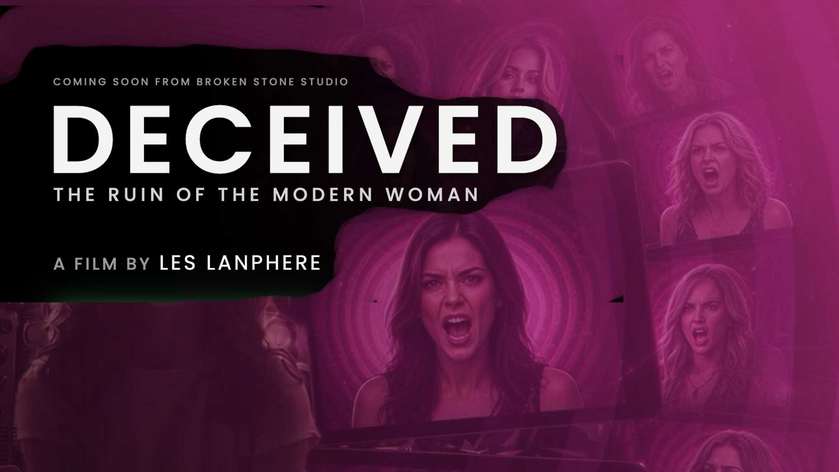
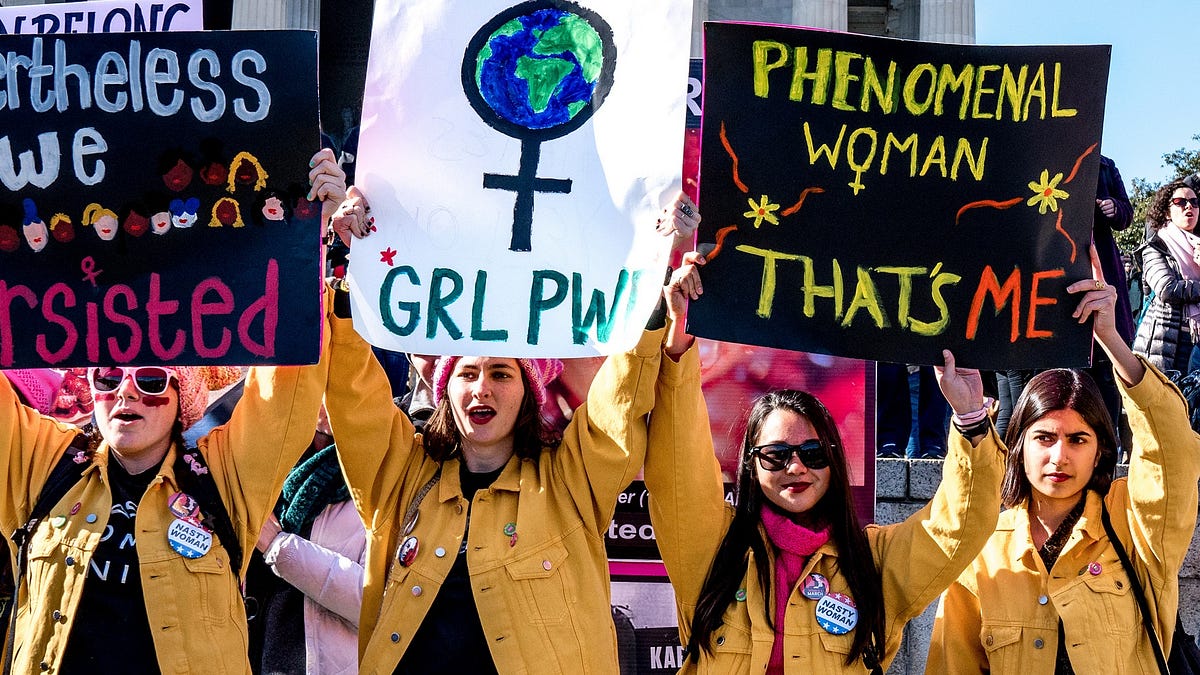
Mistaking the Face for the Mask. and Trying to Tear it Off

Back in 2015 I watched a trailer for an apparent feminist movie about boys and I couldn't resist making a few comments. I think they stand today even more accurately then they did at that time. I'm posting this today due to having heard someone sing the praises of this misandrist movie.

Anyone interested in the research that I refer to can read the 2020 version of David Geary’s Male, Female: The Evolution of Human Sex Differences and also Jaak Panksep's book The Archaeology of Mind. Both are powerful books that tell the truth without a whisper of political correctness.

https://www.amazon.com/Male-Female-Evolution-Human-Differences/dp/143383264X

https://www.amazon.com/Archaeology-Mind-Neuroevolutionary-Interpersonal-Neurobiology/dp/0393705315

00:07:43
Interested? Want to learn more about the community?
What else you may like…
Videos
Posts
Articles
September 03, 2026
False Allegations - What the Numbers Don't Tell Us

We are getting a head start on International Falsely Accused day on Sept 9th!

How many false allegations of sexual abuse are there? We are often told they are extremely rare—perhaps only one to three percent. But those numbers depend on an extraordinarily narrow definition of what qualifies as a false allegation. They usually count only allegations proven to have been deliberately fabricated. Mistaken identity, contaminated memories, misunderstandings, suggestive interviewing, unsupported accusations and even recanted allegations may not be included.

In this conversation, Janice Fiamengo and I speak with Dr. Felicity Goodyear Smith, a physician, forensic medical examiner and professor at the University of Auckland who has studied wrongful allegations for more than three decades. Felicity explains the many different ways an innocent person can be accused, separating deliberate fabrications from allegations that are sincerely believed but untrue.

We also examine how “believe the victim” has ...

01:09:20
July 15, 2026
The Women's Health Narrative Meets the DATA

What if one of the most common claims in health policy simply isn’t true?

We’ve all heard the refrain: women are underfunded, under-researched, and left behind by the medical establishment. It’s repeated so often that most people never stop to ask for the evidence.

In this roundtable, Jack Kammer, Ed Bartlett, Ed Stephens, Jim Nuzzo, and I compare that narrative with the available data. We examine research funding, clinical trial participation, life expectancy, and the unintended consequences of policies that consistently prioritize one sex while neglecting the other.

This isn’t an argument against women’s health. It’s an argument for evidence, fairness, and a healthier future for everyone.

Link to the Feminist pdf that calls for 20 Billion dollars for women’s health!
https://drive.google.com/file/d/1IKEEZMGXtRNxU4n5K_M1d6k2w-ZP_wVT/view

Jim Nuzzo

The Nuzzo Newsletter on Substack http//jameslnuzzo.Substack.com
X: https://x.com/JamesLNuzzo

Jack Kammer

Jacks Substack Men’s ...

00:35:24
July 11, 2026
Mantoon: A Visit to the Doc

A visit to the Doc.

00:00:14

As I stated before women who actually see men’s rights and general fairness as valid, tend to be the mothers of boys. This video is a great example of them pushing back and it is great to see.

August 10, 2026
Feminism Cannot Be Reformed: It Must Be Destroyed Root and Branch

Janice Fiamengo’s new book is out, and this excerpt from the Foreword gives you a pretty good idea of what to expect. Janice goes straight to the heart of feminism and gives ample reasons for its demolition.

This is an important book. I hope you’ll get a copy for yourself—and maybe send one to someone who is even a little bit open to seeing the reality of feminism rather than the equality mask presented by feminists and so much of the media.

https://fiamengofile.substack.com/p/feminism-cannot-be-reformed

Well worth watch it’s good seeing men calling out women’s bull shit when the same women are not use to fair honest responses!

https://www.facebook.com/share/v/1JtTnYLC7K/?mibextid=wwXIfr

post photo preview
The Warrior Within (part one of two)
Robert Moore and the Strength to Act


A note from Tom - Moore’s work is especially important today because so much contemporary discussion of masculinity begins—and often ends—with its shadow side. Feminist theories have given us an increasingly thin picture of men, rich in criticism but poor in any understanding of mature masculine strength. Moore never denied masculinity’s capacity for violence, domination, and destructiveness; he simply understood that these distortions cannot be comprehended without also recognizing the healthy power from which they have fallen.


Of Robert Moore’s four masculine archetypes, the Warrior may be the easiest to not understand.

We hear the word and think of violence. We picture a soldier, a prizefighter, an action hero, or perhaps a swaggering man eager to prove that he is tougher than everyone around him. In our current culture, the Warrior is often treated as the embarrassing remnant of an earlier masculinity—something primitive that civilized men should learn to suppress.

Moore believed that this was a serious mistake.

The Warrior is not simply the part of a man that can fight. It is the capacity to act, to endure, to remain loyal, to protect a boundary, to organize resources, to distinguish what matters from what does not, and to place one’s strength in service to something larger than oneself.

Violence is one possible expression of Warrior energy, but it is not its essence. In fact, the man most eager to use force may be possessed by the Warrior rather than mature in it. And the man who insists that he has no aggression may be no safer. His sword has not disappeared. It has simply gone underground.

Moore’s central insight could be put this way:

The mature Warrior is not the violent man. He is the man who has acknowledged his capacity for force, brought it under conscious discipline, and placed it in service to something beyond himself.

The dangerous man is often the one who either worships the sword or insists he has no sword at all.


There Are No Freelance Warriors

 
The mature Warrior does not serve his own power. He places it in service to something larger.

In a previous post, I explored Moore’s understanding of the King. The King creates order, accepts responsibility, blesses life, and establishes the values of the realm.

The Warrior serves that order.

That relationship is crucial. Warrior energy by itself does not know whether a cause is just. It knows how to identify an enemy, formulate a strategy, accept hardship, mobilize resources, and attack an objective. Those capacities can protect a child or terrorize one. They can defend a community or destroy it. The Warrior supplies power, but it cannot by itself decide what that power should serve.

That is the King’s task.

Moore said that there can be mercenaries without a King, but there can be no true Warriors. The mercenary may be highly skilled. He may be brave, disciplined, and effective. But he fights for money, status, excitement, or whoever happens to be paying. The mature Warrior serves a moral order: a community, a sacred obligation, the vulnerable, the future, or a vision of justice larger than his own appetite.

This is one reason Warrior energy cannot be understood simply as aggression. The mature Warrior does not ask only, “Can I win?” He asks, “Whom do I serve? What am I protecting? Under what authority do I act? What will I refuse to do, even to an enemy?”

Power becomes mature when it kneels.


The Sword Is a Responsibility

 
To possess the sword responsibly is to know both when to draw it and when to hold it still.

Moore spent considerable time discussing the symbolism of the sword.

The sword represents potency, discrimination, and the ability to cut through confusion. It separates one thing from another. It says yes to this and no to that. It establishes a boundary and makes action possible.

But in the traditional ceremony of knighthood, the candidate does not merely seize the sword and begin swinging it. He kneels beneath it. The sword touches him before he carries it.

This means that the Warrior comes under the authority of the sword. His power is governed by a code. He accepts responsibility for how it will be used and what must never be done with it.

The mature Warrior knows that he can cause harm. He does not pretend to be harmless, nor does he advertise his dangerousness in order to frighten others. His power is acknowledged, visible, disciplined, and accountable.

Moore contrasted the sword with the dagger. The sword is openly carried. The dagger is concealed.

The dagger belongs to the person who says, “I am not angry. I would never hurt anyone. I have no interest in power.” Yet the blade appears through sarcasm, procrastination, chronic criticism, manipulation, helplessness, gossip, obstruction, or the perfectly timed wound delivered from behind.

Just because a person does not show a sword does not mean there is no blade.

Denied aggression does not become love. It becomes unconscious aggression.


Permission to Be Powerful

 
A boy’s strength needs guidance, welcome, and a worthy purpose—not shame.

For a boy to develop a healthy relationship with his strength, he needs more than warnings about what not to do. He needs permission to be powerful.

That permission does not mean, “Do whatever you want.” It means, “Your strength is real. It is welcome. It has a place. Let us help you learn what it is for.”

Moore saw the father’s response to the son’s growing power as enormously important. The mature father does not shame the boy for his energy or become threatened when the boy begins to surpass him. He is pleased by the son’s increasing strength. He draws him close, lets him admire, and eventually helps him place that power under discipline and moral purpose.

The shadow father does something very different. He mocks the boy’s awkwardness, treats his energy as dangerous, competes with him, or crushes him before his adult capacities have had time to form. Moore told of a shy, thin adolescent whose father ridiculed his emerging masculinity. The boy later grew into an impressive man, but the wound remained. The father had attacked the unfinished form of something that needed encouragement and time.

Moore pointed to Bull Meechum, the domineering Marine father in Pat Conroy’s The Great Santini, as a vivid portrait of this shadow father. Meechum is a formidable military man—competent and commanding—but emotionally he remains a boy. He can drill, compete, and dominate, but he cannot welcome his son’s emerging strength or bless him as he comes into manhood. What appears to be mature masculinity is largely an impressive uniform wrapped around an uninitiated personality.

A boy who never receives permission to be powerful may grow into a man who fears his own strength. He may become excessively compliant, wait for others to decide, or apologize whenever he takes up space. He may also be vulnerable to sudden eruptions of rage because the Warrior, excluded from ordinary consciousness, returns in a primitive form.

Or he may find someone else to carry his Warrior for him.


The Warrior We Give Away

Moore was particularly good at showing how disowned power becomes projection.

A person who cannot say no may attach himself to someone who says no cruelly. A man who cannot act may idolize a strongman who promises to act for him. A dependent person may wait for a rescuer. A rescuer may go looking for a helpless person and an abusive villain so he can play Sir Galahad. A grandiose leader may surround himself with loyal knights willing to sacrifice themselves for his cause.

In each case, Warrior energy is present. It simply has not been claimed consciously.

This is why Moore refused to define Warrior pathology only as “too much aggression.” Too little conscious Warrior can be equally destructive.

The person who continually says “I can’t” may be projecting agency onto everyone around him. The compulsively nice person may secretly admire people who intimidate and dominate. The chronic complainer has enough Warrior energy to carve at the world but not enough to do anything constructive about it.

Moore’s observation was delightfully blunt: people who complain a great deal often do very little.

Passive aggression is Warrior energy trying to enter through the basement. Procrastination, deliberate incompetence, obstruction, and overcompliance allow a person to attack while preserving the belief that he is innocent.

Imagine a therapist asking a compulsive client to bring in some dreams. The following week the client arrives with forty-two of them. He has obeyed perfectly—and buried the therapist beneath the obedience. The dagger has struck, but no one can accuse him of failing to cooperate.

The healing task is not to make such a man more aggressive. It is to help him become direct.


The Capacity to Act

At its most ordinary and necessary, the Warrior is the part of us that gets things done.

It makes a plan. It identifies the next step. It organizes time and resources. It accepts discomfort. It gets out of bed, makes the telephone call, confronts the problem, keeps the appointment, protects the child, finishes the work, and stays faithful when novelty has disappeared.

The Lover may bring two people together, but the Warrior helps them keep their vows. Attraction is not fidelity. Feeling deeply is not the same as remaining present when a relationship becomes difficult.

The same is true of vocation. Many people can imagine, study, discuss, analyze, worry, and wait. The Warrior acts.

Moore described clients who could spend months exploring their dreams without ever asking what they should do. He began deliberately making room for that question. And he discovered something remarkably practical: people usually already knew.

They knew the conversation they needed to have, the habit they needed to stop, the application they needed to submit, the boundary they needed to set, or the task they had been avoiding. What they lacked was not information. They lacked access to the energy required to act upon it.

Therapy, at that point, could create a space in which the person named the action and received support for the Warrior as he began to do it.

That fits closely with what I have seen in working with men. Insight matters, but insight often needs somewhere to go. Many men begin to move when suffering can be translated into a task—not because action replaces feeling, but because meaningful action gives feeling a form.


The Warrior’s Anesthesia

Warrior energy carries its own anesthesia.

In battle, crisis, emergency, or sustained effort, that can be lifesaving. The Warrior allows a person to continue despite fear, pain, fatigue, and injury. A firefighter cannot stop in the burning building to process every emotion. A father protecting his family may need to act before he has time to feel. A surgeon, police officer, soldier, or trauma worker may temporarily set aside his own reactions in order to do what the situation requires.

But the Warrior does not know when enough is enough.

Moore joked about tanks advancing across the plain until they ran out of gasoline. It is a wonderful image of the workaholic life. The campaign is impressive, the objective is clear, and the forces keep moving—but no one has checked the fuel gauge.

When Warrior energy dominates a personality, a man may not feel tired when he is tired. He may not know he is wounded. He may continue working, fighting, producing, and enduring long after his body or relationships have begun to break down.

The Warrior is not designed to tend the wound. The Magician can recognize it. The Lover can feel it. The King can decide that the welfare of the realm requires rest, repair, or retreat. But the Warrior alone knows only the mission.

This is why Moore never intended any archetype to stand by itself. The pure Warrior is not a complete man. He is a magnificent and terrifying machine.

In Part Two, we will follow Moore’s Warrior through the white, red, and black knights—then examine the Warrior’s relationship to enemies, shadow, admiration, and the difficult passage from raw power to mature service.

Men Are Good.

Read full Article
October 01, 2026
post photo preview
When “Leadership” Means Feminist Activism
How feminist organizations turn school-age leadership into activism—and why parents should know.


The question is not whether girls should lead. It is whether parents are being told what kind of political formation is taking place in their children’s schools.

When we were children, many of us heard the same warning: do not go anywhere with a stranger who offers you candy.

It was never a very complete picture of danger. Most children are not abducted by strangers. Yet the story carried a truth that parents understood: children are impressionable. They can be attracted by something pleasant, familiar, or seemingly harmless without seeing where it may lead.

And yes, they can be drawn to a message that relieves them of responsibility and explains their difficulties as the fault of the opposite sex. In that sense, the feminist message can be its own kind of candy.

I have been looking at feminist organizations that establish clubs and leadership programs for girls and young people. At first I wondered whether there was evidence of an effort to introduce girls to feminism early and bring them into activism. The answer to that questions is yes—but the organizations’ own public materials tell a more specific story than the caricature: they introduce young people to feminist ideas and train them to advocate for particular political causes.

What I found was an organized pathway. It begins in middle and high school. It teaches students a particular way of understanding social problems. Then it gives them training and tools to advocate politically for the causes selected by the organization. A small portion of those tools, often called Guidebooks, is available to the public. The largest portion of their material is withheld. Do you think they might be hiding something?

So it can be framed as public youth activism. But it is not politically neutral. The publicly available material makes it clear that their objectives are to train activists to fight for the feminist cause.

Middle-school girls are at an age when belonging, identity, and moral purpose matter deeply. They are not empty vessels, but they are still forming ideas about who they are, whom they should trust, and how to interpret unfairness. That is why parents should take seriously any program that combines friendship and leadership with a particular political worldview.

Let’s have a look at some of these programs.


Girls Learn International: a pathway, not merely a club

Girls Learn International (GLI), a program of the Feminist Majority Foundation, reports more than 160 clubs in 26 states and 18 countries. Its clubs are for middle- and high-school students, and GLI says they operate in public and private schools as well as community settings. Its own description says that it is building “a movement of informed advocates and a new generation of leaders and activists for social change.”

The organization provides an online Guidebook with more than fifty meeting guides. The public catalog includes titles such as “Allyship in Action,” “In Her Shoes,” “Representing Girlhood,” and “Rethinking the Language We Use.” The detailed lessons require a club login, so ​we really don’t know what is behind that door.

But GLI is very clear about the larger program. Students meet regularly to learn about human rights and gender equity, then are expected to undertake advocacy or fundraising projects. The stated issues include reproductive rights, comprehensive sex education, the Equal Rights Amendment, LGBTQIA+ rights, racial justice, environmental justice, civic engagement, and menstrual equity. There are trainings, a summer activist program, conferences, internships, United Nations opportunities, and a bridge into the organization’s college-level feminist network.

Again, none of this is hidden. The point is not that the group is concealing its goals. The point is that parents may see the word club or leadership and not recognize that the program is also a pipeline into a defined political movement.


NOW is even more explicit

The National Organization for Women’s Campus Action Network offers materials for middle- and high-school students as well as college students. One public activity list gives us a much clearer view of what “young feminist” organizing looks like.

Students are invited to do an “Education Privilege Walk.” They line up, step forward or backward in response to statements about family education, race, language, disability, income, religion, gender, sexual orientation, and safety. When the walk ends, the students who have moved furthest forward—those treated by the exercise as having the greatest privilege—compete for two candy bars. The discussion then asks whether the competition was fair and what “gaps in privilege” need to be bridged.

There is nothing illegitimate about discussing unequal circumstances. Young people should understand that some classmates face burdens others do not.

But the exercise does more than encourage empathy. It gives students a framework: social outcomes are understood through privilege, group identity, and unequal power. That is a political lens. It is not the only lens through which children can be taught to understand the world.

The next activity makes the framework explicit. Each student receives a card naming an “intersectional feminist issue” and is asked to discuss how they would solve it. The approved issue list includes ending the wage gap, abortion access, keeping Planned Parenthood open, ratifying the ERA, comprehensive sex education, transgender military service, immigration policy, and other causes. The same document recommends documentaries such as She’s Beautiful When She’s Angry, Seeing Allred, The Hunting Ground, and Birthright: A War Story.

Those films and causes do not represent every reasonable view of sex, family, women, men, violence, education, or public policy. They represent a particular worldview. The clubs then give students practice in fundraising, campus organizing, publicity, and political action.

It is hard to honestly describe this as merely encouraging girls to “find their voice.” It is training young people to use a feminist voice in public life.


Other organizations say the same thing in different language

GLI and NOW are not unusual.

Girl Up, a program launched by the United Nations Foundation, calls advocacy its tool for “social, political, and economic change.” It supplies clubs with advocacy resources around gender-based violence, sexual and reproductive health and rights, menstrual equity, education, and other issues. It reports thousands of clubs worldwide.

Advocates for Youth publishes a 64-page Youth Activist Toolkit. It teaches young people how to define a problem, identify “constituents” and allies, analyze decision-makers, build collective power, shape a public narrative, and run campaigns. Its examples include reproductive justice and ending stigma around abortion.

Girls for Gender Equity is more candid still. In a public program model, it says its work is grounded in Black feminist pedagogy, intersectionality, social justice, and an anti-oppression analysis. It recruited young women and gender-nonconforming youth to develop policy recommendations for New York City around education, health, anti-violence work, criminal justice, and other systems. One may agree with its aims. But no parent should mistake the program for neutral civic education.

​I suppose these organizations might provide some value to girls. They ​might encourage confidence, public speaking, friendship, service, ​and attention to real hardships​.

But those benefits do not erase the political purpose. Leadership is not neutral when the organization chooses the causes, the interpretive lens, the reading and viewing lists, the vocabulary, and the campaigns.


What about boys?

There are programs for boys. I found groups such as A Call to Men, Coaching Boys Into Men, Equimundo, and MenEngage. They often teach boys about consent, relationship behavior, violence prevention, “healthy masculinity,” and being allies in gender equality.

Some of that work may be useful.

Yet there is a striking difference in emphasis. Girls’ programs are often organized around girls’ leadership, girls’ rights, girls’ voices, and girls’ advocacy. Boys’ programs more often begin with what boys must not become: violent, sexist, dominating, unsafe, or emotionally closed. They are frequently asked to become allies to a movement built around others’ needs.

I have not found a comparably large and well-developed network of school clubs that begins with this message: boys and men have inherent dignity; their struggles matter; their gifts matter; their health, education, fatherhood, and safety deserve attention; and they can organize to address the places where boys and men are doing badly.

That absence is worth noticing.


The question parents should ask

The point is not to pull girls out of every club, or to frighten parents with exaggerated claims. It is to ask the same questions we should ask of any organization seeking access to children.

What is this group teaching? What assumptions does it make about men and women? Which social problems does it emphasize, and which ones does it ignore?​ What films, readings, slogans, and activities shape the ​young girl’s understanding of men, women, and social problems? Is the purpose service, discussion, leadership, political advocacy—or all of the above?

And perhaps most importantly: are parents told the answer plainly?

Both boys and girls should be encouraged to think, lead, speak, and act. But neither should be quietly handed a ready-made ideological map and told that it is simply compassion, empowerment, or equality.

Children deserve to learn how to think before they are trained to become advocates for someone else’s conclusions.


A word about the money

The funding picture is large, even though the precise youth-program share is difficult to isolate. Public Form 990 filings show that the Feminist Majority Foundation reported roughly $8 million in revenue in its most recent filing, while Girls for Gender Equity reported roughly $3 million. The United Nations Foundation—the parent organization of Girl Up—reported about $77 million in revenue. Those three organizations alone represent nearly $90 million in annual organizational revenue.

That is not a claim that $90 million is spent on girls’ clubs. It is not. The United Nations Foundation supports many projects besides Girl Up, and the Feminist Majority Foundation does much more than Girls Learn International. The other organizations discussed here have separate budgets as well. No honest person can turn their parent organizations’ full revenue into a dollar figure for youth feminist advocacy. But the responsible conclusion is still clear: this is not a shoestring effort. It is a well-funded ecosystem with national and international reach, professional staff, curricula, conferences, networks, and access to schools and public institutions.

Imagine if even a small portion of that kind of sustained support were devoted to boys. Not to telling them they are dangerous or defective, and not to making them auxiliary members of someone else’s movement. Imagine school clubs, mentors, and materials that told boys that masculinity is honorable; that courage, responsibility, protection, competence, and leadership are gifts to be developed; that boys’ pain and losses matter; and that they have inherent value simply as human beings. Imagine a generation of boys being invited to lead from strength and purpose rather than being taught, first of all, to apologize for who they are.

Read full Article
September 28, 2026
post photo preview
The King Within
Robert Moore and the Archetype That Blesses Life


If you want to understand Robert Moore’s four archetypes of mature masculinity, begin with the King.

Not because the King dominates the Warrior, Magician, and Lover, but because he provides the center around which their powers can be ordered. Without that center, the Warrior may fight without knowing what is worth defending. The Magician may understand everything while believing in nothing. The Lover may become overwhelmed by everything he feels and desires.

The King gives these powers direction.

The word itself may cause trouble. We hear “King” and may think of monarchy, dominance, privilege, patriarchy, or a man who expects everyone else to obey him. But that is almost the opposite of what Moore meant by the mature King. The King is not the man at the top demanding that the world revolve around him. That is the inflated ego masquerading as the King.

The true King creates order, accepts responsibility, blesses life, and uses his power to help others grow.

That difference is the heart of Moore’s teaching.


The Center Is Within—but It Is Not Me

Moore believed that the psyche contains deep organizing patterns that Jung called archetypes. They are not roles we invent or costumes we decide to wear. They are fundamental human potentials that shape how we experience power, love, struggle, knowledge, purpose, and relationship.

For Moore, the four major patterns of mature masculinity were the King, Warrior, Magician, and Lover. Each creates a different kind of psychological space. The Warrior confronts and acts. The Magician understands and transforms. The Lover connects and appreciates. The King brings order, meaning, blessing, and generativity to the whole.

But the human ego is not the archetype.

This was a point Moore made repeatedly because so much psychological and political trouble begins when a person confuses the two. The ego touches an enormous transpersonal energy and concludes, “I am that.” A leader begins to believe he is the nation. A father assumes that his authority makes him the source of truth. A therapist accepts a client’s idealization and starts to imagine himself uniquely wise. A successful man comes to believe that the people around him exist primarily as an audience for his greatness.

Moore compared this kind of inflation to plugging a 110-volt coffee maker into 220,000 volts. The ordinary personality cannot contain archetypal voltage. It may briefly look powerful, but underneath there is anxiety, brittleness, and fear of exposure.

His alternative could be summarized in one wonderful sentence:

“The center is in here, and it is not me.”

The center is not a political leader, a father, a spouse, a therapist, or some other admired person. But neither is it my own conscious ego. Psychological maturity comes from forming a relationship with that deeper center without claiming to be it.

That is what gives the mature King both strength and humility.


The King Creates a Cosmos

One of the King’s primary functions is to bring cosmos out of chaos.

By “cosmos,” Moore did not mean rigid control or a world in which everything is forced into place. He meant a living order in which things can develop according to their own nature. The mature King does not need to micromanage every detail. He creates and protects the conditions in which life can flourish.

Moore sometimes used the image of the King dancing the world into being. He discussed the film King David, in which David dances into Jerusalem after the death of Saul, the shadow King. Moore insisted that this was not merely a war dance or an exhibition by a triumphant man. Archetypally, it was a cosmos dance. The King was manifesting the new order before his people.

Elsewhere, Moore spoke of the King trying to “dance Atlantis back to the surface.” I love that image. The mature King is not imposing a lifeless plan upon the world. He senses an order and possibility already waiting beneath the surface and helps bring it into being.

We can see this capacity in ordinary life.

A good father creates a home with enough stability that his children can safely experiment, fail, and become themselves. A good teacher gives a class direction without crushing curiosity. A good supervisor establishes standards while helping employees develop their own judgment. A community leader looks at disorder and asks what structures will allow people to cooperate, contribute, and thrive.

This is guidance without control.

The shadow King cannot do this. Because he has no secure relationship to an inner center, he tries to become the center himself. Everything must pass through him. Information, power, initiative, and approval are centralized. Other people’s independence feels like rebellion.

The mature King asks, “What does this person need in order to grow?”

The shadow King asks, “How do I keep this person dependent upon me?”


The King Sacrifices for the Realm

Moore was emphatic that the essence of Kingship is not privilege. It is sacrifice.

The King carries responsibility for a realm larger than himself. He may enjoy authority and honor, but those exist because he has accepted an obligation to serve and protect the whole. Power and sacrifice belong together.

This gives us a simple way to distinguish mature authority from its counterfeit. When a price must be paid, who pays it?

The mature King is willing to bear the cost required by his responsibility. The shadow King retains the language of sacrifice but selects someone else as the victim. Moore captured it with a darkly comic question: “Who’s the goat?”

The shadow King says, in effect, “Yes, a sacrifice is necessary—and I have decided to sacrifice you.”

We see this in families, workplaces, institutions, and governments. Leaders protect their position while transferring the consequences of their decisions to those with less power. Fathers demand sacrifices from their families that they would never make themselves. Organizations preserve the comfort and reputation of those at the top by treating people below them as expendable.

The mature King understands stewardship. The people, resources, traditions, and institutions placed in his care are not simply his possessions. They have value beyond their usefulness to him.

The shadow King knows only disposable people. He uses them while they serve his needs and discards them when they do not.


The Blessing

Of all Moore’s ideas about the King, his teaching about blessing may be the most moving.

The King sees another person, recognizes what is trying to emerge in him, and offers a blessing that strengthens it. This does not have to involve religious language or a formal ceremony. A blessing may be conveyed through attention, delight, encouragement, confidence, or the simple experience of being taken seriously.

The blessing says:

I see you. You have value. There is something in you worth developing. You have a place in this world.

Moore believed that fathers have a “natural priesthood” in mediating this blessing to their children. A father does not create the child’s worth. He bears witness to it and helps the child experience it as real. For a son, the father’s blessing can help consolidate a secure masculine identity. For a daughter, it can affirm her worth and strengthen her capacity to relate to the masculine without fear or submission.

Sadly, many children never receive that blessing.

Moore argued that there is no emotionally neutral alternative. If the blessing is absent, the child experiences something closer to a curse. He may grow up with a chronic sense that he has no right to be here, that his gifts are insignificant, or that his very presence is burdensome. Depression, purposelessness, compulsive behavior, and substance abuse may become attempts to live with that absence.

Moore’s image of the shadow King is unforgettable. This King may sit on an impressive throne, dressed in flowing robes and a jeweled crown. But when you approach him, he yawns. He looks bored. He may not look at you at all.

That is the inner King mediated by a father who could not delight in his child.

The true King looks at you and sees possibility.


When a Son Begins to Shine

The decisive test of the father’s King energy comes when the child begins to develop power of his own.

Moore described the shadow father as responding to the son’s emerging confidence by “calling in an airstrike.” The son shows a talent, receives praise, speaks with confidence, attracts attention, or begins to think independently. Instead of feeling pride, the father experiences the son’s growth as a threat.

The unspoken message is: “If you grow, I lose.”

The attack may take many forms. The father ridicules the son at the moment he is most pleased with himself. He points out the flaw in every achievement. He competes with him, humiliates him, withdraws affection, or reminds him who is still in charge. The father may believe he is keeping the boy humble when he is actually keeping him small.

This dynamic is not limited to fathers and sons. It occurs whenever someone with power experiences another person’s development as a loss of status. It can appear between mothers and daughters, supervisors and employees, teachers and students, mentors and protégés, or leaders and their potential successors.

That leads to what may be the clearest measure of mature power:

What happens inside us when another person begins to flourish?

The mature King experiences that growth as the fulfillment of his stewardship. The shadow King experiences it as a threat to his throne.


The Tyrant and the Weakling

Moore’s archetypes are never divided into a simple healthy side and one unhealthy side. Their shadows tend to form a polarity.

One pole of shadow Kingship is the Tyrant. The Tyrant dominates, humiliates, exploits, and attacks emerging life. He must remain the only genuine center of power. He therefore surrounds himself with dependents, admirers, and people too divided or frightened to challenge him.

Yet the Tyrant is not strong. His domination grows out of insecurity. He knows, at some level, that he is masquerading as the true King. That is why he requires constant confirmation and reacts so violently to criticism, independence, or ridicule.

The other pole is the Weakling, who avoids responsibility and waits for someone else to provide order. The Weakling may appear modest or helpless, but Moore saw a hidden grandiosity in dependency. The inner position can be: “I would be a King, but the price is too high. Someone else should study, decide, work, risk, and sacrifice for me.”

This can become manipulative. Helplessness recruits others to carry the responsibilities the person refuses to claim.

The Tyrant and Weakling often find one another. One needs subjects; the other wants someone else to take charge. Together they create a system in which neither becomes mature.

Moore’s description of codependency was characteristically blunt: it is an agreement that neither person will grow up.


The King and the Queen

The mature King does not rule alone.

At the deepest level of the psyche, Moore saw the King and Queen as a royal pair. Mature relationship requires two genuine centers of power, each capable of blessing and strengthening the other. A healthy man does not need a diminished woman in order to feel like a man. A healthy woman does not need a diminished man in order to feel powerful.

The shadow King does not want an empowered Queen. He wants consorts—people who admire, serve, soothe, and orbit him without possessing a comparable center of their own. The shadow Queen has the same difficulty with an empowered King.

When the royal couple fails, families often form triangles. A mother dissatisfied with the father may recruit a son as her champion or emotional partner. A father dissatisfied with the mother may draw a daughter into a similar role. The child receives a kind of special status, but at a terrible cost: he or she is pulled out of the proper generational place and enlisted in an adult struggle.

Moore joked that what the world might need was “celestial mythic marital therapy”—Zeus and Hera learning to get along. Behind the humor was a serious insight. Human beings have imagined powerful Kings and Queens for millennia, but we have had much more trouble imagining the two fully empowered and mutually blessing one another.

The task is not for one to triumph over the other. It is for both to become whole enough to share power.


There Are No Warriors Without the King

Moore’s four archetypes are distinct, but they are meant to work together.

This becomes especially important when we consider the Warrior. Warrior energy gives us discipline, courage, decisiveness, endurance, and the ability to confront what must be confronted. But force by itself is morally directionless. It can serve justice or cruelty, protection or conquest.

The King provides the transpersonal values that tell the Warrior what is worth defending.

Moore put it beautifully: “There are mercenaries without the King, but there are no Warriors.”

A mercenary fights for reward, excitement, status, or whoever happens to be paying. The mature Warrior serves a moral realm—a community, a sacred obligation, the vulnerable, the future, or a vision of justice that reaches beyond personal gratification.

People sometimes speak of the Rainbow Warrior. Moore reminded them that there can be no Rainbow Warrior without a Rainbow King.

Without the King, strength easily becomes aggression. With the King, strength becomes service.


What Are You Doing With Your King Projection?

The final lecture in Moore’s series turned toward a practical problem. Premodern societies had visible kings, sacred rituals, and religious worlds in which royal projections could be lodged. Modern people killed or deposed their kings and often congratulated themselves for having outgrown the need.

But eliminating monarchy did not eliminate the archetype.

The King projection simply found new homes: presidents, political movements, celebrities, therapists, religious leaders, romantic partners, and sometimes the ego itself.

Moore therefore did not ask whether we project the King. He asked, “What are you doing with your King projection?”

That question matters because idealization contains a dangerous ambivalence. When we elevate a human being to godlike status, we inevitably begin to hate him for failing to be God. Adoration can turn rapidly into rage. The person who was expected to save us becomes the person blamed for every disappointment.

Moore’s goal was not to destroy the projection but to recognize it, withdraw it from its human carrier, and form a conscious relationship with its archetypal source.

He suggested several ways of doing this.

We can study the myths, rituals, images, and history of kingship. We can examine the lives of men who carried King energy in both its mature and shadow forms. We can pay attention to dreams. We can use prayer or religious ritual if those traditions remain meaningful to us. Prayer, Moore joked, is helpful with grandiosity because “it is kind of hard to think you’re God if you’re talking to it.”

He also recommended Jung’s practice of active imagination: entering into a deliberate inner dialogue with an image or figure from the unconscious.

Imagine seeking the inner King. Where does he live? Can you find the room? Is the throne empty? Does the King welcome you, ignore you, threaten you, or look bored? What does he see in you? What does he ask of you? What blessing have you been seeking from an earthly father, teacher, leader, or partner that no human being has been able to provide?

Moore did not present this as make-believe or as theology that one must accept. He treated it as an experiment in psychological experience. “The plumbing’s there,” he said. “The wiring’s there.” See what you encounter.


The Gift of Vocation

The blessing of the King does more than help a person feel good about himself. It gives value, direction, and vocation.

Moore spoke of the successful lawyer who earns plenty of money but remains chronically depressed. Achievement has provided status but not meaning. The person may then turn to cocaine, alcohol, sexual conquest, spending, or relentless work in an attempt to produce the vitality that success failed to deliver.

The King connects us with values larger than ourselves. It is the part of the psyche that asks what our life is for. It gives us concern for the public world, for justice, for children we may never meet, and even for the rainforest. Without some connection to that larger order, everything is reduced to private appetite and personal advantage.

The King gives us a Vocation with a capital V.

That does not mean everyone must become famous, wealthy, or powerful. Vocation may be expressed in raising a child well, caring for a piece of land, practicing a craft with integrity, protecting a community, teaching, healing, building, or quietly keeping faith with a responsibility that matters.

The question is not, “How important do I look?”

It is, “What has been placed in my care?”


The King Is Still Needed

Our culture is rightly suspicious of domination. We know too much about tyrants, abusive fathers, corrupt institutions, and leaders who demand sacrifice from everyone but themselves. But Moore warned against confusing the pathology of masculinity with masculinity itself.

The shadow of the King is not evidence that we should live without King energy. It is evidence of what happens when that energy remains unconscious, inflated, wounded, or absent.

We need men—and women—who can create order without becoming controlling, exercise authority without needing worship, accept sacrifice rather than selecting victims, and experience the growth of others as a source of joy.

We need fathers who look at their sons and daughters and say, in a hundred ordinary ways, “I see you. I delight in you. Your gifts do not diminish me. Go become who you are.”

We need leaders who do not make themselves the center of the realm. We need mentors who prepare their students to surpass them. We need men whose strength is governed by a moral purpose and whose care does not become control.

Most of all, we need to stop asking other human beings to carry the full weight of our longing for the King.

Moore’s teaching returns us to that central paradox:

The center is within, but it is not the ego.

When a man knows this, he no longer needs the world to kneel before him. He can use his strength to create order, bear responsibility, protect what has value, and bless the life growing around him.

That is the King within.

Men Are Good.

Read full Article
See More
Available on mobile and TV devices
google store google store app store app store
google store google store app tv store app tv store amazon store amazon store roku store roku store
Powered by Locals