



MenAreGood
MenAreGood is a channel for men, boys, fathers, new fathers, grandfathers and women who want to learn about men and masculinity.  Are you tired of the false narrative of toxic masculinity?  Did you know there is a huge amount of research that shows the positive aspects of men, boys and fathers?  That is what we focus on here, being a source of good information and also a place to connect.   Join us!
Interested? Want to learn more about the community?
December 27, 2024
Why I Am the Antifeminist Psychiatrist - Hannah Spier, M.D.

This is a very important post from psychiatrist Hannah Spier that focuses on the pathology she has seen in female patients that she attributes to feminism. It takes a considerable amount of courage to take a stand that opposes the majority of the feminist drenched mental health mob. Thank you Hannah!

Why I Am the Antifeminist Psychiatrist

https://hannahspier.substack.com/p/why-i-am-the-antifeminist-psychiatrist

Interested? Want to learn more about the community?
What else you may like…
Videos
Posts
Articles
September 03, 2026
False Allegations - What the Numbers Don't Tell Us

We are getting a head start on International Falsely Accused day on Sept 9th!

How many false allegations of sexual abuse are there? We are often told they are extremely rare—perhaps only one to three percent. But those numbers depend on an extraordinarily narrow definition of what qualifies as a false allegation. They usually count only allegations proven to have been deliberately fabricated. Mistaken identity, contaminated memories, misunderstandings, suggestive interviewing, unsupported accusations and even recanted allegations may not be included.

In this conversation, Janice Fiamengo and I speak with Dr. Felicity Goodyear Smith, a physician, forensic medical examiner and professor at the University of Auckland who has studied wrongful allegations for more than three decades. Felicity explains the many different ways an innocent person can be accused, separating deliberate fabrications from allegations that are sincerely believed but untrue.

We also examine how “believe the victim” has ...

01:09:20
July 15, 2026
The Women's Health Narrative Meets the DATA

What if one of the most common claims in health policy simply isn’t true?

We’ve all heard the refrain: women are underfunded, under-researched, and left behind by the medical establishment. It’s repeated so often that most people never stop to ask for the evidence.

In this roundtable, Jack Kammer, Ed Bartlett, Ed Stephens, Jim Nuzzo, and I compare that narrative with the available data. We examine research funding, clinical trial participation, life expectancy, and the unintended consequences of policies that consistently prioritize one sex while neglecting the other.

This isn’t an argument against women’s health. It’s an argument for evidence, fairness, and a healthier future for everyone.

Link to the Feminist pdf that calls for 20 Billion dollars for women’s health!
https://drive.google.com/file/d/1IKEEZMGXtRNxU4n5K_M1d6k2w-ZP_wVT/view

Jim Nuzzo

The Nuzzo Newsletter on Substack http//jameslnuzzo.Substack.com
X: https://x.com/JamesLNuzzo

Jack Kammer

Jacks Substack Men’s ...

00:35:24
July 11, 2026
Mantoon: A Visit to the Doc

A visit to the Doc.

00:00:14
August 10, 2026
Feminism Cannot Be Reformed: It Must Be Destroyed Root and Branch

Janice Fiamengo’s new book is out, and this excerpt from the Foreword gives you a pretty good idea of what to expect. Janice goes straight to the heart of feminism and gives ample reasons for its demolition.

This is an important book. I hope you’ll get a copy for yourself—and maybe send one to someone who is even a little bit open to seeing the reality of feminism rather than the equality mask presented by feminists and so much of the media.

https://fiamengofile.substack.com/p/feminism-cannot-be-reformed

Well worth watch it’s good seeing men calling out women’s bull shit when the same women are not use to fair honest responses!

https://www.facebook.com/share/v/1JtTnYLC7K/?mibextid=wwXIfr

July 02, 2026
From Shooter to Heroine: The Glorification of Feminist Violence

I recently joined Hannah Spier, Janice Fiamengo, and Jim Nuzzo for a fascinating discussion about one of our culture’s most striking double standards: why violence by women is so often explained, excused, or even celebrated, while violence by men is treated very differently. We examine Valerie Solanas, the attempted murder of Andy Warhol, the SCUM Manifesto, and the film I Shot Andy Warhol, asking what the celebration and romanticizing of Solanas reveals about gynocentrism, empathy, and cultural bias. I think you’ll find it both thought-provoking and eye-opening.

10 hours ago
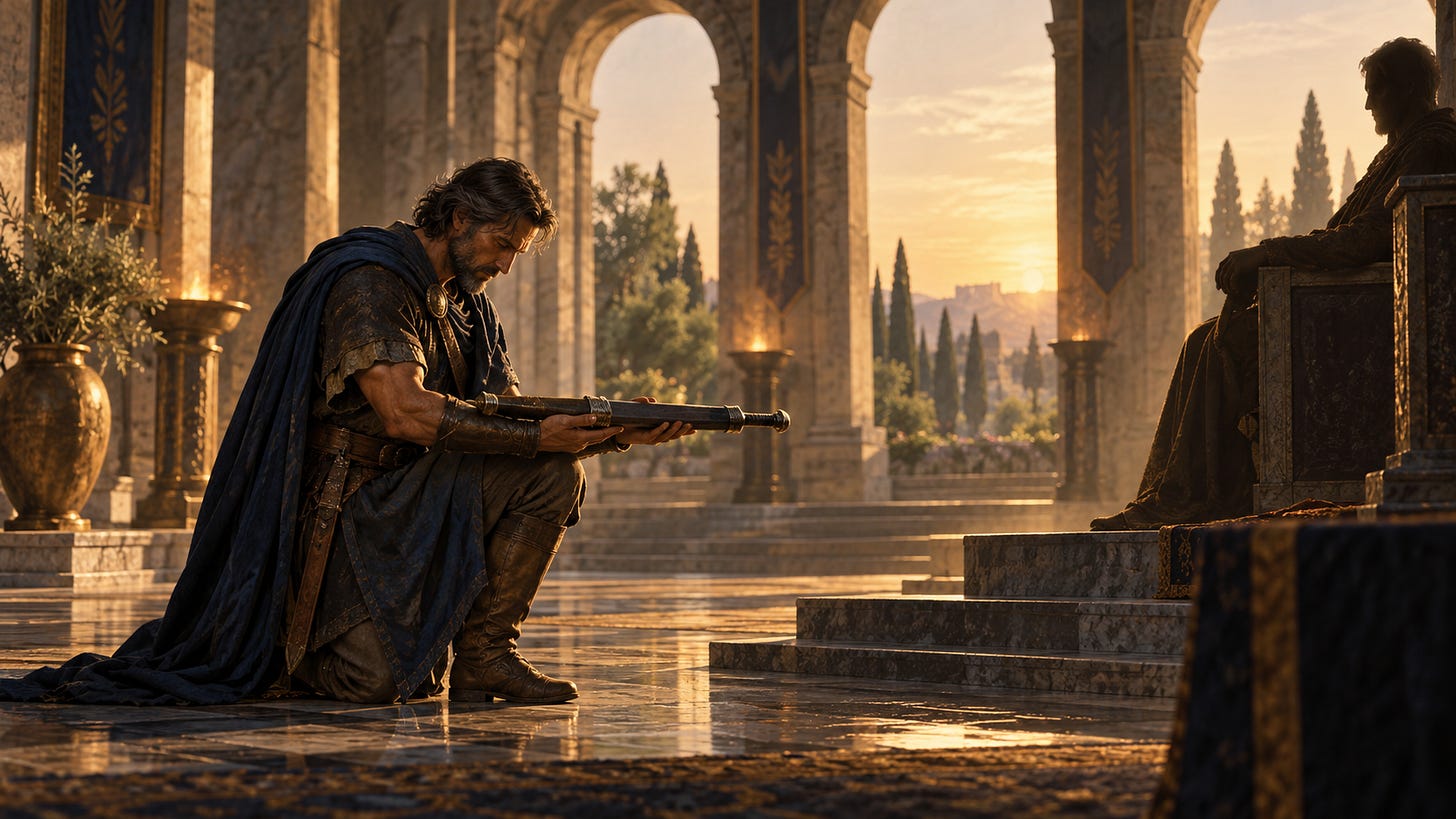
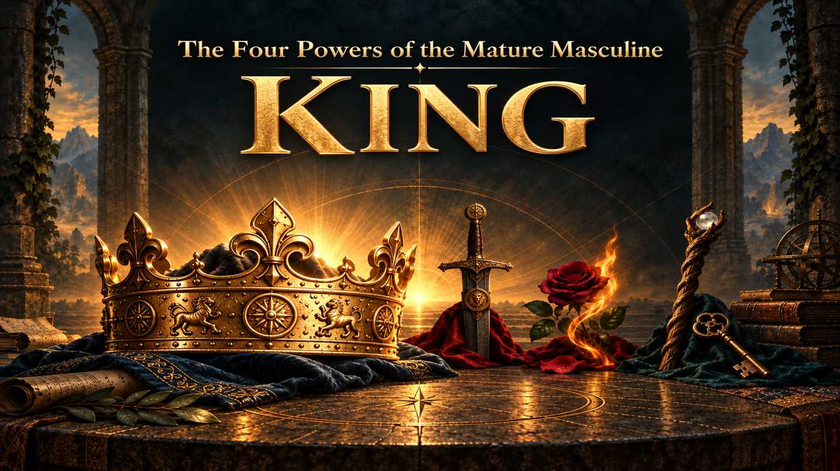
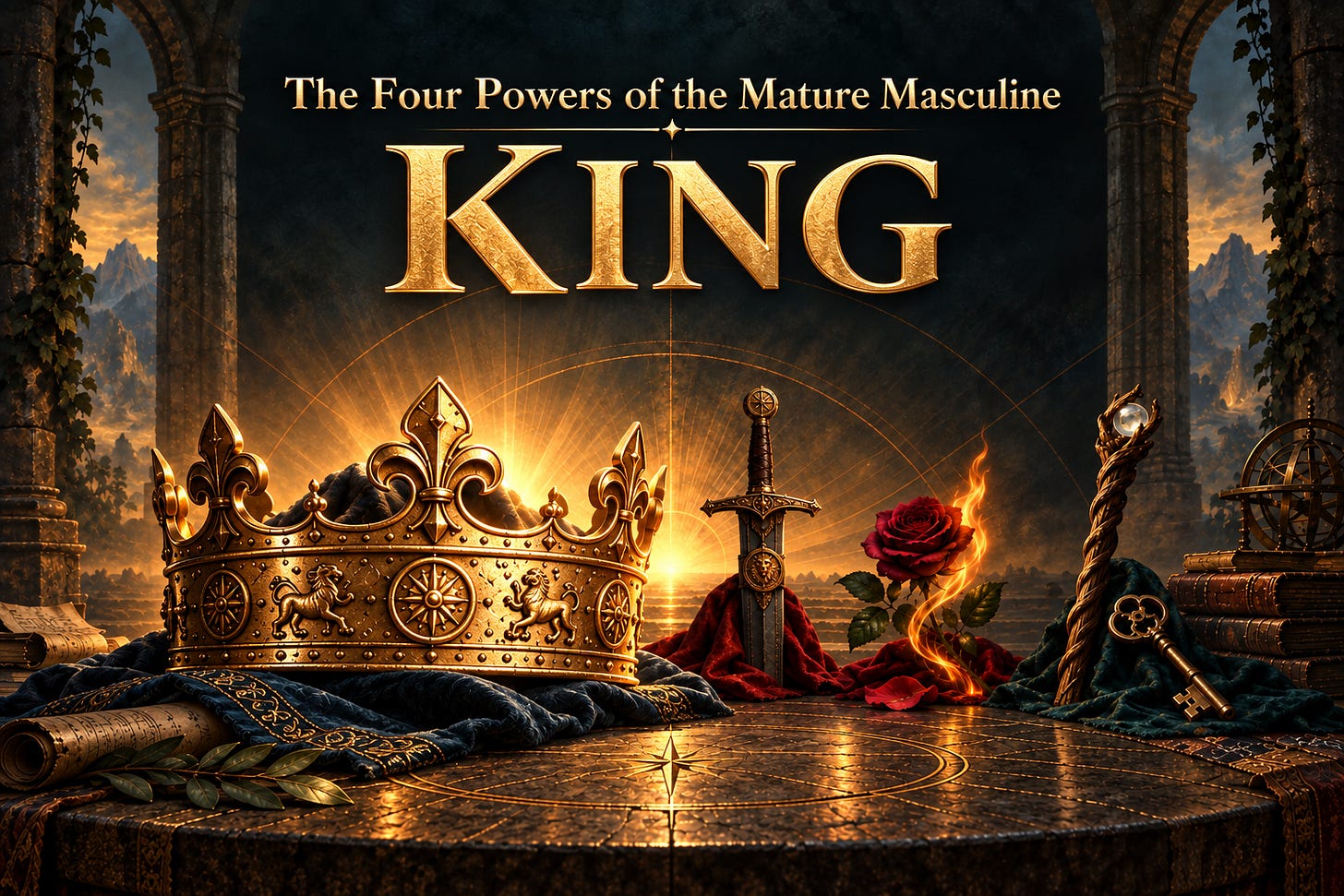
The Four Powers of the Mature Masculine
An introduction to Robert Moore’s King, Warrior, Magician, and Lover


I met Robert Moore only once, but I fell in love with him.

That may sound like an unusual way to introduce a psychological theorist. But anyone who heard Moore teach will probably understand what I mean. He had a strong Southern drawl, an enormous personality, and a gift for taking difficult psychological ideas and making them feel immediate and alive. He would move from Carl Jung to an old myth, from a clinical observation to a story about ordinary life, and then—often enough—to a reference to Jack Daniel’s.

You never had the sense that the archetypes were dry concepts to him. They were living realities. He saw them at work in families, marriages, therapy offices, universities, churches, corporations, political movements, and the private struggles of men trying to grow up.

Many years ago, I purchased a collection of Moore’s audiotapes on the masculine archetypes. I listened to them repeatedly and found them profoundly helpful, both personally and in my work as a psychotherapist. The books Moore wrote with Douglas Gillette—particularly King, Warrior, Magician, Lover—present the basic architecture of the model. But the recordings are different.

Much of this series draws from approximately twenty-seven hours of recordings from Moore’s graduate classes on the masculine archetypes. In those classes he had room to think aloud, answer questions, wander down unexpected paths, tell stories, make jokes, and show how the different parts of his theory fit together. The result is more personal, expansive, and sometimes more revealing than the published books.

These articles are my attempt to introduce that richer Moore to a new audience.

Before we meet the King, Warrior, Magician, and Lover, however, we need to understand what Moore meant by an archetype.


What Is an Archetype?

An archetype is not a personality type.

The four archetypes are not four categories into which men can be sorted. This is not a masculine version of a personality quiz in which you discover that you are “a Warrior” while your friend is “a Lover.” Nor are archetypes prescribed social roles or stereotypes telling men how they are supposed to behave.

An archetype is a deep human pattern—an organizing potential within the psyche that shapes how we perceive, experience, and express a particular form of energy.

The King organizes, blesses, and creates order.

The Warrior acts, protects, establishes boundaries, and gets difficult things done.

The Lover connects, values, grieves, delights, and experiences the world through the senses.

The Magician observes, interprets, understands, and guides transformation.

Every man carries the potential for all four.

We may have easy access to one and very little access to another. One may be welcomed by our family while another is shamed. We may express an archetype maturely in one situation and fall into its shadow in another. We may be disciplined and courageous at work yet unable to establish a boundary with someone we love. We may be a wise guide to other people but incapable of applying the same wisdom to ourselves.

The goal is not to determine which archetype we are. The goal is to develop a conscious relationship with all four and gradually bring their powers into cooperation.

Moore was also careful to distinguish between connecting with an archetype and identifying with it. A man can connect with King energy, but he is not the King. He can draw upon the Warrior, but he is not the archetypal Warrior. These energies are larger than the individual ego.

When a man receives their power while remaining aware of his human limits, the archetype can enlarge his life. But when his ego begins to believe that it is the archetypal power, inflation follows. He may become convinced that he alone knows the truth, that ordinary rules do not apply to him, or that other people exist to admire, obey, or serve him.

Healthy contact with an archetype gives us power. Identification with it makes us grandiose.

Maturity therefore requires more than awakening these energies. It requires learning to contain, balance, and steward them.


Psychology’s Missing Question

As far as I know, Robert Moore is the only major psychological theorist who attempted such a sustained and systematic examination of the mature masculine.

Psychology has produced libraries about what is wrong with men. It has studied male aggression, violence, narcissism, emotional restriction, risk-taking, sexual pathology, criminality, and failure. Some of that work is necessary and valuable. Men, like women, have shadows that must be understood.

But pathology is not a vision of maturity.

It is one thing to tell men what they must stop doing. It is quite another to help them understand what they might become.

Where is the psychological literature describing mature male authority that does not become domination? Where is the account of aggression transformed into courage, discipline, and protection? Where do we find male sexuality joined with wonder, grief, tenderness, and appreciation? Where is knowledge transformed into initiation, healing, and service?

Moore asked these questions.

Instead of beginning with the assumption that masculine power itself was the problem, he asked what each power looked like when it was immature, wounded, inflated, or properly developed. He did not deny the destructive possibilities within men. On the contrary, he examined them closely. But he refused to confuse the shadow of masculinity with masculinity itself.

That distinction is badly needed today.

Years ago, I raised Moore’s work with a group of members of Division 51 of the American Psychological Association—the division devoted to the psychological study of men and masculinities. Not one person present was familiar with it.

I found that astonishing. Here was an extensive psychological model devoted to mature masculine development, and it was largely unknown within the professional organization created to study men.

Perhaps it should not have been surprising. Our culture has become much better at describing harmful male behavior than at giving boys and men a positive image of what their strength, aggression, sexuality, authority, and intelligence are for.

But we cannot help boys grow into mature men if we possess no serious image of mature masculinity.

Moore gave us one.


Four Powers, Not Four Boxes

Moore’s model begins with four basic configurations of masculine energy.

The King is the center that creates order. He offers blessing, holds a vision of the whole, calms chaos, and uses his authority to help others develop. His mature power is not control for its own sake but generativity—the capacity to create a world in which life can flourish.

The Warrior brings disciplined action. He recognizes enemies, establishes boundaries, endures hardship, and places his strength in service of something beyond comfort or self-interest. The mature Warrior is not violent for the pleasure of violence. He knows what must be protected and what is worth sacrificing for.

The Lover awakens us to value. He experiences beauty, pleasure, sorrow, sexuality, nature, music, friendship, and the astonishing particularity of another person. The Lover is the part of us that knows why the world is worth protecting in the first place.

The Magician understands the map. He sees beneath appearances, breaks through denial, interprets symbols, recognizes which energy a situation requires, and helps people move through transformation. At his highest level, knowledge becomes healing and stewardship.

None is sufficient alone.

The King without the Magician may become certain of his own authority and unable to recognize his self-deception. The Magician without the King may see through everything but believe in nothing. The Warrior without the Lover may become brutal, while the Lover without the Warrior may be unable to protect what he loves. The King needs the Warrior’s capacity to act, the Lover’s capacity to value, and the Magician’s capacity to discern.

Maturity does not eliminate the tensions among these powers. It helps us hold them consciously so that each can correct and complete the others.


Every Archetype Has a Shadow

Moore’s work is not a celebration of masculine power without qualification. Each archetype has shadow forms.

The King’s authority may inflate into tyranny or collapse into weakness. The Warrior’s discipline may become cruelty or turn inward as masochistic self-destruction. The Lover’s capacity for connection may become addiction and boundarylessness or disappear into numbness and impotence. The Magician’s insight may become manipulation, cynical detachment, or the denial of knowledge and responsibility.

These opposites are often closer than they appear. The Tyrant may conceal a terrified Weakling. The man who dominates others may feel inwardly powerless. The compulsive Lover may alternate between overstimulation and deadness. The detached Magician may secretly depend upon others to carry the emotional life he refuses to enter.

Moore’s model is therefore not a simple theory of four positive qualities. It is a dynamic system filled with developmental levels, opposing shadows, characteristic inflations, inner conflicts, and relationships among the archetypes.

His understanding also evolved. In the lectures, Moore sometimes questioned earlier formulations, distinguished one archetype from another more carefully, and explored ideas that never received the same space in his books. He was building a map of enormous territory, and he knew the map was unfinished.

This series cannot offer an exhaustive account of that territory. These articles cannot contain the complexity of twenty-seven hours of teaching, much less the larger body of Moore’s work.

What follows is an overview—a way of opening four doors.


The Boy, the Hero, and the Man

One of Moore’s most important distinctions was between boy psychology and mature masculine psychology.

The boy is not bad. Boyhood contains imagination, daring, play, idealism, and enormous potential. But the boy’s energies are not yet organized around adult responsibility. They easily become grandiose: the fantasy that he is invulnerable, uniquely important, exempt from limits, or destined for greatness without apprenticeship and sacrifice.

Moore regarded the Hero as primarily a boyhood pattern. The Hero’s great task is not to remain heroic forever. It is to confront his own grandiosity, accept his limitations, and grow up.

Only then can he become a mature Warrior.

This is a crucial correction to the way these ideas are often simplified. The Warrior is not merely a stronger Hero. The Hero fights in large part to establish himself. The mature Warrior has less need to prove himself because his energy has been placed in service.

The same developmental movement appears in all four archetypes. Immature energy asks, “How powerful does this make me?” Mature energy asks, “What is this power for?”

That question—what is it for?—runs through Moore’s entire model.

Authority is for blessing and creating order. Aggression is for protecting, separating, and acting. Sexual and emotional vitality are for relationship, appreciation, and participation in life. Knowledge is for discernment, initiation, and healing.

Power reaches maturity through stewardship.


Why These Ideas Matter Now

Many men today have been given an extensive vocabulary for their possible defects and almost no language for their healthy development.

They hear about toxic masculinity, male privilege, emotional restriction, dominance, violence, and entitlement. Again, harmful behavior deserves honest attention. But a boy cannot build an identity entirely from instructions about what not to become.

He needs to know what his strength is for.

He needs an image of authority that blesses rather than dominates; aggression that protects rather than abuses; sexuality that connects rather than consumes; knowledge that heals rather than manipulates.

He also needs permission to see these capacities as genuinely masculine without being told that masculinity is either inherently dangerous or merely an arbitrary costume imposed upon him.

Moore offered a language capable of holding masculine power and masculine shadow at the same time. He neither romanticized men nor reduced them to their failures.

That balance may be his greatest contribution.


Entering the Four Rooms

We will begin with the King, because the King supplies the center. Without some connection to calm, blessing, responsibility, and just order, the other energies easily become chaotic or destructive.

We will then meet the Warrior, whose discipline turns intention into action and whose boundaries protect what matters.

Next comes the Lover, who opens the garden of beauty, connection, grief, sexuality, and delight—the world the Warrior is asked to defend.

Finally, we will meet the Magician, keeper of the map and guide to transformation. The Magician brings the fourfold pattern into view and helps us understand how the powers work together.

These articles will include material from Moore’s books, but they will also draw deeply from the recorded classes in which his voice, humor, and humanity are most present. My hope is not merely to summarize his theory. It is to let readers feel something of what I experienced listening to those tapes years ago: the sense that these ancient patterns could illuminate an ordinary life.

Moore helped me see that mature masculinity is not a fixed destination and certainly not a performance of invulnerability. It is an ongoing relationship with powerful inner potentials—each capable of serving life, each capable of falling into shadow, and none capable of maturing alone.

The four archetypes give us a map.

They do not tell us exactly where our journey will lead. But they may help us recognize the room we are standing in, the power we have forgotten, and the next door that needs to be opened.

We will start the series next Monday.

Men Are Good.

Read full Article
September 17, 2026
post photo preview
When One Incel Becomes Ten
How one real threat became evidence of a widespread violent ideology among French youth


One of the great dangers of modern journalism is that a false narrative can acquire the appearance of fact simply by attaching itself to an authoritative source. That is what appears to have happened in a recent Le Monde article about “masculinism.”

The article makes a series of extraordinary claims about boys and men. Its very title announces that masculinism is an “increasingly widespread, violent and popular ideology among French youth.” Throughout the article, male grievance, separated fathers, antifeminism, the manosphere, incels, misogyny and terrorism are placed close enough together that they begin to look like parts of the same phenomenon.


And the claims carry considerable authority because they are presented as flowing from a 260-page French Senate report drawing, in part, on information from the DGSI—France’s domestic security service. That sounds impressive. But then you read what the underlying material actually says. And the story begins to fall apart.

The security evidence is dramatically narrower than the Le Monde narrative built around it. Instead of evidence that a widespread movement of French boys and young men is becoming violent, we find one exceptionally serious case involving a young man identified with incel and Black Pill ideology who was allegedly preparing an attack, along with approximately nine other young people being monitored because authorities considered them susceptible to violent radicalization in connection with the incel milieu.

Those are not the same thing. One boy was allegedly preparing an attack. The others were considered susceptible to radicalization.

Yet watch what happens as this information moves through the story:

One alleged incel attack plot → roughly ten monitored youths → incels → the manosphere → masculinism → a widespread violent ideology among French youth.

At every step the population gets larger. But the word violent travels with it.

That is what makes this more than sloppy wording. When journalism takes evidence about one exceptional case and allows its most frightening characteristics to spread across larger and larger groups, it can create a public narrative that the underlying evidence never established.

And when the people being described are boys and men, the resulting narrative can become deeply misandrist: ordinary male distress starts looking suspicious; male grievance becomes a possible gateway to extremism; fathers’ advocacy can be placed alongside misogyny; and boys searching for help, identity or belonging can appear as the outer edge of a terrorist problem.

So I decided to look more closely at the young men being used to support this narrative. That is when I discovered something remarkable.


One incel had become ten.

Not literally, of course. The other young people did not suddenly adopt his beliefs or actions. Rather, the characteristics of this one serious case began to migrate outward onto other young people for whom the evidence was very different.

The DGSI, France’s domestic security service, reported approximately ten young people under scrutiny because they were considered susceptible to violent radicalization in connection with the incel milieu. That is not the same thing as saying that ten violent incels had been discovered.

One young man was identified with incel/Black Pill ideology and allegedly preparing an attack. The others were being watched because authorities believed they might be susceptible to radicalization. That distinction is crucial.

Susceptibility is not radicalization. Surveillance is not violence. And being considered vulnerable to recruitment into an ideology is certainly not the same thing as personally identifying with that ideology.

At each step the population expands while the frightening characteristic derived from the smallest and most extreme group remains attached. That is the sleight of hand at the heart of this story.


The part of the story we weren’t told

There is another detail that makes the Saint-Étienne case considerably more complicated than the framing suggests. According to the account attributed to the DGSI, the young man’s hostility was directed toward a particular girl whom he believed had falsely accused his friends of rape.

That does not make the alleged plot less serious. Nor does it demonstrate that incel ideology played no role. Both things could have been operating simultaneously. But surely it matters when we are trying to understand motive.

There is a significant difference between a young man wanting to attack women simply because they are women and a young man who embraces incel ideas but is also enraged at a particular person because he believes she seriously harmed his friends. The Le Monde article made no mention of his concerns for his friends.

Perhaps incel ideology intensified that grievance. Perhaps the grievance drove his attraction to the ideology. Perhaps both were important. We don’t know. And that is precisely the point.

The available evidence does not allow us simply to choose among those possibilities. But remove the specific grievance and what remains is a much cleaner story:

Incel hates women and plans attack against girl.

Put the omitted grievance back in and the story becomes more complicated:

A troubled young man immersed in incel/Black Pill material allegedly planned violence against a particular girl whom he believed had falsely accused his friends of rape.

The second description is less convenient. It is also more complete.


One boy carries the weight of the story

This matters because the Saint-Étienne suspect is doing an enormous amount of work in the larger narrative. He is the strongest evidence of the progression the article wants the reader to see:

male grievance → incel ideology → radicalization → violence

But then his characteristics begin to bleed outward onto the other young people.

The Senate report itself is more cautious. It distinguishes cognitive radicalization from behavioral radicalization and acknowledges that the scientific literature does not establish a causal relationship between exposure to masculinist material and violent action. Ideological adherence, it says, does not mechanically lead to violence.

That qualification changes everything. A boy can watch objectionable material without accepting it. He can accept radical ideas without becoming violent. He can be lonely or angry without being radicalized. He can be susceptible to radicalization without actually becoming radicalized. And he can be monitored by a security service without ever having planned an attack.

Those aren’t minor semantic distinctions. They are different evidentiary categories.


How a threat grows on paper

Once you preserve those distinctions, the architecture of the story becomes much easier to see. There are really three very different populations.

The first is a serious case: a young man identified with incel/Black Pill ideology who was allegedly preparing an attack.

The second is a tiny security population: approximately ten young people considered susceptible to violent radicalization in connection with incel milieus.

The third is an enormous and heterogeneous population of boys and men who may watch male-oriented influencers, participate in parts of the manosphere, criticize feminism, favor traditional sex roles, belong to fathers’ groups, struggle with dating, or simply search online for help with loneliness, fitness, money, relationships, or becoming a better man.

Evidence about the first population does not automatically describe the second. And evidence about the second certainly does not describe the third.

But place all three populations close enough together and the reader begins to experience them as points along a single continuum. That is where framing becomes so powerful.

You don’t actually have to say that the lonely fifteen-year-old watching fitness videos is on his way to becoming a terrorist. You merely put him into a narrative that begins with algorithms and male grievance, passes through misogyny and incels, and ends with terrorism.

The reader supplies the arrow.


One attack becomes two

This is also why another discrepancy in the Le Monde article matters so much. The article says that two violent masculinist actions were foiled in 2024 and 2025. But the underlying Senate report identifies one imminent incel terrorist attack foiled by the DGSI—the Saint-Étienne case.

The report discusses other young people who were arrested, referred, investigated, or monitored. But those categories are not interchangeable.

A referral is not an attack. Surveillance is not an attack. Concern about possible radicalization is not an attack. Preparation for an attack is something else entirely.

Unless a second equivalent case can be identified, turning one foiled attack into two “violent actions” isn’t merely a numerical discrepancy. It reinforces the larger narrative by making an extraordinarily small phenomenon appear to be reproducing itself.

And the report itself warns against drawing broad conclusions from these cases. The number is simply too small.

Yet the headline offered to readers was:

“Masculinism, an increasingly widespread, violent and popular ideology among French youth.”

Think about the distance between that headline and the underlying security evidence. One alleged imminent attack. Approximately ten young people being watched because they were considered susceptible to violent radicalization associated with the incel milieu. Only one clearly identified here as an incel/Black Pill adherent preparing an attack.

That is a very different story.


The boys disappear again

There is one final part of this that troubles me. The Senate material describes many of these young people as profoundly vulnerable. Their histories include bullying, social isolation, trauma, sexual victimization, disability, psychiatric difficulties, and dysfunctional families.

Those details should matter. They don’t excuse threats or violence. A young man preparing to hurt someone needs to be stopped regardless of what happened to him.

But imagine encountering a group of troubled girls with those histories. Would our first question be: How dangerous are these girls to men? Or would we ask: What happened to them?

With these boys, their vulnerability seems to become interesting primarily because it may make them susceptible to radicalization. Their suffering becomes a security indicator.

The boy disappears and the potential perpetrator takes his place.

That may be one of the most revealing aspects of the entire story.

The same information could have prompted another set of questions. Why are these boys isolated? Why were some of them bullied? What happened to the sexually victimized ones? Where are their fathers? Where are the male mentors? Why are boys searching online for communities that seem to offer them belonging, identity and meaning? And what could we do to reach them before some negative influencers do?

Those questions don’t require ignoring genuine threats. Quite the opposite. Understanding troubled boys more accurately might be one of the best ways of preventing the tiny number who actually become dangerous from getting there.


A real threat needs no exaggeration

There really was a serious case in Saint-Étienne. French authorities appear to have identified a credible threat and intervened before anyone was hurt.

Good.

That is exactly what security services are supposed to do. And that story needs no exaggeration.

What it does not justify is allowing the characteristics of that one young man to migrate outward—to approximately nine other monitored youths, then to incels generally, then to the manosphere, then to “masculinism,” and ultimately to a broad population of boys and men whose beliefs and behavior bear little resemblance to his.

There is a lesson here that reaches far beyond this particular article. Whenever we hear that some enormous group is becoming “radicalized,” “extremist” or “violent,” we should ask a few simple questions:

How many people actually committed violence? How many actually planned violence? How many were merely being monitored? How many personally identified with the ideology being discussed? And at what point did evidence about a tiny extreme subgroup begin to describe everybody else?

Those questions are especially important when we are talking about boys.

A real threat should lead us to greater precision, not less. One alleged terrorist plot is serious enough.

We shouldn’t need to turn one incel into ten—and ten into a generation.

Men Are Good.

Read full Article
September 14, 2026
post photo preview
Feminist Buzzwords as Attack Drones
These words do more than describe. They arrive with the verdict already loaded.


During a recent video, I described feminist buzzwords as being something like attack drones. The more I think about it, the more I like the comparison.

An attack drone does not arrive to look around and figure out what happened. It has already been programmed. It knows what the target looks like. It knows who the enemy is before it ever gets there.

A lot of feminist buzzwords work the same way. They don’t just describe something that happened. They arrive with a theory already attached to them. Who has the power? Who is the victim? Who should be believed? Who needs to change? Usually the answer is already built in.

The man has power. His power is suspect. The woman lacks power. She is harmed by what he has done. So the word is doing quite a bit more than simply describing behavior. The verdict is built into the word. Every feminist buzzword arrives preloaded with ideology—and armed with disdain for men and masculinity.


Take mansplaining. Certainly a few men may explain things in an arrogant or condescending way. Women do too. We already had perfectly good words for that sort of behavior: patronizing, condescending, arrogant, rude. But mansplaining adds something. Now the man’s sex is part of the offense.

The word suggests that he is acting this way because he considers himself superior and makes the assumption that being male makes him more knowledgeable or more important. But do we know that? Did she misunderstand what he was trying to say? Does he talk this way to everyone? Was he simply trying to help? Before we have looked at any of that, the drone has already found its target. The behavior has been gendered. The motive has been supplied. The verdict is in. The buzzword arrived preloaded with ideology—and armed with disdain for men and masculinity.


Now take toxic masculinity. Some men behave badly. A small minority may be violent or reckless. But once those behaviors are placed under the heading of toxic masculinity, something else happens. Masculinity itself gets ​blamed and dragged into the mud.

The term suggests that these behaviors are an integrated part of masculinity and that men need to learn a different relationship to their own nature. Such a global generalization ignores all the demands placed on men. Provide. Protect. Compete. Take risks. Endure pain. Stay useful under pressure. Those parts of masculinity are usually welcomed when other people benefit from them.

A man works sixty hours a week to support his family? Good. He walks into danger to protect someone? Good. He pushes through pain because other people depend on him? Good. But when some men buckle under those same demands, the whole of masculinity can suddenly become toxic. Why? That is what the term does: it not only describes harmful behavior but directs us to blame masculinity itself—while diverting attention from the pressures, circumstances, and unmet needs that may have helped produce the behavior.


Male privilege carries a similar load. It trains us to notice the man’s advantages and ignore his disadvantages. We see the male CEO. We don’t see the male roofer, the foot soldier, the prisoner, the homeless man, the suicide victim, or the father who has lost his children.

A man’s success can be explained partly by privilege. His suffering is much more likely to be explained by his choices. Notice the difference? His suffering is his fault, while his success is due to his privilege. When judging men as a group, the term directs our attention upward, toward the men with the most wealth, status, and power. When judging women, it directs our attention downward, toward those facing the greatest hardship. Struggling men and successful women quietly disappear from the picture. And this can happen even when the particular woman standing in front of us has more education, more money, more institutional support, and more social credibility than the particular man. The theory can still tell us he has the power and she does not. At that point, the theory has become more important than the people standing right in front of us. The buzzword male privilege arrived preloaded with ideology—and armed with disdain for men and masculinity.


Fragile masculinity is a clever drone. Why? Because disagreement itself can become proof. Suppose a man objects to being mocked or stereotyped. His objection can be taken as evidence that his masculinity is fragile. What if he stays silent? Then there is no challenge. What if he speaks up? Now he has proved the accusation. Heads she wins. Tails he loses. The term doesn’t invite a response. It shuts ​it down.


Then we have the manosphere. Taken literally, this could simply mean internet spaces where men talk about men’s lives. That could include fathers’ groups, divorce forums, men’s health advocates, suicide-prevention groups, dating discussions, and critics of feminism. Pretty broad group, right? But that is rarely how the word is presented. Instead it is usually surrounded by other words: Misogyny. Radicalization. Extremism. Violence. Suddenly a father trying to understand a custody battle and a violent man threatening women can be placed in the same ominous container. Once the label has been attached, even ordinary concern for men can begin to look suspicious. The underlying message is that men don’t deserve compassion.

But there is something odd here. Where is the equivalent word for the huge network of universities, feminist organizations, advocacy groups, foundations, government agencies, media outlets, legal organizations, and research centers that create and circulate feminist ideas? That network is far larger and far more influential. Yet it mostly goes unnamed. And because it goes unnamed, it stays largely invisible. I call it the femosphere. Once you name it, you start to see it.

Feminist ideas do not simply appear out of nowhere. They are researched. Funded. Taught. Repeated. Promoted. Written into policy. And sometimes written into law.


Other terms do the same thing even more clearly. Take coercive control. There is certainly such a thing as a terrible pattern of domination and control inside a relationship. But what happens when the idea is interpreted almost entirely through a feminist power model? Then we can end up with the familiar story. Powerful man. Powerless woman. His controlling behavior becomes part of a larger system of male domination. Her controlling behavior may be minimized, ignored, or explained as self-protection. Same behavior? Different moral story.

Something similar happens with vicarious violence. The term has been used for situations in which a man harms children or other people in order to hurt a woman. That is terrible behavior and certainly deserves attention. But in countries such as Spain, the concept has even been incorporated into the legal framework as a form of male violence against women—building the sex of the perpetrator and victim into the official meaning. The law only goes one way. There is nothing in the law about a mother victimizing her children to hurt the man. Nothing. This even though we know that mothers murder their children as much or more than fathers. The vicarious violence law arrives preloaded with ideology—and armed with disdain for men and masculinity.


Then there is gender-based violence. Violence against a woman is often described as gender-based even when we do not actually know that her sex was the reason she was attacked. But violence against a man is far less likely to receive the same label. This is interesting because men are the majority of homicide victims and men are often expected to absorb danger precisely because they are men. But somehow that doesn’t fit quite as easily. Once again, men get agency and women get victimhood. Men do things. Things happen to women.


From description to control


This is why I think these words eventually become a form of social control. Not that every person using them is consciously trying to control men. Most aren’t.​ Most are unaware of what motivates them and simply repeat the arguments they have been taught—arguments that reinforce the narrative they have already swallowed. People ​tend to repeat the language they hear from professors, journalists, therapists, advocates, friends, and social media. The assumptions just travel along inside the word. Quietly. But the effect is still there.

These words help define what a man is allowed to say. How he is allowed to behave. How much authority he should have. How he is permitted to understand his own experience. And what happens if he objects? He may be told he is fragile. Toxic. Privileged. Misogynistic. Part of the manosphere. Do you see the problem? Every defense can become an opportunity to launch the next drone.

The ​drones can turn: male confidence into dominance; male disagreement into misogyny; male boundaries into control; male suffering into fragility; male spaces into radicalization; male success into privilege; and female aggression into a response to male power. Notice anything? The direction rarely changes. Men need correction. Women need protection. Men should give up power. Women should be given more. Men’s motives are questioned. Women’s experiences are affirmed.


The great paradox


And here is the strange part. This language keeps telling us that women are powerless while giving enormous power to women and to the institutions claiming to act on their behalf. The person labeled the victim receives moral authority. She is more likely to be believed. Protected. Excused. The person labeled powerful receives moral suspicion. He is expected to listen. Confess. Step back. Change. So powerlessness itself can become a kind of power.

Once victimhood carries enough moral authority, it can end arguments, destroy reputations, influence law, redirect public money, and place an entire sex under suspicion. And because all of this is being done in the name of helping the powerless, it becomes very difficult to question. ​”How dare you question giving help to the underdog!” That may be one of the most important things these buzzwords do. They hide power while using it.


Look inside the payload


Now, words are never completely neutral. And sometimes a new word really does help us see something we had missed. Nothing wrong with that. But shouldn’t we get a little suspicious when dozens of new terms all seem to tell us the same moral story? Men have power. Women do not. Men abuse. Women are harmed. Men need limits. Women need authority.

At some point, we have to ask whether we are describing reality or simply applying the same theory over and over again. When the conclusion comes before the evidence, we are no longer dealing with simple description. We are dealing with buzzwords arriving preloaded with ideology—and armed with disdain for men and masculinity.

So the next time one of these words appears, maybe stop for a minute. Ask if the word is being used as a weapon. Ask if it carries an underlying disdain for men. Ask if they have any compassion for men and boys. That one will stop them in their tracks and you will see them fumble for words that show how much compassion they have for men and boys. You have just neutralized an attack drone.

Well done.

Men are good.


Read full Article
See More
Available on mobile and TV devices
google store google store app store app store
google store google store app tv store app tv store amazon store amazon store roku store roku store
Powered by Locals