MenAreGood
Male Suicide: Finland Acted, America Shrugs,
Part 3 - Finland’s Legacy — Lessons for the World
September 15, 2025
post photo preview


Finland’s Legacy — Lessons for the World

Post 3 in a series on what the world can learn from Finland’s suicide prevention efforts


In the first two posts of this series, we traced Finland’s extraordinary journey: from confronting its suicide crisis head-on with unprecedented research, to building a nationwide prevention strategy that saved lives and changed culture. (plus an intro post)

By the mid-1990s, the results were visible. Suicide rates, which had climbed for decades, had finally begun to fall. Hunters were talking to their mates about mental health. Army officers were watching out for vulnerable conscripts. Teachers, clergy, and even journalists had taken on new roles in prevention.

But Finland didn’t stop there. They did something few governments ever do: they invited outsiders in to judge their work.


The External Evaluation (1999)

In 1999, an international team of experts released their assessment of Finland’s National Suicide Prevention Project. Their job was not to pat Finland on the back, but to weigh the evidence: had the ten-year gamble worked?

The answer was a resounding yes.

The reviewers noted that suicide rates had fallen by about 20% from their 1990 peak, reversing what had seemed an unstoppable upward trend. They praised Finland’s creativity and breadth: more than 40 subprogrammes, dozens of guidebooks and training manuals, and a public conversation that no longer treated suicide as taboo.

They were candid about shortcomings. The elderly had been largely overlooked. Firearm restrictions — an obvious lever in a country where hunting rifles were common — had not been seriously addressed. And some of the project’s ideas had not been fully anchored in municipal governments, raising questions about long-term sustainability.

But the overall conclusion was clear: “The achievements of the project greatly outweighed its shortcomings.”

For the first time in history, a country had launched a research-based, nationwide suicide prevention program, implemented it across society, and then subjected it to systematic internal and external evaluation. Finland hadn’t just lowered its suicide rate. It had created a model the rest of the world could learn from.


The Nordic Ripple Effect

Finland may have been the first to take suicide prevention to this scale, but it didn’t remain alone for long. Its bold experiment caught the attention of its Nordic neighbors.

By the early 2000s, Norway, Sweden, Denmark, and Iceland had all developed their own national suicide prevention strategies. Each looked different, shaped by local politics and culture, but the family resemblance was clear:

  • Multisectoral involvement — bringing schools, healthcare, media, and workplaces into the effort.

  • Government backing — strategies tied to official health policy, not just isolated projects.

  • Focus on high-risk groups — men, youth, those with mental illness or substance use issues.

  • Community-level adaptation — prevention designed to fit local contexts.

This Nordic wave turned suicide prevention from a fringe idea into a mainstream policy goal. Finland’s willingness to declare suicide a preventable public health problem gave other countries the courage to do the same.

And while no nation copied Finland exactly, the influence was unmistakable. What began as one country’s desperate attempt to save its men became a regional movement — and, eventually, part of a global shift in how we think about suicide.


Beyond Suicide — Open Dialogue

While the National Suicide Prevention Project was reshaping public health, another Finnish innovation was quietly revolutionizing psychiatric care. It was called Open Dialogue, and it began in the remote region of Western Lapland in the 1980s.

Open Dialogue grew out of the same spirit that drove Finland’s suicide work: the belief that mental health crises should be faced directly, in context, with honesty and community. Instead of isolating patients in institutions, Open Dialogue brought treatment into their living rooms, with their families and friends present.

Its core principles were deceptively simple:

  • Immediate response — no long waits for care.

  • Include the social network — every meeting included family and close supporters.

  • Transparency — no secret discussions; all decisions were made in front of the patient.

  • Continuity — the same care team stayed with the person throughout.

The results were extraordinary. In Western Lapland, outcomes for psychosis — one of the most severe and stigmatized mental health conditions — improved dramatically. Hospitalization rates plummeted. Long-term disability dropped. Many people recovered fully, without lifelong medication. And suicide risk, so often bound up with psychotic crises, declined as well.

Open Dialogue was not designed as a suicide prevention program, but it turned out to be one. By treating people with dignity, involving their communities, and responding quickly in moments of despair, it reduced the very conditions that so often lead to suicide.

Over the years, Open Dialogue spread far beyond Finland. Today, it has inspired projects in 20+ countries, from the UK and Denmark to Italy, Australia, and the United States. In Boston and Atlanta, pilot trials are exploring how it might transform American mental health care.

If Finland’s suicide prevention project showed how to mobilize whole societies, Open Dialogue showed how to humanize psychiatric care. Together, they represented a double legacy: a country rethinking both the prevention of suicide and the treatment of mental illness itself.


The Contrast with the United States

Set Finland’s story alongside that of the United States, and the difference is almost painful to see.

In Finland, suicide was treated as a national emergency. The government gathered data on every case, identified high-risk groups, and then designed interventions that met people where they were — in hunting clubs, army barracks, schools, and village churches. Prevention became everyone’s business: teachers, clergy, journalists, even hunters were mobilized. Men were not ignored; they were named as a priority.

In the United States, by contrast, suicide prevention remains fragmented and underfunded. National data are often shallow, slow, and rarely translated into targeted local strategies. Middle-aged men in rural areas — the group most likely to die by suicide — are treated as a tragic inevitability rather than a challenge to be solved. The refrain is familiar: “men won’t seek help.” And then the conversation stops.

Where Finland built systems that carried help into the everyday lives of men, the U.S. still waits for men to find their way into psychiatric clinics — a threshold many will never cross. Instead of designing support around real lives and communities, America has largely outsourced suicide prevention to crisis hotlines and awareness slogans.

The contrast is not just policy. It is philosophy. Finland chose to look directly at suicide, however uncomfortable, and act with precision. The U.S. continues to look away, resigned to the loss of tens of thousands of men each year.


What the World Can Learn Today

Finland’s story carries a message the world can no longer afford to ignore: suicide is not inevitable. It responds to culture, to policy, and to whether a society is willing to face hard truths.

The lessons are clear:

  1. Do the research. Prevention begins with knowing who is dying, where, and why. Finland’s psychological autopsy study remains a gold standard for how to understand suicide in context.

  2. Tailor interventions. Generic slogans don’t save lives. Finland designed specific responses for hunters, soldiers, farmers, drinkers, and suicide attempters.

  3. Use whole communities. Suicide prevention is not just for psychiatrists. Teachers, clergy, journalists, co-workers, and peers can all play a role.

  4. Address men directly. Male suicide is not an afterthought; it is central. Finland dared to say so, and designed interventions with men in mind.

  5. Sustain the effort. Short-term projects can spark change, but long-term structures anchor it. That remains one of Finland’s unfinished tasks — and one of the biggest lessons for others.

For the United States — and for every country still wringing its hands over “men not seeking help” — Finland offers a blueprint. You don’t wait for men to come to you. You go to them. Into their workplaces, their social clubs, their barracks, their communities. You make prevention part of everyday life.

Finland’s achievement wasn’t only lowering its suicide rate by 20% in a decade. It was proving, for the first time, that suicide is a preventable public health problem. And that societies willing to look directly at despair can bend the curve of death.

That is Finland’s legacy. And it is a challenge to all of us: if a small country on the edge of Europe could do it, what excuse do we have not to try?

Men Are Good

Update: Dr. Partonen sent me the latest figures for male suicides in Finland, showing that the rates for men were 52.6 per 100,000 in 1990 and had dropped to 20.3 by 2023 — a stunning 61% decrease.


community logo
Join the MenAreGood Community
To read more articles like this, sign up and join my community today
0
What else you may like…
Videos
Posts
Articles
April 02, 2026
Are Family Courts at War with the Constitution?

In this conversation, I sit down with longtime scholar and author Stephen Baskerville to take a hard look at modern family courts, no-fault divorce, paternal rights, and the assumptions behind shared parenting. Stephen argues that what many people take for granted in divorce and custody law may be far more troubling than they realize—not only for fathers and children, but for the rule of law itself. Join us in this challenging and thought-provoking discussion that raises questions most people never hear asked.

Stephen's Substack
https://stephenbaskerville.substack.com/

01:02:28
March 30, 2026
Blame it on the Manosphere

This short video takes a humorous look at the current panic among feminists and the media over what they call the manosphere. In reality, the manosphere is one of the places where their false narratives are being exposed. What we are seeing now is the creation of a straw man—something to blame, distort, and use as a distraction from the truth that is coming to light. More and more people are waking up to the game and beginning to see the hostility and self-interest that have been there all along.

(This video was produced largely with AI. I wrote the script, and the music and images were AI-generated.)

Men are Good!

00:03:05
March 23, 2026
From Description to Smear: The Guide to the Manosphere

Today’s video is a lively and revealing conversation with Jim Nuzzo about the growing panic over what the media and academia call “the manosphere.” Together, we take a close look at a new Australian guide for teachers that claims to help schools deal with so-called misogynistic behavior among boys. What we found was not careful scholarship, balanced concern, or genuine curiosity about boys. What we found was a familiar pattern: boys portrayed as the problem, their questions treated as threats, and their frustrations dismissed before they are even heard.

Jim brings his scientific eye to the discussion, and that makes this exchange especially valuable. We talk about the sudden explosion of academic and media attention on the manosphere, the way fear is being used to drive the narrative, and the striking absence of empathy for boys who feel blamed, dismissed, and alienated. We also explore something the guide never seriously asks: why are boys drawn to these spaces in the first ...

00:48:43

The rules of the “Red Pill Glasses”

Once you put them on you can’t taken them off.

Once you see it you can’t unsee it.

You can’t force others to where them

You end up saying the sky is blue and they will not believe you!

https://www.facebook.com/share/r/1Cak9m6uiY/?mibextid=wwXIfr

Women can they just won’t!

This is on point and even this will be seen as anti woman

19 hours ago
post photo preview
False Accusations: Emily's Story


Emily had always thought of herself as a thoughtful woman.

Not exceptional.
Not revolutionary.
Just decent.

She cared deeply about people. She volunteered occasionally at the animal shelter. She checked on her aging parents every week. She worked hard, loved her children fiercely, and tried to be kind whenever she could.

But over the years, something began changing inside her.

At first it barely registered.

A professor during graduate school casually remarked:
“One of the major problems in society is feminine emotionality. Women are simply too irrational to lead effectively.”

The room laughed softly.

Emily laughed too, though something about it stung.

Over time the messages became more frequent.

Television shows portrayed women as unstable, manipulative, shallow, emotionally chaotic, and intellectually weak.

Articles circulated explaining how femininity itself was harmful.

Social media repeated endless variations of the same themes:
Women are too emotional.
Women are manipulative.
Women are needy.
Women are irrational.
Women are weak.
Women are the problem.

At first Emily resisted the messages internally.

But repetition has power.

And gradually she began monitoring herself.

At work she became hesitant to speak passionately during meetings because she feared being perceived as emotional.

When she disagreed with someone, she carefully softened every sentence.

“I may be wrong, but…”
“This might sound silly…”
“Sorry, I just feel like…”

She apologized constantly.

Not because she lacked intelligence.
But because she had begun feeling vaguely discredited before she even spoke.

One afternoon during a strategy meeting, Emily became excited about an idea and started explaining it enthusiastically.

A male coworker smiled politely and said:
“Careful, Emily. Don’t get emotional on us.”

The room chuckled lightly.

Emily laughed too.

But afterward, sitting alone in her car, she suddenly realized how exhausted she had become.

Exhausted from managing perceptions.
Exhausted from trying to appear rational enough.
Strong enough.
Detached enough.
Logical enough.

The strangest part was that everyone around her acted as though this was normal.

Podcasts discussed the dangers of female emotionality.

Experts explained how women manipulated men through tears and victimhood.

News panels blamed feminine weakness for social decline.

Academics described women as biologically unsuited for leadership because emotion clouded judgment.

The messages came from everywhere.

And eventually Emily began absorbing them.

Not consciously.

But quietly.

A low-grade shame settled into her.

She second-guessed her instincts.

She became suspicious of her own emotions.

When she cried, she felt embarrassed.

When she wanted reassurance, she felt weak.

When she became attached to people, she wondered if something was wrong with her.

Even motherhood became psychologically confusing.

The very qualities that once gave her dignity —
nurturance,
attachment,
empathy,
emotional sensitivity,
protectiveness,
warmth —
were increasingly framed as liabilities.

Over time Emily became more careful socially.

She edited herself constantly.

She monitored her tone of voice.

She avoided expressing strong emotion in professional settings.

She became hyperaware of how women were perceived.

And eventually something painful began happening:

She started losing trust in her own goodness.

One evening her teenage daughter came home from school upset after hearing boys joking online about women being irrational and manipulative.

“Mom,” she asked quietly,
“Do you think women are weak?”

Emily felt something twist inside her chest.

Because she realized her daughter had been breathing the same cultural air.

She looked at her for a long moment.

“No,” she said softly.
“I think women are human.”

Her daughter nodded silently.

But Emily stayed awake long after everyone had gone to bed.

Because for the first time she fully understood what broad cultural accusation does to people.

It does not merely offend them.

It reshapes them.

It teaches them to monitor themselves constantly.

To distrust their natural traits.

To feel morally suspect for characteristics tied to their identity.

To carry shame they did not earn.

And worst of all, it slowly erodes the sense that their humanity will be seen fairly.

Emily eventually realized something important.

If a culture spent decades describing women as emotionally defective, dangerous, manipulative, and inherently harmful, most people would immediately recognize it as prejudice.

They would understand the psychological damage instantly.

The anxiety.
The self-monitoring.
The shame.
The silence.
The alienation.

But somehow people struggle to recognize those same dynamics when the target changes.

And perhaps that blindness itself is part of the problem.

Read full Article
May 21, 2026
post photo preview
False Accusations: Mark's Story


Mark had always thought of himself as a decent man.

Not perfect. Just decent.

He worked hard, paid his bills, coached little league when his son was younger, helped neighbors when storms knocked trees down, and tried to stay out of trouble. The people who knew him well would have described him as calm, reliable, and thoughtful.

But over the years, something began changing inside him.

At first it was subtle.

A comment at work during a diversity seminar:
“Men need to understand how toxic masculinity harms everyone.”

Mark remembered sitting quietly in his chair, not entirely sure what to do with the sentence.

Part of him thought:
“Well, sure…some men can be destructive.”

But another part quietly wondered:
What exactly does that have to do with me?

He said nothing.

Over time the messages became more frequent.

Television commercials portrayed fathers as incompetent buffoons.

Articles circulated online explaining how masculinity itself was dangerous.

Social media repeated variations of the same themes:
Men are privileged.
Men are emotionally stunted.
Men are unsafe.
Men are the problem.

Mark noticed something strange happening inside himself.

He began monitoring his behavior.

At work, he became careful around younger women. He avoided closing the office door during meetings. He became cautious about compliments, humor, or even casual friendliness.

Not because he wanted anything inappropriate.

But because he had begun to feel vaguely dangerous.

One afternoon a younger female coworker was struggling to carry several heavy boxes to her car. Mark almost offered to help, then hesitated.

What if she thought he was being intrusive?

He hated that thought.

So he stayed silent and watched her struggle from the window.

That night he sat in his truck longer than usual after pulling into the driveway.

Something about that moment bothered him deeply.

Not because he had been accused of anything.

But because he was beginning to feel accused all the time.

The strangest part was that nobody around him seemed to notice.

His wife occasionally repeated things she read online about men needing to “do better.” His daughter came home from college talking about patriarchal systems and toxic masculinity. His son became quieter each year, increasingly withdrawn, spending more time alone in his room.

One evening during dinner, his daughter laughed while describing “mediocre white men” in one of her classes.

Everyone smiled awkwardly.

Mark smiled too.

But something sank inside him.

Because he realized he no longer knew how men were allowed to speak about themselves without sounding guilty.

The rules had changed.

If he defended men, he risked sounding defensive.

If he objected to the stereotypes, that itself could be interpreted as proof of fragility.

If he stayed silent, the accusations simply stood unanswered.

It was a trap with no clear exit.

And over time the psychological effects accumulated.

Mark became more withdrawn socially.

He stopped mentoring younger employees at work because he feared misunderstandings.

He became hesitant around his daughter’s friends, careful not to appear too warm, too interested, too present.

He second-guessed harmless interactions.

He edited his speech constantly.

He learned to scan conversations for danger.

Most painfully, he began losing trust in his own goodness.

Not consciously at first.

But gradually.

A kind of low-grade shame settled into him.

The culture around him spoke about men as though male violence, selfishness, domination, and emotional inadequacy were the defining truths of masculinity. And even though Mark knew intellectually that this was unfair, emotionally the repetition began wearing grooves into his mind.

Human beings absorb stories.

Especially stories repeated endlessly.

One night Mark’s son quietly asked him something unexpected.

“Dad…do you think men are bad?”

The question hit him like a punch to the chest.

Because he realized his son had been breathing the same cultural air.

Mark looked at the boy for a long moment before answering.

“No,” he said softly.
“I think men are human.”

His son nodded but said nothing else.

Later that night Mark sat awake thinking about how strange things had become.

For most of his life, masculinity had meant responsibility.

Protecting people.
Working hard.
Providing stability.
Fixing problems.
Controlling impulses.
Sacrificing quietly.

Now the very traits that once gave him dignity often felt morally suspect.

Strength was reframed as domination.
Leadership as control.
Confidence as threat.
Male sexuality as danger.
Stoicism as pathology.

Even his silence was interpreted negatively.

And yet the men he knew were mostly ordinary human beings carrying enormous burdens quietly.

The electrician restoring power during storms.
The exhausted father working overtime.
The plumber fixing broken pipes at midnight.
The mechanic.
The farmer.
The soldier.
The truck driver.
The lonely divorced father sitting silently in a small apartment missing his children.

These were not monsters.

They were human beings.

Imperfect.
Necessary.
Often unseen.

Mark eventually realized that one of the deepest wounds caused by broad cultural accusations is not simply anger.

It is alienation.

A growing sense that your humanity is no longer being viewed clearly.

And perhaps worst of all:
the fear that your son may inherit that same burden.

Can you relate to Mark? What have we done to our men and boys?

Men are good, as are you.

Read full Article
May 18, 2026
post photo preview
When False Accusation Becomes Cultural - Part Two
Claiming toxic masculinity is false accusation


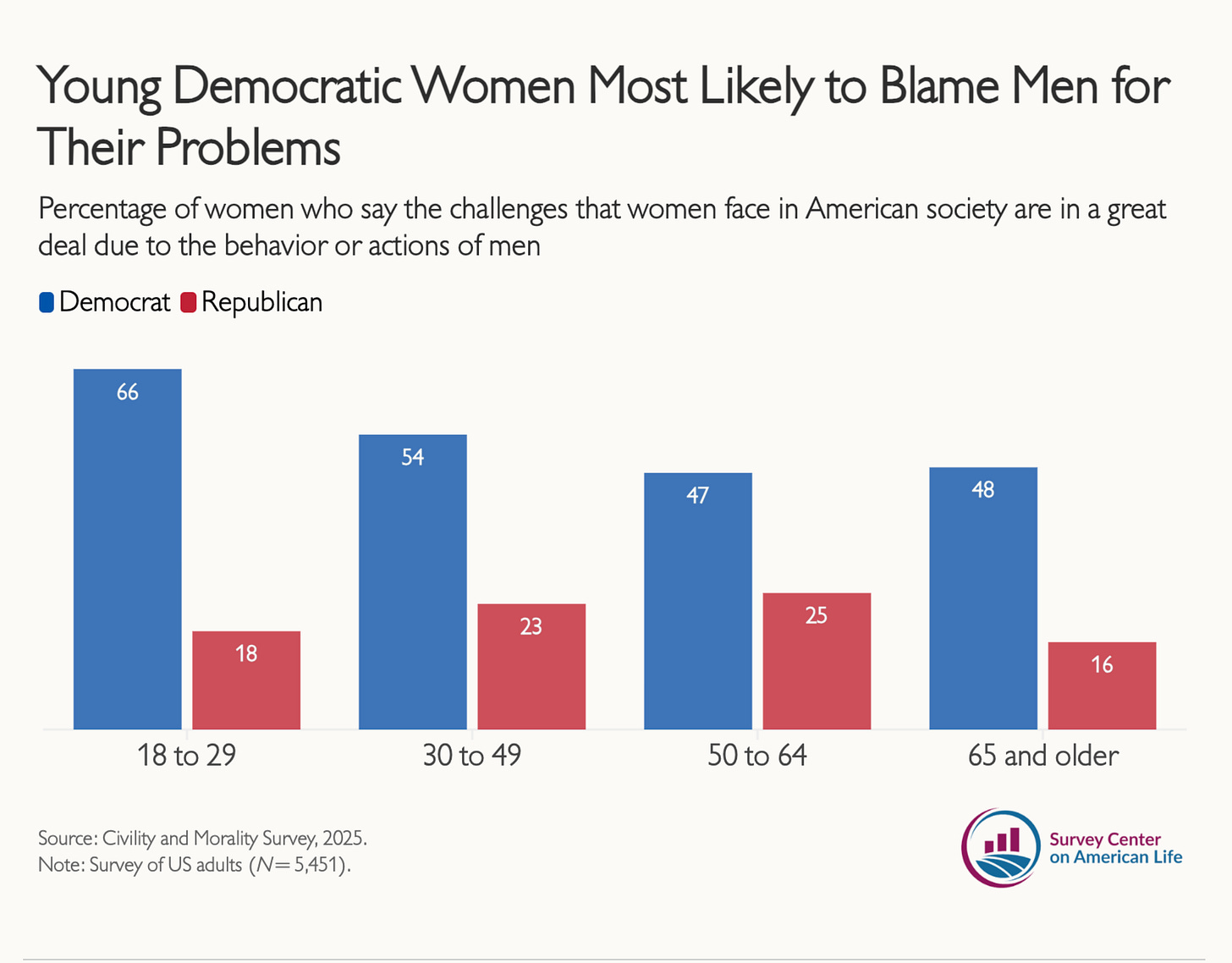
In Part One, we explored the psychology of false accusation at the interpersonal level. Now let’s turn to false accusations on a cultural level which have been ongoing for decades. eg men are toxic, men are oppressors etc.

We examined how false accusations can arise not only from conscious malice, but also from emotional reinterpretation, projection, social contagion, cognitive dissonance, and the powerful human need for moral belonging and validation.

We also explored what happens psychologically to the accused:

hypervigilance,
social anxiety,
depression,
withdrawal,
fear of relationships,
fear of institutions,
normal self-defense mechanisms no longer work,
fear of speaking openly,
significant anger,
and an ongoing sense that the world is no longer entirely predictable or safe.

But now we arrive at a deeper and more uncomfortable question:

What happens when these same accusation dynamics move beyond individuals and begin operating culturally?

Because the more closely one examines modern narratives surrounding men and masculinity, the more difficult it becomes to ignore the structural similarities.

The scale changes.

But the psychology often remains remarkably similar.

Consider some of the dominant cultural messages of the past decades:

“Men are toxic.”
“Men are oppressors.”
“Masculinity is dangerous.”
“Men are privileged.”
“All men benefit from patriarchy.”
“Male sexuality is inherently threatening.”

These are not criticisms aimed at specific individuals for specific actions.

They are sweeping moral accusations attached to an entire birth group.

And psychologically, broad accusations toward men often function in ways strikingly similar to interpersonal false accusation dynamics.

This does not mean harmful men do not exist. Some men commit terrible acts. Some expressions of masculinity can become destructive.

But there is a profound difference between:
“Some men do harm” and “Men are the problem.”

That distinction matters enormously.

Because once a culture begins attaching generalized moral suspicion to an entire class of people, predictable psychological and social dynamics begin appearing.

The first thing to understand is that culturally endorsed accusations are not sustained merely by anger or misunderstanding.

They are sustained because they are socially rewarded.

Human beings are profoundly shaped by incentives, approval, belonging, status, and fear of exclusion.

When a behavior produces rewards while carrying little social consequence, the behavior tends to spread — especially when those rewards are emotional, social, or institutional.

And broad accusations toward men often receive enormous reinforcement from modern culture.


Approval.

A person who makes sweeping negative statements about men is often treated as morally aware, socially conscious, compassionate, or enlightened. Even highly generalized statements that would immediately be recognized as prejudice if directed toward other groups are often applauded when directed at men.

This creates a powerful psychological reward loop.

The accusation itself becomes a form of virtue signaling.


Status.

Within many social and academic environments, criticism of men can function as a marker of sophistication or moral seriousness.

The more forcefully one condemns masculinity, patriarchy, or male privilege, the more one may be perceived as educated, progressive, or morally evolved.

Human beings naturally move toward ideas that increase status within their group.

This is especially true among young people trying to establish identity and belonging.


Group Belonging.

Many people do not repeat anti-male narratives because they have deeply studied the issue.

They repeat them because those narratives signal membership within a moral community.

Agreement brings acceptance.
Disagreement risks criticism, discomfort, or exclusion.

This creates pressure toward conformity.

A person may privately feel uncomfortable with broad accusations toward men while publicly nodding along in order to avoid social friction.

Over time, silence itself begins reinforcing the accusation.


Moral Signaling.

Public condemnation of men often functions as a way of signaling one’s own moral goodness.

“I oppose toxic masculinity.”
“I challenge male privilege.”
“I call out men.”

These statements become less about truth and more about demonstrating moral identity.

This is one reason nuance often disappears.

Nuance does not signal purity as efficiently as outrage does.


Online Validation.

Social media dramatically amplifies these dynamics.

Broad accusations toward men frequently generate likes, reposts, emotional validation, attention, and algorithmic amplification.

Outrage spreads rapidly because outrage activates emotion.
And emotion drives engagement.

As a result, the most emotionally accusatory versions of these narratives often rise to the top culturally.

Meanwhile, calm nuance spreads far more slowly.


Institutional Protection.

Perhaps most importantly, broad accusations toward men are often institutionally protected.

Media organizations frequently repeat generalized negative narratives about men with little scrutiny.

Academic frameworks sometimes begin from assumptions of male power, male danger, or male oppression rather than examining men as full human beings with strengths, vulnerabilities, sacrifices, and suffering of their own.

Corporate trainings often present masculinity primarily through the lens of risk, harm, or pathology.

Entertainment media repeatedly portrays men as incompetent, emotionally defective, predatory, or morally suspect.

And because these narratives are institutionally reinforced, many people become afraid to question them openly.

This creates a striking asymmetry.

Broad accusations toward other groups are quickly challenged as prejudice.

Broad accusations toward men are often normalized.

That normalization matters psychologically.

Because when accusations are constantly reinforced while objections are socially punished, people gradually stop examining the fairness of the accusation itself.

The accusation simply becomes part of the cultural atmosphere.

And once that happens, boys and men begin breathing it in from childhood onward.

This is where the psychological overlap with interpersonal false accusation becomes especially important.

The mechanisms are strikingly familiar.

The incentives are similar.
The reinforcement patterns are similar.
The double binds are similar.
And the emotional impact on the accused is often strikingly similar too.

Many men begin walking through the world cautiously, carefully monitoring their speech, humor, sexuality, eye contact, opinions, and interactions.

Some become hesitant around women.
Some avoid mentoring younger women.
Some withdraw emotionally.
Some stop speaking honestly altogether.
Some work to avoid women altogether.

Not because they are guilty.
But because accusation itself has become dangerous.

And just as with interpersonal false accusations, men often encounter cultural double binds.

If a man objects to sweeping accusations toward men:
“That proves fragility.”

If he defends masculinity:
“That proves insecurity.”

If he says men are hurting too:
“He is centering men.”

If he remains silent:
The accusations stand unanswered.

This resembles what psychologists sometimes call a Kafka trap:
denial itself becomes evidence of guilt.

And once that dynamic takes hold culturally, rational discussion becomes extraordinarily difficult.

Another dynamic begins appearing as well: internalized stigma.

Human beings absorb the stories told about them.

If boys grow up hearing repeatedly that masculinity is toxic, male sexuality is dangerous, fathers are suspect, and men are emotionally defective or oppressive, many eventually begin carrying a quiet shame simply for being male.

This is especially powerful because most boys and men genuinely want to be good.

They want connection.
They want love.
They want approval.
They want to protect.
They want to provide.
They want to be seen clearly.

That makes them highly vulnerable to moral condemnation.

And over time many men unconsciously begin adopting the language used against them.

Not necessarily because the accusations are true.

But because social belonging often depends upon agreeing with them.

This is one reason cultural accusation can become psychologically devastating even without formal accusation directed at a specific individual.

A person does not need to be accused in court to begin feeling morally suspect.

Repeated moral framing can create the same psychological atmosphere:
hypervigilance,
self-monitoring,
fear,
silence,
alienation,
anger,
and shame.

That may help explain why so many ordinary men today feel vaguely accused all the time.

Not because they have committed wrongdoing.

But because they are living inside an atmosphere of collective moral suspicion.

And one of the most troubling aspects of this dynamic​, much like the interpersonal false accuser, is that there are often very few consequences for spreading these accusations.

In some cases, even demonstrably false accusations produce little accountability for the accuser while inflicting enormous psychological, reputational, relational, and financial harm on the accused.

Human beings notice incentives.

When accusations produce approval and status while carrying little social cost, the accusations spread.

That is why even small moments of calm moral clarity become important.

Perhaps one of the healthiest things we can begin doing is gently interrupting broad false accusations when we hear them.

I have found that because challenges to the ideology often trigger immediate emotional reactions, the best response is usually to rely on men’s natural strengths of logic, calmness, and steadiness. Those strengths are often surprisingly effective against relational aggression.

When someone says:

“Men are toxic.”

We might calmly respond:

“Wait a minute. That’s a sweeping accusation against an entire group of people. That’s a logical fallacy. Men are human beings, not a toxic class.”

Or perhaps:

“That sounds like stereotyping an entire birth group.”

Or even:

“It sounds like you’re having a hard time finding compassion for men.”

That last response has an interesting effect. In my experience, it almost immediately causes the other person to insist that they do have compassion for men. Once they say that out loud, the conversation shifts. Now they feel some pressure to demonstrate that compassion rather than continue making broad condemnations.

The important thing is not to become reactive yourself. Calmness matters. Clarity matters. Refusing to mirror hostility matters.

Think about your own phrases ahead of time. Have them ready. A calm sentence, spoken at the right moment, can interrupt a great deal of cultural conditioning.

Small moments like this matter.

Cultures are shaped conversation by conversation.

And many people repeat these phrases casually without ever fully considering what they imply psychologically.

Imagine if we normalized speaking this way about women, blacks, Jews, gays, or any other birth group.

Most people would immediately recognize the prejudice.

Men deserve the same moral clarity.

This does not mean ignoring harmful behavior.

It means refusing collective moral condemnation.

It means separating individuals from stereotypes.

It means recognizing that broad accusation injures innocent people — especially boys who are still forming their identity.

A healthy culture should be able to criticize harmful behavior without teaching entire groups of children to feel morally suspect simply for being who they are.

And perhaps that is part of what it means to see each other clearly again.

Not as caricatures.
Not as ideological abstractions.
Not as oppressors or victims by birth.

But as human beings.

Men Are Good, as are you.

Read full Article
See More
Available on mobile and TV devices
google store google store app store app store
google store google store app tv store app tv store amazon store amazon store roku store roku store
Powered by Locals