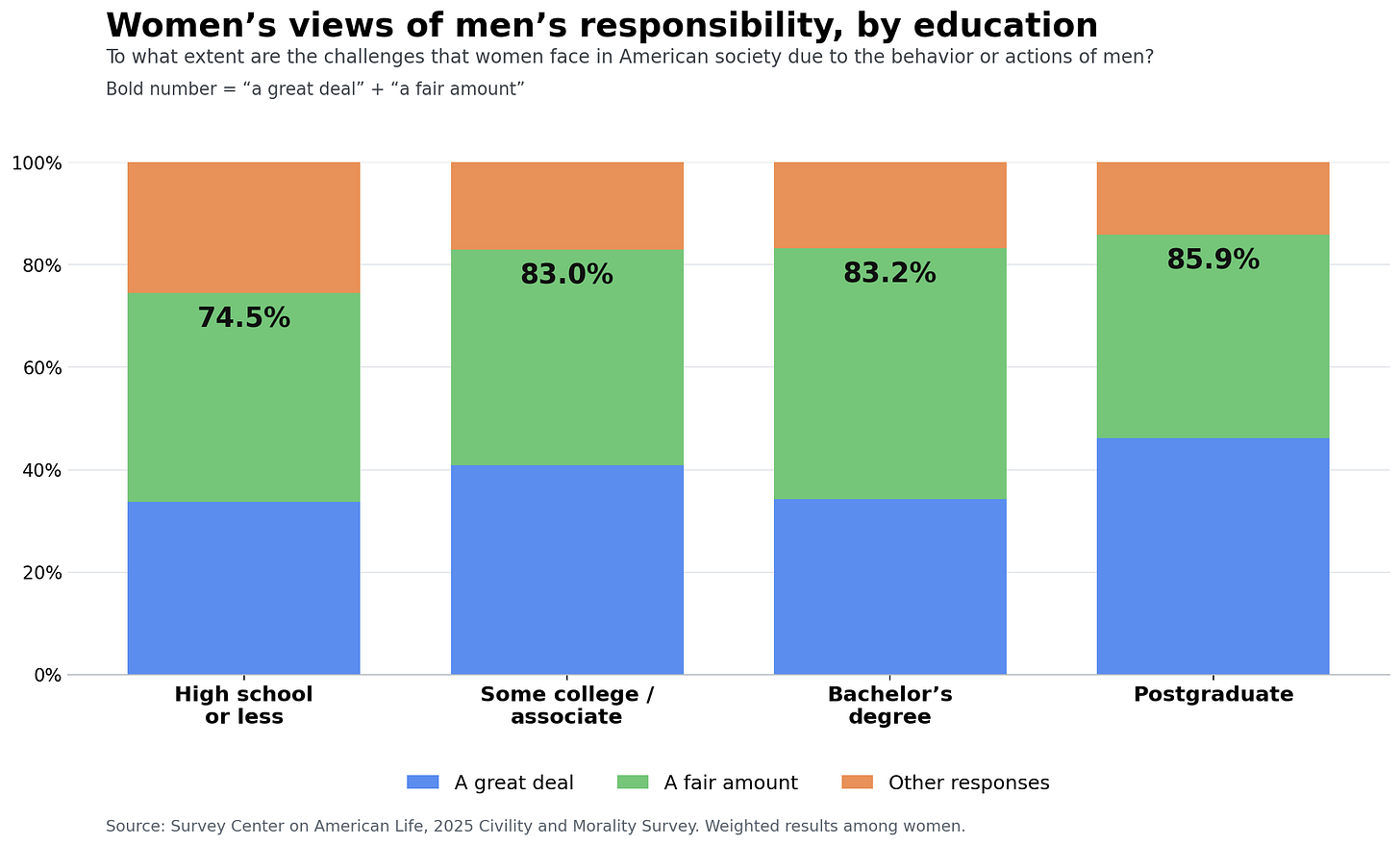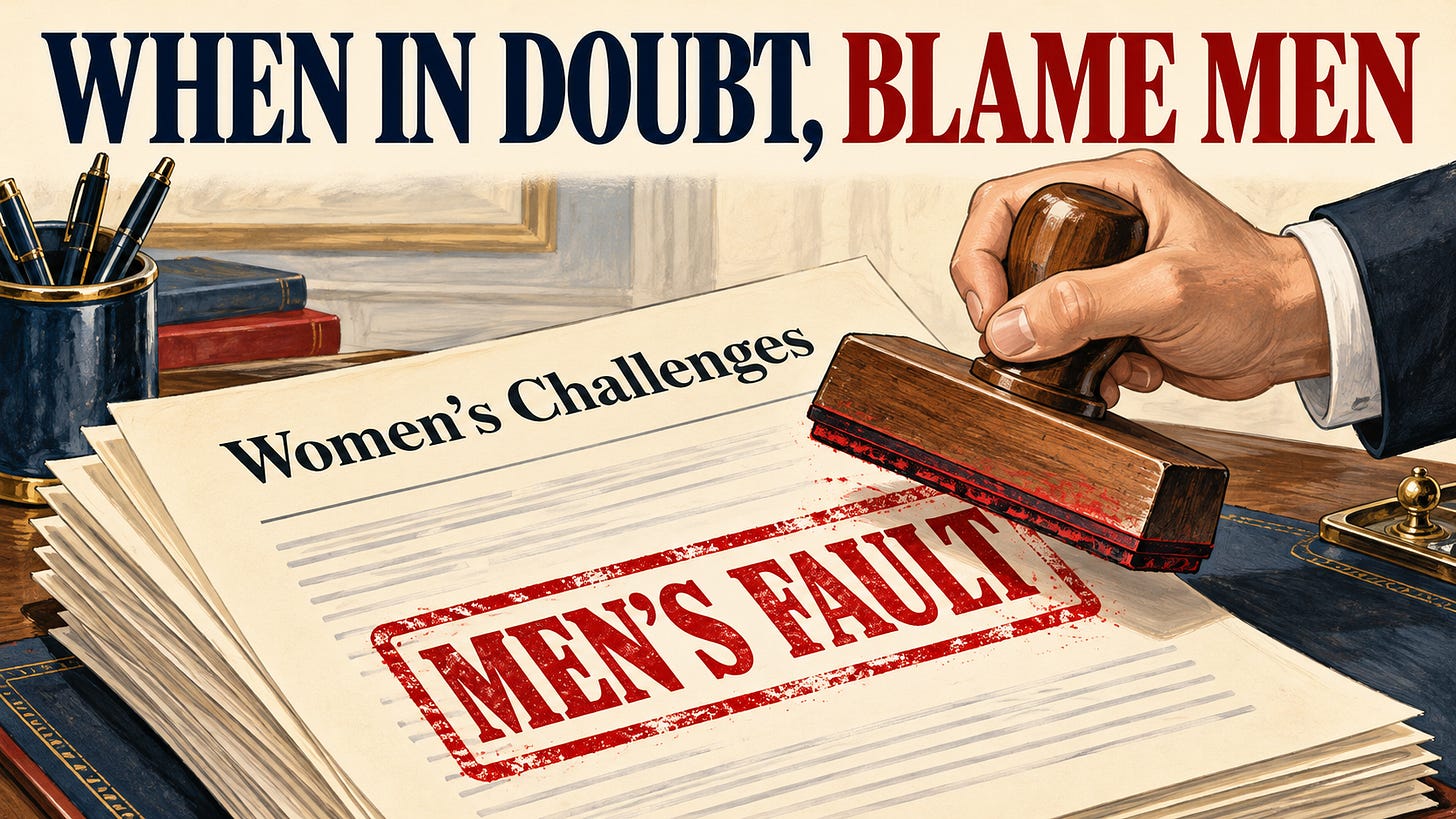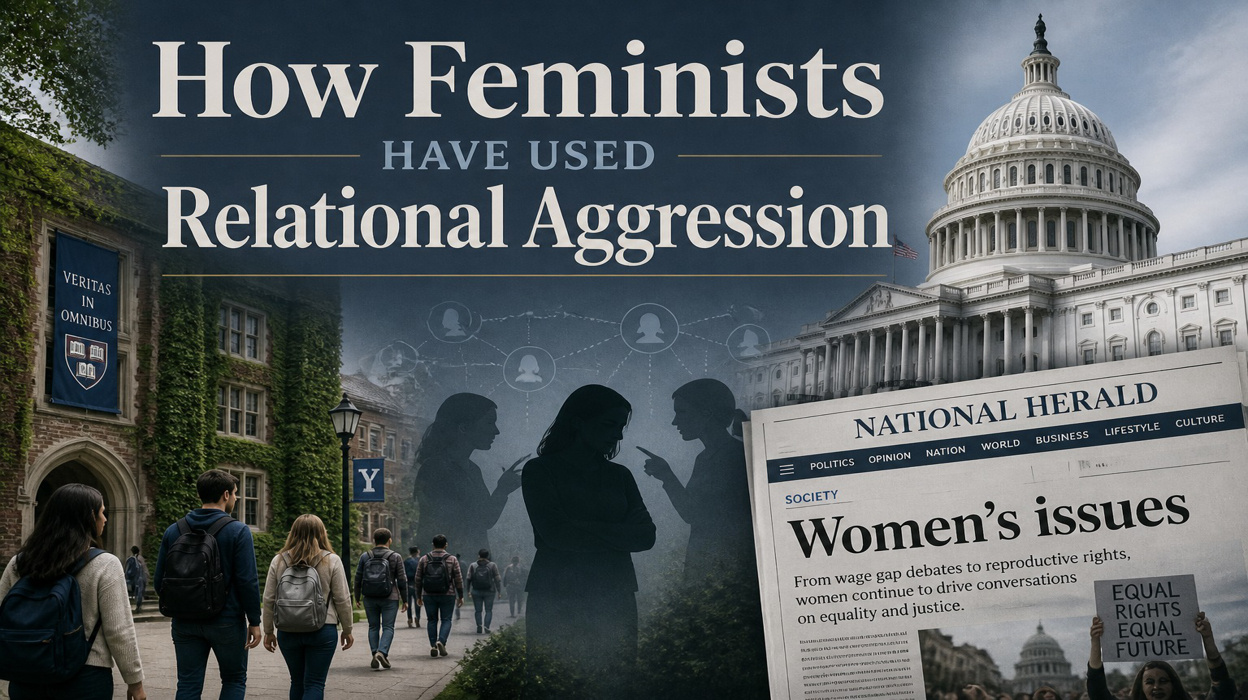
Physical aggression has rightly been recognized as harmful and unacceptable. We understand that threats, intimidation, and violence can be used to control others, and society has developed powerful norms to discourage such behavior. Relational aggression, by contrast, often remains largely invisible. Instead of fists, it uses shame, exclusion, reputation damage, moral condemnation, and social pressure to influence behavior. While less obvious than physical aggression, it can be equally effective as a tool of manipulation and intimidation. Before examining how some feminists employ these tactics, it is worth understanding the nature of relational aggression itself.
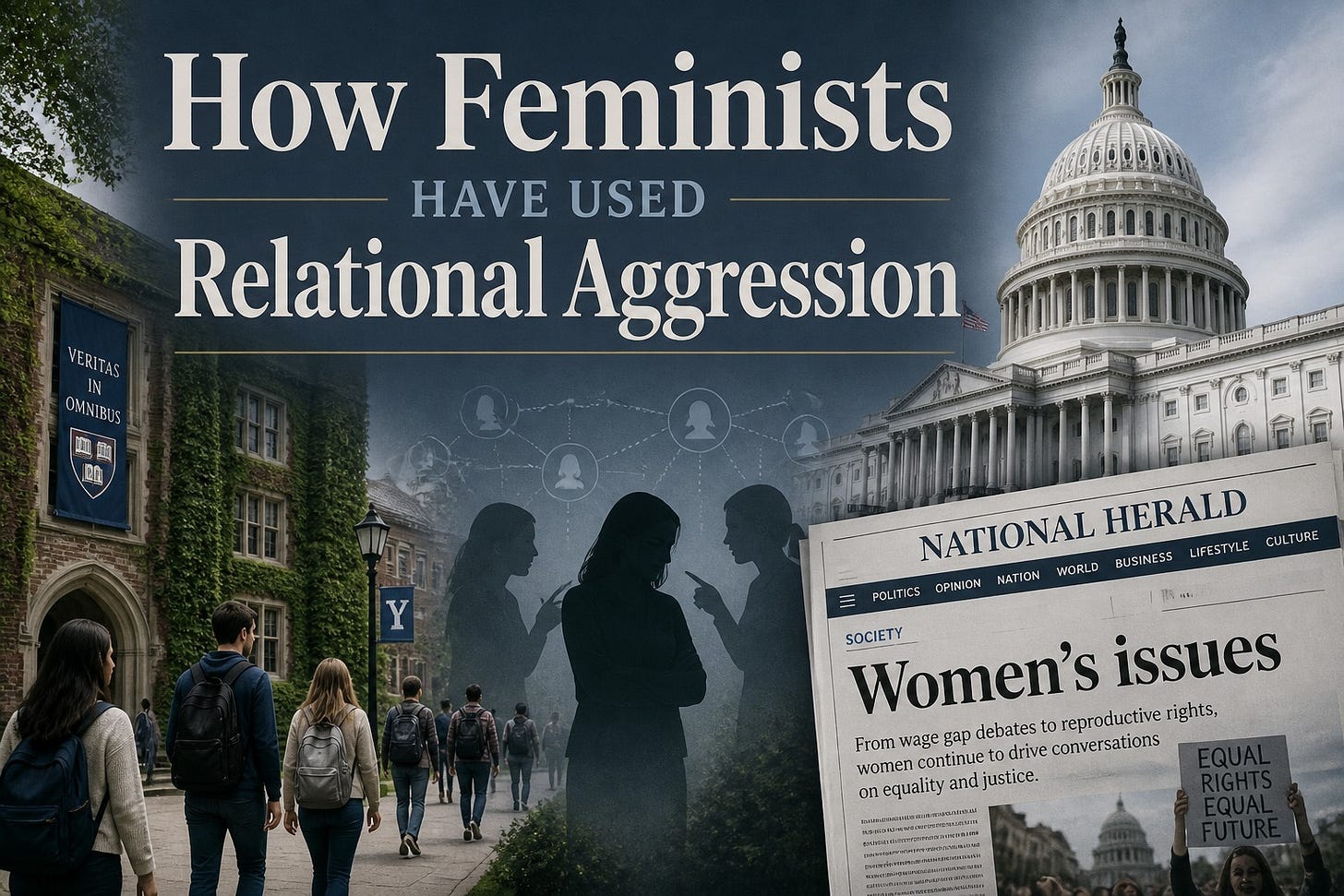
How Feminists have used Relational Aggression
One of the most useful ways to understand feminism is not simply as a political ideology, but as a cultural system that often uses relational aggression to gain compliance.
Relational aggression does not usually rely on physical force. It works through shame, exclusion, reputation damage, social pressure, emotional manipulation, and control of the story. It attacks a person’s standing, belonging, credibility, and right to speak.
At the personal level, we see this in relationships when one partner uses guilt, withdrawal, public shaming, triangulation, or accusations to silence the other. But the same mechanisms can operate at the cultural level. When they do, the target is no longer just one person. The target can become an entire group.
That is what has happened with men.
Radical feminist leaders often begin with a claim of female injury. Some of those injuries are real. Both men and women have suffered in many ways, and no honest person needs to deny that. But the problem begins when female injury becomes the only injury that matters. Once that happens, male suffering is minimized, mocked, or reframed as deserved.
This is where gynocentrism becomes useful. Our culture already has a deep tendency to see women as more vulnerable, more innocent, and more deserving of protection. Feminism did not create that tendency. It learned to use it.
At first, gynocentrism provided moral energy for reform. “Look at women’s suffering,” the movement said. “Look at the ways women have been ignored.” That argument had power because people are naturally moved by female distress.
But over time, that same protective instinct became a weapon. Female suffering became a shield against scrutiny. Male disagreement became evidence of male defect. Questioning the ideology became “misogyny.” Asking about male victims became “derailing.” Defending boys became “protecting patriarchy.”
This is relational aggression scaled up into culture.
The most obvious form is shaming. Men are routinely described with terms such as toxic, fragile, entitled, privileged, dangerous, emotionally stunted, oppressive, and predatory. These are not neutral descriptions. They are moral labels. Their purpose is not merely to describe men, but to lower men’s social standing.
Another form is reputation attack. Men who question feminist narratives are not usually answered directly. They are often labeled. They are called sexist, misogynist, incel, abuser, patriarchal, fragile, or hateful. The accusation becomes the argument. Once the label lands, the man is placed outside the circle of acceptable speech.
Then comes social exclusion. Men are told, directly or indirectly, that they do not get a voice in conversations about family, violence, education, sexuality, fatherhood, divorce, or even masculinity. If they speak, they are accused of centering themselves. If they remain silent, their silence is taken as consent. Either way, their position is controlled.
Feminism also uses narrative control. It defines the moral story in advance: women are harmed; men are harmful. Women are victims; men are agents. Women need protection; men need correction. Once this frame is accepted, every fact is filtered through it. Female aggression becomes trauma. Male distress becomes entitlement. Female fear becomes wisdom. Male fear becomes threat.
This is why male suffering is so often invisible. It does not fit the approved story.
There is also manipulative victimhood. This does not mean that women are not sometimes victims. Of course they are. It means that victimhood can become a source of social power when it is used to end discussion, demand obedience, or shield one group from criticism. In feminist hands, the claim “women are harmed” often becomes “therefore women must not be questioned.”
That is a dangerous move.
In a healthy culture, compassion does not eliminate accountability. But in an ideologically captured culture, compassion for one group can become permission to attack another.
Coalition building is another major tool. Feminist ideas have moved through universities, nonprofits, media, government agencies, HR departments, family courts, professional licensing boards, and therapeutic institutions. Once these institutions adopt the same basic narrative, dissent becomes risky. People learn what can and cannot be said.
The genius of relational aggression is that it rarely requires direct control. It operates through fear. Judges fear being portrayed as sexist. Politicians fear losing votes, donations, or public support. University administrators fear activist campaigns. Journalists fear professional ostracism. Therapists fear licensing complaints. The fear need not be constant; it merely needs to be credible. Once enough people understand the social penalties attached to dissent, most will censor themselves without being asked. Institutions then become amplifiers of the narrative, teaching the public what is acceptable to think and say. The population is not usually controlled through force but through reputational risk. People learn which opinions bring approval and which invite punishment. That is how a relatively small but highly motivated ideological movement can exert influence far beyond its actual numbers.
This is where relational aggression becomes institutionalized. It is no longer simply one activist shaming one man. It is an entire network of institutions, incentives, and reputational pressures signaling that certain questions are unsafe.
Can we talk about female violence?
Can we talk about male victims?
Can we talk about false accusations?
Can we talk about boys falling behind?
Can we talk about father loss?
Can we talk about women’s relational aggression?
Often the answer is no — not because the questions are invalid, but because the questions threaten the protected narrative.
Another powerful tool is emotional blackmail. The message is simple: if you care about women, you must accept the feminist frame. If you question the frame, you must not care about women. This traps good people. Many men and women remain silent not because they agree, but because they do not want to be seen as cruel.
That silence is one of feminism’s greatest victories.
Gaslighting also plays a central role. Men are told that the double standards they see are not real. They are told family courts are fair. They are told male victims have equal support. They are told boys are not being shamed. They are told “toxic masculinity” does not really mean men are toxic. They are told their objections are overreactions.
But many men know what they are seeing. They simply learn not to say it out loud.
The #MeToo movement provides a revealing example of how relational aggression can operate on a societal scale. Some women came forward with genuine experiences of harassment and abuse, and those stories deserved to be heard. But alongside those legitimate concerns emerged a cultural dynamic in which accusation itself often carried extraordinary power. In many cases, the mere allegation of misconduct could trigger immediate reputational damage, job loss, social ostracism, and public condemnation long before any formal investigation occurred. The fear was not simply legal punishment. It was social punishment.
The slogan “Believe Women” (often remembered by critics as “Believe All Women”) illustrates how relational aggression can operate through moral pressure. On the surface, the message appeared compassionate: take women’s reports seriously rather than dismissing them out of hand. But in practice, the slogan often carried a second message: questioning an accusation could itself become evidence of moral failure. Those who expressed skepticism, asked for evidence, or advocated due process risked being portrayed as insensitive, sexist, or complicit in abuse. The social pressure did not merely encourage belief; it raised the reputational cost of doubt. In that sense, the slogan functioned as a powerful relational tool. It shifted attention away from evaluating claims and toward evaluating the character of anyone who hesitated to accept them. The question was no longer simply, “Is this accusation true?” It increasingly became, “What kind of person are you if you do not believe it?” That is one of the hallmarks of relational aggression: using the threat of social condemnation to discourage disagreement and enforce conformity.
What made this dynamic especially powerful was that few institutions wanted to be seen as insufficiently supportive of women. Employers feared public backlash. Universities feared activist pressure. Politicians feared being portrayed as insensitive to victims. Journalists feared appearing unsympathetic. As a result, many organizations responded to accusations with rapid displays of compliance, often treating skepticism as moral failure. The social cost of questioning an allegation could become greater than the social cost of accepting it.
This does not mean all accusations were false. It means the movement demonstrated how powerful reputational threats can become when combined with moral urgency. The lesson is not that victims should be ignored. The lesson is that fear, shame, and public condemnation can become tools of social control when institutions conclude that appearing supportive is more important than careful examination. In that sense, #MeToo revealed how relational aggression can move beyond individual relationships and become a cultural force capable of influencing institutions, public discourse, and individual behavior.
Perhaps the most damaging form of relational aggression is the cultural accusation. A false personal accusation can destroy one man’s reputation, relationships, work, and sense of safety. But a cultural accusation works more broadly. It places a cloud of suspicion over men as a class.
Men are not accused one at a time. They are accused collectively.
Men are told they are privileged, dangerous, oppressive, emotionally defective, sexually suspect, and morally in need of correction. Boys grow up breathing this air. They may not have done anything wrong, but they inherit the accusation.
That has consequences.
A boy who is repeatedly told that masculinity is dangerous may begin to distrust himself. A man who hears constant contempt for men may withdraw. A father who is treated as optional may lose confidence. A husband who is afraid to speak honestly may disappear inside his own marriage.
This is the hidden power of relational aggression. It does not merely silence speech. It reshapes identity.
And yet, many of the people participating in this do not experience themselves as aggressive. They experience themselves as virtuous. They believe they are standing up for women, fighting oppression, protecting the vulnerable, or correcting injustice. That is what makes the pattern so difficult to confront.
Relational aggression often hides behind moral language.
The feminist leader may not say, “I want to silence men.” She says, “Men need to listen.”
She may not say, “I want to shame boys.” She says, “We need to challenge toxic masculinity.”
She may not say, “Male victims do not matter.” She says, “This is not the time to center men.”
She may not say, “Dissent must be punished.” She says, “We must hold people accountable.”
The phrase “toxic masculinity” also functions as a powerful tool of relational aggression. Supporters often argue that the term refers only to specific harmful behaviors, not to men themselves. Yet many men experience the phrase very differently. They hear a cultural message that links masculinity with danger, dysfunction, violence, emotional deficiency, and social harm. The power of the term lies not merely in its definition but in its social effect. Once masculinity is associated with toxicity, men are placed in a defensive position. They are expected to prove that they are not toxic. If they object to the label, their objection is often interpreted as further evidence of the problem. If they ask for clarification, they may be told they are fragile. If they defend traditionally masculine traits such as competitiveness, stoicism, risk-taking, or protectiveness, they risk being accused of supporting harmful norms. In this way, the phrase operates less as a description and more as a moral framing device. It lowers the social standing of the target group while making resistance appear suspect. Rather than encouraging understanding, it often pressures men to distance themselves from their own identity in order to gain social approval. That is a classic feature of relational aggression: using shame and reputational pressure to reshape behavior without the need for direct coercion.
The language sounds moral. The impact is often coercive.
This distinction matters. Many women who repeat these ideas are not consciously trying to hurt men. Many are following the emotional current of the group. In-group bias is powerful. If the women around you all nod at the same slogans, if institutions reward the same language, if dissent risks social punishment, it becomes much easier to go along.
That is not unique to feminism. It is human. Groups protect their stories. Movements defend their moral identities. People prefer belonging to isolation.
But this does not make the harm any less real.
The challenge is to name the pattern without demonizing every person caught inside it. Not all feminists use relational aggression. Not all women accept these ideas. Many women love men deeply and are confused by the cultural hostility they have been taught to absorb.
The real issue is the ideological leadership and the institutional incentives that reward one-sided narratives.
Feminism has been effective not simply because it made arguments, but because it learned to control the social cost of disagreement. It learned how to use shame, exclusion, moral labeling, victim status, and reputational threat to make dissent feel dangerous.
That is relational aggression.
And once we see it, we can begin to understand why so many men remain quiet.
They are not silent because they have nothing to say.
They are silent because they know what happens when they say it.
Men Are Good.