A note before the article:
Nick O’Hara has written something deeply painful, deeply human, and deeply important.
His essay is not simply the story of one father’s heartbreak. It is also a window into a much larger injustice that far too few people are willing to see, much less name. We hear constant discussion about “absent fathers,” but almost no discussion of fathers who are absent against their will—fathers who love their children, fight for them, and are still pushed out by systems that seem unable, or unwilling, to protect the father-child bond.
That is what makes this piece so powerful. Nick is writing from the raw center of his own experience, but he is also giving language to a reality that many men live in silence. His story is heartbreaking, but it is not merely personal. It raises urgent questions about parental equality, about the invisibility of fathers in family law and public discourse, and about the cost children pay when a loving parent is treated as expendable.
I am sharing this excerpt because I believe his voice deserves to be heard. The full piece is considerably longer, and I hope you will follow the link at the end to read the rest on Nick’s site and help bring more attention to his work.
If we are serious about justice, compassion, and the well-being of children, we must be willing to look at realities that make people uncomfortable. This is one of them.
Father Exclusion: The Invisible Injustice
The search for my abducted child reveals a wider silence on parental inequality
Mar 02, 2026
Your children are not your children
They are the sons and daughters of Life’s longing for itself
They come through you but not from you,
And though they are with you yet they belong not to you
– Kahlil Gibran, The Prophet
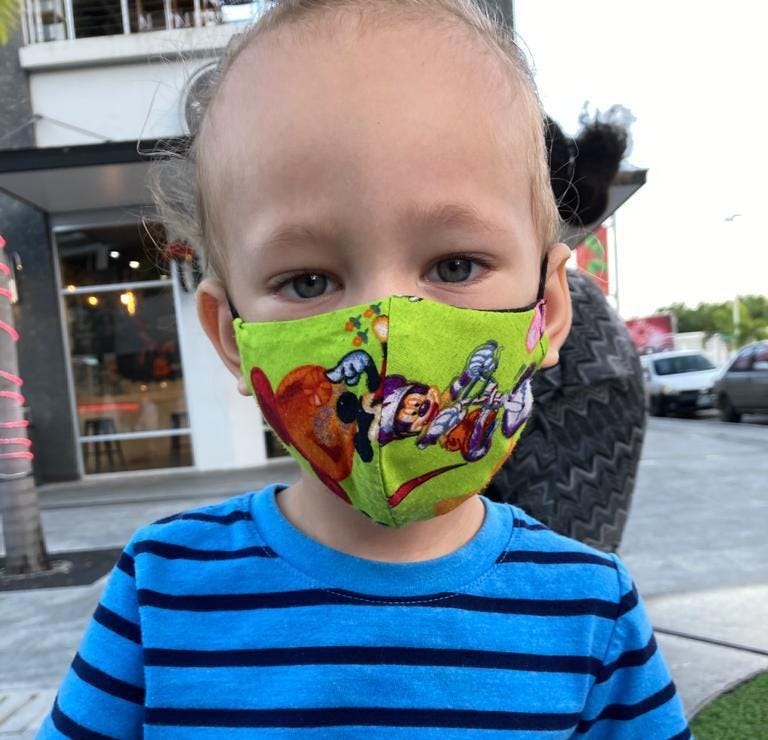
My son and I are strangers. He turns seven soon and I’ve never celebrated his birthday with him. I have never read him a bedtime story. I don’t know if he is safe. I don’t even know if he is alive. I am a father needlessly separated from my child, and society makes me invisible. After years of holding my tongue and getting nowhere, I feel compelled to convey what it is like to be completely excluded from your child’s life in a culture that leaves virtually no space for fathers in my position.
We often hear about absent fathers, but rarely about those who are absent against their will: men erased from their children’s lives without justification. I call this “father exclusion”. It’s a term I have coined because I can’t find any official language or descriptor for fathers in my position. Despite impacting many families, it barely registers in our public discourse. No data seems to be collected on father exclusion. No politicians seem interested in addressing it. No one even names the problem.
Father exclusion is not a fringe issue. It is extremely harmful to families and society; a systemic failure so pervasive it becomes invisible. We talk a great deal about irresponsible fathers, but what about those of us fighting with everything we have to be in our children’s lives, only to be systematically shut out? This silence is institutional, cultural and statistical. It has consequences: for children, for fathers like me, for our understanding of parenthood itself.
One goal in sharing my story is to advance a rationale argument in favour of gender equality in parenting, guided by the humanist case for balanced parental rights.
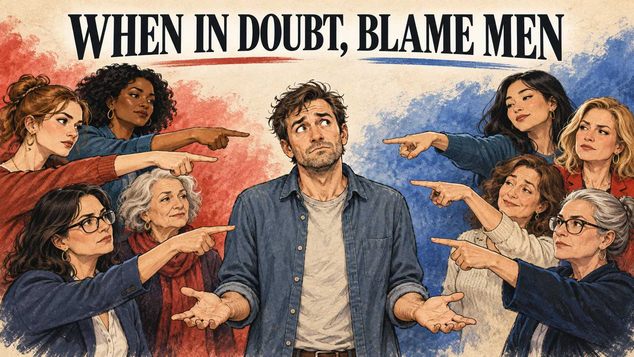
Western culture’s current obsession with “toxic masculinity” prefers to cast men as villains, leaving no room to acknowledge that fathers can be victims of discrimination, or that many are unjustifiably pushed out of their children’s lives. Many people take offence at the suggestion that father absence is detrimental to our children, despite the evidence that it is. So, any attempt to raise fathers’ rights is met with discomfort, defensiveness or even aggression: if it is acknowledged at all. For the main part, it is met with silence.
I know this silence intimately. It helps prevent my son from knowing my love.
When he drew his first breath in Brooklyn seven years ago, I was thousands of miles away in the United Kingdom, unaware of his arrival because his mother had cut off contact with me. What began as a conventional path to fatherhood – ultrasounds, excited plans of being present at the birth – unravelled into a nightmare. Every attempt since then to be part of my son’s life has been blocked, defied or ignored by his mother, enabled by systems that treat paternal bonds as optional, granted or withheld at the mother’s discretion.
I later discovered that my estranged wife had given our son different names to those we’d agreed upon. She omitted my name from his birth certificate and provided a false address to give the impression that she lived in New York; presumably in order to align with her falsified Medicaid forms. In fact, she is a citizen of Trinidad and Tobago and lives there with her two older children, whose father she also denies access.
Or at least, they did live in Trinidad. Almost three years ago, my son was abducted by his mother. To evade the increasing scrutiny of Trinidad and Tobago’s Family Court and Children’s Authority, she disappeared with all three children and is hiding somewhere in America. I do not know if they are safe, in good health or whether they attend school.
When I met my ex, in our initial interactions, she told me her first husband had abused her and their children, claiming serious offences. I felt sympathy and wanted to help. She said she reported each incident to the police, to create a record. Though to what end, I couldn’t figure out: she never wanted to take legal action, only to have a record of complaints.
Her story became increasingly inconsistent and I started noticing contradictions that grew more absurd. When I questioned her, she sometimes responded by suggesting that I was paranoid, other times she insisted I was losing my memory. It was only later that I recognised this as gaslighting.
While married and briefly living in Trinidad, it began to feel that she had only wanted me there so that I could support her and the kids while she continued not to work at all. However, tightening immigration restrictions meant that I couldn’t get a work permit and the strain on our relationship grew. Pregnant with our son, she cut off communication when I returned to the UK to work.
Since then, I’ve been trapped in a nightmare. Parenthood has been an illusory half-reality: I am legally a father but have never been allowed to be one. Despite my indefatigable efforts, I have met my son just twice; his mother has blocked all other access in defiance of multiple court orders. I could detail here a long list of her heartbreaking breaches, but nobody would want to read it.
Life as an excluded father is utterly lonely. I feel cast adrift, like an inconvenience nobody cares about.
With court proceedings stalled by my ex’s disappearance, I have spent two years pursuing an application under the Hague Convention on International Child Abduction. I receive email updates mentioning INTERPOL and U.S. authorities’ efforts to locate my son. The situation is surreal. There are days when it feels less like my life and more like a documentary film that I never agreed to star in. I have needed to write about it to help me survive it, to produce a memoir I might someday share to help others enduring similar ordeals.
My story is highly personal; the international dimension somewhat unusual. However, my general experience is not unique. It reflects a deeper truth: we simply do not value fatherhood highly enough. We are far more comfortable accusing men of abandonment than confronting how and why institutions push them out.
It needn’t be this way. We can acknowledge this systemic exclusion while rejecting the false binary that caring about fathers must come at the expense of mothers. Justice does not require us to diminish one parent in order to elevate the other. Instead, recognising and supporting the vital roles of both mothers and fathers, on equal terms, is how we can best serve the interests of our children. Persistently favouring one parent over the other – as we currently do – undermines not only parental equality, but the well-being of children and the moral coherence of society.
My son was abducted and taken to the U.S. in breach of a court order prohibiting his removal from Trinidad and Tobago. Like the others, the order proved meaningless. Indeed, every directive issued by the court has been breached or ignored by my ex without consequence.
My ex is legally aided, so there is no financial deterrent to obstruction. Three different legal aid-appointed attorneys withdrew their representation of her after realising she was misleading the court. None of this resulted in sanctions; just stronger orders that my ex ignores. She has, effectively, been able to act with impunity.
She has also prevented my son’s siblings – my stepchildren – from seeing their own father since they were infants. Unwittingly, the children’s experience contributes to the often-racist stereotype of Caribbean father absenteeism. But their respective fathers are not absent: we are excluded.
Despite being represented by one of Trinidad and Tobago’s leading family lawyers (who sadly passed away suddenly last summer), I have felt utterly powerless. Court interventions have been too slow, enforcement mechanisms too weak or non-existent. In the initial years of my matter, the institutional indifference was astonishing. Even evidence of my ex preventing her older children from seeing their father – a relevant pattern of behaviour, one would think – could not be considered, due to family court evidentiary rules. Eventually the authorities did seem to realise what they were dealing with. But by then it was too late, my ex had disappeared with my son.
In fairness, the judge’s hands are tied by inadequate enforcement powers. The court knows that my son is being deliberately repelled from access to his father, without justification. It just isn’t able to actually do much about it. The system appears designed to make fathers give up.
With the disappearance, my attorney advised me to pursue the Hague Convention process. At first, it seemed promising: we received confirmation that my son had been taken to America. He was even, seemingly, located by U.S. authorities, only to vanish again. With the Hague application drawing blanks and family court proceedings stalled, I find myself back where I began. I am sharing my story in the hope that someone, somehow, might help locate my child.
Please share this essay with anyone who might be able to help me locate my child
The wider narrative of absentee fathers is well-known, but how accurate is it? In the United States, more than one in four children live without a father in the home. This is also the generally accepted proportion for the UK, though my own crude maths suggests that it could be higher, with nearly 40 percent of households with dependent children being single-parent families (3.2 million out of the 8.2 million total). Data from the Office for National Statistics show 85 percent of those are headed by mothers (child custody data reporting has it higher, at 89 percent). Statistics for Trinidad and Tobago are harder to obtain, but anyone will tell you the situation is likely similar to the U.S. and UK.
How many of these fathers are missing by choice versus how many, like me, are deliberately excluded? We don’t know the answer, because – and this is a point worth emphasising – nobody publishes that data. There is no government task force. No politicians introducing parental equality legislation. No newspaper headlines.
It’s easier to frame us as absent, easier to perpetuate the ‘irresponsible father’ trope than confront the reality of father exclusion. Doing so would entail acknowledging that men face systemic discrimination in family courts and are relegated to second-class parental status. It’s easier for society not to care.
For the sake of our children, we should care. Active father engagement results in improved child outcomes. In 2016 the UK Department for Work and Pensions hosted a Father Engagement Seminar, which concluded that children with highly involved fathers have greater self-esteem, perform better at school and have fewer behavioural problems.
Conversely, growing up fatherless is highly detrimental to children and society. Children from fatherless homes are exponentially more likely to run away, die from suicide, suffer with substance abuse, become teenage mothers, have behavioural disorders, be sent to prison ... the list goes on. The fact that we have to go back a decade to find such a level of attention (in the UK) to the issue tells its own story.
When I share this information, people often react defensively. One American acquaintance, raised by a single parent, accused me of “blaming single mothers” before I could explain that I, too, grew up in single-parent households (with both my mother and father at different points), and that I was not making a political argument. But I had offended his sensibilities; he wasn’t prepared to even momentarily consider an alternative perspective.
What puzzles me is why acknowledging evidence of poorer average outcomes for children in father-absent homes is so often treated as a moral judgment rather than an empirical observation. Recognising such patterns need not imply blame, nor does it diminish the efforts or sacrifices of single parents. If child welfare is a genuine priority, we should be able to discuss uncomfortable data openly and with nuance, even when it complicates prevailing narratives.
Being an excluded father feels like living in exile. Some people are sympathetic, but not overly concerned. There is no language for your grief, no place for your story. Father exclusion does not fit into any fashionable social movement. Indeed, it’s allowed to slip through the cracks because it contradicts prevailing assumptions about gender, victimhood and power. Refusal to acknowledge this issue reflects a cultural and legal bias that renders fathers morally disposable.
Link to the full article Scroll down and look for the above image to continue reading.