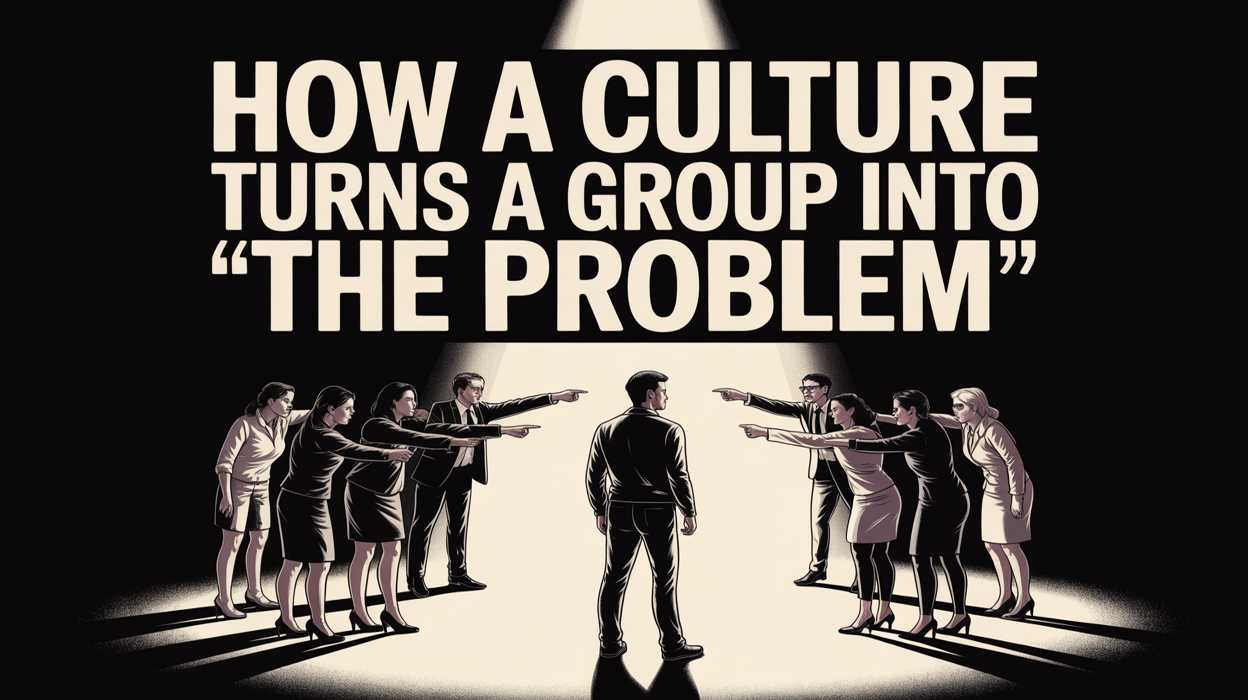
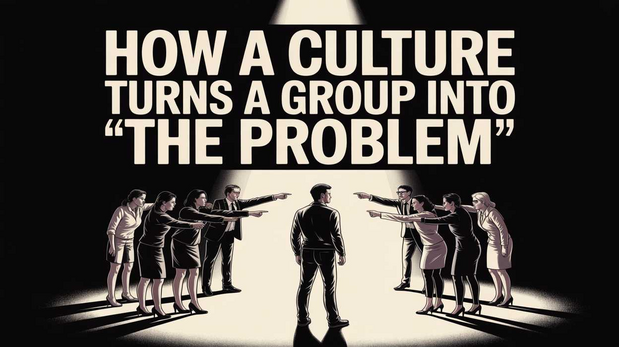
Years ago I read a book called The Death of White Sociology. It explored the rise of a Black sociological viewpoint and challenged the assumptions of what the authors called “White sociology.” What struck me most was not only the book’s critique of how Blacks had been studied and described, but the way it mapped the machinery by which a culture teaches itself to see a group as lesser.
It showed how prejudice does not survive by hatred alone. It survives through a system of reinforcement. Research, media, public opinion, everyday conversation, and institutional assumptions all work together until a distorted view begins to feel like simple common sense. The result is that the targeted group is not merely disliked. It is interpreted through a lens of defect.
As I read it, I kept having the same thought: there is something here that resembles what men face today.
Let me be clear. This is not an argument that men have endured the same history that Blacks endured. They have not. The suffering is not the same. The legal and social conditions are not the same. But the pattern by which a group is culturally misread, judged by hostile assumptions, and portrayed as inherently flawed can look strikingly similar.
That is the comparison worth making.
How a Culture Teaches Itself to See
The book described three powerful channels through which the myth of Black inferiority was spread: common knowledge, the media, and science. Together, they created a self-reinforcing system. Each one echoed the others until the message became nearly impossible to challenge.
Common knowledge is what people “just know” without thinking. In the period the book described, it was simply accepted that Blacks were inferior. That belief did not feel like prejudice to most people. It felt like reality.
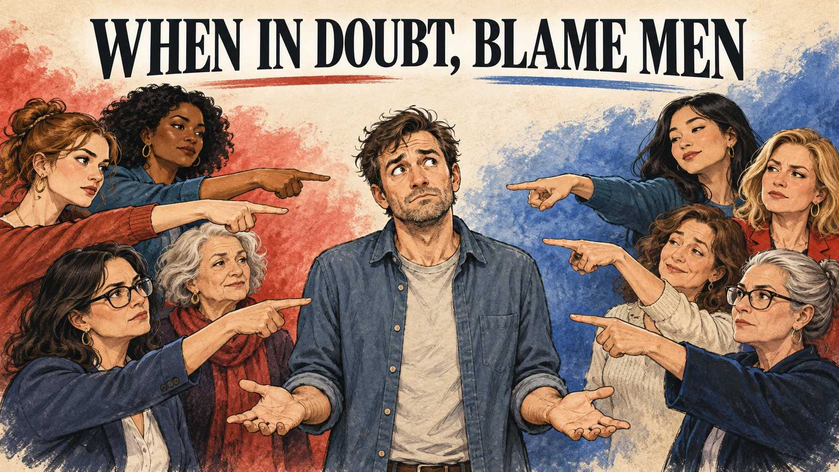
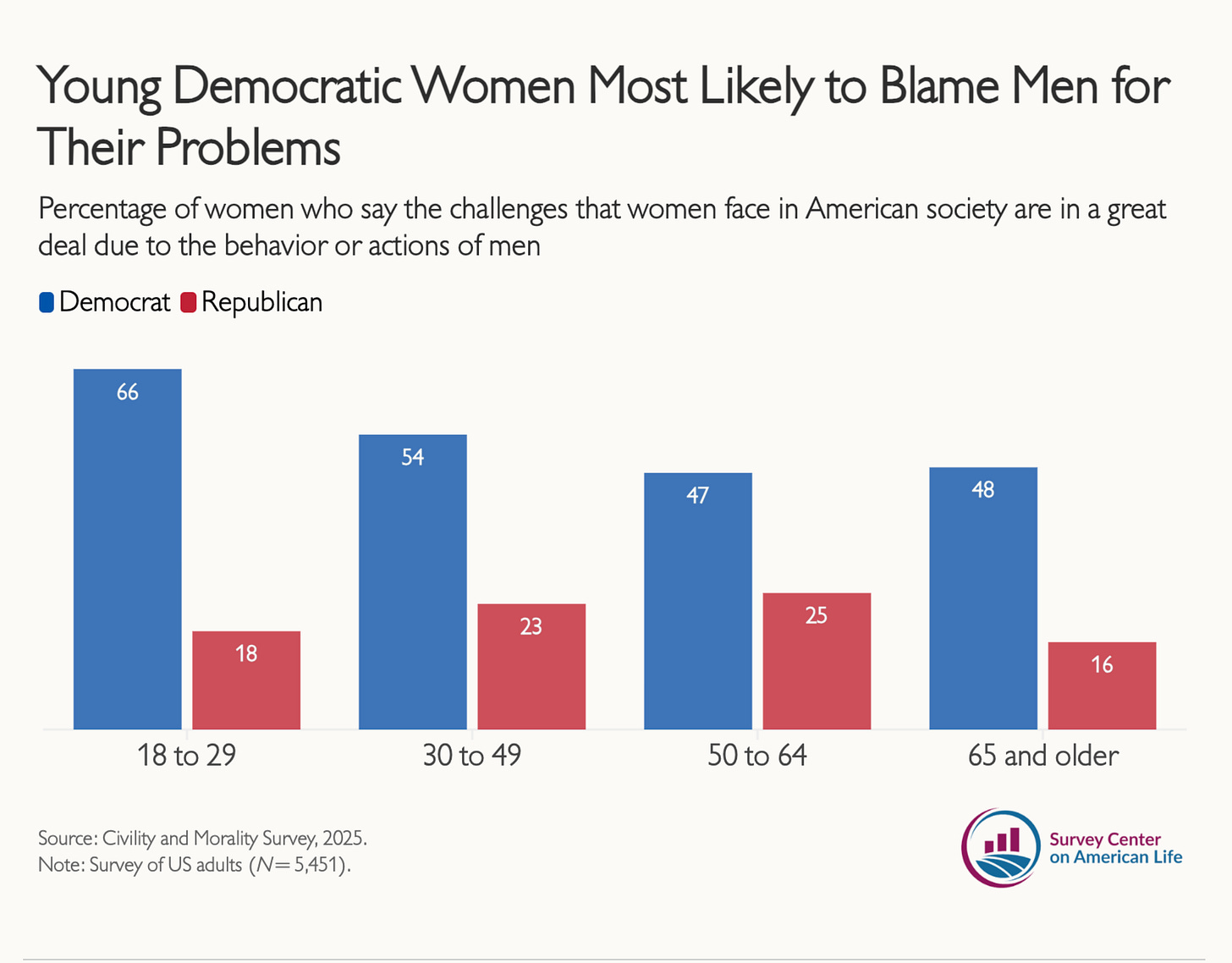
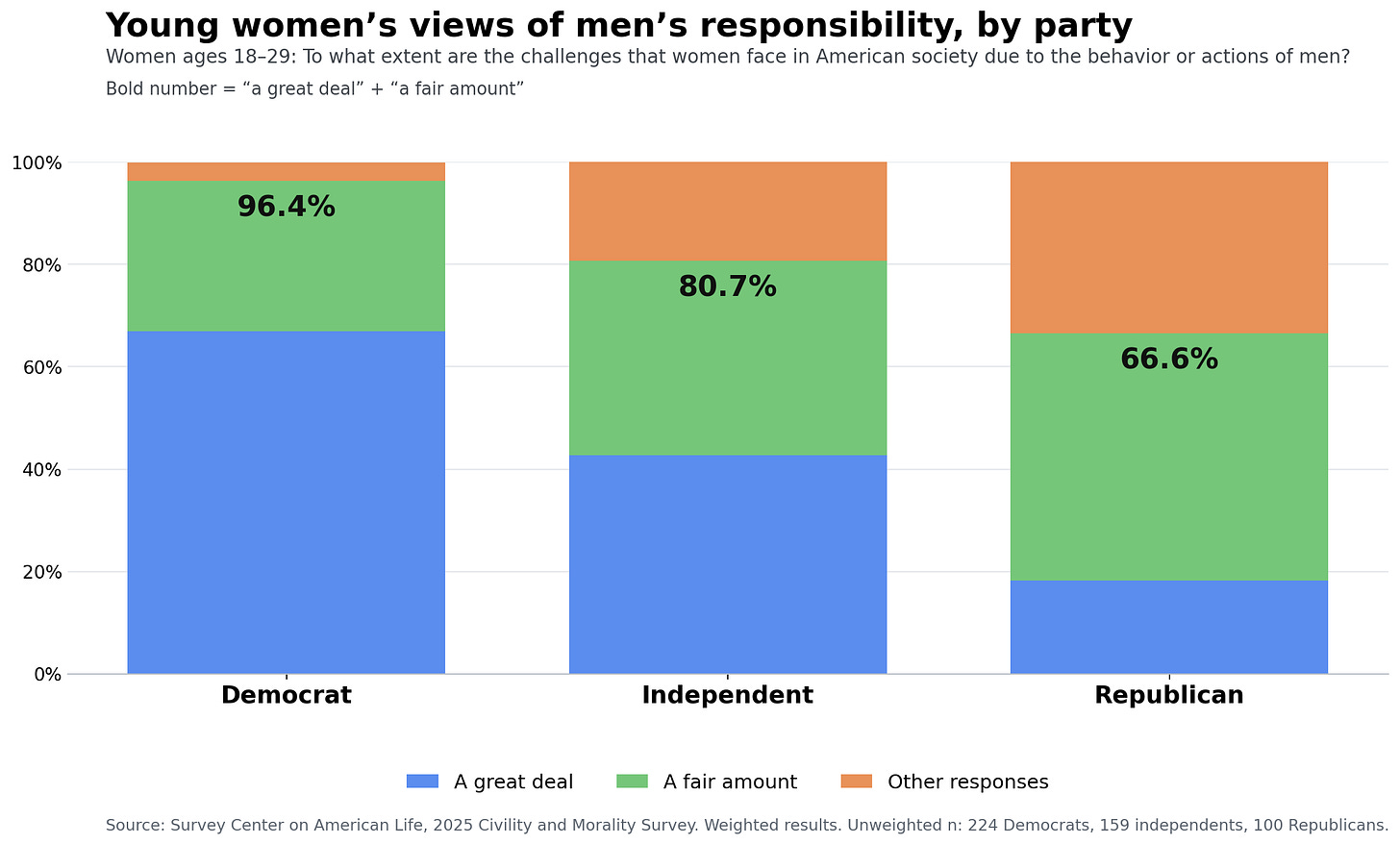
Today, something similar operates in a different direction. It is widely assumed that men, as a class, are the problem—emotionally limited, morally suspect, prone to harm. Not some men. Men.
Once that assumption settles in, everything else begins to orbit around it.
The Media: Then and Now
Media plays a powerful role in teaching people how to see.
In earlier decades, Blacks were often portrayed as immature, unintelligent, and incapable of managing life without guidance. Characters like Stepin Fetchit or Amos and Andy reinforced an image of Blacks as confused, dependent, and lacking competence.
Today, it is difficult not to notice a similar pattern applied to men. The modern version is not as overt, but it is just as persistent. Think of characters like Homer Simpson and countless others—men portrayed as childish, incompetent, emotionally clueless, and in need of a woman to guide or correct them.
The message accumulates:
Men are not fully capable. Men need women to straighten them out.
Over time, that message begins to feel normal.
Science and the Framing of Defect
One of the most troubling aspects described in The Death of White Sociology was how research itself could be shaped by cultural assumptions.
In the early to mid-20th century, much psychological and sociological research was not designed to help Blacks. It was designed to explain what was wrong with them. It cataloged deficits. It emphasized pathology. It framed Blacks as needing to change in order to fit the dominant culture.
That pattern is not entirely gone. It has, in many ways, shifted.
Today, a great deal of research on men begins with a similar orientation. It is often less about understanding men and more about diagnosing them. Masculinity is framed as problematic. Male traits are frequently interpreted as risks rather than resources. The focus is not on how to support men, but on how men must change.
And just as importantly, what does not get highlighted matters.
In earlier times, when research produced findings that challenged the narrative of Black inferiority, those findings were often minimized or ignored. They did not fit the story, so they did not spread.
Today, we see a parallel dynamic. When data shows men as victims—whether in areas like domestic violence, educational decline, or mental health—it is often underreported or downplayed. When men do well, it is frequently reframed as evidence of advantage rather than strength. The result is a public picture that remains lopsided.
When only one side of the story is consistently told, it stops feeling like a story. It starts feeling like truth.
Difference Turned Into Deficiency
Another striking pattern from the earlier era was the assumption that Blacks needed proximity to Whites in order to become more “civilized” or mature. The closer one was to White influence, the better one was assumed to be.
That same structure appears today in a different form.
Men are often seen as needing to become more like women in order to be fully healthy or mature. Emotional styles, communication patterns, and ways of processing experience that are more typical of women are treated as the standard. When men do not match those patterns, they are seen as deficient rather than different.
The message, again subtle but persistent, is this:
Men are better when they resemble women.
Perpetrators, Not Victims
Perhaps the most powerful mechanism described in the book was this:
Blacks were defined as the creators of social problems, not the victims of them.
Once that framing takes hold, something important happens. The suffering of the group becomes harder to see. If a group is the problem, then its pain feels less deserving of attention.
That dynamic is deeply relevant today.
Men are routinely framed as the source of social pathology—violence, war, exploitation, dysfunction. And while individual men certainly do harmful things, the broader cultural narrative often treats men as a class as the problem itself.
As a result, male suffering becomes less visible.
Male loneliness.
Male suicide.
Male educational struggles.
Male victimization.
These are real, measurable issues. But they rarely sit at the center of public concern in the same way that other forms of suffering do.
Selective empathy becomes the norm.
The Psychological Cost
When a culture repeatedly tells a group that it is the problem, that message does not remain external. It gets absorbed.
In the years prior to the 1960s, many Black activists faced a heartbreaking reality. Some Blacks had been so worn down by years of judgment and cultural dismissal that their spirits were deeply damaged. The constant message of inferiority had taken its toll.
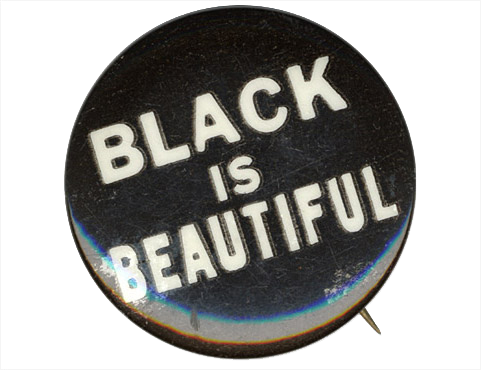
The civil rights movement did something powerful in response. It did not only change laws. It worked to restore identity and dignity. Phrases like “Black is Beautiful” were not slogans in the shallow sense. They were acts of psychological repair. They challenged a culture-wide narrative and helped rebuild a sense of worth.
That kind of shift matters.
Today, we should at least be willing to ask whether something similar is needed for men and boys.
If boys grow up hearing that masculinity is toxic, that men are the problem, that their instincts are suspect, it is not hard to imagine the impact. Shame takes root quietly. Identity becomes confused. Confidence erodes.
At some point, a counter-message becomes necessary—not one that diminishes others, but one that restores balance.
A simple one might be enough to start:
Men are good.
Not the Same History—But a Recognizable Pattern
The point of this comparison is not to collapse different histories into one.
It is to recognize a pattern.
A culture can:
create a narrative about a group
reinforce it through media, research, and conversation
filter all new information through that lens
and slowly make that narrative feel like reality
When that happens, the group is no longer seen clearly.
It is seen symbolically—as a problem.
We have seen this before.
The people living through it then often could not see it clearly.
It felt normal.
It felt justified.
It felt like truth.
That may be the most unsettling part.
Because if a culture can do that once, it can do it again.
Not the same history.
Not the same wounds.
But a pattern familiar enough that we would be wise—very wise—to recognize it.
Men Are Good, as are you.
The Death of White Sociology https://amzn.to/4dToojz