In a recent piece for The Globe and Mail, Debra Soh takes on a topic that is long overdue for honest discussion: the growing hostility between young men and women, and the role online spaces play in fueling it.
To her credit, she does something that many commentators still avoid. She acknowledges that the problem is not confined to the so-called “manosphere.” She names the existence of a “femosphere” and recognizes that it, too, can promote distrust, manipulation, and even outright hostility toward the opposite sex.
That matters.
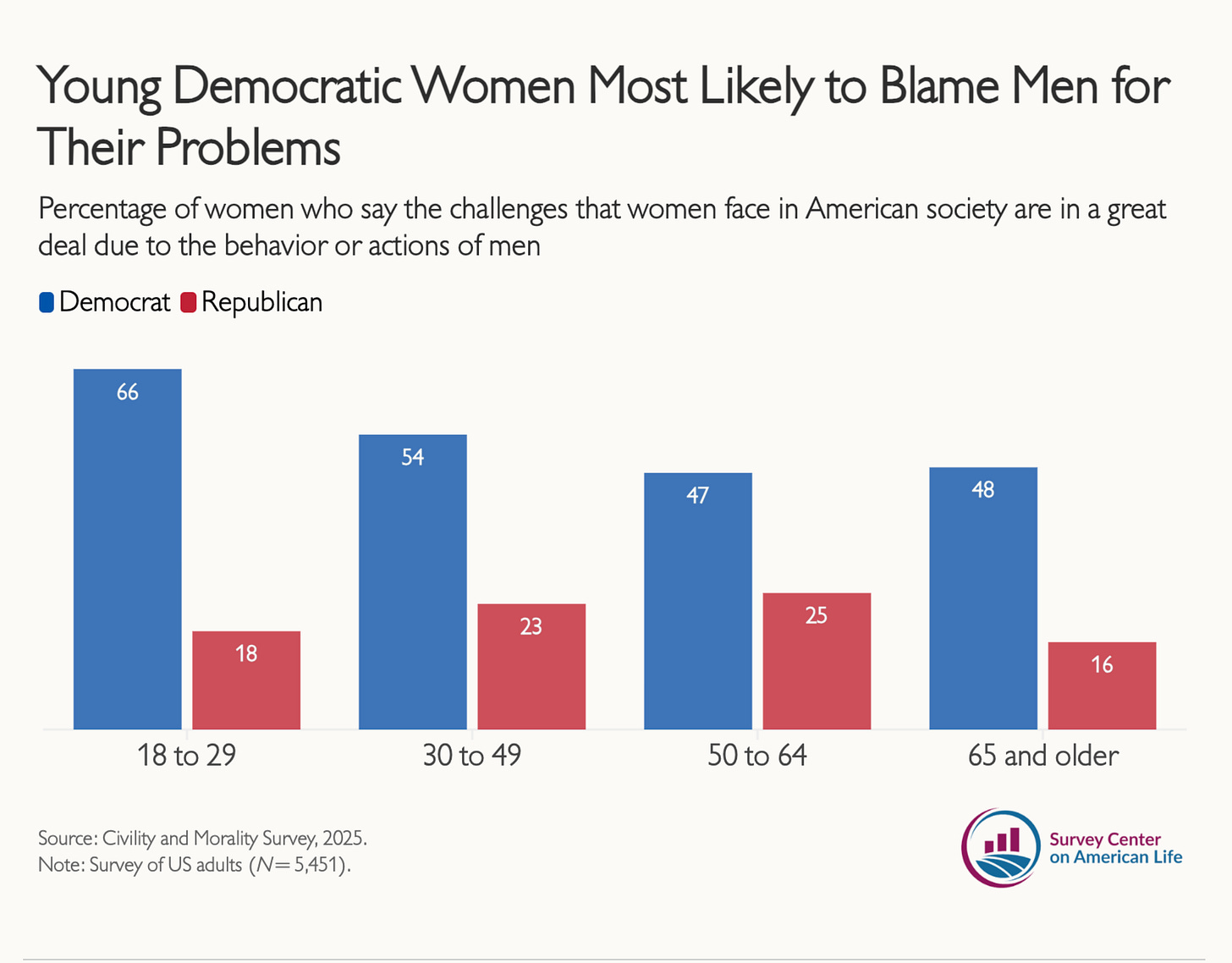
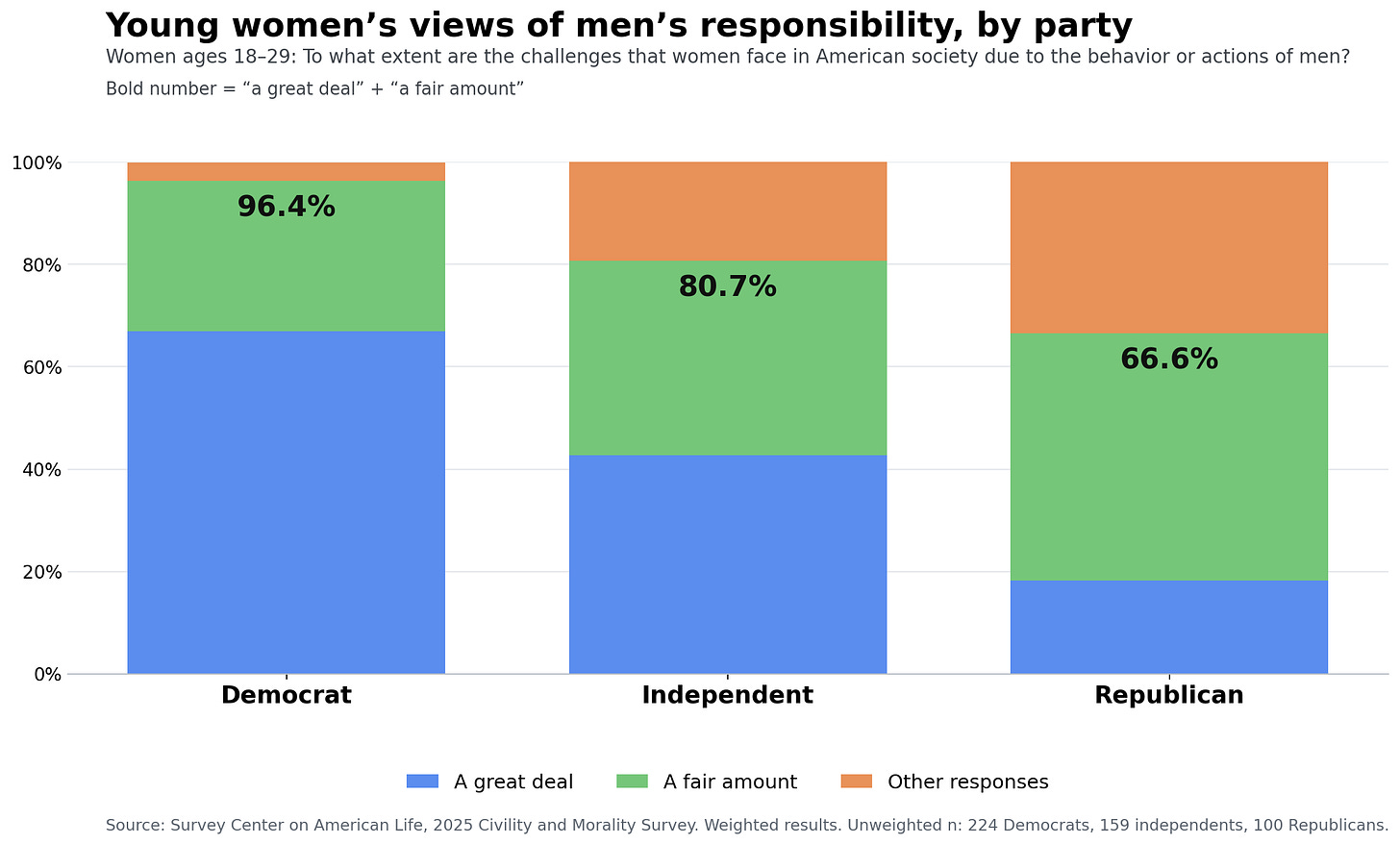
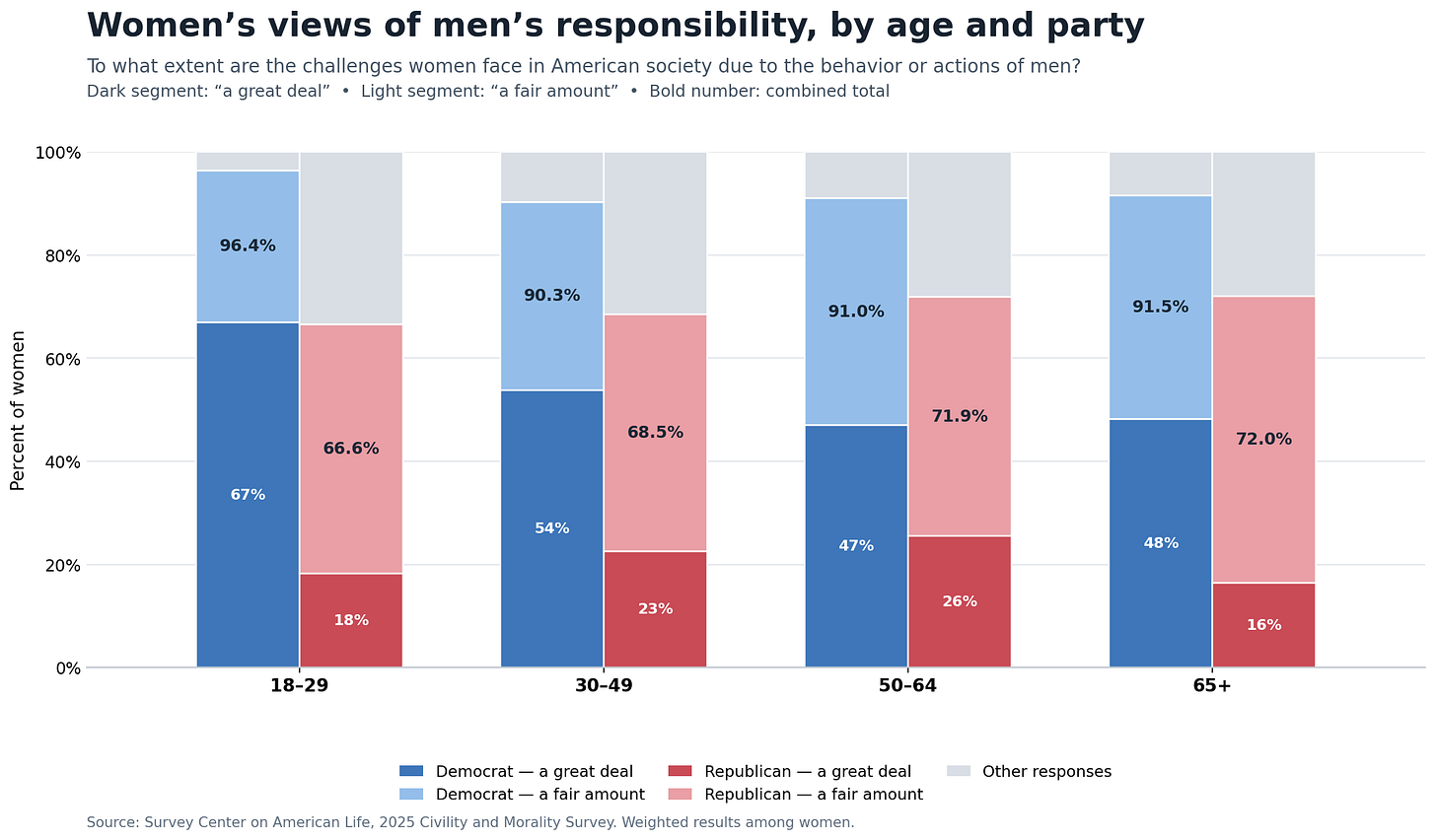
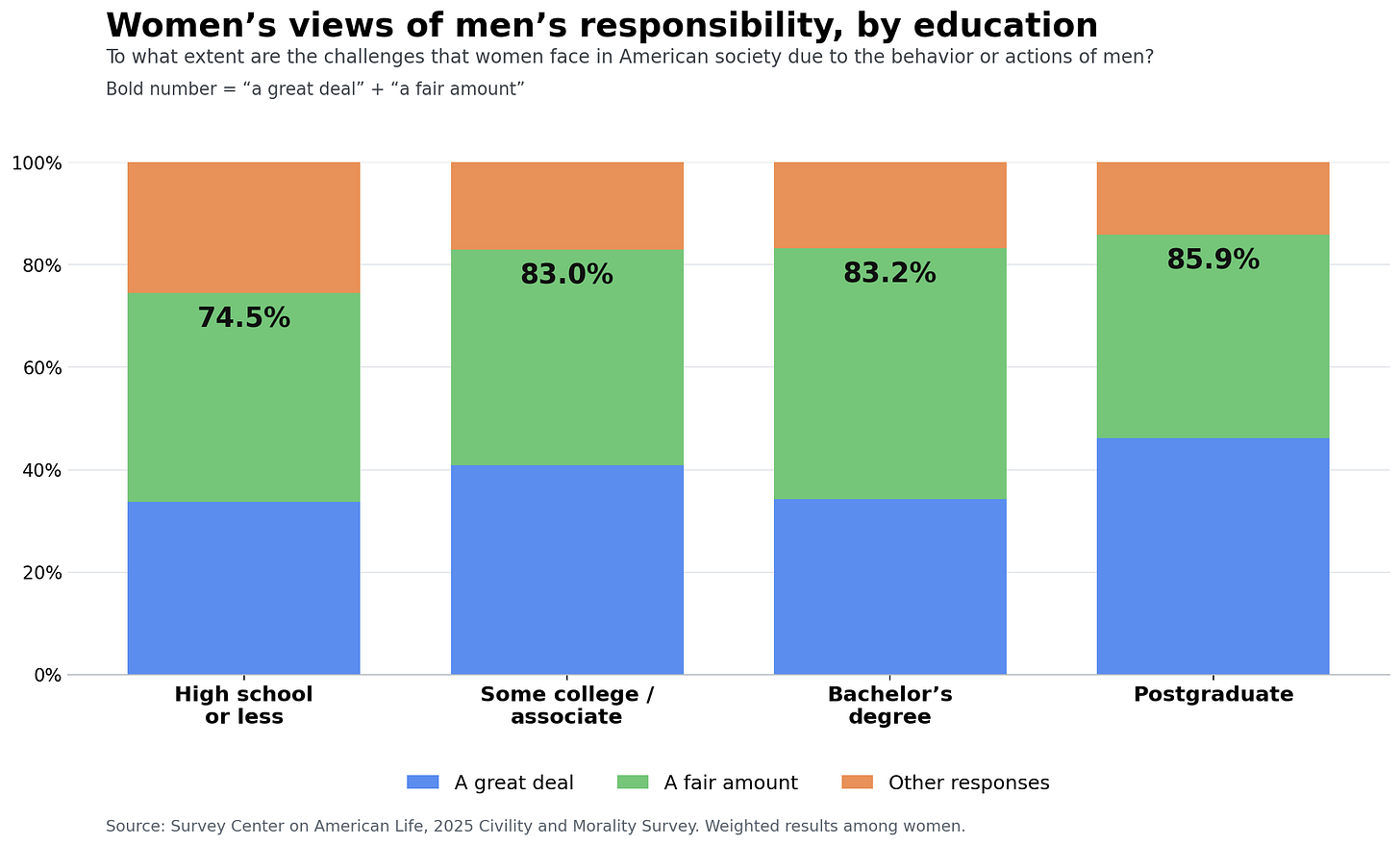
For years, the dominant narrative has been that toxicity flows in one direction—that men are the primary source of gender-based hostility, and women are largely reacting to it. Soh challenges that assumption. She points to polling data showing that young women, in some cases, hold more negative views of men than men do of women. She highlights the cultural double standards that allow anti-male messaging to pass with far less scrutiny than anti-female messaging.
All of this is important. And it takes a certain degree of intellectual independence to say it out loud.
But this is where her analysis stops just short of something deeper.
Soh ultimately frames the problem as a kind of mutual escalation—two sides locked in a feedback loop of resentment, each needing to step back, see the other more clearly, and abandon the worst impulses of their respective online cultures.
It’s a reasonable conclusion. It’s also incomplete.
Because it assumes that these two forces exist on roughly equal footing.
They don’t.
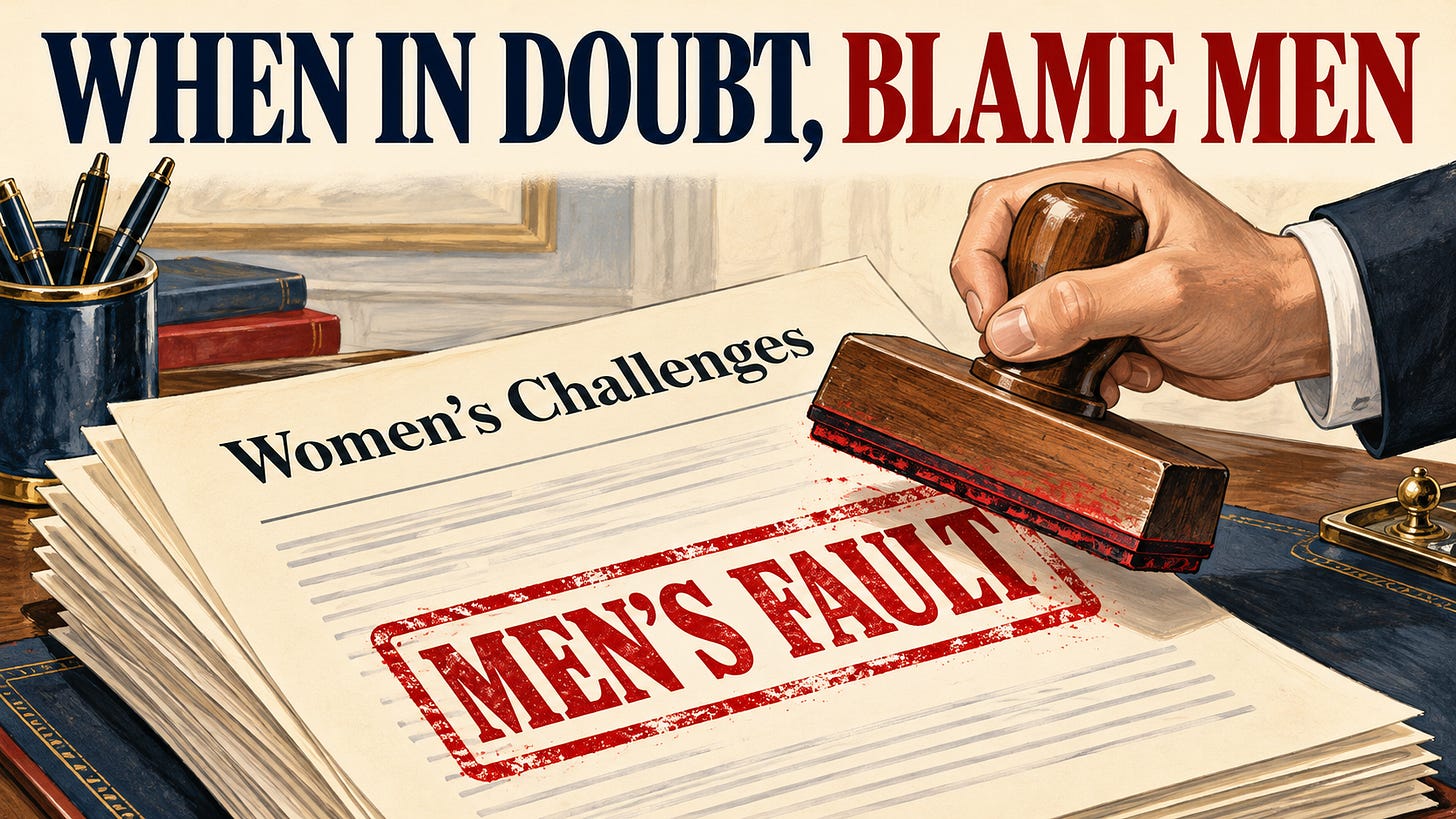
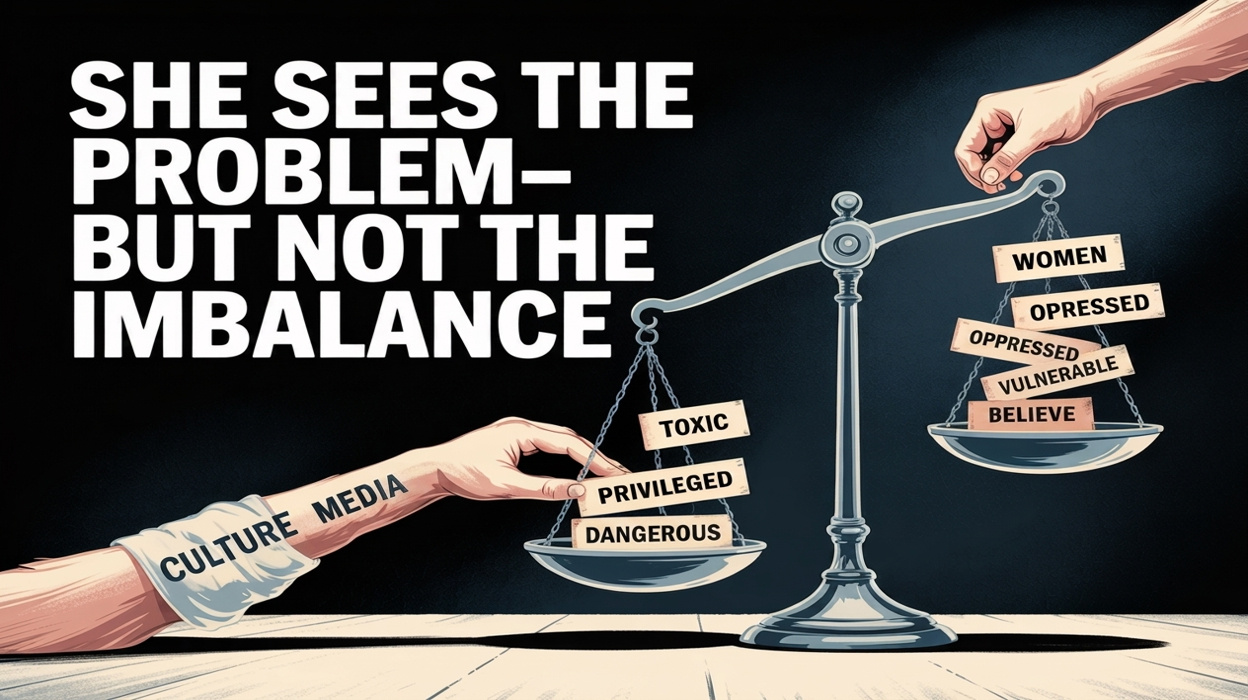
The hostility toward men that Soh describes is not simply emerging from fringe online communities. It is reinforced—often subtly, sometimes explicitly—by the broader culture itself. Media narratives regularly cast men as dangerous, deficient, or morally suspect. Academic frameworks frequently position men as privileged agents and women as vulnerable recipients. Institutional policies are often built on these same assumptions.
Over time, this does something powerful: it transforms a perspective into a kind of cultural default.
It begins to feel less like an opinion and more like reality.
By contrast, the hostility that emerges from the manosphere exists in a very different environment. It is not institutionally reinforced. It is challenged, criticized, and often condemned outright. Again, that does not make it accurate or healthy—but it does mean it operates under constraints that the opposing narrative largely does not.
This creates a playing field that is far from level.
One set of ideas is amplified and legitimized. The other is policed and marginalized.
And that asymmetry matters more than we often acknowledge.
Because when one narrative is embedded in institutions, it shapes not just opinions, but outcomes. It influences how boys are educated, how men are treated in courts, how male suffering is perceived—or overlooked. It becomes part of the background assumptions people carry without even realizing it.
Meanwhile, the reactive spaces that emerge in response—however flawed—are then judged as if they exist in isolation, rather than as downstream responses to an already tilted system.
This is the piece that Soh only partially touches.
She sees the hostility. She sees the polarization. She even sees that anti-male sentiment is more widespread than many are willing to admit.
But she does not fully account for the cultural forces that sustain and legitimize that sentiment.
And without that, the solution she offers—mutual correction—risks placing equal responsibility on two sides that are not equally empowered.
To be clear, none of this is an argument for excusing hostility—whether it comes from men or from women. We need to resist the pull of the worst elements on either side. Dehumanization, wherever it appears, damages everyone involved.
But understanding requires clarity.
And clarity requires us to ask not just what is happening, but where the weight of the culture rests.
Until we do that, we will continue to describe the conflict between men and women as a symmetrical breakdown in understanding—when in many ways, it is something much more lopsided than that.
Men are good, as are you.