Fatherhood matters.
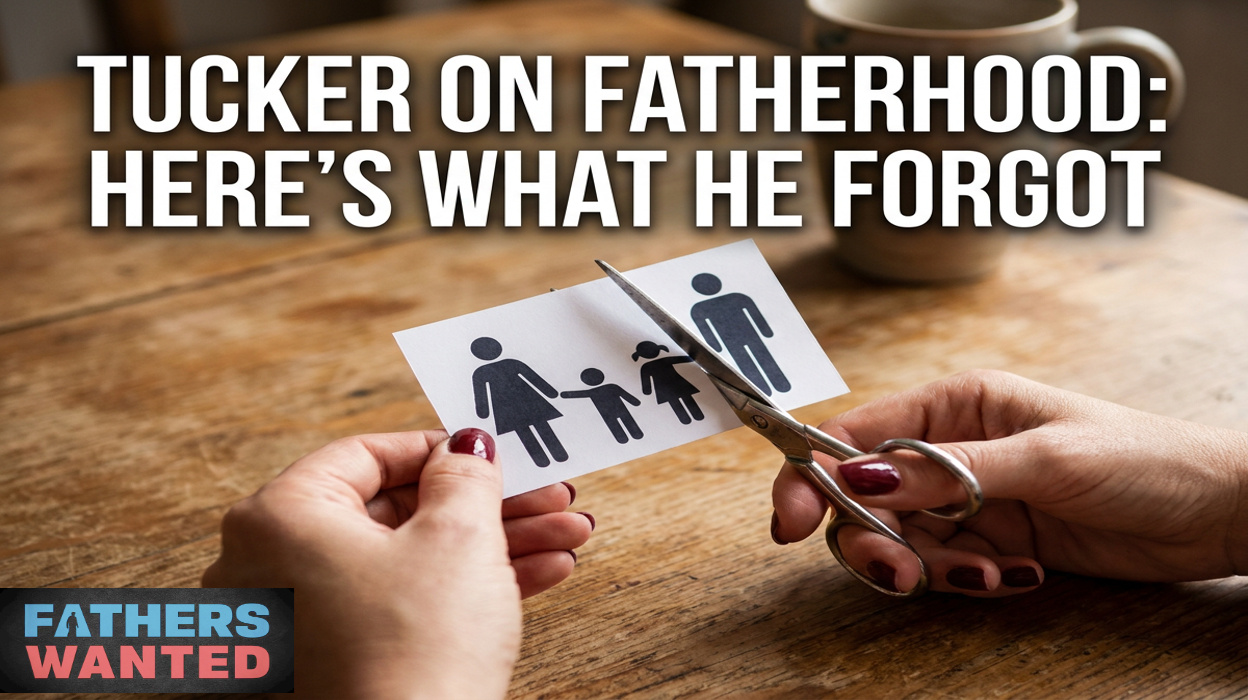
That’s the message at the heart of Tucker Carlson’s documentary Fathers Wanted—and it’s a message worth hearing.
A man who gives his time, his energy, and his life to his children is doing something deeply meaningful. There’s no controversy there.
But as I watched the film, I kept noticing something else.
Not what it said.
But what it didn’t.
Because by the end, the story felt strangely incomplete—like watching a documentary about lung cancer that never once mentions smoking.
The framing begins immediately.
Within the first moments, we are told that young men are choosing pornography, video games, and drugs over marriage and family. The implication is clear: the problem is not just that fatherhood is declining, but that men are turning away from it—opting for comfort, distraction, and indulgence instead.
That may be true in some cases.
But starting the story this way does something important. It establishes, from the outset, that the primary driver of fatherlessness is male behavior.
Everything that follows is filtered through that lens.
The film goes on to frame fatherlessness largely as a cultural and moral failure.
Men, we’re told, are retreating. Avoiding responsibility. Choosing comfort over commitment. Losing faith. Losing purpose.
By the end, the message is unmistakable: good men step up, bad men walk away.
And if a father abandons his children, Carlson makes it clear—he deserves contempt.
That’s a powerful claim.
But it rests on a narrow frame.
Because what the film barely examines—if at all—is the system in which modern fatherhood actually exists.
There is no serious discussion of:
family courts
custody outcomes
child support structures
no-fault divorce
or how fathers often lose daily access to their children
These are not minor details.
They are central to understanding what happens to fathers in the real world.
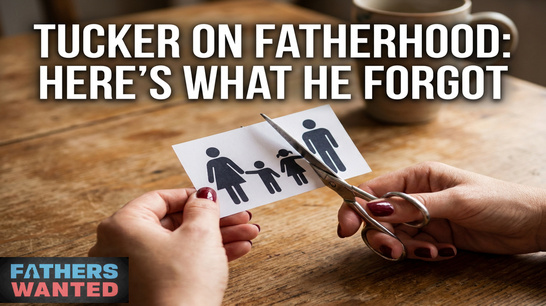
In many cases, fathers do not simply walk away.
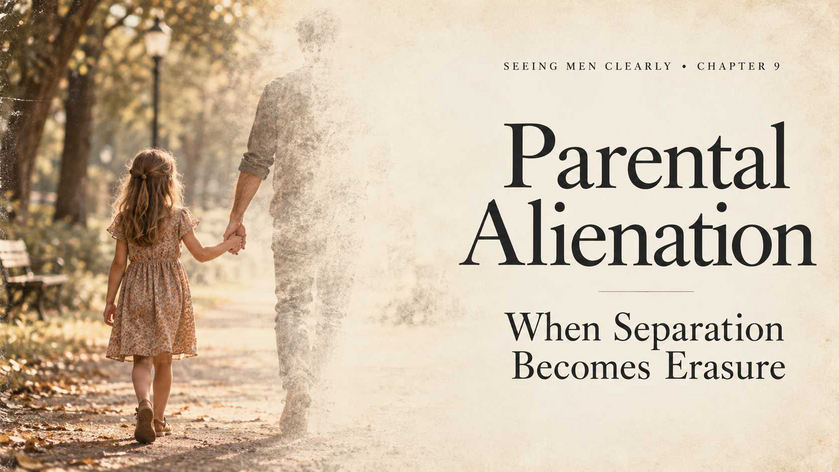
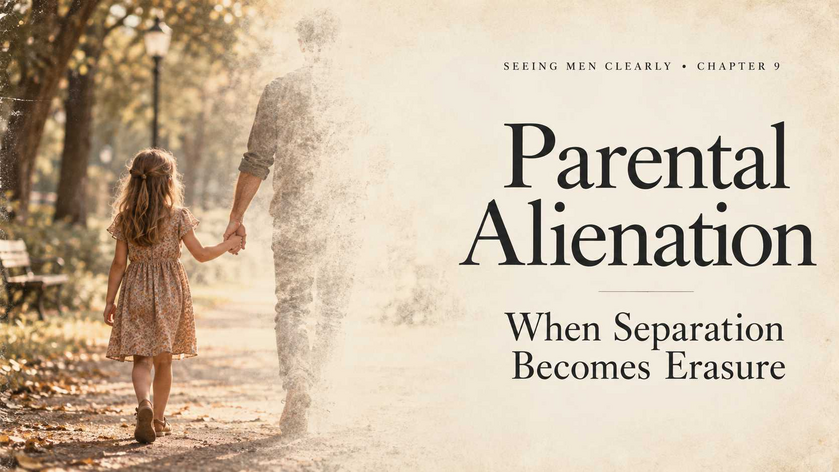
They are separated—from their children, from their role, from their identity as fathers—by processes largely outside their control. A man can go from being an everyday presence in his child’s life to being a visitor—or, in some cases, a paycheck. And yet, culturally, the outcome is often interpreted the same way:
He left.
But that is not always what happened.
There is another layer here the film only partially acknowledges. For decades, men have been broadly portrayed as:
oppressive
emotionally deficient
disposable
dangerous
toxic
These ideas have been reinforced across media, education, and public discourse—under the influence of feminist frameworks that carry a deep skepticism and contempt toward men.
At the same time, we have seen something very different happen on the other side.
Single motherhood has increasingly been framed not as a difficult circumstance to be supported and stabilized, but as something to be celebrated—even idealized. Cultural messaging often elevates the strength and independence of mothers raising children alone, while saying very little about the cost of a father’s absence.
The contrast is striking. Fathers are questioned. Their role is diminished. Their presence is treated as optional. While single motherhood is often presented as sufficient—sometimes even preferable. The result is a contradiction we rarely confront: We tell men they are not needed. We question their value. We undermine their role.
And then we ask why they hesitate to step into it.
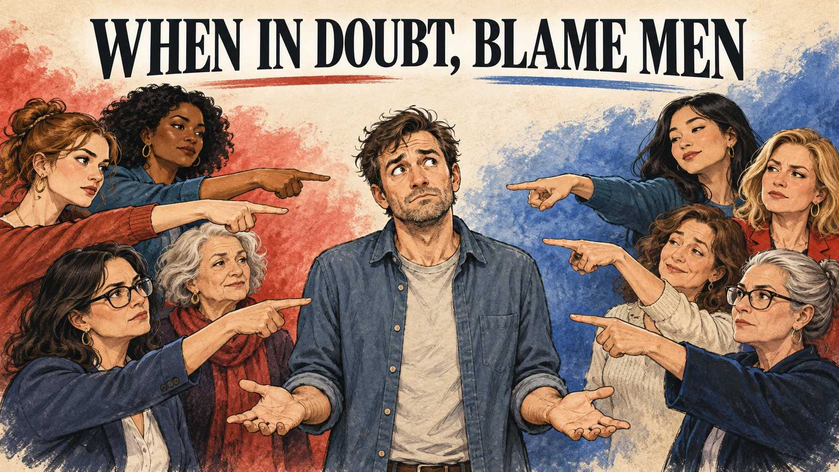
When structural forces are ignored, a complex social problem can get reduced to a simple moral failure. And when that happens, the burden of explanation—and blame—falls almost entirely on individuals.
In this case, on men.
Carlson is right about something important:
Fatherhood matters.
But if we want more fathers present in their children’s lives, we need to do more than praise the ideal We need to examine the systems that shape the reality. Because until we do, we will keep asking the same question—
Why aren’t men stepping up?
—without fully understanding what they are stepping into.
Men Are Good, as are you.