MenAreGood
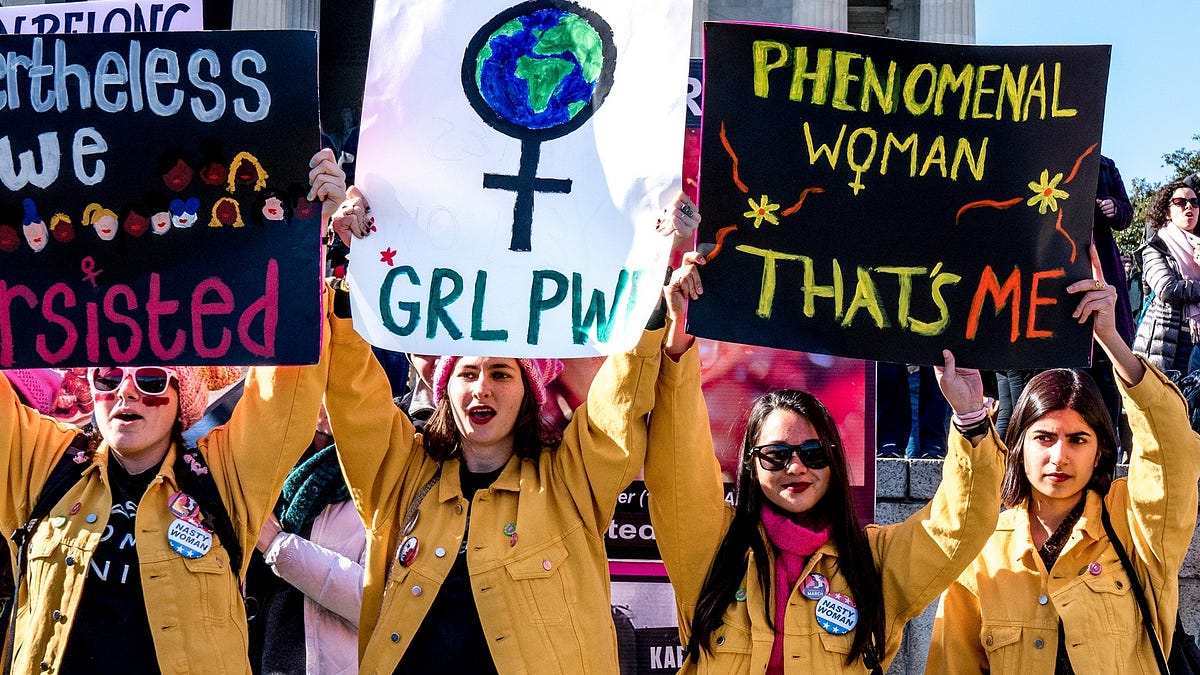
Why Caitlin Clark Became a Target
The overlooked psychology behind one of the biggest stories in sports.
June 29, 2026
post photo preview


There is an old saying from Australia:

“Tall poppies get cut down.”

The expression refers to the tallest flower in the field. Rather than celebrating its beauty, someone cuts it off so that it is no taller than the rest.

Psychologists have spent decades studying this phenomenon. They have given it several names: Tall Poppy Syndrome, the Black Sheep Effect, female intrasexual competition, and indirect or relational aggression.

Although each focuses on a different aspect of human behavior, they all point toward a similar observation.

Groups do not always reward excellence.

Sometimes they punish it.

Researchers such as Anne Campbell have argued that women historically competed quite differently than men. Physical aggression carried enormous risks for ancestral women, especially during pregnancy and child-rearing. Instead of fists and open confrontation, competition more often took the form of gossip, exclusion, reputation damage, coalition-building, and social isolation.

Tracy Vaillancourt and others have likewise shown that women are especially skilled at what psychologists call indirect​ or relational aggression—forms of competition that damage a rival without requiring physical conflict.

Interestingly, these patterns have been documented across a remarkable range of social settings. Researchers have observed them among schoolchildren, university students, summer camps, workplaces, parent groups, politics, entertainment, and increasingly on social media. The specific behaviors vary, but the underlying dynamic remains strikingly consistent. Wherever social relationships help determine status, competition often takes relational rather than physical forms.

Classic studies by psychologist Ritch Savin-Williams are especially revealing. His summer camp research showed that even groups of adolescents who had just met quickly formed stable dominance hierarchies. Among girls, those hierarchies were maintained largely through verbal and relational tactics rather than physical confrontation. The lesson was clear: human groups naturally establish social rankings, but the methods used to compete for status often differ between the sexes.

Another body of research examines what is known as the Black Sheep Effect. Groups often react more harshly toward members of their own group who violate expectations than toward outsiders. The person who rises too far above the group, receives too much attention, or appears to disrupt the existing social order can become the target of surprisingly intense hostility.

Perhaps the most remarkable feature of relational aggression is not the aggression itself but its invisibility.

Unlike physical violence, relational aggression is often designed to leave little evidence. Gossip is whispered rather than shouted. Social exclusion leaves no bruises. Reputation attacks are disguised as concern. Coalitions form quietly. Each individual act may appear trivial—even accidental—but together they can profoundly alter a person’s standing within a group.

This invisibility may help explain why relational aggression is so often overlooked. Victims know something is happening, yet observers struggle to identify any single event worth condemning. Even authority figures can miss the larger pattern because they evaluate each incident in isolation rather than seeing the cumulative effect.

That brings us to Caitlin Clark.

By any objective measure, Clark has transformed the WNBA.

She fills arenas.

Television ratings have exploded.

Merchandise sales have soared.

Many fans who never watched women’s basketball now tune in specifically to watch her play.

One might expect such a player to be celebrated almost universally.

Instead, she has often been met with unusually hard fouls, dismissive comments, resentment, and a remarkable reluctance among some players ​to acknowledge what she has accomplished.

The fouls themselves are obvious enough, although even the obvious ones often seem to be missed by the referees.

That pattern is typical of relational aggression, which is frequently overlooked by school officials, HR departments, and even informal social groups. Researchers have long noted that women’s relational aggression often goes unrecognized by those in positions of authority.

The fouls against Caitlin Clark are physical, but they also share important characteristics with relational aggression. They are easily hidden within behavior that appears normal: “I play hard basketball. Sometimes it gets rough.” They also come with built-in plausible deniability: “I didn’t mean to do that.” “It’s just a foul.”

The deeper question, then, is not whether these are simply hard basketball plays. It is whether they are better understood as the physical expression of a broader social dynamic.

A hard foul is easy to dismiss. Two hard fouls are still just basketball. But when the same player repeatedly becomes the target of ​v​iolent play, persistent criticism, social distancing, and efforts to minimize her accomplishments, the research suggests we should at least consider the possibility that we are witnessing something larger than ordinary athletic competition.

If so, the referees face a​ tough task. They are trained to officiate individual fouls, not invisible social hierarchies. A referee can call a shove. He cannot call status competition. He can penalize an elbow. He cannot penalize a coalition.

Perhaps Clark is not merely a great player.

She is a tall poppy.

Her extraordinary success has disrupted an existing hierarchy.

The research suggests that when someone suddenly rises far above her peers, she may trigger forms of indirect aggression designed—not consciously in most cases, but socially—to pull her back toward the group.

Again, this is not an excuse.

It is an explanation.

The interesting part comes when we compare this with men’s sports.

Consider Michael Jordan.

Jordan entered the NBA as an extraordinary talent. Opposing teams hit him hard. They challenged him physically. They tried to stop him.

But something else happened.

As his greatness became undeniable, players increasingly admired him. Young athletes wanted to imitate him. Rivals measured themselves against him. He became the standard by which excellence itself was judged.

The competition remained fierce.

The respect grew alongside it.

That difference is fascinating.

Male hierarchies often appear to resolve competition through rank. Once someone proves himself to be the best, others continue trying to defeat him, but they also acknowledge his position.

Female hierarchies often seem to operate somewhat differently. Because relationships and coalition membership play a larger role, someone who rises dramatically above the group may be experienced not simply as the best performer, but as someone disrupting the balance of the group itself.

Human behavior is almost always influenced by multiple factors—personality, cliques, incentives, race, culture, coaching, individual history, and circumstance. It would be a mistake to attribute what we are seeing to any single cause. My suggestion is simply that relational aggression deserves consideration as one contributing factor among many.

What is remarkable is that psychology has spent decades documenting phenomena such as Tall Poppy Syndrome, relational aggression, stable dominance hierarchies, and the Black Sheep Effect, yet almost no one seems willing to ask whether these well-established patterns might help us understand what we are witnessing today.

Sometimes the best way to understand a controversy is not to ask who is good and who is bad.

It is to ask what kind of human behavior we are looking at.

If Caitlin Clark were a man playing in a men’s league, would we be seeing the same social dynamics?

That may be the most interesting question of all.

​Men Are Good.


Tall Poppy Syndrome
N. T. Feather’s classic work: Attitudes towards the high achiever: The fall of the tall poppy.
Also useful: BPS overview on tall poppies, deservingness, and schadenfreude. https://www.researchgate.net/publication/229782141_Attitudes_towards_the_high_achiever_The_fall_of_the_Tall_Poppy

Relational Aggression
Crick & Grotpeter’s foundational 1995 paper: Relational Aggression, Gender, and Social-Psychological Adjustment. https://pubmed.ncbi.nlm.nih.gov/7789197/

Black Sheep Effect
Marques, Yzerbyt & Leyens’ original 1988 paper: The “Black Sheep Effect”: Extremity of judgments towards ingroup members as a function of group identification. https://pubmed.ncbi.nlm.nih.gov/7789197/

Dominance / Status Hierarchies
Good overview: Dominance in humans — useful for distinguishing dominance from prestige/status.
Also relevant: Cheng et al. on dominance and prestige as routes to social status.
https://pmc.ncbi.nlm.nih.gov/articles/PMC8743883/

Hierarchy Stability
Knight & Mehta: Hierarchy stability moderates the effect of status on stress and performance.
https://www.pnas.org/doi/10.1073/pnas.1609811114

Savin-Williams, R. C., & Vrangalova, Z. (2013).
Mostly heterosexual as a distinct sexual orientation group: A systematic review of the empirical evidence.
Developmental Review, 33(1), 58–88.
https://doi.org/10.1016/j.dr.2013.01.001


community logo
Join the MenAreGood Community
To read more articles like this, sign up and join my community today
0
What else you may like…
Videos
Posts
Articles
September 03, 2026
False Allegations - What the Numbers Don't Tell Us

We are getting a head start on International Falsely Accused day on Sept 9th!

How many false allegations of sexual abuse are there? We are often told they are extremely rare—perhaps only one to three percent. But those numbers depend on an extraordinarily narrow definition of what qualifies as a false allegation. They usually count only allegations proven to have been deliberately fabricated. Mistaken identity, contaminated memories, misunderstandings, suggestive interviewing, unsupported accusations and even recanted allegations may not be included.

In this conversation, Janice Fiamengo and I speak with Dr. Felicity Goodyear Smith, a physician, forensic medical examiner and professor at the University of Auckland who has studied wrongful allegations for more than three decades. Felicity explains the many different ways an innocent person can be accused, separating deliberate fabrications from allegations that are sincerely believed but untrue.

We also examine how “believe the victim” has ...

01:09:20
July 15, 2026
The Women's Health Narrative Meets the DATA

What if one of the most common claims in health policy simply isn’t true?

We’ve all heard the refrain: women are underfunded, under-researched, and left behind by the medical establishment. It’s repeated so often that most people never stop to ask for the evidence.

In this roundtable, Jack Kammer, Ed Bartlett, Ed Stephens, Jim Nuzzo, and I compare that narrative with the available data. We examine research funding, clinical trial participation, life expectancy, and the unintended consequences of policies that consistently prioritize one sex while neglecting the other.

This isn’t an argument against women’s health. It’s an argument for evidence, fairness, and a healthier future for everyone.

Link to the Feminist pdf that calls for 20 Billion dollars for women’s health!
https://drive.google.com/file/d/1IKEEZMGXtRNxU4n5K_M1d6k2w-ZP_wVT/view

Jim Nuzzo

The Nuzzo Newsletter on Substack http//jameslnuzzo.Substack.com
X: https://x.com/JamesLNuzzo

Jack Kammer

Jacks Substack Men’s ...

00:35:24
July 11, 2026
Mantoon: A Visit to the Doc

A visit to the Doc.

00:00:14

It seems that one famous plaster body of mother and child was wrong. The “mother” is actually a man and the child is not related to him.
For years the famous image of a mother protecting a child was projection. The DNA shows a man protecting a child that is not related to him.

As I stated before women who actually see men’s rights and general fairness as valid, tend to be the mothers of boys. This video is a great example of them pushing back and it is great to see.

August 10, 2026
Feminism Cannot Be Reformed: It Must Be Destroyed Root and Branch

Janice Fiamengo’s new book is out, and this excerpt from the Foreword gives you a pretty good idea of what to expect. Janice goes straight to the heart of feminism and gives ample reasons for its demolition.

This is an important book. I hope you’ll get a copy for yourself—and maybe send one to someone who is even a little bit open to seeing the reality of feminism rather than the equality mask presented by feminists and so much of the media.

https://fiamengofile.substack.com/p/feminism-cannot-be-reformed

October 31, 2026
post photo preview
Part 3: Consent, the Only Sexual Norm Left


Part 3: Consent, the Only Sexual Norm Left

Follow the public argument over the Cornell case, or almost any campus sexual assault case, and you’ll notice something. It turns on a single question: was there consent? Other moral questions about the same night barely come up. When someone raises them, they’re usually heard as irrelevant, or as blaming the victim.

Why is consent the only question we can see?


Three ideas, briefly

The Family Archetype is the moral logic of a family: protect the vulnerable, care before proof. The Society Archetype is the moral logic of public life: fair procedure, evidence before judgment, individuals responsible for what they did. Matrisensus is the family’s logic taking over public life. It treats groups as victims or villains, and it keeps those it sees as vulnerable innocent by placing all the guilt elsewhere.


Consent, and one other

Consent isn’t quite alone. One other sexual norm still gets attention: power. Universities ban relationships between professors and students even when both consent, and #MeToo focused heavily on bosses and subordinates. But power and consent have the same shape. Both put all the moral responsibility on one person’s conduct toward the other: the one who initiated, the one with more power, the one who didn’t get a clear yes.


What disappeared

The norms that have faded have the opposite shape. Dignity, sobriety, modesty, fidelity, prudence and self-respect are norms of self-governance. They ask what each person owes to herself, as well as to the other: Did I keep my judgment clear? Does this honor what sex is meant to be? Am I protecting my own worth?

For most of history, these norms did most of the work of sexual morality, and they applied to both people. They didn’t wait for harm and then assign blame. They shaped behavior beforehand, so harm was less likely.


Why only consent survives

Here’s the key. Consent is the only sexual norm that fits Matrisensus, because it’s the only one that keeps the protected person completely innocent.

A norm like sobriety or dignity can’t do that. It looks at the choices of the person Matrisensus wants to protect: what she drank, what she risked, what she agreed to. Even mentioning such a norm puts some responsibility on her, so the norm simply stops being seen. Nobody argues against it. It just becomes invisible. Consent passes the test perfectly. Whatever happened, the moral question becomes what the other person did to her. An ethics of consent alone is the only sexual ethics in which innocence and guilt always belong to different people.

There’s a second reason. Consent is the only sexual norm decided by feeling. Sobriety and fidelity are about what you do, which others can see. Consent is about an inner state: did she want it? No one else can check that, and it can be reassessed afterward, as feelings about a night change. When consent is the only standard, what an encounter meant is no longer fixed by what happened. It depends on how one person later feels about it.

And there’s an irony. Consent actually comes from the Society Archetype. It’s a kind of contract: a mutual agreement between adults, judged by what each did and said at the time, with each responsible for their part. What Matrisensus keeps is a version stripped of what made it fair. The mutual agreement becomes one person’s inner state, the time of agreement becomes any later moment, and the shared responsibility falls on one person.


How we got here

This isn’t mysterious. The sexual revolution rejected marriage, chastity, modesty and courtship as tools of control. Consent was what was left, because both sides of the new culture could accept it. For those who wanted freedom, it was the limit: anything goes between consenting adults. For those who wanted protection, it was also the limit: no harm without consent. Consent is where “anything goes” and “protect the vulnerable” meet.


Three levels of desire

It helps to see desire as working on three levels, each meant to guide the one below it. The first is appetite: wanting pleasure, comfort, recognition. The second is self-control: the desire for order and mastery over ourselves. The third is meaning: the desire for purpose and for contributing to something beyond ourselves. A healthy life doesn’t abolish appetite. It puts appetite under self-control, and self-control in service of meaning.

Consent is permission between two appetites. It lives entirely on the first level. The older sexual morality guided that appetite from both levels above. Chastity, sobriety, modesty and prudence belong to the second level: they’re practices of self-control. Dignity, fidelity and the sense that sex is sacred belong to the third. They place sex inside something larger than one night: a committed relationship, the beginning of families and generations, the worth of a person and not just her pleasure.

An ethics built on consent alone has thrown out both upper levels at once. Self-control is dismissed as repression, and meaning as superstition. What’s left is appetite, with nothing above it but permission.


What this costs

The older norms protected in advance. Staying sober, taking time, staying among friends, all made harm less likely before any question of permission came up. Consent only protects after the fact, by judging what went wrong. Women lost protective norms and were given a courtroom norm in their place.

Harms that aren’t consent violations — degradation, being used with your agreement at the time, the emptiness of a night both people regret — no longer have any moral language. The only way to name them is to call them a consent violation. So ambiguous encounters get forced into two boxes: assault, or nothing. That’s why cases like Cornell become battlegrounds, and why the definition of consent keeps stretching to cover harms it was never built to carry.

This isn’t only a conservative argument. Christine Emba, in Rethinking Sex, argues that consent is necessary but not enough, and that a consent-only ethics has failed women. Louise Perry makes a similar case in The Case Against the Sexual Revolution.

To be clear: consent matters, and violating it is a serious wrong. The point isn’t that consent is unimportant. It’s that a culture that can see only consent has lost the norms that protected women before consent was ever in question, and has lost the language even to notice what that has cost.


One pattern

Across this series, the same thing has happened three times. Hard cases become battlegrounds because their meaning is open, and open meaning is where the fight between protective feeling and fair judgment gets fought. Juries falter in exactly those cases, because a shared moral story produces the shared blind spot that defeats the reason juries exist. And sexual morality has shrunk to consent, because consent is the one norm that keeps the protected person innocent.

Each time, feeling has moved from signal to verdict. The answer isn’t less feeling. A culture that stopped caring about the vulnerable would be worse than ours. The answer is putting feeling back where it belongs: the first word, not the last. Mercy after truth, not instead of it. And judgment that can still see a particular person and a particular act, rather than the story they seem to fit.

David Shackleton

____________________________

David Shackleton is a writer and cultural commentator whose work focuses on identity politics and gender. His books, Matrisensus, The Hand That Rocks the World: An Inquiry Into Truth, Power and Gender, and Daughters of Feminism: Women Supporting Men’s Equality, are available on Amazon. His website is genderhealing.com.


Sources for the series

Part 1

  • Charles G. Lord, Lee Ross, and Mark R. Lepper, “Biased Assimilation and Attitude Polarization,” Journal of Personality and Social Psychology 37, no. 11 (1979): 2098–2109.

Part 2

  • Marquis de Condorcet, Essai sur l’application de l’analyse à la probabilité des décisions rendues à la pluralité des voix (1785).

  • Franz Dietrich and Kai Spiekermann, “Jury Theorems,” Stanford Encyclopedia of Philosophy.

  • Christian List and Robert E. Goodin, “Epistemic Democracy: Generalizing the Condorcet Jury Theorem,” Journal of Political Philosophy 9, no. 3 (2001): 277–306.

  • Reporting on the Clancy jury by NBC10 Boston, CBS News, NBC News, and the Boston Globe, August–September 2026.

Part 3

  • Jesse Graham, Jonathan Haidt, and Brian A. Nosek, “Liberals and Conservatives Rely on Different Sets of Moral Foundations,” Journal of Personality and Social Psychology 96, no. 5 (2009): 1029–1046.

  • Nick Haslam, “Concept Creep,” Psychological Inquiry 27, no. 1 (2016): 1–17.

  • Christine Emba, Rethinking Sex: A Provocation (Sentinel, 2022).

  • Louise Perry, The Case Against the Sexual Revolution (Polity, 2022).

Read full Article
October 30, 2026
post photo preview
When Feeling Becomes the Verdict Part 2 (David Shackleton)
Part 2: Can a Jury Still Judge?


Part 2: Can a Jury Still Judge?

When the Clancy jury deadlocked, eleven jurors wanted to find her not guilty by reason of insanity. One man refused. Afterward, several jurors described him to the press as “closed off” and unable to explain himself. His lawyer called him heroic for holding his ground. One juror described confronting him forcefully. The defense asked the court to remove him from the jury.

What he was actually thinking is still disputed. But the scene raises a question worth asking: when a whole culture has already sorted people into victims and villains, can a jury still do its job?


Three ideas, briefly

The Family Archetype is the moral logic of a family: protect the vulnerable, care before proof. The Society Archetype is the moral logic of public life: fair procedure, evidence before judgment, individuals held responsible for what they did. Matrisensus is the family’s logic taking over public life, judging people as members of victim or villain groups instead of by what they actually did.


Why juries work

We tend to think of juries as a democratic courtesy, a way of letting ordinary people have a say. But there’s a more precise reason they work, and it was worked out in 1785 by a French mathematician, the Marquis de Condorcet.

His insight was this: if each person in a group is a little more likely to be right than wrong, and each judges independently, then the majority of a group is far more reliable than any one person. Twelve independent judgments, pooled together, beat one expert.

Notice the key word: independently. That’s where it all depends.


When everyone shares the same blind spot

If the jurors don’t judge independently, if they all tend to make the same mistake for the same reason, the advantage disappears. Philosophers who study this have shown it can get worse than that. A jury that shares one blind spot can be less reliable than a single sensible judge, because instead of correcting each other’s errors, the jurors magnify the same one. A bigger jury just repeats the mistake more confidently.

Matrisensus creates exactly this condition. It doesn’t produce twelve people weighing the evidence separately. It produces twelve people applying the same ready-made story to the same facts. A dominant moral outlook doesn’t make people err in different directions. It makes them agree.

And jury selection can’t catch it. Lawyers screen jurors for bias they’re aware of: a conflict of interest, an opinion already formed. But a dominant moral outlook doesn’t feel like bias to the person who holds it. It feels like plain good sense. A juror who holds it will honestly answer “Yes, I can be fair,” and still be wrong in exactly the way the mathematics predicts. You can’t ask someone to disclose a distortion they can’t see.


What the Clancy jury shows

It helps to remember how a criminal trial is built. It doesn’t shut out compassion. It puts compassion in its proper place.

The trial answers a narrow question: did the person do it, and were they capable of being responsible for it? That question is answered from evidence and deliberately protected from sympathy. Only afterward, at sentencing, usually before a judge, do the defendant’s circumstances, history and suffering get weighed in full. Truth first. Mercy after.

An insanity defense brings one narrow question forward into the trial: because of mental illness, could she tell right from wrong, or control what she did? That’s a specific test, decided on evidence.

Several Clancy jurors described reasoning that went around that test. She had been “failed by everyone,” they said; she was “lost in the system.” One said that testimony about what a loving mother Clancy had seemed weighed on her more than the clinical evidence about her state of mind when she killed. That’s sentencing reasoning — sympathy for a whole life — brought into the place reserved for a narrower, harder question.

Then there’s the shape of the deliberations. The jury was nine women and three men, and the lone holdout was its only minority member. Eleven people converged quickly and emotionally on one account. The one person who didn’t was treated less as someone with a view to be considered than as a problem to be fixed. That doesn’t prove the eleven were wrong. It shows what shared judgment looks like from the inside, and how little room it leaves for the one kind of voice a jury most needs: the independent one.


How far this goes

It’s important not to overstate this. In an ordinary contract dispute or burglary trial, nothing triggers a shared moral story, and juries probably work as well as they ever did. The problem shows up in a specific kind of case: one where the parties can be sorted by identity into categories the culture has already judged. That category isn’t small. For those cases, the reason we trust juries may have quietly stopped applying.


Is there a fix?

Not an easy one. Replacing the jury with a judge just puts the same vulnerability in one person, who comes from the same culture. Better instructions can’t reach a bias the juror doesn’t feel as bias. Appeals courts share the same assumptions.

The only real fix is the one that works anywhere: people capable of independent judgment, who can see a case on its own facts instead of the familiar story it seems to fit. That’s a much higher bar than the jury system was designed to require. But it’s the bar we now face.

Next: Part 3 asks why, in arguments about sex, consent is the only question anyone seems able to see.

David Shackleton

____________________________

David Shackleton is a writer and cultural commentator whose work focuses on identity politics and gender. His books, Matrisensus, The Hand That Rocks the World: An Inquiry Into Truth, Power and Gender, and Daughters of Feminism: Women Supporting Men’s Equality, are available on Amazon. His website is genderhealing.com.

Read full Article
October 28, 2026
post photo preview
When Feeling Becomes The Verdict (by David Shackleton)
Part 1: Why the Hard Cases Become Battlegrounds


Part 1: Why the Hard Cases Become Battlegrounds

This fall, two cases have taken over public argument. In Massachusetts, a jury could not agree whether Lindsay Clancy, who strangled her three young children while suffering what her defense called postpartum psychosis, should be held criminally responsible. Eleven jurors said no. One said yes. The judge declared a mistrial. At Cornell, an accusation against seven young men became a national story, and then a contested one, when the local prosecutor said the woman’s first sworn statement differed substantially from the version that spread online.

Neither case is settled, and I’m not going to argue about what happened in either. I want to ask a different question. Why do some cases become national battlegrounds, while others, often far worse, are reported and forgotten within a week?

Three ideas to start with

People live inside two moral systems, and each is right in its own place.

The Family Archetype is how a family thinks. It protects the vulnerable, gives according to need rather than merit, favors its own, and acts on care before proof. A mother doesn’t ask for evidence before comforting a crying child. In a family, that’s exactly right.

The Society Archetype is how public life among strangers has to work. It relies on fair procedures, evidence before judgment, and holding individuals responsible for what they actually did, not for the group they belong to. A court doesn’t comfort the accuser before establishing the facts. In public life, that’s exactly right.

Matrisensus is what happens when the family’s way of thinking takes over public life. It treats whole groups as victims or villains, rather than judging what particular people did. It keeps the people it sees as vulnerable innocent by placing the guilt elsewhere. It speaks the language of compassion, but it works like a verdict.

It isn’t outrage. It’s ambiguity.

The usual explanation for viral controversies is that outrage gets clicks. But that doesn’t fit the pattern. The clearest, most one-sided cases of wrongdoing rarely become lasting flashpoints. Everyone agrees what happened, and the story fades. The cases that never go away are the ones whose meaning stays open.

Sometimes that’s because the facts are disputed. But often the facts are agreed, and what’s disputed is what they mean. A case with one obvious reading gets absorbed. A case with two live readings can be argued forever.

Psychologists showed why in a classic 1979 study. Charles Lord, Lee Ross and Mark Lepper gave people on opposite sides of an issue the same mixed evidence. Neither side moved toward the other. Both became more certain they were right, because evidence that doesn’t settle its own meaning leaves room for everyone to read it their way.

So the real fight in these cases isn’t usually about the people involved. It’s about a rule. Matrisensus says: believe the designated victim, condemn the designated villain. The question is whether that rule is absolute, or only a starting assumption that has to give way when the evidence goes the other way. A clear case never tests that question, because both moral systems reach the same answer. An ambiguous case is the only place it can be fought out in public. That’s why both sides mobilize so completely. If the rule bends here, it was never absolute. If evidence doesn’t govern here, it doesn’t govern anywhere.

This is an old fight

Social media didn’t start this. It just made it faster.

In 1991, Anita Hill accused Clarence Thomas of sexual harassment during his Supreme Court confirmation hearings. No witness could settle what happened. But even certainty about the facts wouldn’t have settled the deeper question: should an uncorroborated accusation block a confirmation, or does fairness require more? The Senate confirmed him 52 to 48, the closest margin in over a century. Hill is still asked to relitigate it more than thirty years later. Clear cases don’t do that to their witnesses.

In 1998, the facts of Bill Clinton’s affair with Monica Lewinsky were agreed almost immediately. The two-year fight that followed, including an impeachment, was entirely about meaning: was this an abuse of power over a young subordinate, or a private matter? And the sides lined up largely by political loyalty, which shows how often people choose their principle based on the outcome they want.

The pattern ran on through the Duke lacrosse case, the Rolling Stone story about the University of Virginia, the Kavanaugh hearings, and the Covington Catholic incident.


The two current cases

Clancy’s own defense never denied that she killed her children. Her case rested on insanity. Investigators had ruled out her husband, Patrick, with surveillance footage and phone records. Even so, a loud online group insisted that Patrick was the real killer, contradicting the evidence and her own lawyers. That goes beyond arguing about meaning. It refuses to accept facts that are settled, because the only acceptable conclusion is her total innocence. Most of her supporters didn’t go that far; the real legal question, whether her mental state removed criminal responsibility, was genuinely hard. But the fringe shows where the rule leads when it’s held as absolute. It ignores not only uncertain facts, but certain ones.

The Cornell case is different: there, a real factual dispute remains open.

A culture that had settled which moral system governs public judgment wouldn’t need to fight this battle every few years. That we do, reliably, since at least 1991, tells us the question is still open.

One last idea

Underneath all of this is a simple principle about feeling. The feeling that something is wrong is real and valuable. It tells us where to look and what matters. But it is true testimony about the person who feels it, not proof about the world. “I feel harmed” is a fact. “So you harmed me” is a separate question. Feeling deserves the first word. It shouldn’t have the last.

Next: Part 2 asks whether juries can still do their job.

David Shackleton

____________________________

David Shackleton is a writer and cultural commentator whose work focuses on identity politics and gender. His books, Matrisensus, The Hand That Rocks the World: An Inquiry Into Truth, Power and Gender, and Daughters of Feminism: Women Supporting Men’s Equality, are available on Amazon. His website is genderhealing.com.


Read full Article
See More
Available on mobile and TV devices
google store google store app store app store
google store google store app tv store app tv store amazon store amazon store roku store roku store
Powered by Locals