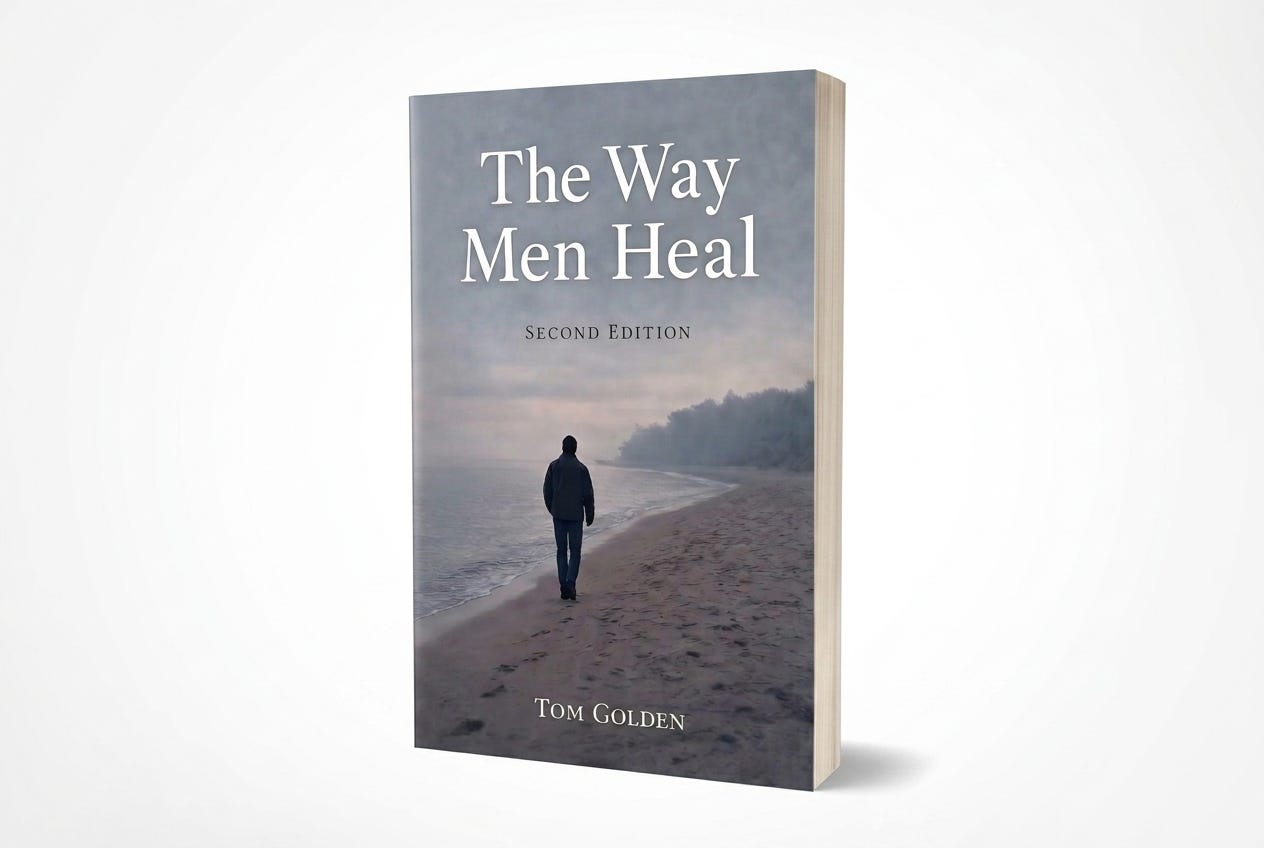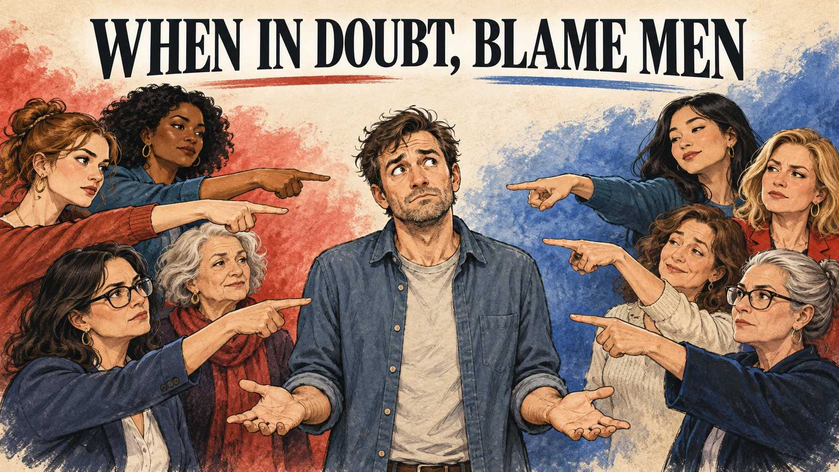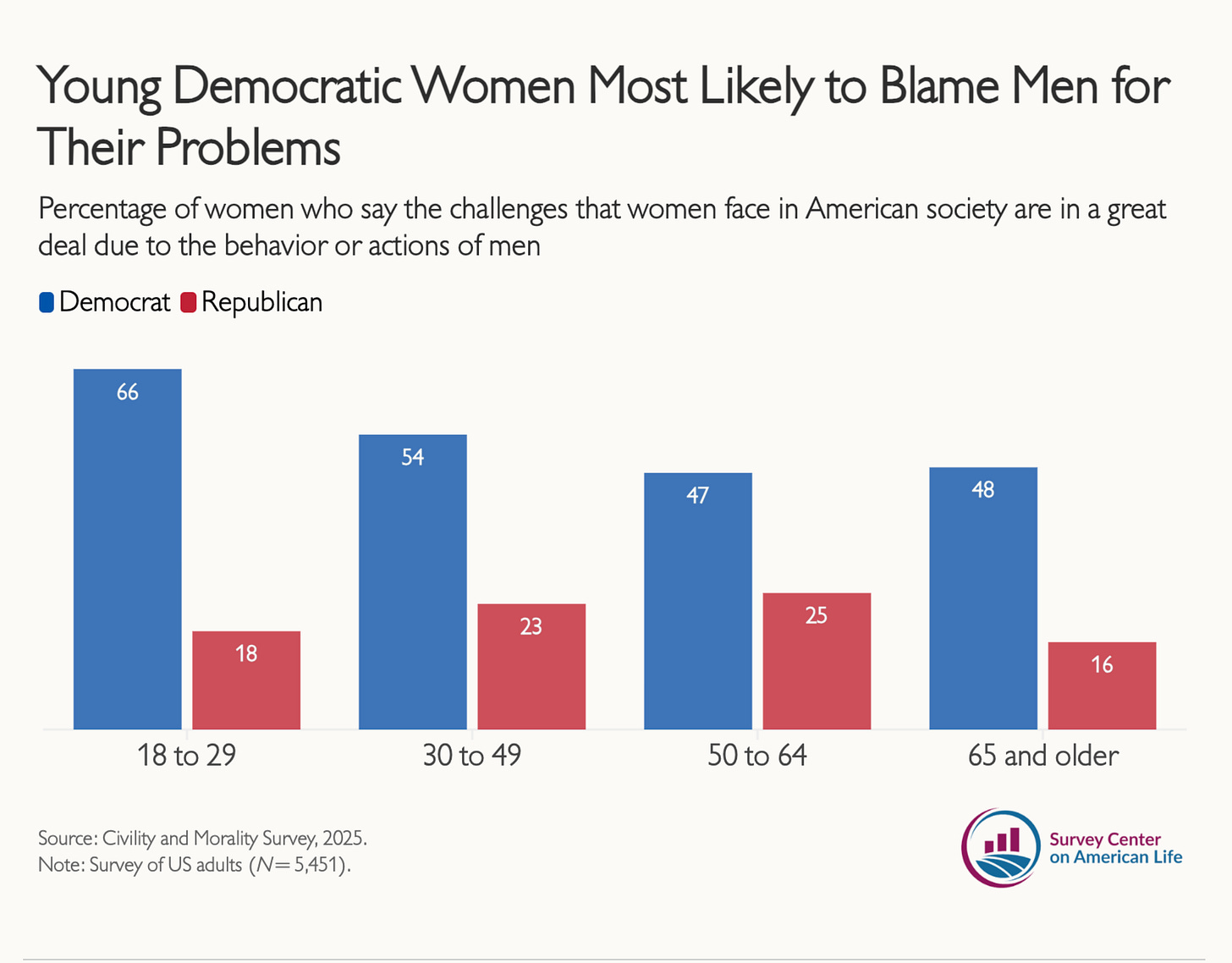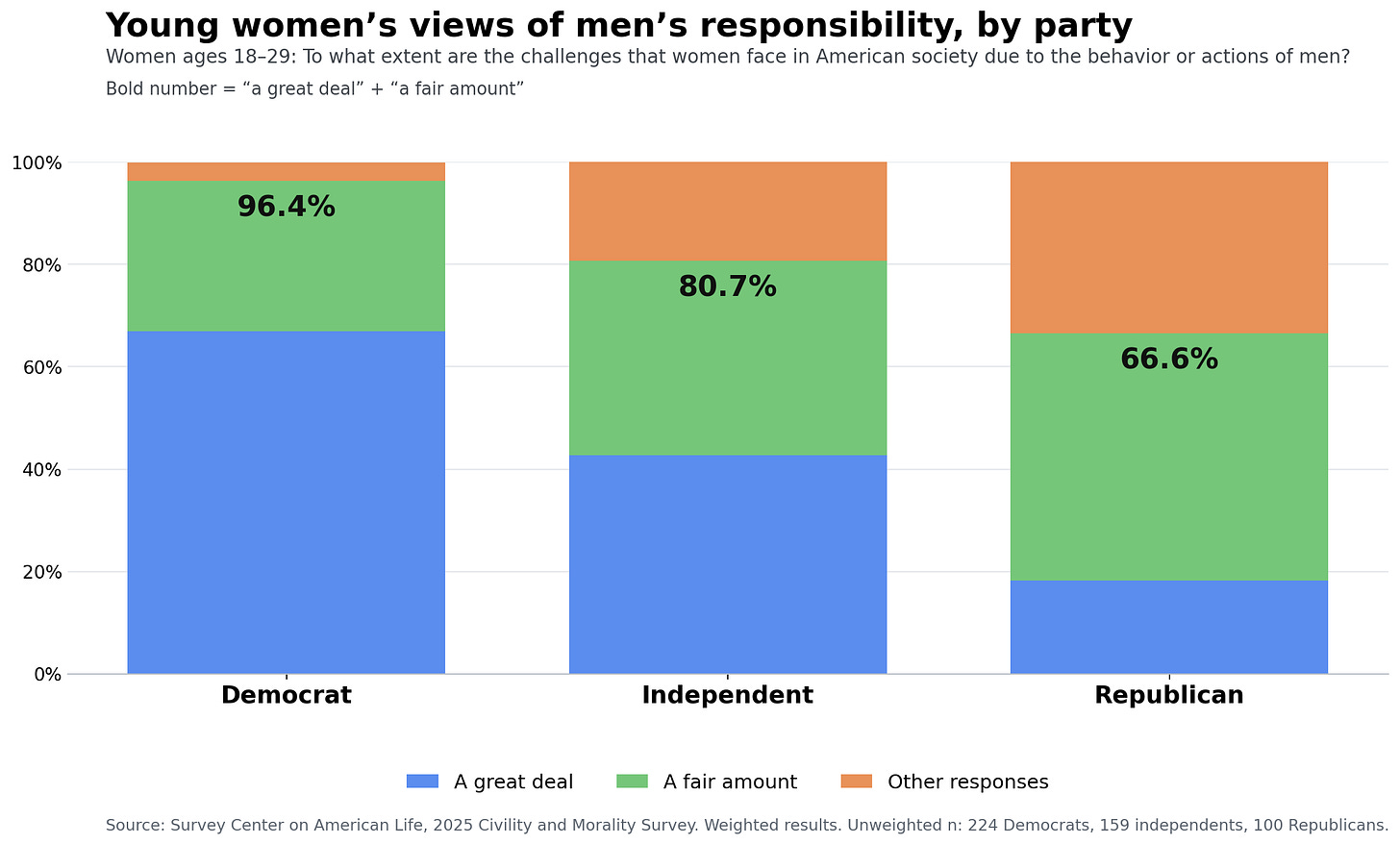
Today I’d like to begin sharing portions of The Way Men Heal (Second Edition).
When I wrote Swallowed by a Snake more than thirty years ago, there was remarkably little research explaining why so many men seemed to grieve differently than women. Much of what I understood came from listening carefully to grieving men and from studying grief rituals in cultures around the world.
Since then, an enormous amount of research has emerged. We now know much more about stress, testosterone, moral typecasting, empathy, precarious manhood, and the different ways many men and women respond to emotional pain.
Those discoveries inspired me to revise and update The Way Men Heal. This second edition includes many of those newer insights while remaining true to the simple goal of the original: to help men in crisis—and the people who love them—better understand how many men heal.
Today’s excerpt is available to everyone. Future installments will be reserved for paid subscribers. If you’ve been thinking about becoming a paid subscriber, I hope you’ll consider joining us. Your support allows me to continue researching, writing, and sharing these ideas each week.
I also hope you’ll use the comments section as we go. One of the great advantages of sharing the book here is that we can actually discuss it together. If a chapter raises questions, reminds you of your own experiences, or even if you disagree with something I’ve written, I’d love to hear from you. It’s very helpful to hear your thoughts.
Rather than beginning on page one, I’d like to begin with one of the questions that has fascinated me for decades:
Why is men’s emotional pain so often invisible?
A Man’s Pain Is Taboo
(pages 19-22)
When I first began working with men, I assumed I had no real bias about men and emotional pain. But the longer I worked, the more I came to see that I did have biases, and that they were affecting my work.
Over time I developed a simple exercise that can help people see this bias in themselves.
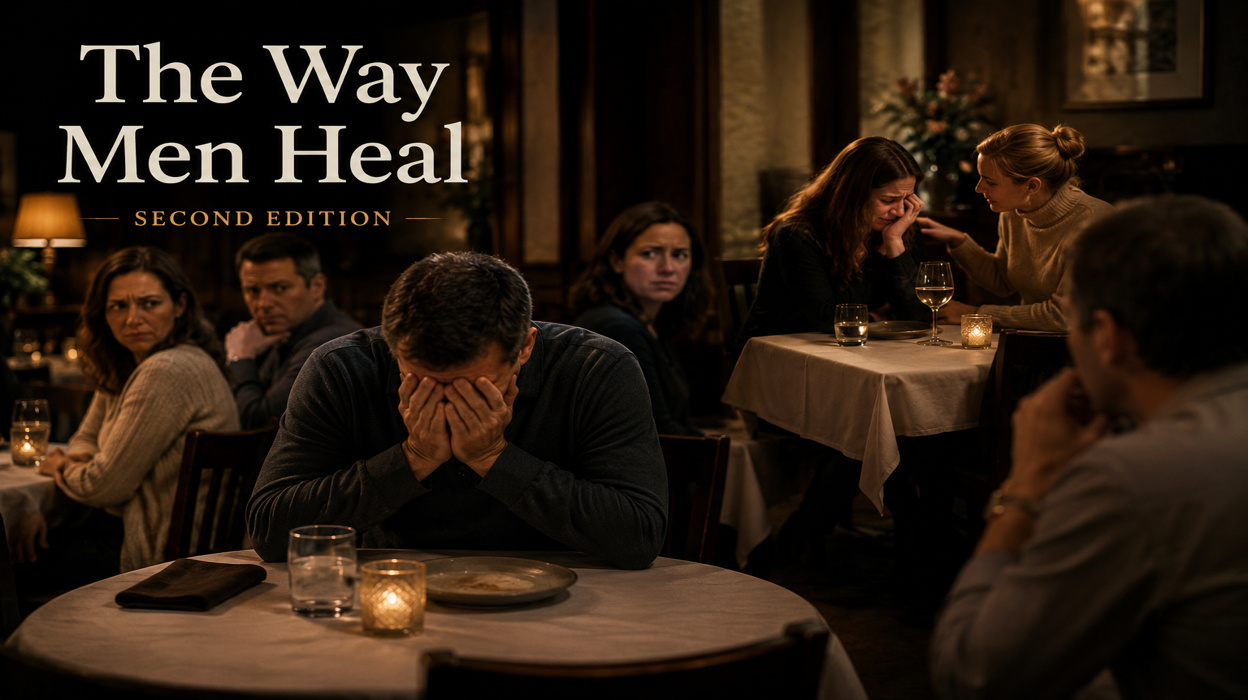
Imagine you are being seated at your favorite restaurant. As you walk toward your table, you notice a woman in the corner crying, her head in her hands. What is your first reaction?
I have asked this question to thousands of people in my workshops. The most common responses are things like, “She is upset,” “Poor thing,” or “She needs some support.” The woman’s pain is usually read as understandable and worthy of care.
Now erase that image and imagine the same restaurant, the same corner table, but this time it is a man who is crying.
What is your first reaction now?
In my workshops, the responses often shift dramatically. People become wary. “Something is wrong with him.” “He must be drunk.” “I’d stay away from him.” The woman’s pain evokes sympathy. The man’s pain evokes unease, suspicion, or avoidance.
That difference tells us something important.
A woman’s emotional pain is often treated as a call to care. A man’s emotional pain is more likely to be treated as a disturbance, a threat, or a violation of expectation. In that sense, male pain functions almost like a cultural taboo.
Peter Marin captured this problem beautifully in an article about men and homelessness. He wrote, “To put it simply: men are neither supposed nor allowed to be dependent. They are expected to take care of others and themselves. And when they cannot or will not do it, then the assumption at the heart of the culture is that they are somehow less than men and therefore unworthy of help. An irony asserts itself: by being in need of help, men forfeit the right to it.” Marin put his finger on the powerful and often invisible double standard men face around dependency. When women appear dependent, people are more likely to move toward them with care; when men appear dependent, people are more likely to pull back, judge, or devalue them. And it is important to remember that it is nearly impossible to express emotional pain without appearing, at least to some degree, dependent.
Modern psychological research may help explain why my workshop attendees were more likely to respond with compassion to the woman than to the man. One useful concept here is moral typecasting. (See Going Deeper: Moral Typecasting) This research suggests that we tend to cast women more readily as sufferers and men more readily as agents. Women are more easily seen as those to whom bad things happen. Men are more easily seen as those who cause things, control things, or should be able to handle things. When a woman cries, people often see vulnerability. When a man cries, people are more likely to wonder what is wrong with him, what he has done, or whether he is unstable. The moral typecasting studies help explain why men’s grief is so often misread: a grieving man is less likely to be seen simply as someone in pain and more likely to be viewed as someone who should keep himself together, get back to functioning, and ask little of others.
There is also a broader cultural force at work that I would call gynocentrism—a tendency to place women’s needs, suffering, and perspectives closer to the moral center of our concern, while placing men second. John Barry and Martin Seager describe a similar pattern in their research using the term gamma bias: female suffering is more readily magnified, while male suffering is more easily minimized or overlooked. (See Going Deeper: Bias and Perception) Together, these ideas point to the same underlying reality: our culture tends to center women’s pain more readily than men’s, and most people do not even notice they are doing it. These dynamics help explain why male pain is not only hidden by men, but also frequently misread by the culture around them.
Men, of course, are not blind to this. They know, often without consciously thinking about it, that public displays of emotional pain can bring discomfort, judgment, or avoidance rather than comfort. It makes sense, then, that many men would gravitate toward quieter, less visible ways of grieving—toward action and inaction rather than public emotional display. These quieter forms of grieving are often not empty activity at all, but early attempts at meaning-making. Unfortunately, these quieter modes are often judged harshly as men “not dealing with their feelings,” when in fact they may be dealing with their pain in the only way that feels safe.
When something is taboo, people learn to hide it. Men are not simply failing to express pain. Many are doing their best to keep that pain out of sight because they know how it will likely be received.
———————————————————-
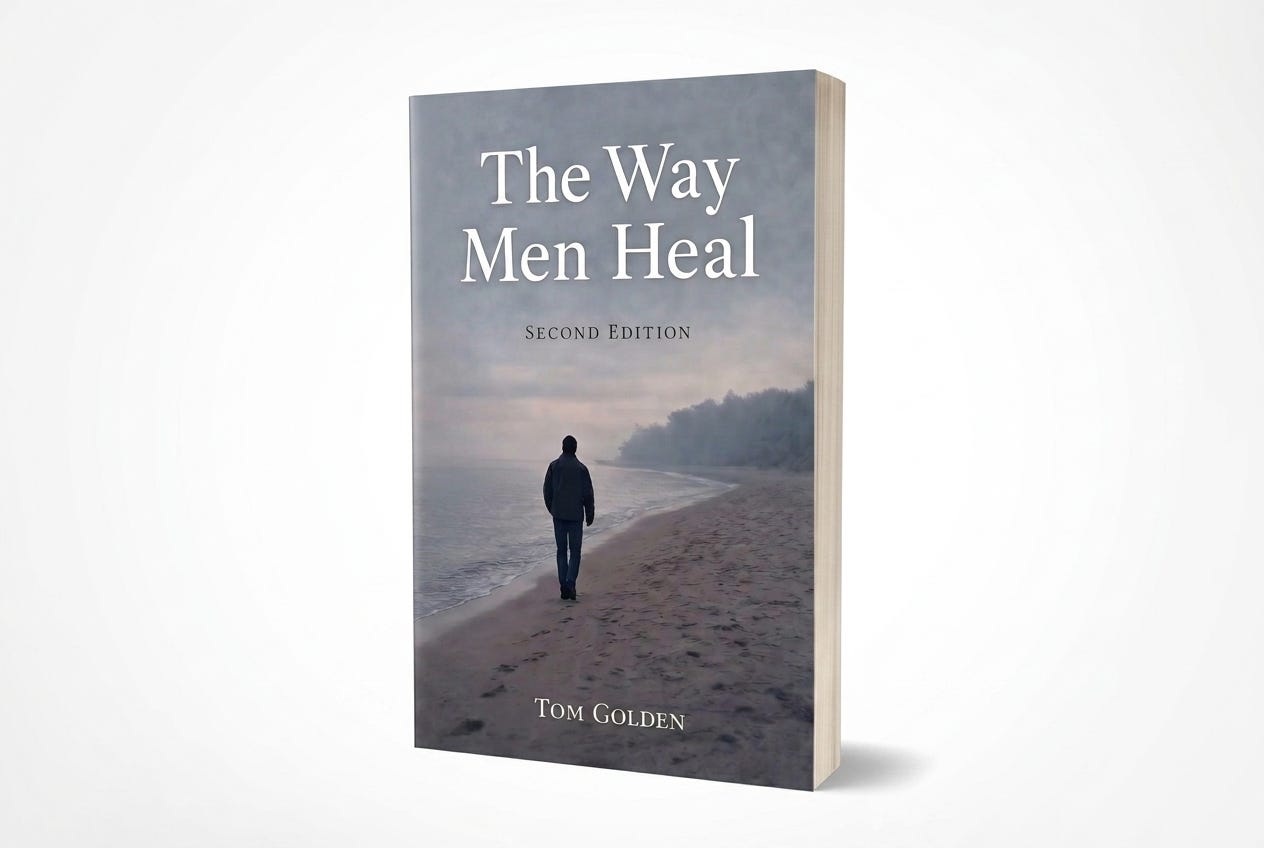
if you are looking for the book on amazon be sure this is the cover, The first edition will sometimes pop up when the title is searched link to amazon