MenAreGood
What Would We Call These Books If They Were About Women?
A simple thought experiment about sex, prejudice, and a striking double standard
August 17, 2026
post photo preview


My friend Fred Hayward wrote to me and asked if I had a list of misandrist books. He had seen one and wondered what I might know about it. I told him I didn’t have a list and couldn’t remember ever seeing one.

But I took Fred’s idea and went to ChatGPT and asked it to give me a list of misandrist books. It came back with numerous books and some ideas about the best way to present the material. It suggested using four categories, beginning with the most explicit and extreme anti-male material and moving toward books where the case for misandry was less clear.

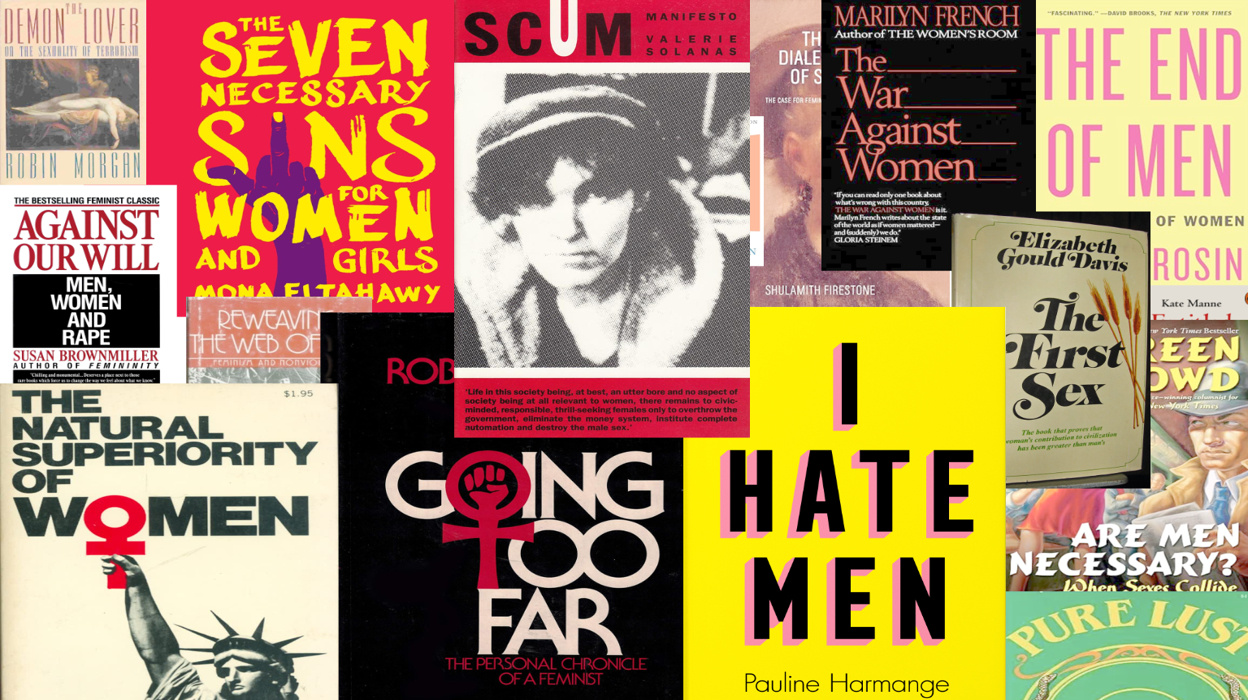
It came up with 23 books and I asked it to write up its findings. This post is basically that write-up, followed by a conclusion I asked it to write. I didn’t tell it what conclusion to reach or how I wanted the books characterized. I did some editing along the way, and I gathered the book covers and made the main image.

I am familiar with many of the books it mentioned, but not all of them. I will be curious to hear from anyone who has read these books about how accurate the descriptions are. The books I am familiar with are portrayed accurately.

Here’s what GPT said:


Category 1 — Explicit Hatred, Elimination, Population Reduction, or Violence

 

These are the hardest examples to explain away as simply “criticism of patriarchy.” Here the hostility is not something we need to read between the lines to find. Men themselves—or the continued existence of men in anything approaching their present numbers—become the target.
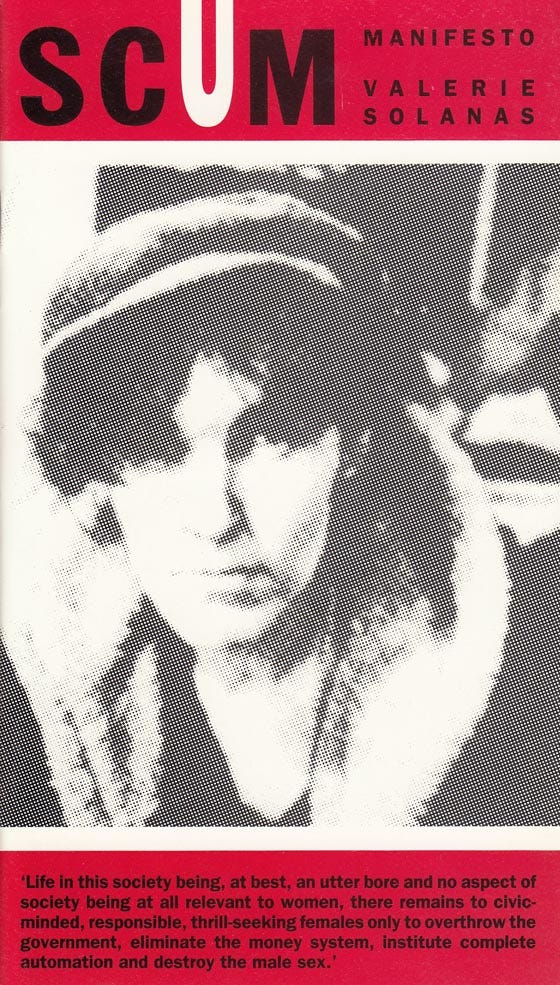
 

SCUM Manifesto — Valerie Solanas (1967). This is probably the clearest example in the entire collection. Solanas doesn’t simply criticize male behavior or male-dominated institutions. She portrays the male himself as a biological mistake: an incomplete and defective female. From there, the manifesto launches into a sweeping indictment of men as emotionally crippled, egocentric, incapable of genuine empathy, and responsible for many of society’s evils.

And Solanas takes the argument much further than contempt. SCUM Manifesto envisions eliminating the male sex itself. That makes this qualitatively different from a book arguing that men possess unfair advantages or behave badly. Imagine a widely published manifesto describing women as biologically defective creatures and envisioning a future in which the female sex was eliminated. Would anyone hesitate to describe that as misogyny?
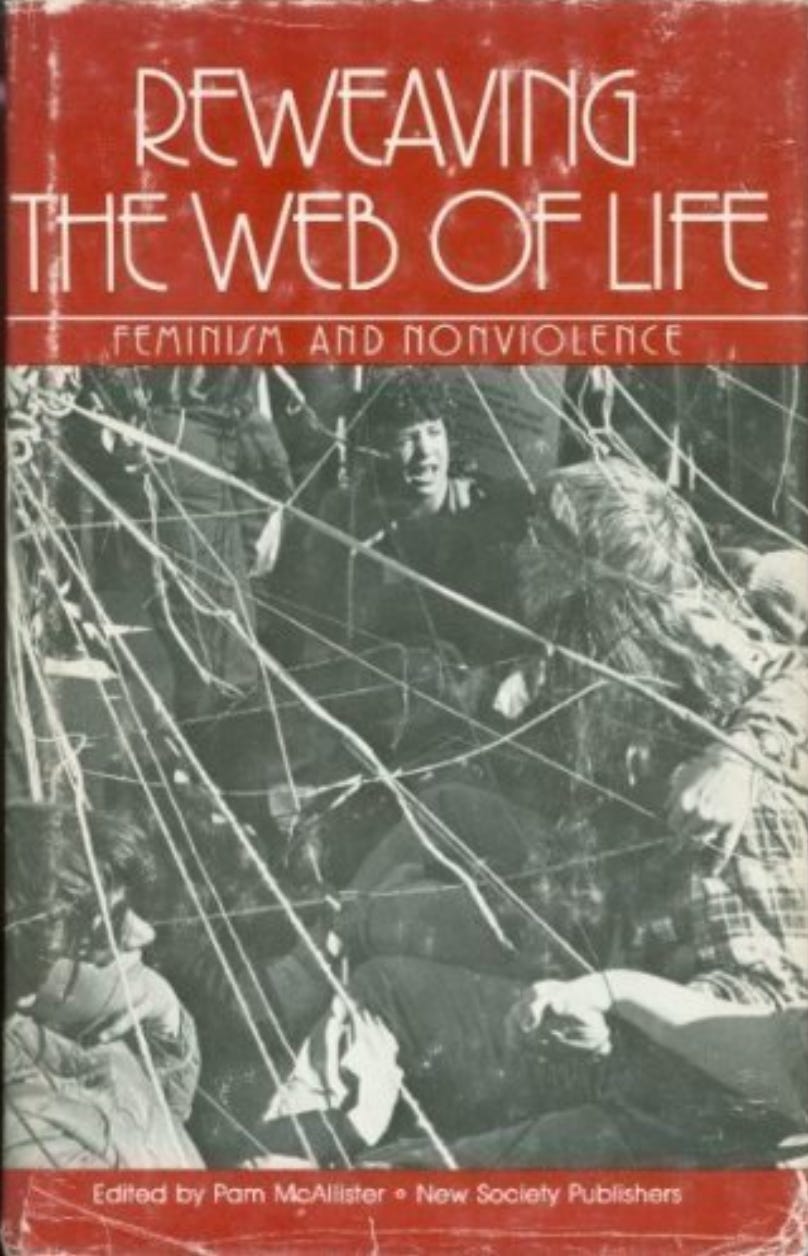
 

“The Future—If There Is One—Is Female” — Sally Miller Gearhart (1981/1982). Gearhart’s piece is an essay rather than a standalone book and was subsequently published in the anthology Reweaving the Web of Life: Feminism and Nonviolence. But it belongs in this collection because of the extraordinary nature of its proposal.

Gearhart argued that the proportion of males in the human population should be reduced to approximately 10 percent. This was not simply a prediction that technological change might eventually produce such a population. It was presented as part of a feminist vision for the future.

Think for a moment about what that means. Men currently constitute roughly half of humanity. If the female population remained roughly constant, reducing males to just 10 percent of humanity would mean a reduction of nearly 90 percent in the male population. If a male writer proposed that women should constitute only 10 percent of humanity, would we regard that merely as an eccentric political theory? Or would we recognize something profoundly disturbing in the willingness to imagine an entire sex reduced to a tiny reproductive minority?
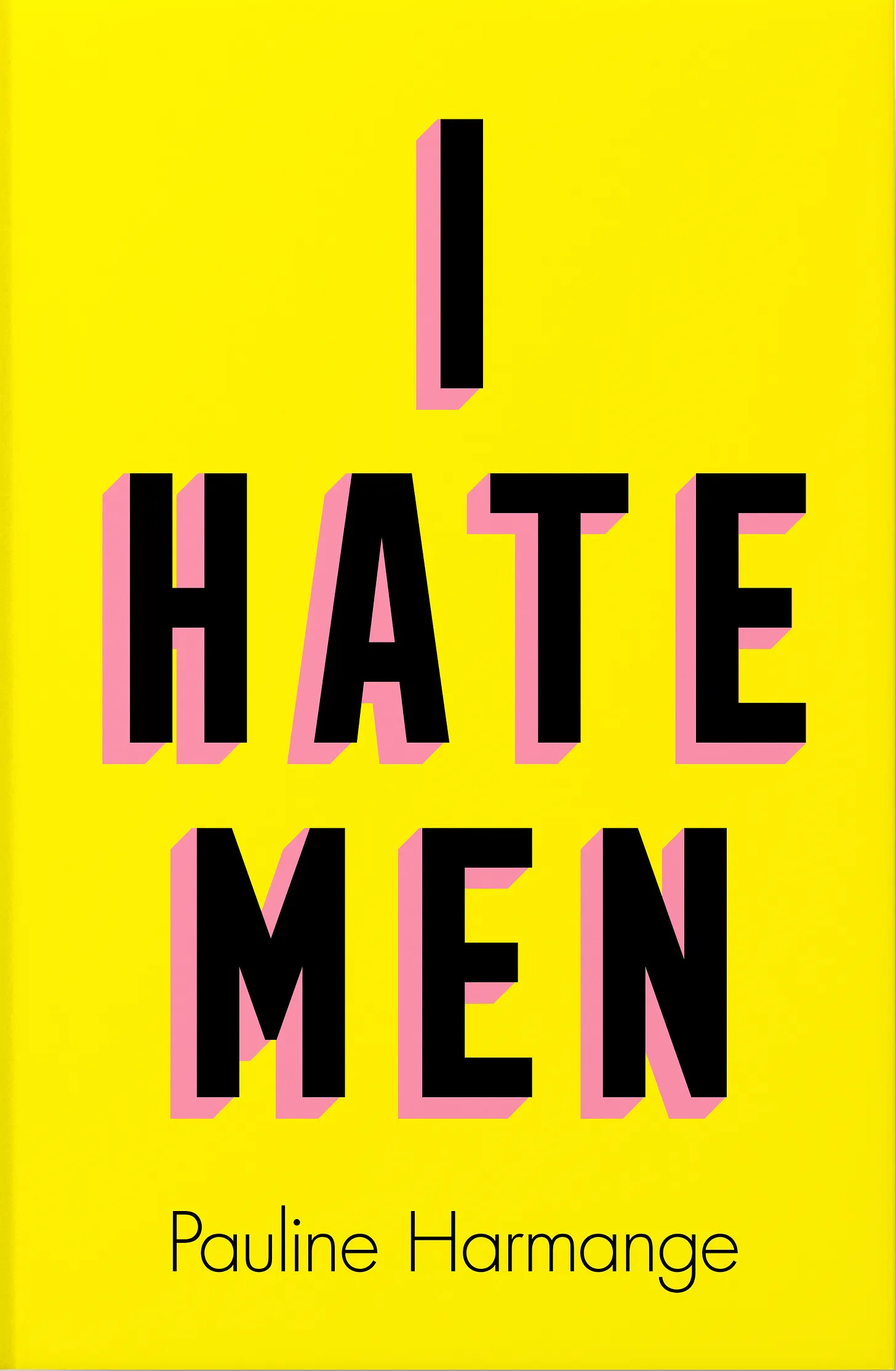
 

I Hate Men — Pauline Harmange (2020). The title sounds as though it might simply be designed to provoke. But hatred of men is actually part of Harmange’s argument. She explicitly discusses misandry and attempts to rehabilitate it as a legitimate response to women’s experiences with men.

That distinction matters. This isn’t merely a book called I Hate Men whose contents turn out to be a nuanced argument against sexism. Harmange asks readers to consider whether women might actually benefit from disliking men and distancing themselves from them. Publishers Weekly summarized the book as arguing that misandry can be “healthy and joyful.”

Again, reverse the sexes. Imagine a contemporary book titled I Hate Women explaining why misogyny might be healthy, liberating, and joyful for men. Would a major publisher touch it? Would reviewers treat hatred of women as an interesting intellectual position?
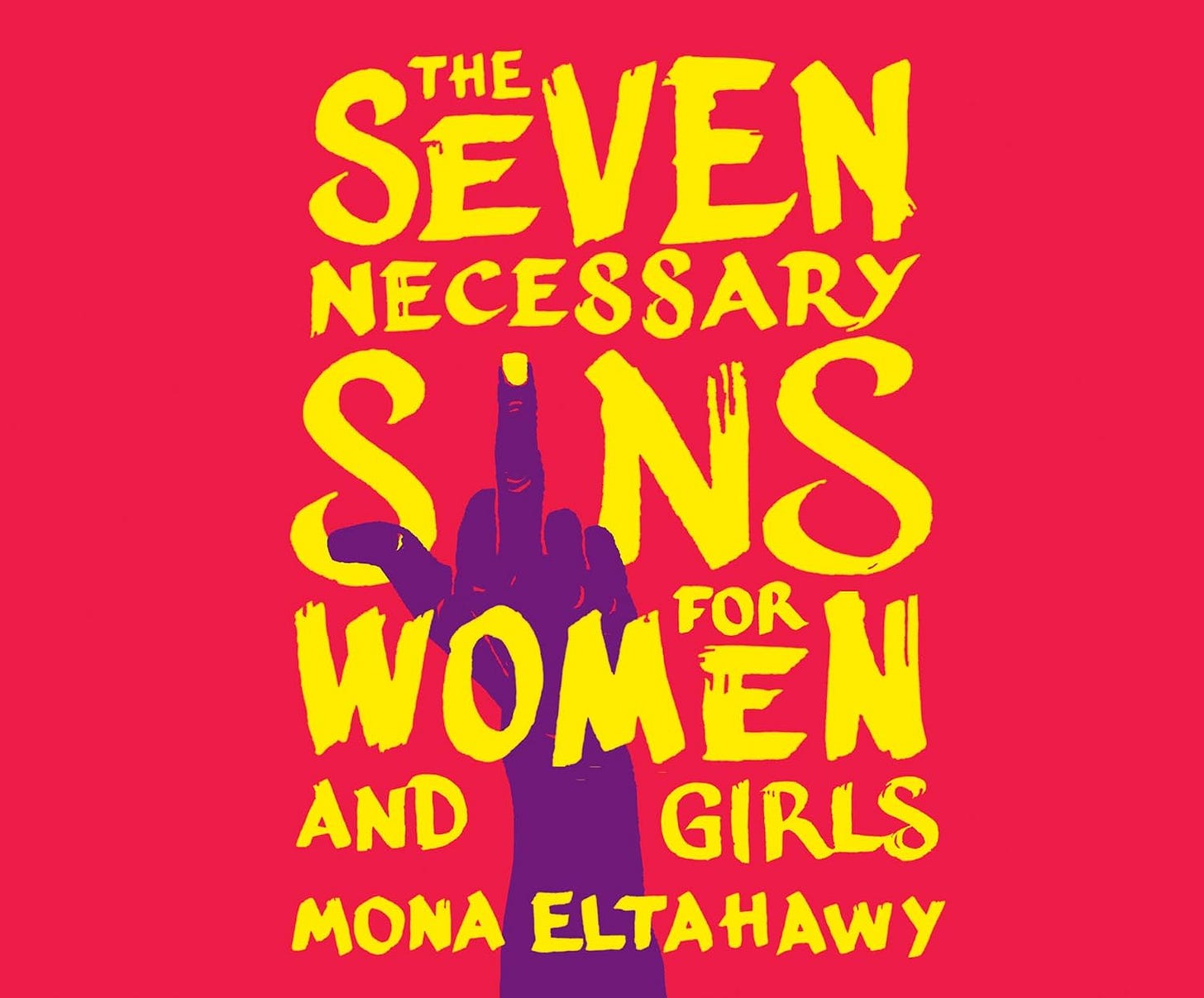
 

The Seven Necessary Sins for Women and Girls — Mona Eltahawy (2019). Eltahawy is a more complicated case and should be represented carefully. Her book advocates seven qualities she believes women and girls need in resisting patriarchy, and one of those qualities is violence.

Most strikingly, Eltahawy imagines a scenario in which women begin systematically killing men until men are forced to negotiate with them. She presents this as a thought experiment rather than a literal program for exterminating men. That distinction matters, and we should make it.

But the thought experiment itself also matters. An author can use fantasy, satire, or hypothetical scenarios and still reveal something about which forms of rhetoric our culture is prepared to tolerate. Imagine a male author inviting readers to contemplate men systematically killing women until feminists agreed to negotiate. Calling it a “thought experiment” would hardly end the discussion.

For that reason, I would describe this as violent anti-male rhetoric rather than a literal proposal to kill men. That is both stronger and more accurate than exaggerating what Eltahawy actually claims.
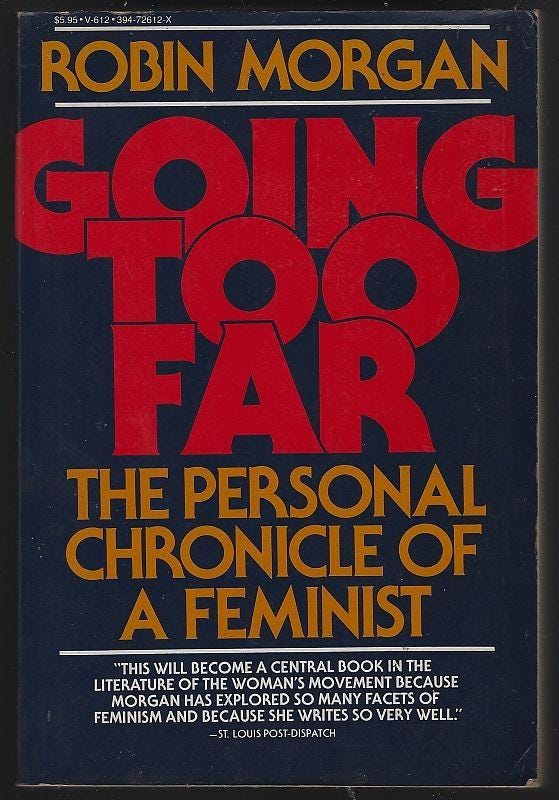
 

Going Too Far: The Personal Chronicle of a Feminist — Robin Morgan (1977). Morgan is particularly significant because she was not an obscure writer operating at the fringes of feminism. She was an important figure in the second-wave women’s movement and later became an editor of Ms. magazine.

The book chronicles Morgan’s development as a feminist activist and contains rhetoric about men and “man-hating” that deserves examination in its historical context. What makes material like this significant isn’t simply that an angry individual woman expressed hostility toward men. People of both sexes say ugly things. The more interesting question is how openly hostile ideas about men could exist within an influential political and intellectual movement without carrying the stigma that comparable statements about women would carry.

That question will recur throughout this collection.


Category 2 — Female Superiority / Male Inferiority

 

These works don’t necessarily advocate harming men, but they make arguments that would almost certainly be described as sexist if the sexes were reversed.
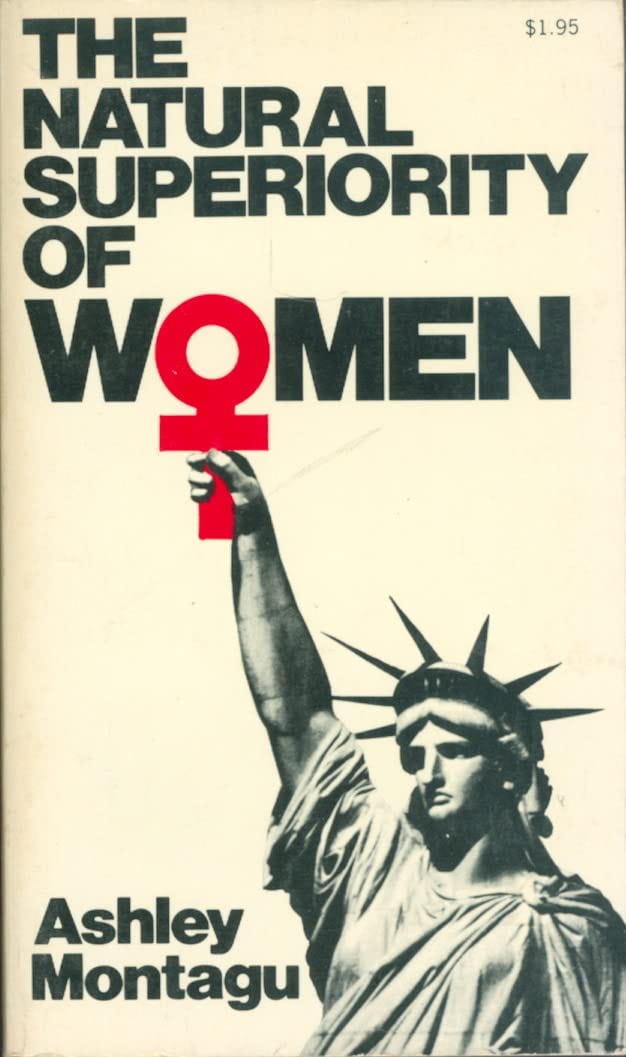
 

1The Natural Superiority of Women — Ashley Montagu (1953). Explicitly argues for women’s natural superiority. A publisher’s description of an earlier edition summarized its thesis as showing that “the superiority of women is a biological fact.”
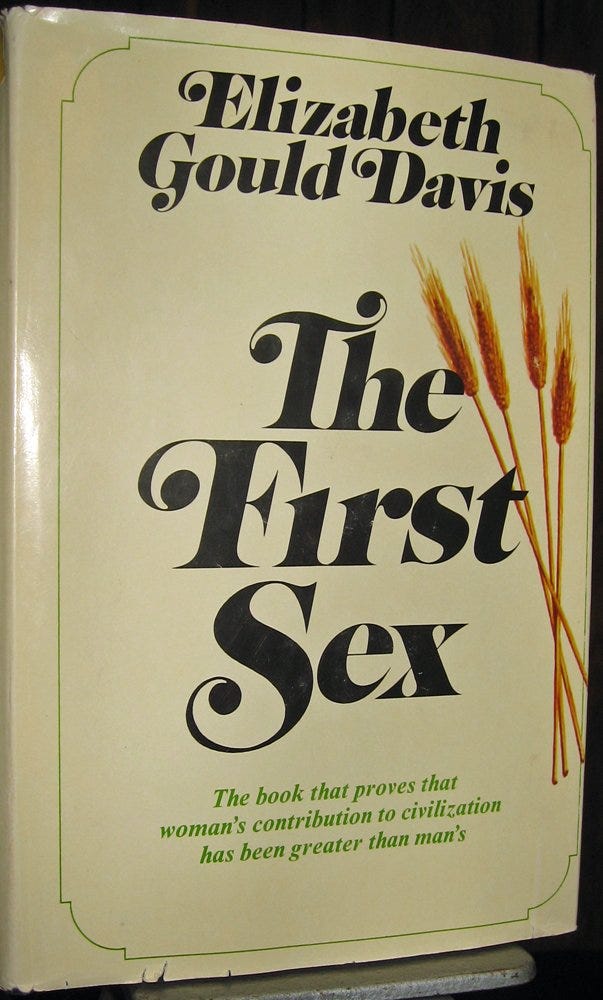
 

The First Sex — Elizabeth Gould Davis (1971). Directly asks whether women are superior to men and argues toward precisely that conclusion. The publisher describes women being “the first sex” as the book’s “inescapable conclusion.”
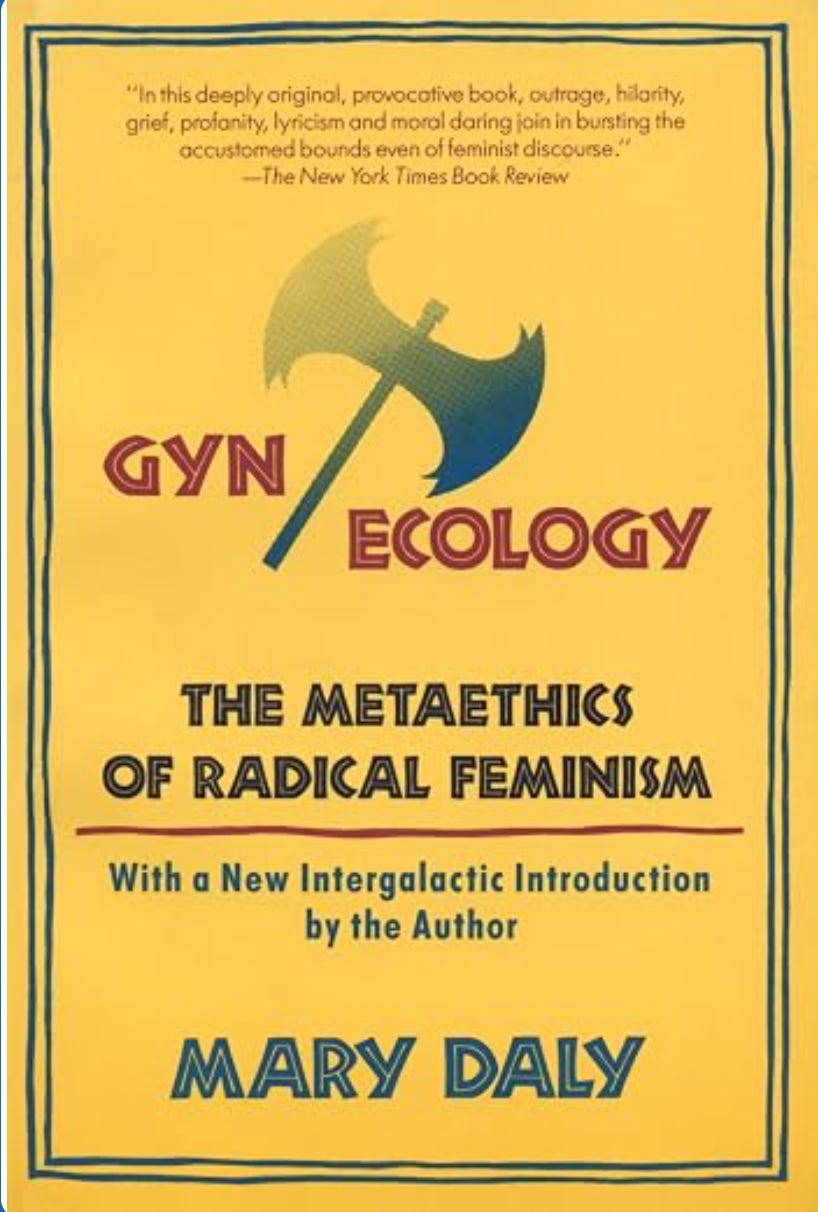
 

Gyn/Ecology: The Metaethics of Radical Feminism — Mary Daly (1978). Develops an extraordinarily sweeping critique of male-created culture, religion, medicine, and language. Daly’s vocabulary includes concepts such as “phallocracy” and male-centered systems as destructive forces against women.
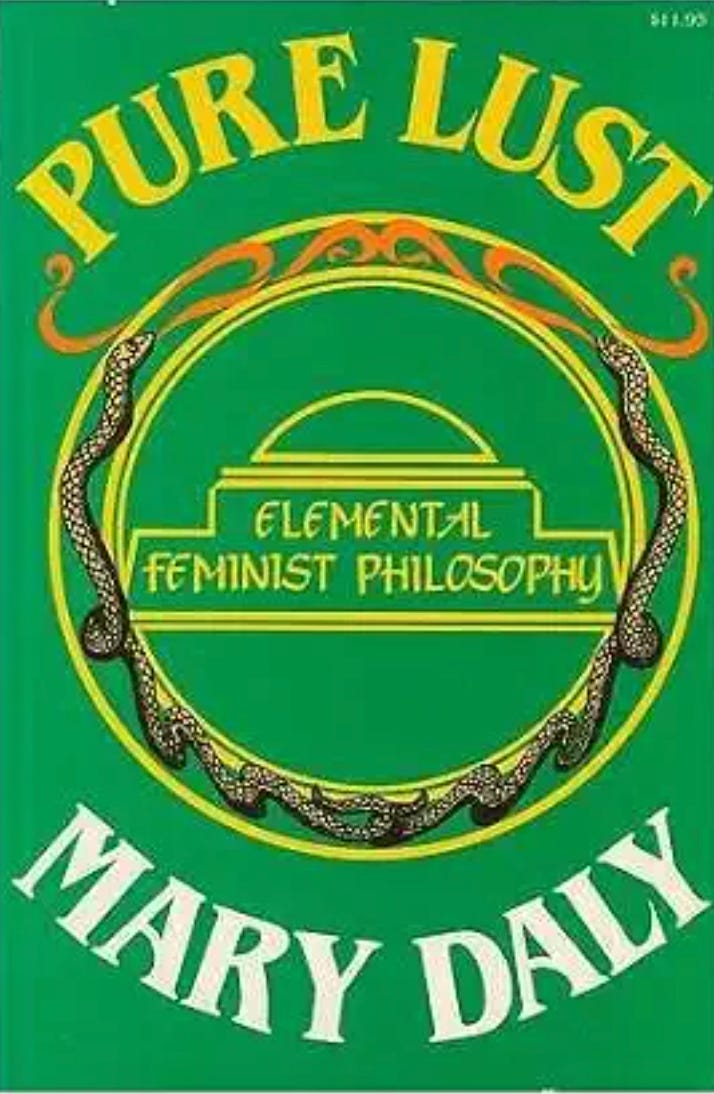
 

Pure Lust: Elemental Feminist Philosophy — Mary Daly (1984). Continues Daly’s framework, contrasting female liberation with what she calls “Cockocracy,” the “Phallic State,” and a male “sadosociety.” That terminology comes even from the bibliographic description of the book.
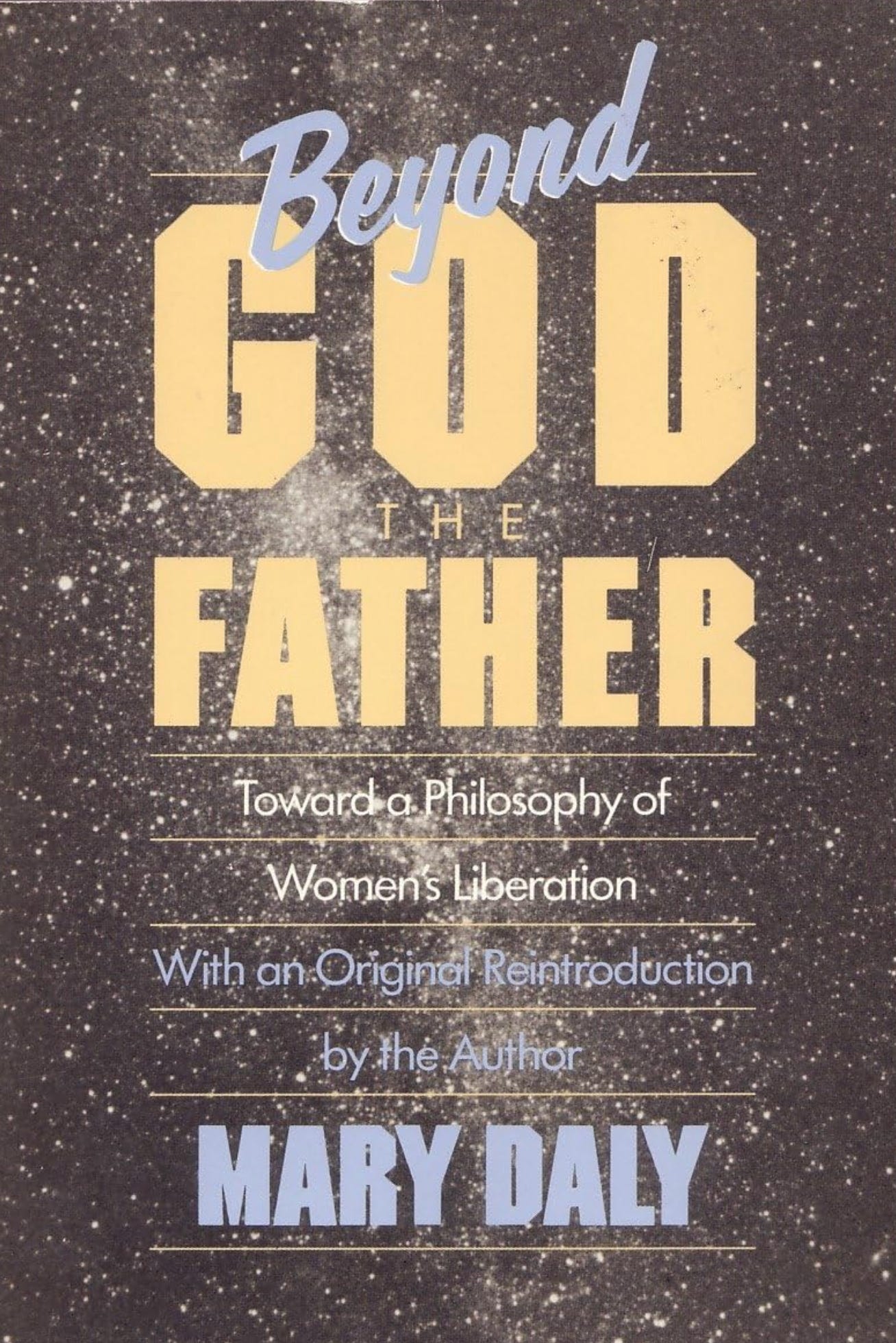
 

Beyond God the Father — Mary Daly (1973). Presents male-centered religion and the male conception of God as expressions of patriarchal domination. This one is considerably less explicitly anti-male than Pure Lust or Gyn/Ecology, so I would place it lower on the severity scale.

Mary Daly may deserve a section of her own in a serious treatment of this subject. Her work doesn’t merely criticize particular male institutions; she develops an entire vocabulary in which male civilization is repeatedly associated with domination, pathology, and violence.


Category 3 — Men Collectively Portrayed as an Oppressor or Threat Class

 

Here I would stop using the uncomplicated label “hate literature.” These books are important because of their collective attribution of guilt, danger, or domination to males, rather than because they literally tell readers to hate men.
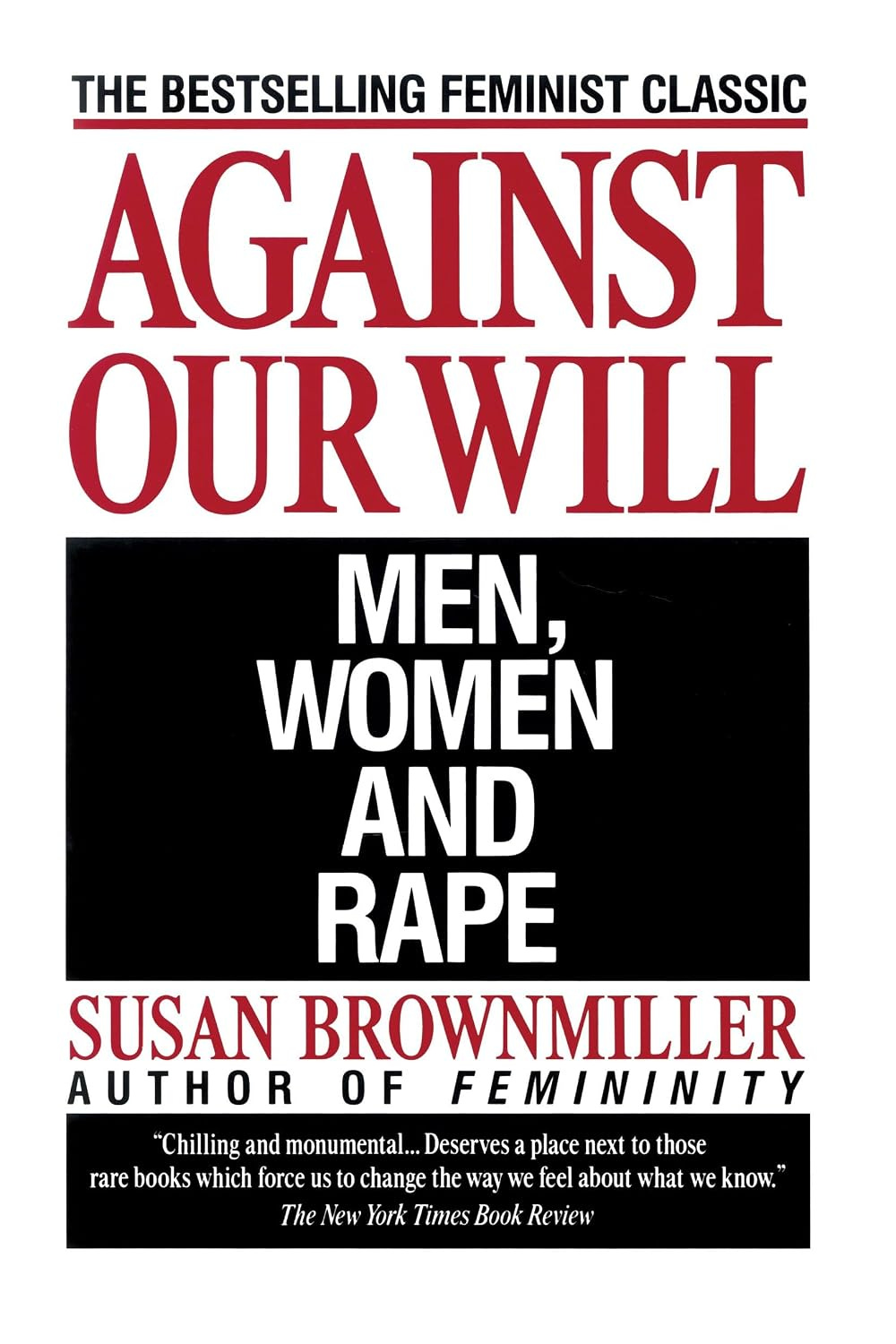
 

Against Our Will: Men, Women and Rape — Susan Brownmiller (1975). Famously characterized rape as a process through which “all men keep all women” in fear. Whatever one’s view of the rest of this enormously influential book, that is an extraordinarily sweeping attribution to an entire sex.
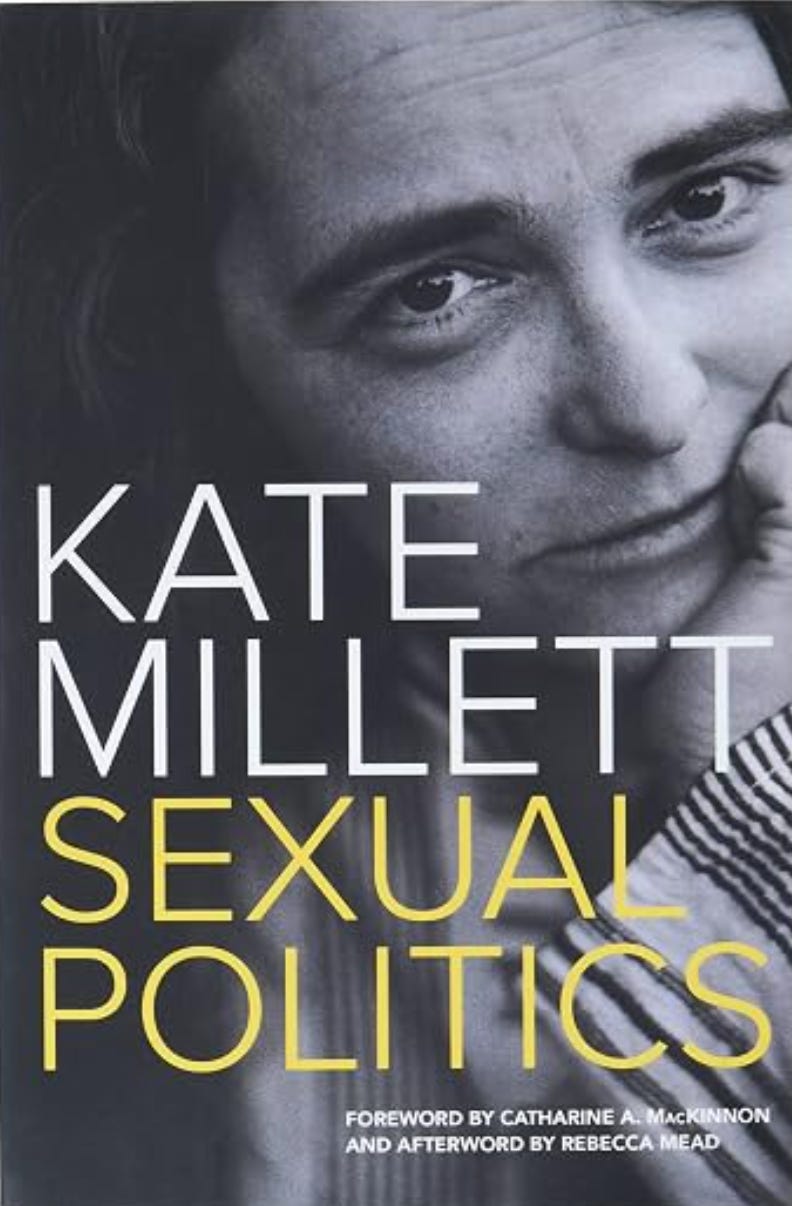
 

Sexual Politics — Kate Millett (1970). One of second-wave feminism’s foundational texts. It interprets sex relations through a political structure in which men constitute the dominant class and women the subordinated class.

 

Pornography: Men Possessing Women — Andrea Dworkin (1981). Dworkin treats pornography as an expression of a much wider system of male domination, linking male sexual power with ownership, terror, and the subordination of women.

 

Intercourse — Andrea Dworkin (1987). Presents heterosexual intercourse within a structure of profound sexual inequality and domination. Importantly, though, the common assertion that Dworkin literally wrote “all sex is rape” is false; Dworkin herself explicitly denied saying that.

 

Woman Hating — Andrea Dworkin (1974). Describes male dominance as the fundamental political and cultural reality that must be abolished. Her introduction explicitly calls ending male dominance a revolutionary commitment.
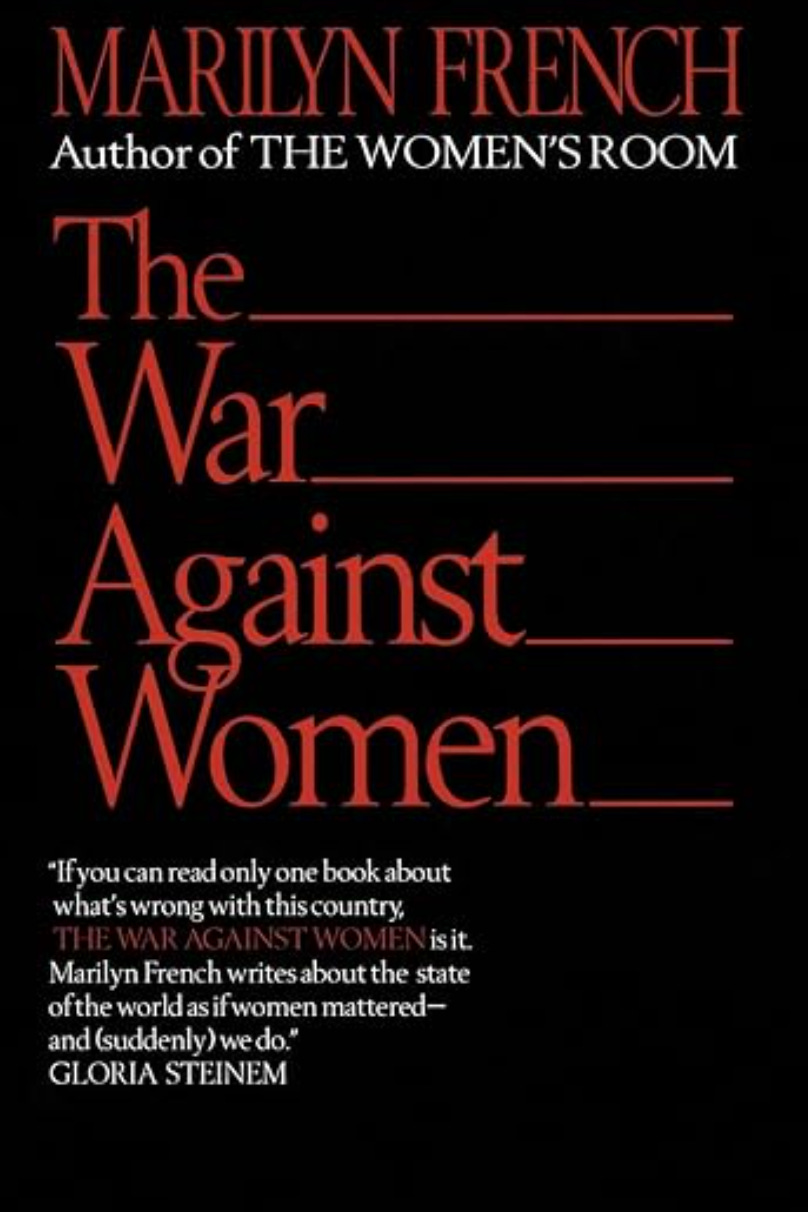
 

The War Against Women — Marilyn French (1992). Perhaps one of the strongest examples in this category. The publisher describes French’s thesis as a male-dominated global society with an underlying aim of “destroying, subjugating, or mutilating women.”
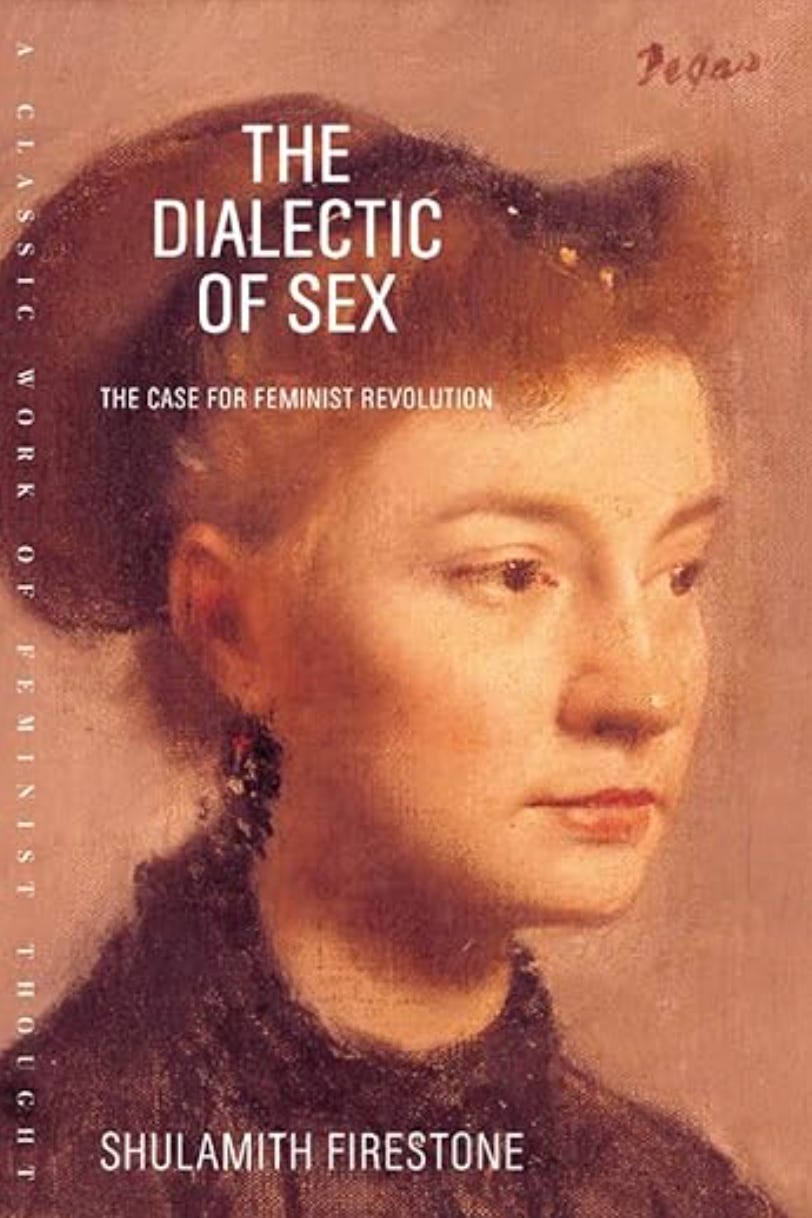
 

The Dialectic of Sex — Shulamith Firestone (1970). Treats the biological sex distinction and reproductive family as the foundation of a sex-class system. Firestone proposes eliminating sex-class distinctions through radical changes including artificial reproduction. That is revolutionary gender theory, though not an argument for killing men, an important distinction.
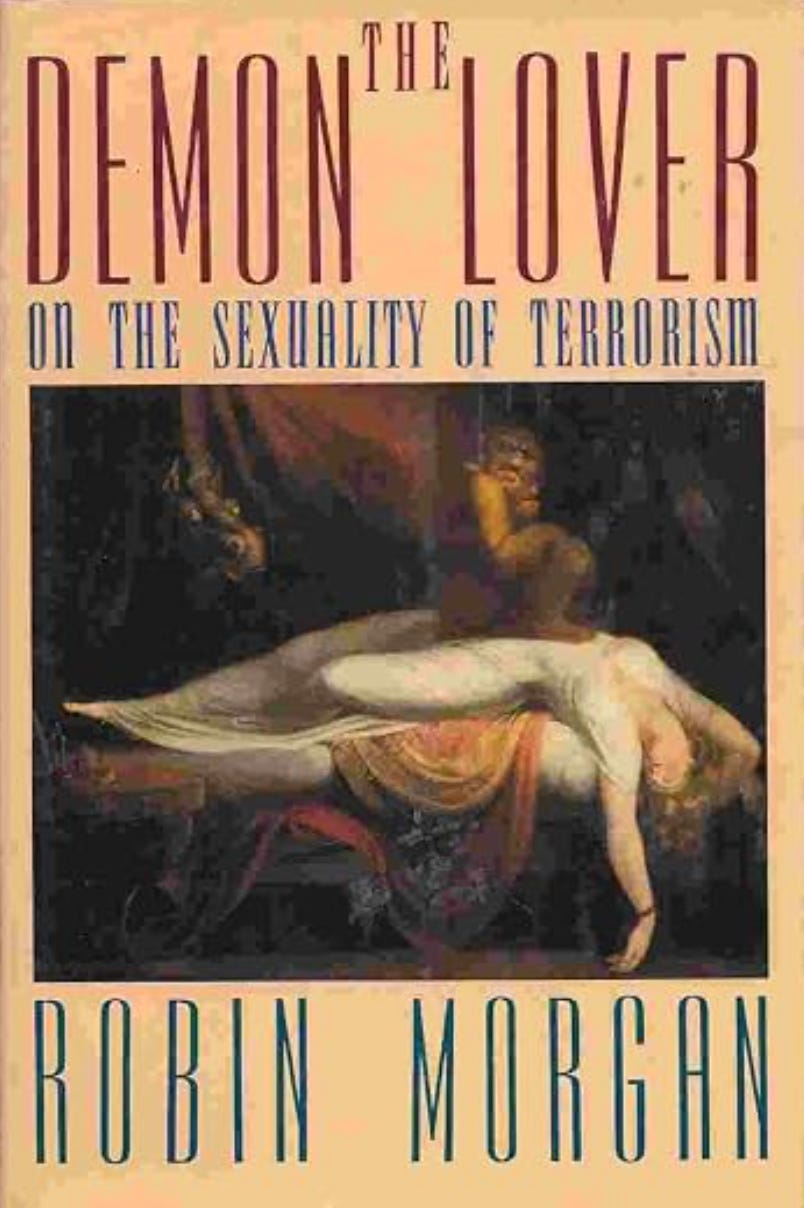
 

The Demon Lover: On the Sexuality of Terrorism — Robin Morgan (1989). Links militarism, terrorism, patriarchy, and masculine systems of domination. I would include it as an example of the broader tendency to interpret large forms of human violence through masculinity.

Category 4 — Men as Privileged, Entitled, Dangerous, Defective, or Socially Problematic

 

These are substantially weaker candidates for the word misandrist, but they illustrate how negative generalizations about men became normalized in more mainstream literature.
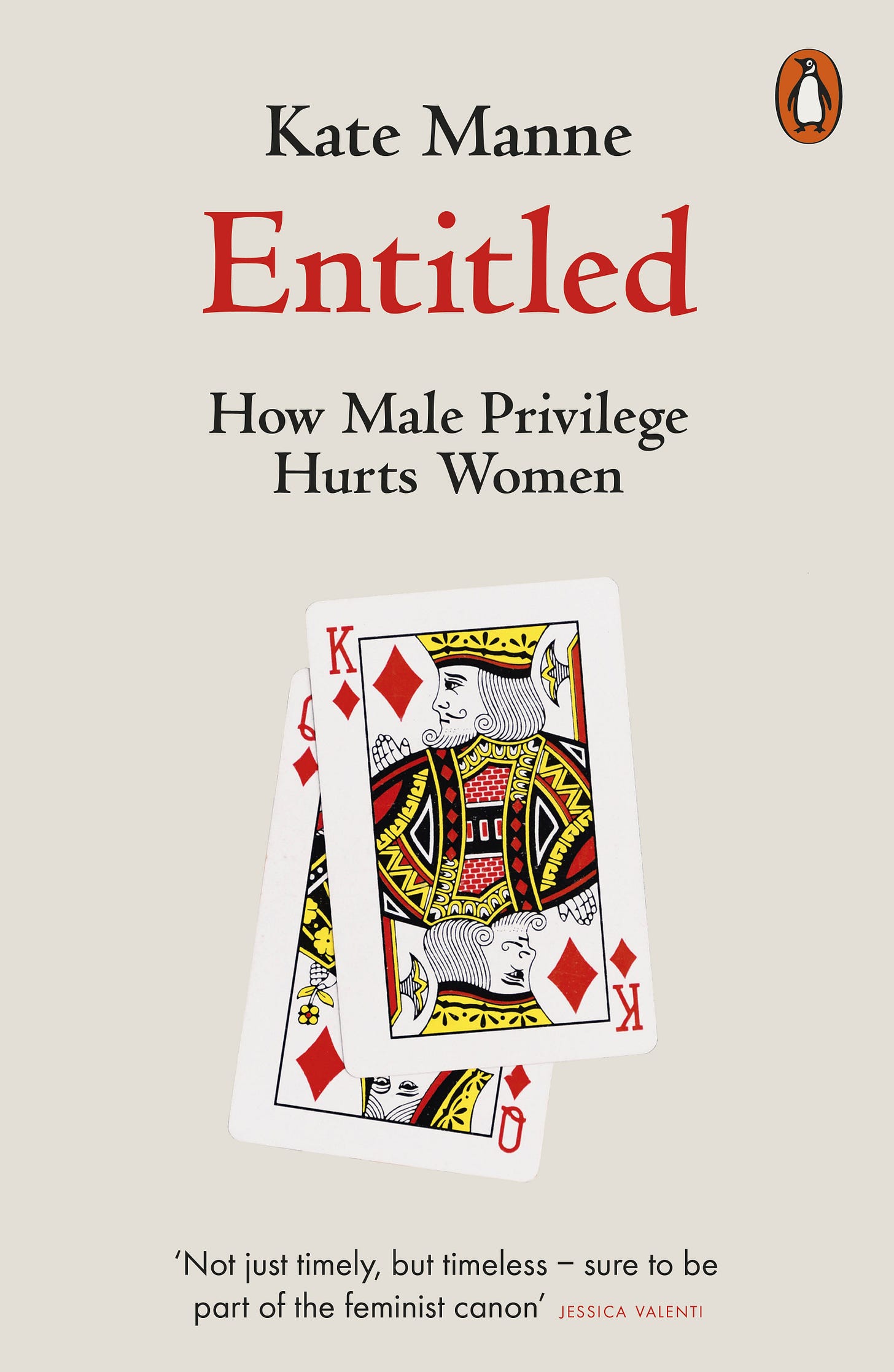
 

Entitled: How Male Privilege Hurts Women — Kate Manne (2020). Makes “male entitlement” a broad explanatory framework for phenomena ranging from interpersonal behavior to mass shootings and politics. Manne describes it as a pervasive social problem rather than merely the behavior of a few men.
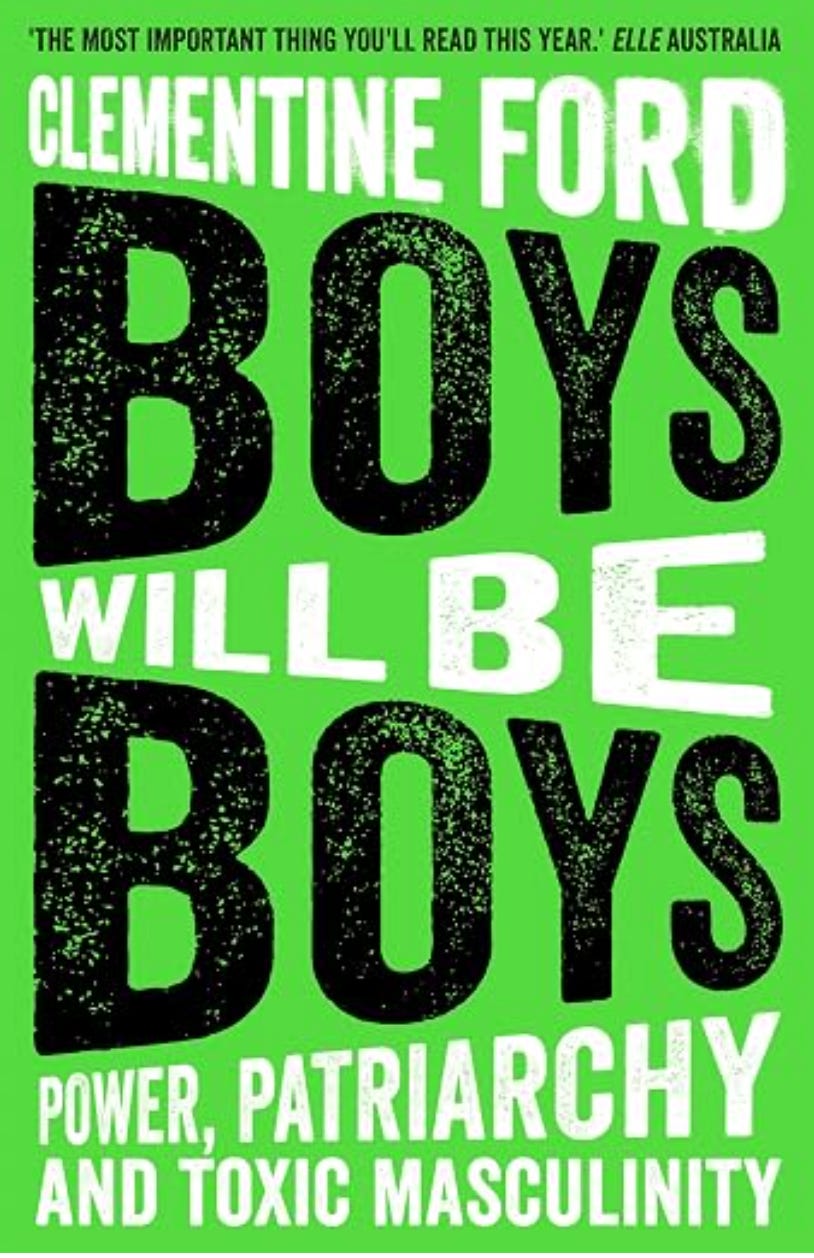
 

Boys Will Be Boys: Power, Patriarchy and Toxic Masculinity — Clementine Ford (2018). Begins with boys themselves and treats their socialization through the framework of patriarchy and toxic masculinity. The publisher frames its central question as how to raise a son “to respect women.”
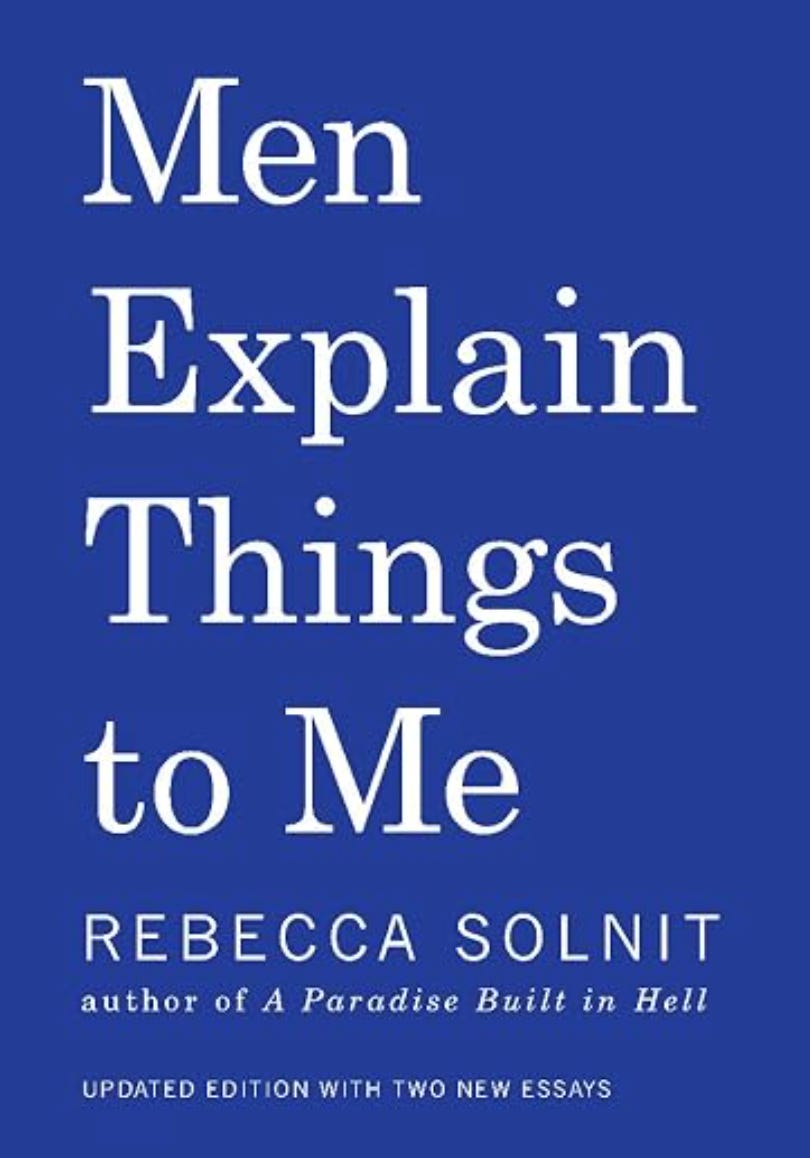


Men Explain Things to Me — Rebecca Solnit (2014).
Helped inspire the concept of “mansplaining” and uses interactions with men to examine assumptions of male authority and women’s silencing. I would not call this a book advocating hatred of men, however; even Solnit has distanced herself from the term mansplaining.
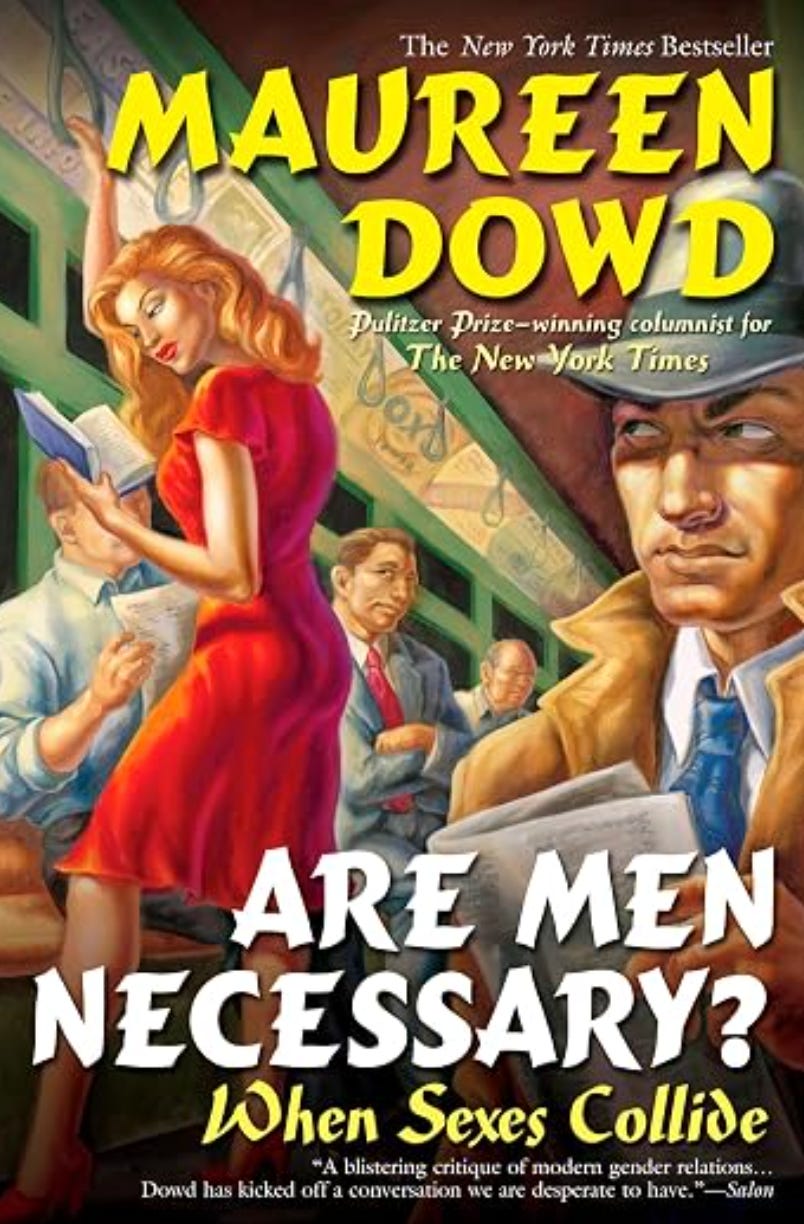
 

Are Men Necessary? When Sexes Collide — Maureen Dowd (2005). The title plays deliberately with male dispensability, but the actual work is humorous social commentary about gender relations rather than a serious argument that men should disappear.
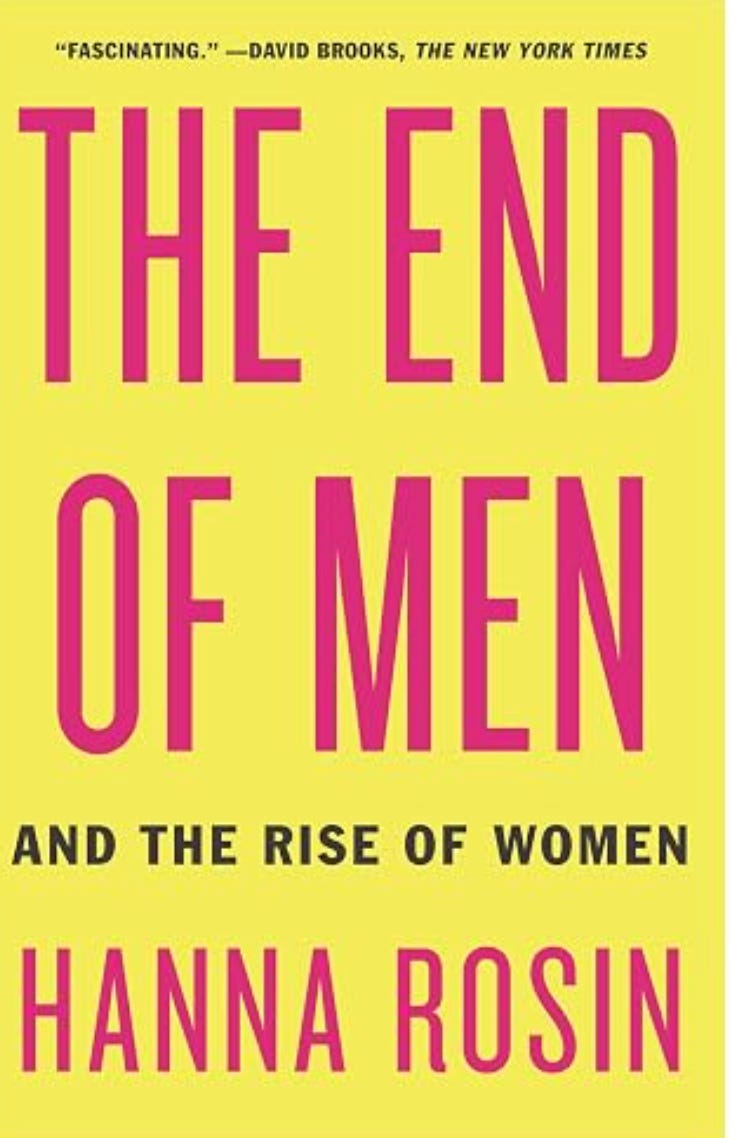
 

The End of Men: And the Rise of Women — Hanna Rosin (2012). Uses male decline and female advancement as its organizing conceit. But this really should not be represented as a hatred-of-men book; the book is socioeconomic reportage, and Rosin’s argument was about the decline of traditional male economic dominance.

Conclusion

What Would We Call These Books If the Sexes Were Reversed?

Looking at these books together leaves me with a very simple question: What would we call them if the sexes were reversed?

Imagine books titled I Hate Women, The Natural Superiority of Men, Are Women Necessary?, or The End of Women. Imagine a male writer proposing that women should make up only 10 percent of the population. Imagine another imagining women being killed until they agreed to negotiate. Imagine an entire body of literature describing women collectively as dangerous, defective, oppressive, entitled, or responsible for the world’s violence.

Would we have trouble finding a word for it?

I don’t think we would.

Now, these books are not all the same. That is important. SCUM Manifesto is vastly more extreme than Men Explain Things to Me. Some openly express hostility toward men. Others portray men collectively as an oppressor class. Still others simply use male privilege, entitlement, toxicity, or dominance as the lens through which they interpret relations between the sexes.

But when you stand back and look at them together, a pattern emerges.

Men can be described in ways that would immediately set off alarm bells if directed toward almost any other group. Male biology can be disparaged. Male sexuality can be treated as threatening. Men can be described collectively as oppressors. Hatred of men can even be defended as healthy or liberating. And proposals that would sound horrifying with the sexes reversed can sometimes be treated as provocative feminist thought.

Perhaps the most interesting question isn’t whether every book on this list deserves the label misandrist. Clearly they don’t.

The more interesting question is this: Why are we so reluctant to use that word at all?

We have become extremely sensitive to language that demeans women. I think that is a good thing. Hatred and dehumanization shouldn’t be encouraged.

But shouldn’t men receive the same consideration?

The book covers shown here are real. The words are real. The authors are real. And many of these works came not from obscure corners of the internet but from established writers, publishers, academics, and political movements.

Maybe the lesson isn’t that we should become less concerned about misogyny.

Maybe the lesson is that we should become equally concerned about misandry.

community logo
Join the MenAreGood Community
To read more articles like this, sign up and join my community today
0
What else you may like…
Videos
Posts
Articles
September 03, 2026
False Allegations - What the Numbers Don't Tell Us

We are getting a head start on International Falsely Accused day on Sept 9th!

How many false allegations of sexual abuse are there? We are often told they are extremely rare—perhaps only one to three percent. But those numbers depend on an extraordinarily narrow definition of what qualifies as a false allegation. They usually count only allegations proven to have been deliberately fabricated. Mistaken identity, contaminated memories, misunderstandings, suggestive interviewing, unsupported accusations and even recanted allegations may not be included.

In this conversation, Janice Fiamengo and I speak with Dr. Felicity Goodyear Smith, a physician, forensic medical examiner and professor at the University of Auckland who has studied wrongful allegations for more than three decades. Felicity explains the many different ways an innocent person can be accused, separating deliberate fabrications from allegations that are sincerely believed but untrue.

We also examine how “believe the victim” has ...

01:09:20
July 15, 2026
The Women's Health Narrative Meets the DATA

What if one of the most common claims in health policy simply isn’t true?

We’ve all heard the refrain: women are underfunded, under-researched, and left behind by the medical establishment. It’s repeated so often that most people never stop to ask for the evidence.

In this roundtable, Jack Kammer, Ed Bartlett, Ed Stephens, Jim Nuzzo, and I compare that narrative with the available data. We examine research funding, clinical trial participation, life expectancy, and the unintended consequences of policies that consistently prioritize one sex while neglecting the other.

This isn’t an argument against women’s health. It’s an argument for evidence, fairness, and a healthier future for everyone.

Link to the Feminist pdf that calls for 20 Billion dollars for women’s health!
https://drive.google.com/file/d/1IKEEZMGXtRNxU4n5K_M1d6k2w-ZP_wVT/view

Jim Nuzzo

The Nuzzo Newsletter on Substack http//jameslnuzzo.Substack.com
X: https://x.com/JamesLNuzzo

Jack Kammer

Jacks Substack Men’s ...

00:35:24
July 11, 2026
Mantoon: A Visit to the Doc

A visit to the Doc.

00:00:14
August 10, 2026
Feminism Cannot Be Reformed: It Must Be Destroyed Root and Branch

Janice Fiamengo’s new book is out, and this excerpt from the Foreword gives you a pretty good idea of what to expect. Janice goes straight to the heart of feminism and gives ample reasons for its demolition.

This is an important book. I hope you’ll get a copy for yourself—and maybe send one to someone who is even a little bit open to seeing the reality of feminism rather than the equality mask presented by feminists and so much of the media.

https://fiamengofile.substack.com/p/feminism-cannot-be-reformed

Well worth watch it’s good seeing men calling out women’s bull shit when the same women are not use to fair honest responses!

https://www.facebook.com/share/v/1JtTnYLC7K/?mibextid=wwXIfr

July 02, 2026
From Shooter to Heroine: The Glorification of Feminist Violence

I recently joined Hannah Spier, Janice Fiamengo, and Jim Nuzzo for a fascinating discussion about one of our culture’s most striking double standards: why violence by women is so often explained, excused, or even celebrated, while violence by men is treated very differently. We examine Valerie Solanas, the attempted murder of Andy Warhol, the SCUM Manifesto, and the film I Shot Andy Warhol, asking what the celebration and romanticizing of Solanas reveals about gynocentrism, empathy, and cultural bias. I think you’ll find it both thought-provoking and eye-opening.

11 hours ago
post photo preview
When One Incel Becomes Ten
How one real threat became evidence of a widespread violent ideology among French youth


One of the great dangers of modern journalism is that a false narrative can acquire the appearance of fact simply by attaching itself to an authoritative source. That is what appears to have happened in a recent Le Monde article about “masculinism.”

The article makes a series of extraordinary claims about boys and men. Its very title announces that masculinism is an “increasingly widespread, violent and popular ideology among French youth.” Throughout the article, male grievance, separated fathers, antifeminism, the manosphere, incels, misogyny and terrorism are placed close enough together that they begin to look like parts of the same phenomenon.


And the claims carry considerable authority because they are presented as flowing from a 260-page French Senate report drawing, in part, on information from the DGSI—France’s domestic security service. That sounds impressive. But then you read what the underlying material actually says. And the story begins to fall apart.

The security evidence is dramatically narrower than the Le Monde narrative built around it. Instead of evidence that a widespread movement of French boys and young men is becoming violent, we find one exceptionally serious case involving a young man identified with incel and Black Pill ideology who was allegedly preparing an attack, along with approximately nine other young people being monitored because authorities considered them susceptible to violent radicalization in connection with the incel milieu.

Those are not the same thing. One boy was allegedly preparing an attack. The others were considered susceptible to radicalization.

Yet watch what happens as this information moves through the story:

One alleged incel attack plot → roughly ten monitored youths → incels → the manosphere → masculinism → a widespread violent ideology among French youth.

At every step the population gets larger. But the word violent travels with it.

That is what makes this more than sloppy wording. When journalism takes evidence about one exceptional case and allows its most frightening characteristics to spread across larger and larger groups, it can create a public narrative that the underlying evidence never established.

And when the people being described are boys and men, the resulting narrative can become deeply misandrist: ordinary male distress starts looking suspicious; male grievance becomes a possible gateway to extremism; fathers’ advocacy can be placed alongside misogyny; and boys searching for help, identity or belonging can appear as the outer edge of a terrorist problem.

So I decided to look more closely at the young men being used to support this narrative. That is when I discovered something remarkable.


One incel had become ten.

Not literally, of course. The other young people did not suddenly adopt his beliefs or actions. Rather, the characteristics of this one serious case began to migrate outward onto other young people for whom the evidence was very different.

The DGSI, France’s domestic security service, reported approximately ten young people under scrutiny because they were considered susceptible to violent radicalization in connection with the incel milieu. That is not the same thing as saying that ten violent incels had been discovered.

One young man was identified with incel/Black Pill ideology and allegedly preparing an attack. The others were being watched because authorities believed they might be susceptible to radicalization. That distinction is crucial.

Susceptibility is not radicalization. Surveillance is not violence. And being considered vulnerable to recruitment into an ideology is certainly not the same thing as personally identifying with that ideology.

At each step the population expands while the frightening characteristic derived from the smallest and most extreme group remains attached. That is the sleight of hand at the heart of this story.


The part of the story we weren’t told

There is another detail that makes the Saint-Étienne case considerably more complicated than the framing suggests. According to the account attributed to the DGSI, the young man’s hostility was directed toward a particular girl whom he believed had falsely accused his friends of rape.

That does not make the alleged plot less serious. Nor does it demonstrate that incel ideology played no role. Both things could have been operating simultaneously. But surely it matters when we are trying to understand motive.

There is a significant difference between a young man wanting to attack women simply because they are women and a young man who embraces incel ideas but is also enraged at a particular person because he believes she seriously harmed his friends. The Le Monde article made no mention of his concerns for his friends.

Perhaps incel ideology intensified that grievance. Perhaps the grievance drove his attraction to the ideology. Perhaps both were important. We don’t know. And that is precisely the point.

The available evidence does not allow us simply to choose among those possibilities. But remove the specific grievance and what remains is a much cleaner story:

Incel hates women and plans attack against girl.

Put the omitted grievance back in and the story becomes more complicated:

A troubled young man immersed in incel/Black Pill material allegedly planned violence against a particular girl whom he believed had falsely accused his friends of rape.

The second description is less convenient. It is also more complete.


One boy carries the weight of the story

This matters because the Saint-Étienne suspect is doing an enormous amount of work in the larger narrative. He is the strongest evidence of the progression the article wants the reader to see:

male grievance → incel ideology → radicalization → violence

But then his characteristics begin to bleed outward onto the other young people.

The Senate report itself is more cautious. It distinguishes cognitive radicalization from behavioral radicalization and acknowledges that the scientific literature does not establish a causal relationship between exposure to masculinist material and violent action. Ideological adherence, it says, does not mechanically lead to violence.

That qualification changes everything. A boy can watch objectionable material without accepting it. He can accept radical ideas without becoming violent. He can be lonely or angry without being radicalized. He can be susceptible to radicalization without actually becoming radicalized. And he can be monitored by a security service without ever having planned an attack.

Those aren’t minor semantic distinctions. They are different evidentiary categories.


How a threat grows on paper

Once you preserve those distinctions, the architecture of the story becomes much easier to see. There are really three very different populations.

The first is a serious case: a young man identified with incel/Black Pill ideology who was allegedly preparing an attack.

The second is a tiny security population: approximately ten young people considered susceptible to violent radicalization in connection with incel milieus.

The third is an enormous and heterogeneous population of boys and men who may watch male-oriented influencers, participate in parts of the manosphere, criticize feminism, favor traditional sex roles, belong to fathers’ groups, struggle with dating, or simply search online for help with loneliness, fitness, money, relationships, or becoming a better man.

Evidence about the first population does not automatically describe the second. And evidence about the second certainly does not describe the third.

But place all three populations close enough together and the reader begins to experience them as points along a single continuum. That is where framing becomes so powerful.

You don’t actually have to say that the lonely fifteen-year-old watching fitness videos is on his way to becoming a terrorist. You merely put him into a narrative that begins with algorithms and male grievance, passes through misogyny and incels, and ends with terrorism.

The reader supplies the arrow.


One attack becomes two

This is also why another discrepancy in the Le Monde article matters so much. The article says that two violent masculinist actions were foiled in 2024 and 2025. But the underlying Senate report identifies one imminent incel terrorist attack foiled by the DGSI—the Saint-Étienne case.

The report discusses other young people who were arrested, referred, investigated, or monitored. But those categories are not interchangeable.

A referral is not an attack. Surveillance is not an attack. Concern about possible radicalization is not an attack. Preparation for an attack is something else entirely.

Unless a second equivalent case can be identified, turning one foiled attack into two “violent actions” isn’t merely a numerical discrepancy. It reinforces the larger narrative by making an extraordinarily small phenomenon appear to be reproducing itself.

And the report itself warns against drawing broad conclusions from these cases. The number is simply too small.

Yet the headline offered to readers was:

“Masculinism, an increasingly widespread, violent and popular ideology among French youth.”

Think about the distance between that headline and the underlying security evidence. One alleged imminent attack. Approximately ten young people being watched because they were considered susceptible to violent radicalization associated with the incel milieu. Only one clearly identified here as an incel/Black Pill adherent preparing an attack.

That is a very different story.


The boys disappear again

There is one final part of this that troubles me. The Senate material describes many of these young people as profoundly vulnerable. Their histories include bullying, social isolation, trauma, sexual victimization, disability, psychiatric difficulties, and dysfunctional families.

Those details should matter. They don’t excuse threats or violence. A young man preparing to hurt someone needs to be stopped regardless of what happened to him.

But imagine encountering a group of troubled girls with those histories. Would our first question be: How dangerous are these girls to men? Or would we ask: What happened to them?

With these boys, their vulnerability seems to become interesting primarily because it may make them susceptible to radicalization. Their suffering becomes a security indicator.

The boy disappears and the potential perpetrator takes his place.

That may be one of the most revealing aspects of the entire story.

The same information could have prompted another set of questions. Why are these boys isolated? Why were some of them bullied? What happened to the sexually victimized ones? Where are their fathers? Where are the male mentors? Why are boys searching online for communities that seem to offer them belonging, identity and meaning? And what could we do to reach them before some negative influencers do?

Those questions don’t require ignoring genuine threats. Quite the opposite. Understanding troubled boys more accurately might be one of the best ways of preventing the tiny number who actually become dangerous from getting there.


A real threat needs no exaggeration

There really was a serious case in Saint-Étienne. French authorities appear to have identified a credible threat and intervened before anyone was hurt.

Good.

That is exactly what security services are supposed to do. And that story needs no exaggeration.

What it does not justify is allowing the characteristics of that one young man to migrate outward—to approximately nine other monitored youths, then to incels generally, then to the manosphere, then to “masculinism,” and ultimately to a broad population of boys and men whose beliefs and behavior bear little resemblance to his.

There is a lesson here that reaches far beyond this particular article. Whenever we hear that some enormous group is becoming “radicalized,” “extremist” or “violent,” we should ask a few simple questions:

How many people actually committed violence? How many actually planned violence? How many were merely being monitored? How many personally identified with the ideology being discussed? And at what point did evidence about a tiny extreme subgroup begin to describe everybody else?

Those questions are especially important when we are talking about boys.

A real threat should lead us to greater precision, not less. One alleged terrorist plot is serious enough.

We shouldn’t need to turn one incel into ten—and ten into a generation.

Men Are Good.

Read full Article
September 14, 2026
post photo preview
Feminist Buzzwords as Attack Drones
These words do more than describe. They arrive with the verdict already loaded.


During a recent video, I described feminist buzzwords as being something like attack drones. The more I think about it, the more I like the comparison.

An attack drone does not arrive to look around and figure out what happened. It has already been programmed. It knows what the target looks like. It knows who the enemy is before it ever gets there.

A lot of feminist buzzwords work the same way. They don’t just describe something that happened. They arrive with a theory already attached to them. Who has the power? Who is the victim? Who should be believed? Who needs to change? Usually the answer is already built in.

The man has power. His power is suspect. The woman lacks power. She is harmed by what he has done. So the word is doing quite a bit more than simply describing behavior. The verdict is built into the word. Every feminist buzzword arrives preloaded with ideology—and armed with disdain for men and masculinity.


Take mansplaining. Certainly a few men may explain things in an arrogant or condescending way. Women do too. We already had perfectly good words for that sort of behavior: patronizing, condescending, arrogant, rude. But mansplaining adds something. Now the man’s sex is part of the offense.

The word suggests that he is acting this way because he considers himself superior and makes the assumption that being male makes him more knowledgeable or more important. But do we know that? Did she misunderstand what he was trying to say? Does he talk this way to everyone? Was he simply trying to help? Before we have looked at any of that, the drone has already found its target. The behavior has been gendered. The motive has been supplied. The verdict is in. The buzzword arrived preloaded with ideology—and armed with disdain for men and masculinity.


Now take toxic masculinity. Some men behave badly. A small minority may be violent or reckless. But once those behaviors are placed under the heading of toxic masculinity, something else happens. Masculinity itself gets ​blamed and dragged into the mud.

The term suggests that these behaviors are an integrated part of masculinity and that men need to learn a different relationship to their own nature. Such a global generalization ignores all the demands placed on men. Provide. Protect. Compete. Take risks. Endure pain. Stay useful under pressure. Those parts of masculinity are usually welcomed when other people benefit from them.

A man works sixty hours a week to support his family? Good. He walks into danger to protect someone? Good. He pushes through pain because other people depend on him? Good. But when some men buckle under those same demands, the whole of masculinity can suddenly become toxic. Why? That is what the term does: it not only describes harmful behavior but directs us to blame masculinity itself—while diverting attention from the pressures, circumstances, and unmet needs that may have helped produce the behavior.


Male privilege carries a similar load. It trains us to notice the man’s advantages and ignore his disadvantages. We see the male CEO. We don’t see the male roofer, the foot soldier, the prisoner, the homeless man, the suicide victim, or the father who has lost his children.

A man’s success can be explained partly by privilege. His suffering is much more likely to be explained by his choices. Notice the difference? His suffering is his fault, while his success is due to his privilege. When judging men as a group, the term directs our attention upward, toward the men with the most wealth, status, and power. When judging women, it directs our attention downward, toward those facing the greatest hardship. Struggling men and successful women quietly disappear from the picture. And this can happen even when the particular woman standing in front of us has more education, more money, more institutional support, and more social credibility than the particular man. The theory can still tell us he has the power and she does not. At that point, the theory has become more important than the people standing right in front of us. The buzzword male privilege arrived preloaded with ideology—and armed with disdain for men and masculinity.


Fragile masculinity is a clever drone. Why? Because disagreement itself can become proof. Suppose a man objects to being mocked or stereotyped. His objection can be taken as evidence that his masculinity is fragile. What if he stays silent? Then there is no challenge. What if he speaks up? Now he has proved the accusation. Heads she wins. Tails he loses. The term doesn’t invite a response. It shuts ​it down.


Then we have the manosphere. Taken literally, this could simply mean internet spaces where men talk about men’s lives. That could include fathers’ groups, divorce forums, men’s health advocates, suicide-prevention groups, dating discussions, and critics of feminism. Pretty broad group, right? But that is rarely how the word is presented. Instead it is usually surrounded by other words: Misogyny. Radicalization. Extremism. Violence. Suddenly a father trying to understand a custody battle and a violent man threatening women can be placed in the same ominous container. Once the label has been attached, even ordinary concern for men can begin to look suspicious. The underlying message is that men don’t deserve compassion.

But there is something odd here. Where is the equivalent word for the huge network of universities, feminist organizations, advocacy groups, foundations, government agencies, media outlets, legal organizations, and research centers that create and circulate feminist ideas? That network is far larger and far more influential. Yet it mostly goes unnamed. And because it goes unnamed, it stays largely invisible. I call it the femosphere. Once you name it, you start to see it.

Feminist ideas do not simply appear out of nowhere. They are researched. Funded. Taught. Repeated. Promoted. Written into policy. And sometimes written into law.


Other terms do the same thing even more clearly. Take coercive control. There is certainly such a thing as a terrible pattern of domination and control inside a relationship. But what happens when the idea is interpreted almost entirely through a feminist power model? Then we can end up with the familiar story. Powerful man. Powerless woman. His controlling behavior becomes part of a larger system of male domination. Her controlling behavior may be minimized, ignored, or explained as self-protection. Same behavior? Different moral story.

Something similar happens with vicarious violence. The term has been used for situations in which a man harms children or other people in order to hurt a woman. That is terrible behavior and certainly deserves attention. But in countries such as Spain, the concept has even been incorporated into the legal framework as a form of male violence against women—building the sex of the perpetrator and victim into the official meaning. The law only goes one way. There is nothing in the law about a mother victimizing her children to hurt the man. Nothing. This even though we know that mothers murder their children as much or more than fathers. The vicarious violence law arrives preloaded with ideology—and armed with disdain for men and masculinity.


Then there is gender-based violence. Violence against a woman is often described as gender-based even when we do not actually know that her sex was the reason she was attacked. But violence against a man is far less likely to receive the same label. This is interesting because men are the majority of homicide victims and men are often expected to absorb danger precisely because they are men. But somehow that doesn’t fit quite as easily. Once again, men get agency and women get victimhood. Men do things. Things happen to women.


From description to control


This is why I think these words eventually become a form of social control. Not that every person using them is consciously trying to control men. Most aren’t.​ Most are unaware of what motivates them and simply repeat the arguments they have been taught—arguments that reinforce the narrative they have already swallowed. People ​tend to repeat the language they hear from professors, journalists, therapists, advocates, friends, and social media. The assumptions just travel along inside the word. Quietly. But the effect is still there.

These words help define what a man is allowed to say. How he is allowed to behave. How much authority he should have. How he is permitted to understand his own experience. And what happens if he objects? He may be told he is fragile. Toxic. Privileged. Misogynistic. Part of the manosphere. Do you see the problem? Every defense can become an opportunity to launch the next drone.

The ​drones can turn: male confidence into dominance; male disagreement into misogyny; male boundaries into control; male suffering into fragility; male spaces into radicalization; male success into privilege; and female aggression into a response to male power. Notice anything? The direction rarely changes. Men need correction. Women need protection. Men should give up power. Women should be given more. Men’s motives are questioned. Women’s experiences are affirmed.


The great paradox


And here is the strange part. This language keeps telling us that women are powerless while giving enormous power to women and to the institutions claiming to act on their behalf. The person labeled the victim receives moral authority. She is more likely to be believed. Protected. Excused. The person labeled powerful receives moral suspicion. He is expected to listen. Confess. Step back. Change. So powerlessness itself can become a kind of power.

Once victimhood carries enough moral authority, it can end arguments, destroy reputations, influence law, redirect public money, and place an entire sex under suspicion. And because all of this is being done in the name of helping the powerless, it becomes very difficult to question. ​”How dare you question giving help to the underdog!” That may be one of the most important things these buzzwords do. They hide power while using it.


Look inside the payload


Now, words are never completely neutral. And sometimes a new word really does help us see something we had missed. Nothing wrong with that. But shouldn’t we get a little suspicious when dozens of new terms all seem to tell us the same moral story? Men have power. Women do not. Men abuse. Women are harmed. Men need limits. Women need authority.

At some point, we have to ask whether we are describing reality or simply applying the same theory over and over again. When the conclusion comes before the evidence, we are no longer dealing with simple description. We are dealing with buzzwords arriving preloaded with ideology—and armed with disdain for men and masculinity.

So the next time one of these words appears, maybe stop for a minute. Ask if the word is being used as a weapon. Ask if it carries an underlying disdain for men. Ask if they have any compassion for men and boys. That one will stop them in their tracks and you will see them fumble for words that show how much compassion they have for men and boys. You have just neutralized an attack drone.

Well done.

Men are good.


Read full Article
September 07, 2026
post photo preview
all is as it is

This post is a story by Moiret Allegiere about about awakening to manhood.


The boy, sweating, stood silent halfway up the hill. Above, in the blue skies, the sun shone brightly. Warm. Late spring. A slight breeze – quite welcome, thought the boy – broke the stillness of the air.

The boy looked out upon the seemingly endless fields below. Ancient fields, a small portion of which were his and his was also the grass which he had just cut by the sweat of his brow and his scythe and nothing more.

The boy wiped the sweat from his eyes with the palm of his left hand. His right hand, the dominant one, hung limply to the side of his body, swaying. His muscles ached. He thought it more than he felt it. Years of toil had learned him to expect as much. The grass cut then was not his grass, yet the work and the toil and the sweat and the blood belonged to him and him alone. And the very same work and toil and sweat and blood had taught him that his right arm, when not in use, must be loose and limp and tender. As if not to spoil the meat or blood or strength within, but tenderize it, preserve it and conserve it.

Because harder times had been before and harder times would come once more. All things must be conserved and saved so as not to face that snarling beast again, having spoilt or spent knife and rifle both.

“The great divide”, thought the boy. 70/30, with the harder times bearing the brunt of the thing thus split. A beast of burden led with a thin string of silver across a rickety bridge. The boy knew this. The father of the boy taught him this. The boy was five and was watching his father cut the grass and dry it and turn it into food for the sheep. The man always saved some.

Rather would he see his sheep 30 percent starved than for them not to eat at all. So he said. He never strayed. His sheep were always well fed, and his children and his wife as well. The man never strayed. A few of his children had strayed already, yet they strayed only from his path onto their own path as had he when once he grew from boy to man. All was as it should be.

The boy stood there still, and he looked at his fields and then towards the lush green of the plants growing there which he himself placed there for food, and then towards his house which he had built upon the plot of land his father gave to him. A house in which a woman and a baby also lived and breathed and ate and slept.

The boy sighed.

He looked at his watch. The time was where it should be. He stood and he looked some more. He looked at his father’s house.

Still well-kept and maintained and nurtured and loved from seed to harvest.

Beside him now, and quite suddenly, his father stood. Quiet, perhaps, as is his wont, yet lively still, far from dead, merely crippled by arthritis and now incapable of tending to all that which he once tended to.

The boy gave the man a nod, and he smiled. The father stood and he looked. Then he smiled. And they looked both upon the son’s work and the son’s world, neither saying a word because no words were needed. Some time passed. Still was the air and the time was where it should be still. The man gestured with his arm.

“Sit down, son,” he said.

The boy sat down. His father stood there, smiling.

“How’s the baby?” He asked. He had always been a kind man, yet never before as kind as just now.

The boy thought.

“Growing, crying and shitting.”

The older of the two grinned and then he laughed, heartily, and his mood changed abruptly, as if suddenly remembering something long forgotten. He paused and turned to the boy. He looked at his son’s face. Still young and handsome and maintained and nurtured and loved from seed to harvest. And in his son’s face he saw at once his own face as once it was in younger years.

“All is as it should be then?”

“Yes,” the boy said.

“Yes,” said the man.

The older of the two went quiet for a bit, fumbling in his backpack which he always carried with him. The fumbling went on for a little longer than it should, thought both boy and man. The man found what he was looking for. The man was always prepared and the man never strayed, not now and not ever.

He pulled out a beer, and then he pulled out another. Piss-warm now, perhaps, yet it was still beer and still the time was right where it should be.

The son sighed and he smiled as his father opened a beer and handed it to him, saying nothing. There they were. The boy sitting and the man standing. They stood and sat and they looked at what was theirs and theirs alone, and they drank from their beers. Then looked and drank some more. Some time passed just as time does and they stood and sat as if all that was there or anywhere was them and them alone. The older of the two then put his hand upon the shoulder of the younger, and, smiling warmly, he nodded as if to say goodbye even when his lips and his mouth and his mind and his reason said “See you later, son”. He turned and walked away, going home.

The boy sat and he looked some more upon all that was there that was his and his alone. And he sighed and he smiled and he laughed and then he made to leave.

The man got to his feet and the man turned and walked away, going back home following behind the older man, too far behind to catch up yet close enough to never stray.

Read full Article
See More
Available on mobile and TV devices
google store google store app store app store
google store google store app tv store app tv store amazon store amazon store roku store roku store
Powered by Locals