MenAreGood
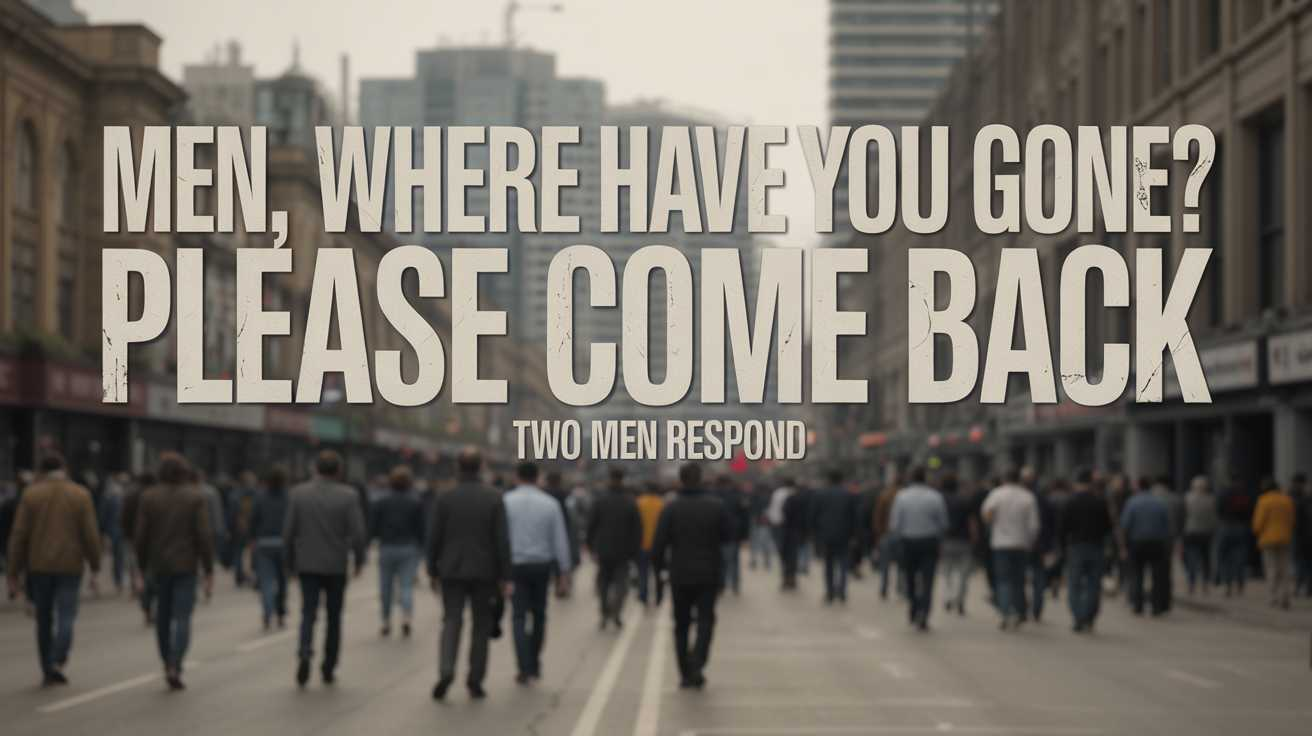
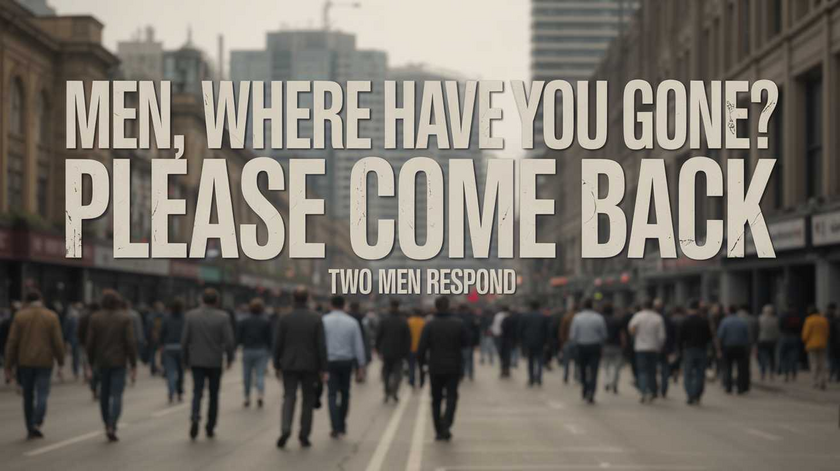
NYTimes Article Men Where Have You Gone? Two Men Respond
July 06, 2025
post photo preview


I recently read a New York Times article by Rachel Drucker titled “Men, Where Have You Gone? Please Come Back.” The subtitle reads: “So many men have retreated from intimacy, hiding behind firewalls, filters and curated personas, dabbling and scrolling. We miss you.”

In the article, Drucker shares a personal story about meeting a man named James online. Things started off well—but then James disappeared. From there, she explores her ideas of why so many men seem to be withdrawing from relationships and intimacy.

Here’s a link to the article if you’d like to take a look:
https://www.nytimes.com/2025/06/20/style/modern-love-men-where-have-you-gone-please-come-back.html

I wanted to share two responses to the article—both from men, and both striking in their own way. One is by Jim Nuzzo, my favorite researcher, and the other is by Paul Nathanson, co-author of the most comprehensive and fascinating series ever written on misandry.

Enjoy the creativity—and insight—of men!

First a tweet from Jim Nuzzo.


https://x.com/JamesLNuzzo/status/1940296998072226262

Next, a written response from Paul Nathanson that I saw on a mutual mailing list. I think it captures this woman’s ignorance of men and our present situation very well:


This article makes me angry. For many years, I have tried to foster inter-sexual dialogue, a project that seems like utopian science-fiction for the time being. With that in mind, I read the author’s discussion of one woman’s deceptive plea for men to “come back.”

Rachel Drucker claims to understand what drives men away from women. “I get it,” she says. But she clearly doesn’t. Otherwise, she’d be “interrogating” women instead of complaining about men. Listen, I’m a gay man. I’ve never played mating games with women and have no personal stake at all in the rules—old or new. But even as an outsider—or maybe for that very reason—I can see the depressing reality that’s becoming more and more obvious to straight men. It’s true that many men, at least in the most articulate and influential circles, are withdrawing from women. But that’s mainly because women have already withdrawn from men. And no one who reads the Times does so without being aware of its historical and cultural context. For half a century, these women have made it clear that they, as a class, consider men the inferiors of women at best and the evil oppressors of women at worst. In other words, they have indulged publicly in subtle condescension at best—this article being one example—and open contempt or revenge at worst. Consider an article, both famous and infamous, for the Washington Post. In it, Suzanna Danuta Walters openly abandons the most basic moral principle of all by asking, “Why Can’t We Hate Men?” (8 June 2018).

Okay, maybe many men are unaware of what’s going on. They’ve never actually read feminist denunciations of marriage as legalized prostitution, for instance, or as legalized rape. (According to feminist theorists such as Catharine MacKinnon and Andrea Dworkin, women are incapable of consenting to the sexual advances of men due to the “eroticization of power,” which supposedly makes women capable of sexual arousal only in the patriarchal context of submission to rape.) But most men are indeed aware by now that women have organized themselves politically as enemies of men, at least of those men who don’t convert to feminism (and not even those men deserve redemption according to the woke version of feminism). This hostility is as obvious in the relatively safe context of casual entertainment, moreover, as it is in the riskier contexts of friendships or “relationships” with women. Why would any reasonably healthy man be willing to put up with the lurking possibility of incessant complaining, relentless insinuating or implacable ranting? Enough already.

Explaining the current state of affairs is one thing, and recommending an alternative is something else. I’m not advocating the position of either Men Going Their Own Way (who have reasonable grounds for fearing entanglement with women despite the high cost to themselves) or the “incels” (who cannot attract women and therefore have unreasonable grounds for hostility toward women). I mention all this for two reasons. First, men and women are biologically programmed to unite not only for purely reproductive reasons but also for childrearing purposes. Because no society can endure the estrangement of men and women, reciprocity lies at the heart of any social contract. Second, human existence would be meaningless and unendurable without at least the hope of moving beyond cynicism toward altruism. Striving for reconciliation between any groups in conflict is also, therefore, a moral imperative.

Some women really do “get it” by now. Janice Fiamengo sure does, for example, and she’s not alone. Being explicitly anti-feminist, though, they have a long road ahead. I doubt that I’ll live long enough to see the dawn of genuine inter-sexual dialogue, but I’ll do anything that I can to join them in that effort.

_______________________________________________
_______________________________________________

Thank you Paul and James! Men Are Good!

community logo
Join the MenAreGood Community
To read more articles like this, sign up and join my community today
0
What else you may like…
Videos
Posts
Articles
April 02, 2026
Are Family Courts at War with the Constitution?

In this conversation, I sit down with longtime scholar and author Stephen Baskerville to take a hard look at modern family courts, no-fault divorce, paternal rights, and the assumptions behind shared parenting. Stephen argues that what many people take for granted in divorce and custody law may be far more troubling than they realize—not only for fathers and children, but for the rule of law itself. Join us in this challenging and thought-provoking discussion that raises questions most people never hear asked.

Stephen's Substack
https://stephenbaskerville.substack.com/

01:02:28
March 30, 2026
Blame it on the Manosphere

This short video takes a humorous look at the current panic among feminists and the media over what they call the manosphere. In reality, the manosphere is one of the places where their false narratives are being exposed. What we are seeing now is the creation of a straw man—something to blame, distort, and use as a distraction from the truth that is coming to light. More and more people are waking up to the game and beginning to see the hostility and self-interest that have been there all along.

(This video was produced largely with AI. I wrote the script, and the music and images were AI-generated.)

Men are Good!

00:03:05
March 23, 2026
From Description to Smear: The Guide to the Manosphere

Today’s video is a lively and revealing conversation with Jim Nuzzo about the growing panic over what the media and academia call “the manosphere.” Together, we take a close look at a new Australian guide for teachers that claims to help schools deal with so-called misogynistic behavior among boys. What we found was not careful scholarship, balanced concern, or genuine curiosity about boys. What we found was a familiar pattern: boys portrayed as the problem, their questions treated as threats, and their frustrations dismissed before they are even heard.

Jim brings his scientific eye to the discussion, and that makes this exchange especially valuable. We talk about the sudden explosion of academic and media attention on the manosphere, the way fear is being used to drive the narrative, and the striking absence of empathy for boys who feel blamed, dismissed, and alienated. We also explore something the guide never seriously asks: why are boys drawn to these spaces in the first ...

00:48:43

The rules of the “Red Pill Glasses”

Once you put them on you can’t taken them off.

Once you see it you can’t unsee it.

You can’t force others to where them

You end up saying the sky is blue and they will not believe you!

https://www.facebook.com/share/r/1Cak9m6uiY/?mibextid=wwXIfr

Women can they just won’t!

This is on point and even this will be seen as anti woman

May 04, 2026
post photo preview
Don't Take The Bait
Understanding the Animus—and What Men Can Do About It


There’s an idea from Carl Jung that has largely disappeared from modern conversation, but once you see it, you begin to recognize it everywhere.

He called it the animus.

In simple terms, the animus is the inner masculine side of a woman’s psyche. Just as men have an inner feminine (anima), women have an inner masculine. But that simple definition doesn’t go far enough, because the animus doesn’t just sit quietly in the background. At times, it can take over.


What the Animus Looks Like in Real Life

Jungian writers like Emma Jung and Marie-Louise von Franz described this very clearly. When the animus is active, it tends to speak in opinions that feel like absolute truth—not reflections, not curiosity, not a back-and-forth, but conclusions delivered with certainty.

Most men have experienced this moment, even if they didn’t have a name for it. You’re in a conversation, and suddenly you’re no longer being heard. Your words don’t land. The tone becomes sharp, certain, even prosecutorial. You are no longer an individual—you are “men.” And perhaps most telling: it doesn’t feel like her.

That’s the moment.


A Simple Tip-Off: Listen for “Should”

One of the clearest signals I’ve found is a small word that shows up again and again: “should.”

“You should know better.”
“Men should…”
“You shouldn’t feel that way.”

“Should” often signals that the conversation has shifted from what is happening to what must be true—from reality to judgment, from relationship to prosecution. It’s not that the word itself is bad, but when it shows up with certainty and heat, it often marks the moment when you are no longer in a discussion—you’re in something else.


Not Every Argument Is the Animus

This matters. Not every disagreement is an animus moment. Two adults can argue, disagree, challenge each other, and even get emotional while still being in a real conversation. That’s not what we’re talking about here.

A real argument still allows for movement. Animus possession does not.

So these strategies are not for normal discussions. They’re for those moments when nothing lands, everything is certain, and you can feel the shift.


The Bait

The animus, much like relational aggression, offers something very specific: it offers bait. The bait is emotional, and the hook is reactivity. If you take it—even for a moment—you’ve already lost, because now the conversation is no longer about what happened. It’s about how you reacted.


What Works Instead

Over time, I’ve seen something else work. Not perfectly, not always, but often enough to matter. When a man can stay calm, clear, and grounded while simply stating the truth, something changes.

Not immediately. In fact, the attack often continues in the moment. But without a counterattack, the conflict has nowhere to go but inward.


What This Sounds Like

Staying grounded doesn’t mean staying silent. It means speaking clearly—without heat, without defensiveness, and without trying to win.

For example:

“I care about you, but I’m not going to accept being spoken to as if I’m the enemy.”

“I’m willing to talk about what happened. I’m not willing to stand here as a symbol for all men.”

“I hear that you’re upset. I don’t agree with how you’re describing me.”

“I’m open to this conversation—but not in this tone.”

“I don’t think more arguing is going to help us right now.”

“I’m going to step away for a bit. I’m open to talking when we can both speak to each other as people.”

These responses don’t escalate, don’t submit, and don’t take the bait. They simply hold reality steady.


The “Next Day” Effect

I’ve seen this pattern many times. When I don’t take the bait—when I stay steady and speak plainly without heat—the moment doesn’t resolve right away. But later, something shifts.

Sometimes hours later. Sometimes the next day.

The woman comes back—not because I won the argument, but because I didn’t give the argument anything to grow on. Without escalation, she’s left with something different: she has to sit with what happened. And when there is maturity, that can lead to reflection.


But This Only Works With Maturity

This is important. This approach is not a universal solution. There are women who, in the heat of the moment, lose themselves and later come back, and there are women who never come back.

You need to know the difference.

If there is no reflection, no softening, and no awareness afterward, then you are not dealing with a moment—you are dealing with a pattern. And continuing to offer calmness into that pattern does not fix it. It sustains it.


This Takes Practice

None of this is easy. In the moment, your body is activated, your instincts are to defend or counterattack, and the pressure to respond is real. Staying calm and clear under those conditions is a skill, and like any skill, it takes practice.

You won’t do it perfectly. You’ll take the bait sometimes. Everyone does. But over time, you begin to recognize the moment sooner—and respond differently.


Calm Is Not Weakness

One of the challenges today is that this kind of steadiness is often misunderstood. Calmness is labeled as avoidance, logic as cold, and non-reactivity as disengagement. But those labels often miss something essential:

There is a difference between withdrawal and discipline.

I saw this growing up. Men who could sit with intensity, listen without collapsing, and respond without heat. They didn’t always fix things in the moment, but they didn’t make them worse either—and that mattered more than we realized.

As a man, you likely have strengths in logic, calmness, and clarity. These natural masculine qualities have been steadily undermined and, at times, openly shamed by feminists and modern cultural currents. Don’t give them up—use them.


The Real Skill

The real skill is not dominance, and it’s not submission. It’s something far more difficult: clarity without reactivity.

Because clarity doesn’t escalate, and reactivity is what the conflict feeds on.


The Line You Don’t Cross

This is not about becoming endlessly patient. It’s not about absorbing attack indefinitely. At some point, a man has to recognize:

If my steadiness is never met with awareness—only more attack—then I am no longer helping the relationship.

That’s where a different kind of strength is required—the willingness to stop participating in a pattern that does not change.


Final Thought

You can’t force someone to see themselves clearly. But you can refuse to cloud the mirror.

And sometimes, when you do that, they come back and see it on their own.

Men are good, as are you.

Read full Article
May 01, 2026
post photo preview
Tucker on Fatherhood: Here's What He Forgot


Fatherhood matters.

That’s the message at the heart of Tucker Carlson’s documentary Fathers Wanted—and it’s a message worth hearing.

A man who gives his time, his energy, and his life to his children is doing something deeply meaningful. There’s no controversy there.

But as I watched the film, I kept noticing something else.

Not what it said.

But what it didn’t.

Because by the end, the story felt strangely incomplete—like watching a documentary about lung cancer that never once mentions smoking.


The framing begins immediately.

Within the first moments, we are told that young men are choosing pornography, video games, and drugs over marriage and family. The implication is clear: the problem is not just that fatherhood is declining, but that men are turning away from it—opting for comfort, distraction, and indulgence instead.

That may be true in some cases.

But starting the story this way does something important. It establishes, from the outset, that the primary driver of fatherlessness is male behavior.

Everything that follows is filtered through that lens.


The film goes on to frame fatherlessness largely as a cultural and moral failure.

Men, we’re told, are retreating. Avoiding responsibility. Choosing comfort over commitment. Losing faith. Losing purpose.

By the end, the message is unmistakable: good men step up, bad men walk away.
And if a father abandons his children, Carlson makes it clear—he deserves contempt.

That’s a powerful claim.

But it rests on a narrow frame.


Because what the film barely examines—if at all—is the system in which modern fatherhood actually exists.

There is no serious discussion of:

  • family courts

  • custody outcomes

  • child support structures

  • no-fault divorce

  • or how fathers often lose daily access to their children

These are not minor details.

They are central to understanding what happens to fathers in the real world.


In many cases, fathers do not simply walk away.

They are separated—from their children, from their role, from their identity as fathers—by processes largely outside their control. A man can go from being an everyday presence in his child’s life to being a visitor—or, in some cases, a paycheck. And yet, culturally, the outcome is often interpreted the same way:

He left.

But that is not always what happened.


There is another layer here the film only partially acknowledges. For decades, men have been broadly portrayed as:

  • oppressive

  • emotionally deficient

  • disposable

  • dangerous

  • ​toxic

These ideas have been reinforced across media, education, and public discourse—under the influence of feminist frameworks that carry a deep skepticism and contempt toward men.

At the same time, we have seen something very different happen on the other side.

Single motherhood has increasingly been framed not as a difficult circumstance to be supported and stabilized, but as something to be celebrated—even idealized. Cultural messaging often elevates the strength and independence of mothers raising children alone, while saying very little about the cost of a father’s absence.

The contrast is striking. Fathers are questioned. Their role is diminished. Their presence is treated as optional. While single motherhood is often presented as sufficient—sometimes even preferable. The result is a contradiction we rarely confront: We tell men they are not needed. We question their value. We undermine their role.

And then we ask why they hesitate to step into it.


​When structural forces are ignored, a complex social problem ​can get reduced to a simple moral failure. And when that happens, the burden of explanation—and blame—falls almost entirely on individuals.

In this case, on men.


Carlson is right about something important:

Fatherhood matters.

But if we want more fathers present in their children’s lives, we need to do more than praise the ideal We need to examine the systems that shape the reality. Because until we do, we will keep asking the same question—

Why aren’t men stepping up?

—without fully understanding what they are stepping into.

Men Are Good, as are you.

Read full Article
April 27, 2026
post photo preview
She Sees the Problem-But Not The Imbalance
The conflict between men and women isn’t just mutual—it’s shaped by a culture that amplifies one narrative and attacks the other.

In a recent piece for The Globe and Mail, Debra Soh takes on a topic that is long overdue for honest discussion: the growing hostility between young men and women, and the role online spaces play in fueling it.

To her credit, she does something that many commentators still avoid. She acknowledges that the problem is not confined to the so-called “manosphere.” She names the existence of a “femosphere” and recognizes that it, too, can promote distrust, manipulation, and even outright hostility toward the opposite sex.

That matters.

For years, the dominant narrative has been that toxicity flows in one direction—that men are the primary source of gender-based hostility, and women are largely reacting to it. Soh challenges that assumption. She points to polling data showing that young women, in some cases, hold more negative views of men than men do of women. She highlights the cultural double standards that allow anti-male messaging to pass with far less scrutiny than anti-female messaging.

All of this is important. And it takes a certain degree of intellectual independence to say it out loud.

But this is where her analysis stops just short of something deeper.

Soh ultimately frames the problem as a kind of mutual escalation—two sides locked in a feedback loop of resentment, each needing to step back, see the other more clearly, and abandon the worst impulses of their respective online cultures.

It’s a reasonable conclusion. It’s also incomplete.

Because it assumes that these two forces exist on roughly equal footing.

They don’t.

The hostility toward men that Soh describes is not simply emerging from fringe online communities. It is reinforced—often subtly, sometimes explicitly—by the broader culture itself. Media narratives regularly cast men as dangerous, deficient, or morally suspect. Academic frameworks frequently position men as privileged agents and women as vulnerable recipients. Institutional policies are often built on these same assumptions.

Over time, this does something powerful: it transforms a perspective into a kind of cultural default.

It begins to feel less like an opinion and more like reality.

By contrast, the hostility that emerges from the manosphere exists in a very different environment. It is not institutionally reinforced. It is challenged, criticized, and often condemned outright. Again, that does not make it accurate or healthy—but it does mean it operates under constraints that the opposing narrative largely does not.

This creates a playing field that is far from level.

One set of ideas is amplified and legitimized. The other is policed and marginalized.

And that asymmetry matters more than we often acknowledge.

Because when one narrative is embedded in institutions, it shapes not just opinions, but outcomes. It influences how boys are educated, how men are treated in courts, how male suffering is perceived—or overlooked. It becomes part of the background assumptions people carry without even realizing it.

Meanwhile, the reactive spaces that emerge in response—however flawed—are then judged as if they exist in isolation, rather than as downstream responses to an already tilted system.

This is the piece that Soh only partially touches.

She sees the hostility. She sees the polarization. She even sees that anti-male sentiment is more widespread than many are willing to admit.

But she does not fully account for the cultural forces that sustain and legitimize that sentiment.

And without that, the solution she offers—mutual correction—risks placing equal responsibility on two sides that are not equally empowered.

To be clear, none of this is an argument for excusing hostility—whether it comes from men or from women. We need to resist the pull of the worst elements on either side. Dehumanization, wherever it appears, damages everyone involved.

But understanding requires clarity.

And clarity requires us to ask not just what is happening, but where the weight of the culture rests.

Until we do that, we will continue to describe the conflict between men and women as a symmetrical breakdown in understanding—when in many ways, it is something much more lopsided than that.

Men are good, as are you.

Read full Article
See More
Available on mobile and TV devices
google store google store app store app store
google store google store app tv store app tv store amazon store amazon store roku store roku store
Powered by Locals