MenAreGood
Dismantling Men's Masculinity
September 22, 2025
post photo preview


In Chinese philosophy, yin and yang represent complementary forces. Yin, often linked with the feminine, is receptive, inward, intuitive, and fluid. Yang, the masculine counterpart, is active, outward, structured, and bold. Neither is “better” than the other — balance is the point.

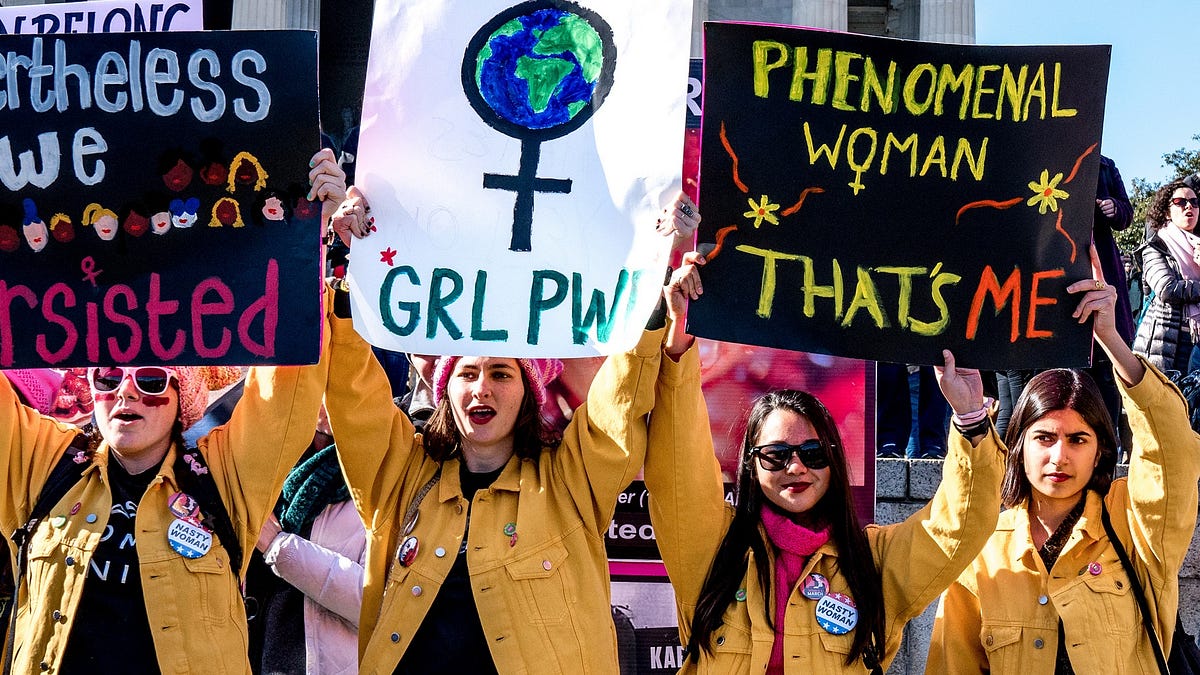
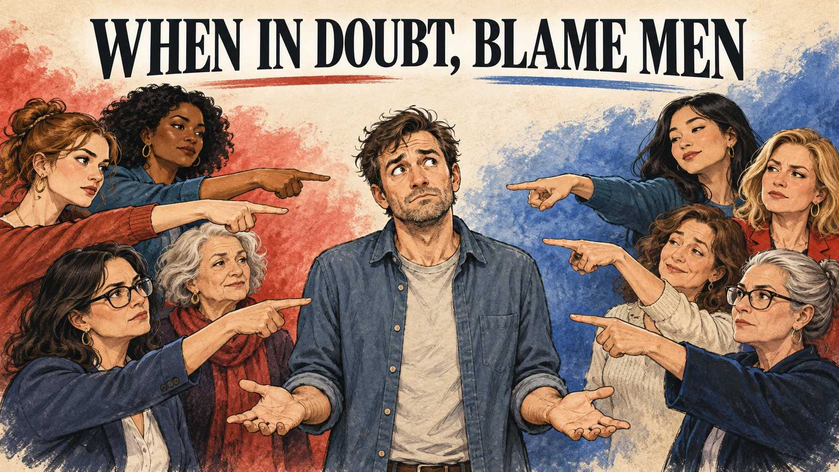
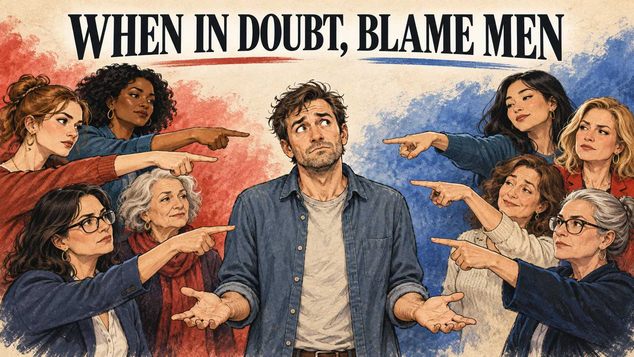
Our culture has slipped into imbalance. Instead of valuing both masculine (yang) and feminine (yin) traits, we treat yang traits in men as problems to be corrected while elevating yin traits as the moral ideal. This creates an environment where boys and men are shamed for expressing natural masculine tendencies, while the feminine is glorified as “healthier,” “safer,” or “more evolved.” To make matters worse, men are framed as the problem—legitimizing attacks against them—while women and girls are cast as victims, granting them cultural permission to adopt masculine traits. Boys watch in bewilderment as this double standard unfolds: masculinity is shamed in men but praised in women, and women are celebrated for both yin and yang traits. It defies logic, yet nearly every cultural institution reinforces it. We are living in a truly unbalanced world.

Let’s look at seven primary yang characteristics and how they’ve been discouraged in men.

 

1. Active / Initiating

Yang energy moves forward, takes initiative, acts rather than waits. In boys, this shows up as physical play, restless energy, and risk-taking curiosity.

In schools, this natural boyish energy is often punished. Boys who get up, explore, or speak out are labeled “disruptive.” Increasingly, they’re medicated for ADHD — not because they’re sick, but because they don’t fit a classroom model designed for quiet compliance.

At the same time, receptivity and patience — yin traits — are praised. The quiet child is “well-behaved.” Girls who sit still are called “model students.” Boys learn quickly: initiative will get you in trouble, while passivity earns approval. Yet in a striking double standard, as boys are shamed for their energy, girls are increasingly praised for showing initiative and taking risks.


2. Rational / Analytical

Masculine energy emphasizes clarity and reason. But in relationships and therapy, men who rely on logic are accused of being “emotionally unavailable.” A husband who responds to conflict with analysis rather than emotional validation is told he’s “cold.”

Media reinforces this, portraying rational men as out of touch. Think of the sitcom father who is clueless and insensitive until the emotional wife rescues him with her intuition. Logic in men becomes something to mock or pathologize.

Meanwhile, intuition and emotional fluency are praised as “true intelligence.” Schools teach “emotional literacy” — overwhelmingly in a feminine key — while men’s rational approaches are sidelined. Yet here again, the double standard is obvious: when girls show clarity and reason, they are celebrated as strong and capable, while boys are criticized for the very same trait.


3. Independent / Self-Directed

Yang independence is about autonomy and leadership. In the past, this was recognized as a virtue. Today, independence in men is recast as selfishness.

In therapy, men who assert boundaries are accused of being avoidant. In family courts, fathers who resist intrusive parenting mandates are painted as uncooperative. At work, men who prefer autonomy are accused of “not being team players.”

Meanwhile, collectivist ideals are glorified. “Community,” “collaboration,” and “consensus” are treated as moral goods. The man who pursues his own vision is suspect; the man who dissolves into the group is praised. Yet when women insist on autonomy or self-direction, they are celebrated as “empowered” and “breaking barriers.” The very trait condemned in men is rewarded in women.


4. Expressive / Outward-Projecting

Yang expression is about projecting energy outward — speaking with authority, asserting oneself, showing presence. Today, this is routinely shamed. Men are accused of “mansplaining” when they speak confidently, of “taking up too much space” when they sit or stand naturally. Even in classrooms, boys who speak out are silenced while girls are coaxed to speak more.

Corporate trainings echo the same script: men must “step back” and “make space.” Male outwardness is recast as oppressive, while passivity and listening — yin traits — are presented as the moral high ground. Yet when women speak forcefully or take command of space, they are praised as bold and inspiring. The same assertiveness that earns men censure wins women applause.


5. Confident / Bold

Confidence, a core yang quality, is easily rebranded as arrogance or entitlement. A young man who asserts himself risks being accused of “toxic masculinity.” Ambition is reframed as greed or patriarchal privilege.

In education, boys who compete hard are told to “tone it down.” In dating, confidence is increasingly viewed with suspicion. A man approaching a woman boldly risks being labeled a predator, while tentativeness is reframed as “respect.”

Meanwhile, vulnerability has been rebranded as the new courage. Being hesitant, emotionally raw, or self-doubting is celebrated — but only when men embody it. Boldness is shamed; vulnerability is glorified. And once again, the double standard is clear: when women display confidence and ambition, they are praised as trailblazers and role models. What is condemned in men is applauded in women.


6. Competitive / Striving

Competition once fueled innovation, excellence, and mastery. For boys, striving to test themselves against others was natural.

Today, competition is under attack. Schools downplay winning, cancel scores, and hand out participation trophies. Boys are told that striving to be the best is unfair or mean-spirited. Even in workplaces, ambition is framed as “cutthroat.”

Meanwhile, cooperation is praised as the higher moral good. Equality of outcome — not excellence — is celebrated. The yin trait of blending in is exalted over the yang drive to stand out. And yet, when girls and women show drive, ambition, and competitiveness, they are praised as strong, empowered, and fearless. The very striving that earns boys censure is reframed as heroic when displayed by girls.


7. Stable / Structured

Yang energy provides order and discipline. Fathers setting boundaries, men building institutions, coaches demanding discipline — all are examples of stabilizing structure.

Yet structure is often demonized. Discipline is rebranded as control. Fathers who insist on rules are called authoritarian, while mothers who allow flexibility are celebrated as “nurturing.” In broader culture, structure is portrayed as oppression, while fluidity and openness are presented as progressive ideals.

And here too the double standard is unmistakable: when women take charge, enforce rules, or demand order, they are praised as strong leaders and role models. But when men do the very same thing, they are criticized as rigid, controlling, or oppressive. The masculine contribution of structure is vilified in men while valorized in women.


The “Male Privilege” Narrative

Layered on top of this shaming is the constant accusation of male privilege. Men are told they benefit from invisible advantages that invalidate their struggles. The boy disciplined in school for his energy is “privileged.” The man told his logic is cold is “privileged.” The father stripped of custody in court is “privileged.”

This accusation functions as a silencing tactic: no matter what hardships men face, their yang traits are delegitimized by the claim that they come from an unfair advantage. It’s a clever inversion — turning natural masculine expressions into proof of oppression.

For boys, the effect is especially disorienting. They are punished and shamed for their natural energy, independence, or boldness, yet they watch those same qualities praised in girls as “empowerment.” Imagine growing up in that atmosphere — told that what comes naturally to you is toxic, while applauded when someone else displays it. It creates confusion, self-doubt, and a sense of injustice that borders on madness. Boys learn not just that they are wrong, but that their very strengths are only acceptable when embodied by someone else.
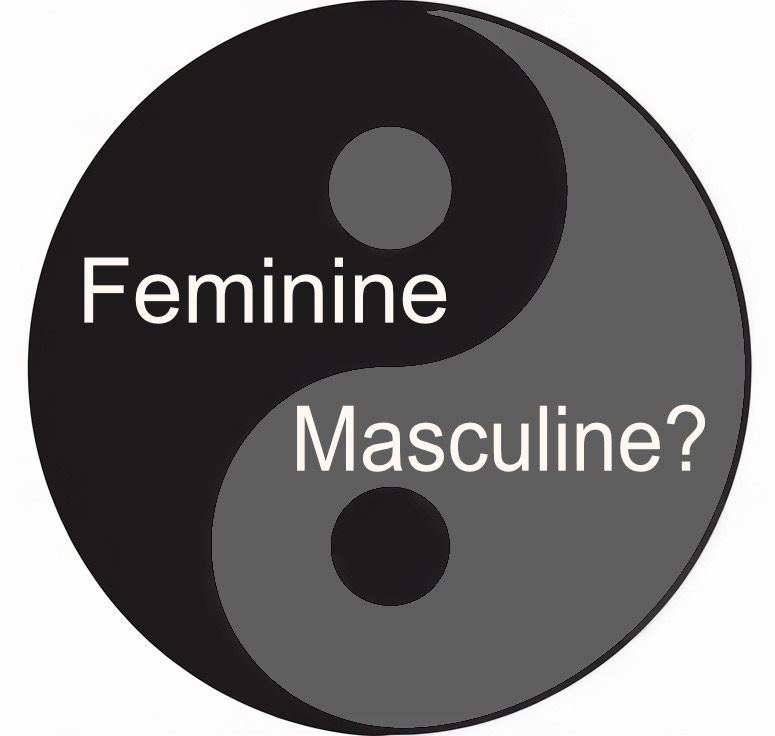
 

When Yin Is Glorified and Yang Is Shamed

Chinese philosophy has a very straightforward warning: when yin and yang fall out of balance, decay follows. Illness in the body, discord in relationships, collapse in societies — all are traced to one side being exalted while the other is suppressed.

Today, our culture is caught in just such an imbalance. Feminine (yin) traits — receptivity, emotion, flexibility — are not only praised, they are presented as the gold standard for everyone. Masculine (yang) traits — activity, logic, independence, boldness, competition, structure — are not only discouraged, they are actively shamed.

From the Chinese perspective, this is a recipe for trouble. Here’s what they would say is coming:

  • Stagnation and Weakness: Too much yin creates passivity. Boys withdraw, men retreat, societies lose resilience.

  • Anxiety and Discord: Suppressed yang resurfaces in distorted ways — aggression, violence, self-destruction.

  • Collapse of Natural Order: Institutions weaken when initiative, structure, and clarity are attacked. Families fracture, schools falter, social trust declines.

  • Loss of Wholeness: When one side is glorified and the other shamed, the creative power of balance disappears. Everyone loses.


Restoring the Missing Balance

Chinese wisdom is blunt: when yin and yang fall out of balance, decline is inevitable. Our culture has tipped hard toward yin, glorifying receptivity, vulnerability, and fluidity while shaming activity, confidence, and structure. We are out of balance.

And balance will not return by doubling down on yin or by continuing to accuse men of “privilege” whenever they show their natural strengths. The way forward is to restore respect for yang.

That means honoring boys’ energy instead of medicating it away. Valuing men’s rational clarity instead of mocking it as cold. Praising independence and confidence in men just as we do in women. Allowing competition and striving to be celebrated, not shamed. And recognizing that discipline and structure are not oppression, but foundations for growth.

Revaluing the masculine does not mean dismissing the feminine. It means returning to the truth the Chinese saw thousands of years ago: life flourishes only when yin and yang stand side by side, each strong, each respected, each essential.

If we continue to shame one half of the human equation, we invite stagnation, confusion, and collapse. But if we restore balance, we give our sons — and our daughters — the gift of wholeness.

​Men Are Good. So is Yang.

community logo
Join the MenAreGood Community
To read more articles like this, sign up and join my community today
0
What else you may like…
Videos
Posts
Articles
March 05, 2026
How Women Gaslight and Manipulate Men

Most boys are taught how to treat a girl. Almost nobody teaches them how they should be treated.

In this conversation, I’m joined by Tammy Sullivan (the “Manicured Mom”), author of How Women Gaslight and Manipulate Men. Tammy stumbled onto a massive TikTok trend openly teaching manipulation—and decided to “flip the script” and expose the tactics so men could recognize them, name them, and set boundaries.

We dig into the subtle, day-by-day moves that can erode a man’s confidence and isolate him from his friends, his hobbies, and even his family—things like the “real man” trap, backhanded compliments, “I’m sorry you feel that way,” using sex as leverage, and the weaponized “we need to talk.”

This isn’t about condemning women. It’s about giving men language, clarity, and self-respect—and helping healthy couples stop these patterns before they become a way of life. Men are good… and you deserve to be treated well, too.

Tammy’s book How Women Gaslight ...

01:01:55
February 26, 2026
Gynocentrism is Like Gravity

I’ve started experimenting with short music videos on men’s issues—this one focuses on gynocentrism.

I’m exploring whether concise, straightforward videos like this might reach and engage more people. I’d welcome your feedback and any suggestions.

00:02:41
February 12, 2026
A Conversation on Matrisensus — With Warren Farrell, Janice Fiamengo, Lisa Britton, David Shackleton, and Tom Golden

A Conversation on Matrisensus — With Warren Farrell, Janice Fiamengo, Lisa Britton, David Shackleton, and Tom Golden
David Shackleton’s newest book, Matrisensus, is not a small argument.

Matrisensus is not what happens when women are in charge. It is what happens when the family’s moral logic is applied where society’s civic logic should govern. In this sweeping examination, David shows how cultural consensus forms — and how it can come to center women’s experiences, priorities, and moral framing as the unquestioned norm. The mechanism, he argues, polarizes our moral narrative, distributing compassion and accountability not by conduct but by identity. The result is a culture in which designated victim groups are treated as morally untouchable, while those who question the framing are cast as suspect — with profound consequences for law, family, education, and public trust.

So a group uniquely qualified to engage these ideas gathered for this video.

Joining me were Warren Farrell, Janice Fiamengo, Lisa Britton, and of course the...

00:59:58
March 02, 2026
Men Don't Grieve the Way You Think

I had the good fortune to be interviewed by Jason MacKenzie, who runs the Man Down Substack—a publication dedicated to men and their unique paths to healing.

Many of you may not know that I spent many years working directly with men who were grappling with trauma and loss. Through that experience, it became strikingly clear to me that men and women are often treated very differently after a loss. Those early observations opened my eyes to the broader ways men face discrimination, misunderstanding, and hardship in our society. I hope you find the conversation interesting and worthwhile.

https://www.mandown.tools/p/men-dont-grieve-the-way-you-think?utm_campaign=post&utm_medium=web

February 27, 2026
Are Some Women Waking Up?

This was sent to me by an alert viewer and shows a woman calling out the feminist lies about men being privileged. What do you think:

Another good one describe things extremely well.

https://www.facebook.com/share/v/1BXRPxMeiZ/?mibextid=wwXIfr

post photo preview
The Manosphere Study That Reveals Academic Panic


The Manosphere Study That Reveals Academic Panic

I recently read a new study titled Mapping the Neo-Manosphere(s): New Directions for Research. It presents itself as a serious academic effort to understand the changing world of the manosphere—male influencers, anti-feminist spaces, incels, online male grievance communities, and the growing variety of voices speaking to young men outside mainstream institutions.

But as I read it, I found myself thinking that the study reveals something else too.

It reveals, I think, a kind of academic panic.

That may sound harsh, but I do not mean panic in some cartoonish sense. I do not mean scholars sitting around trembling because young men are listening to Andrew Tate. I mean something deeper than that. I mean a worldview that is starting to sense it is losing its monopoly on meaning.

That phrase gets at the heart of the problem.

For a long time, a fairly narrow academic and media establishment had enormous power to define what men’s experience meant. If men spoke of pain, that pain could be reinterpreted. If they spoke of unfairness, that could be called backlash. If they objected to feminism, that could be framed as resentment, fragility, or misogyny. The gatekeepers held the language, the categories, and the moral authority. They got to decide what counted as truth and what counted as danger.

What I think we are seeing now is that this old arrangement is weakening.

More and more young men are stepping outside those approved frameworks. They are listening to voices that tell them something they do not often hear from the mainstream: that they are not crazy, that the culture has often been deeply unfair to men and boys, that feminism is not the neutral benevolent force it pretends to be, and that many of the judgments placed on masculinity are not only harsh but profoundly distorted.

That is a hard development for the academic world to control.

And I think this study shows signs of that loss of control.


The paper begins with suspicion, not curiosity

One of the first things that struck me is that the study does not really begin with open inquiry. It begins with a verdict.

The manosphere is described as an ecosystem of anti-feminist and male-supremacist groups, bound together by the belief that society is a misandrist conspiracy against men.

That is a remarkable way to begin.

Notice what has already happened before the real analysis even gets going. Men’s grievances are not treated as possibly true, partly true, exaggerated, mixed, confused, or grounded in lived experience. No, they are placed at once inside a framework of suspicion. They are treated as either supremacist, conspiratorial, or both.

That is not a small thing. It tells you a lot about the paper.

A genuinely curious scholar might ask: Are there legitimate grievances in these communities mixed in with anger and distortion? Are some young men responding to real experiences of humiliation, pathologizing, or neglect? Are there distinctions that need to be made between lonely men, bitter men, wounded men, manipulative men, hateful men, fathers’ rights advocates, incels, male self-help figures, and young men simply trying to make sense of a culture that often seems to dislike them?

This paper does not show much interest in those distinctions.

Instead, it starts by putting the whole subject inside a moral quarantine.


This is less mapping than boundary enforcement

The study claims to be “mapping” the neo-manosphere. But much of what it actually does is spread suspicion outward from the worst elements until almost every male-centered space starts to feel contaminated.

Incels, MRAs, MGTOW, gamers, male influencers, anti-feminists, NoFap communities, stoics, wellness figures, conservative women, “tradwives,” anti-trans spaces, conspiracy material, right-wing populism, and monetized self-help all get pulled into a broad ecosystem of harm, grievance, reaction, or radicalization.

Now of course some of these spaces overlap. Of course there are bad actors in some of them. Of course the internet creates strange and unstable alliances.

But overlap is not identity. Proximity is not sameness. Shared audiences do not prove shared motives.

And yet the paper repeatedly leans on this method. It widens the frame, darkens the tone, and allows moral suspicion to move outward by association.

That is one reason I say this is less scholarship than boundary enforcement.

It is not merely describing a phenomenon. It is warning the reader which kinds of male-centered thought should be treated as suspect.


Male pain is not understood. It is managed.

This is one of the deeper patterns I notice in studies like this.

When men speak of pain, they are rarely just listened to. More often their pain is analyzed, explained away, or treated as if it carries some hidden threat.

And that is very much the case here.

The paper does briefly acknowledge loneliness, insecurity, mental-health struggles, and alienation among men. But those things are not really allowed to stand on their own as human realities deserving genuine moral attention. They are quickly folded back into the preferred academic framework: misogyny, radicalization, grievance markets, pipelines, monetization, and male supremacy.

In other words, male pain is not really explored. It is managed.

That sounds harsh, but I think it is true.

It is part of a larger double standard that has become so common many people hardly notice it anymore. When women gather around grievance, they are often listened to with sympathy. When men gather around grievance, they are often investigated with suspicion. When women are angry, we ask what happened to them. When men are angry, we ask who influenced them. When women seek solidarity, it is called healing. When men do, it is called a pipeline.

That difference matters. It tells us something important about the moral atmosphere in which these studies are written.


Even male self-help is treated as suspicious

Another thing that stood out to me is how the paper treats self-improvement in men.

Stoicism, discipline, fitness, confidence, anti-porn movements, semen retention, purpose, self-mastery, masculine restoration—again and again these are framed as entangled with grift, insecurity, reaction, or male supremacism.

Now certainly there are grifters in that world. Some male influencers are ridiculous. Some are exploitative. Some mix useful advice with ego, ideology, or posturing. That is true.

But there is another question that this paper has very little interest in asking: why are so many men drawn to those things in the first place?

Could it be because many men do not feel helped by the official culture? Could it be because schools often do not understand boys, therapy often speaks in a language many men experience as alien, and the broader culture often approaches masculinity with criticism rather than respect? Could it be because action, discipline, competence, structure, challenge, and purpose are not pathological male fantasies but part of how many men actually regain stability?

That possibility receives very little room here.

Instead, male forms of self-repair are treated with suspicion, as though any attempt by men to rebuild themselves outside approved therapeutic and ideological channels is likely to be contaminated.

This is one of the places where the paper feels especially revealing. It seems unable to imagine that men might turn toward masculine discipline not because they long to dominate, but because they are trying to survive.


The study also polices explanation

I was also struck by how clearly the paper wants to police the boundaries of acceptable thought.

It looks suspiciously on evolutionary psychology, on sex-difference approaches, and on those who question whether boys should always be encouraged to process emotion according to models more naturally suited to girls. It warns against views that emphasize biology or that reject the reigning social-constructionist framework.

That is very telling.

This is not simply disagreement about evidence. It is an attempt to decide in advance which kinds of explanation are morally acceptable and which are to be treated as suspect intrusions.

Again, that is why the phrase defensive ideological maintenance fits so well.

When a worldview is confident, it can tolerate competing explanations. It can test itself. It can afford curiosity.

When it is losing ground, it becomes more protective, more censorious, and more likely to turn scholarship into a kind of intellectual border patrol.

That is what I feel in this paper.


Why this is happening now

I do not think this kind of scholarship is appearing in a vacuum.

For a long time, the dominant academic and media culture enjoyed something close to a monopoly on how gender questions were interpreted. It could define the terms, assign the moral categories, and dismiss dissenters as backward, defensive, or dangerous. It could make its own assumptions look like simple decency.

That is harder to do now.

Young men can now hear very different interpretations of the world. They can hear criticisms of feminism that once would have been filtered out or ridiculed into silence. They can hear discussions about schools, dating, fatherlessness, therapy, family courts, media bias, double standards, false accusations, and the casual contempt often shown toward masculinity.

Some of these voices are wise. Some are foolish. Some are helpful. Some are toxic. But mixed into all of that is a message many young men recognize immediately: the culture has not been honest with you.

That message lands because it speaks to experience.

And once that begins happening on a large scale, the old gatekeepers no longer get to decide so easily what things mean.

That is what I mean by losing a monopoly on meaning.

I think that loss is one of the real drivers behind the strained tone of studies like this one. They are not just trying to describe a phenomenon. They are trying to recover authority over its interpretation.


A worldview under pressure will label more aggressively

One of the things that often happens when an ideology starts losing ground is that it leans more heavily on labels.

It becomes less curious and more managerial. Less open to complexity and more eager to classify. Instead of asking why people are leaving, it spends more time warning others not to follow them. Instead of listening, it maps. Instead of persuading, it pathologizes.

That pattern is all over this study.

The language is heavy with terms like supremacy, radicalization, contagion, pipelines, harm, and grievance. Some of those words may fit some corners of the manosphere. But in this paper they often do more than describe. They stigmatize. They mark certain kinds of male speech as inherently suspect.

That is why the piece feels so tense to me.

It has the tone of a worldview under pressure.

Not a worldview calmly examining reality, but one sensing that the ground beneath it is shifting.


What honest scholarship would do

A more honest study would begin from a more human place.

It would ask why so many boys and men are looking elsewhere for understanding.

It would ask why schools so often seem better fitted to girls than to boys.

It would ask why so many men experience therapy as alien or feminizing.

It would ask why criticism of feminism so often triggers moral panic rather than real debate.

It would ask whether some forms of masculine self-help arise not from domination, but from the failure of mainstream institutions to offer men forms of help that actually fit them.

And it would ask perhaps the most difficult question of all: whether some of what young men are hearing in these disapproved spaces contains not just resentment, but truth.

That would take courage.

It would also require scholars to question their own assumptions.

That may be exactly what they are least prepared to do.


Final thoughts

In the end, I do not think this paper tells us nearly as much about the manosphere as it tells us about the academic establishment.

It shows us a style of scholarship that has grown accustomed to interpreting men from above, with suspicion already built in. It shows us an intellectual class that has trouble distinguishing between male grievance and male supremacy, between masculine restoration and political danger, between unsupervised thought and extremism. And most of all, it shows us what happens when a worldview senses it is losing its monopoly on meaning.

That is why the paper feels the way it does.

It does not feel open. It does not feel genuinely curious. It does not feel like careful inquiry.

It feels like academic panic.

And I think more and more people are starting to notice.

Men Are Good.

Read full Article
February 23, 2026
post photo preview
Where Galoway Stops Short
Calling Men to Rise Without Naming What Pushed Them Down

Where Galoway Stops Short - Calling Men to Rise Without Naming What Pushed Them Down

Something unusual has happened in mainstream culture: a prominent public figure has spoken to men without contempt.

In his widely circulated reflections on masculinity, Scott Galloway tells men things they rarely hear anymore — that discipline matters, that status is real, that no one is coming to save them, and that adulthood still requires effort, competence, and responsibility.

In a culture that often speaks about men as a problem to be managed, he speaks to them as adults.

That alone makes his work a step in the right direction.

But it is only a step.

Because embedded within his message are two assumptions that deserve closer examination.


When Pain Is Treated Like Weather

Galloway acknowledges that many men are struggling. He names loneliness, economic displacement, sexual exclusion, and a growing sense of irrelevance.

But these realities are framed as impersonal shifts — like automation, globalization, or changing markets. The world evolved. Adapt.

There is no villain. No moral accounting. Just conditions.

But much of what men are experiencing did not unfold quietly or accidentally.

It happened in open daylight.

For decades now:

  • Boys have been described as “toxic.”

  • Masculinity has been framed as inherently dangerous.

  • Fathers have been treated as optional.

  • Male ambition has been recoded as domination.

  • Male restraint has been interpreted as emotional deficiency.

These were not subtle cultural breezes. They were institutionalized narratives — repeated in media, education, and public discourse.

Men did not imagine this shift. They lived through it.

To speak about male pain without acknowledging the cultural disdain that preceded it is to ghost the very experience men are trying to make sense of.

If a man absorbs, year after year, the message that his nature is suspect, the shame that follows does not originate inside him.

It is absorbed.

And absorbed shame cannot be healed by discipline alone.


Responsibility Without Reciprocity

The second issue is not that Galloway calls men to responsibility.

Responsibility matters.

Structure matters.

Competence matters.

Men do not need to be rescued from adulthood.

But when responsibility is presented as the sole remedy — without acknowledging cultural injury — it subtly transforms pain into proof of failure.

If you are hurting, you must not have adapted well enough.

If you are struggling, you must not be disciplined enough.

Pain becomes diagnostic of insufficiency.

That may produce functionality.
It does not necessarily produce healing.

And it quietly leaves the culture itself unexamined.


What This Is Not

Let me be clear about something.

This is not an argument for coddling men.

It is not an argument for lowering standards.
It is not an argument for emotional indulgence or endless processing circles.
It is not an argument for turning men into women.

Men do not need to be babied.

They need to be understood accurately.


What Men Actually Need

What is missing from the conversation is something I would call respect-based empathy.

Respect-based empathy does not treat men as fragile.
It does not assume that emotional expression is superior to endurance.
It does not pathologize male withdrawal.

It recognizes that men often heal differently — and that those differences deserve admiration rather than suspicion.

When a man withdraws for a day or two after a setback, that may not be avoidance. It may be integration. When he fixes something, builds something, runs hard, works longer hours, or goes quiet, he may be metabolizing stress in a deeply male way.

For many men, solitude is not escape. It is work.

But in a culture that filters coping through a single emotional style, male processing is easily misread as deficiency.

And that misreading quietly reinforces the very problem we claim to address.


Admiration Is Fuel

Men are fueled by admiration and respect.

Not indulgence.
Not protection.
Respect.

When a man feels respected, he expands.
When he feels perpetually scrutinized or pathologized, he contracts.

The cultural shift that would help men most is not softer expectations.

It is moral clarity.

Clarity that says:

“Yes, some of this pain did not originate inside you.”
“Yes, some of it came from narratives that diminished you.”
“And yes, the way you work through it has dignity.”

Responsibility matters.

But responsibility without acknowledgment of cultural harm becomes another burden.

Strength and suffering can coexist.

Calling men to rise without first admitting that they were pushed down in public view is not maturity. It is amnesia.

And offering responsibility without respect-based empathy risks reinforcing the very isolation we claim to address.

Men do not need coddling.

They need to be seen clearly.

They need standards, yes — but they also need a culture wise enough to recognize the dignity in how they endure.

Until we add that understanding, responsibility alone is not enough.

Men Are Good.

Read full Article
February 19, 2026
post photo preview
Do Men Face Prejudice?
A dissertation that reveals what the APA quietly overlook


Do Men Face Prejudice?

A dissertation that reveals what the APA quietly overlook

The American Psychological Association likes to remind us that psychology should be guided by empathy, cultural awareness, and respect for lived experience. Few would argue with that. These values are written directly into the APA Guidelines for Psychological Practice with Boys and Men, published in 2018.

On paper, the Guidelines sound humane and thoughtful. They urge psychologists to be gender-sensitive, to avoid stereotyping, to understand the social contexts shaping boys’ and men’s lives, and to guard against bias that might harm the therapeutic alliance.

All good things.

But there is an important question we almost never ask:

What happens when those principles are applied fully and consistently to men — including the possibility that men themselves may be targets of prejudice?

A largely unknown doctoral dissertation from 2020 offers a surprisingly clear answer.


A brief introduction most people never received

In 2020, psychologist Aman Siddiqi completed a doctoral dissertation titled A Clinical Guide to Discussing Prejudice Against Men. It was submitted quietly, without media attention or controversy, and has remained largely invisible outside academic circles.

That is unfortunate — because it does something rare.

Rather than arguing politics or ideology, Siddiqi does something very simple and very professional:
He takes the existing psychological science on prejudice and asks whether it applies to men.

Not rhetorically. Clinically.

He does not invent new standards. He does not dismiss women’s issues. Instead, he asks whether psychologists may be overlooking an entire category of harm because it doesn’t fit the dominant narrative.

And in doing so, his work quietly exposes a tension at the heart of the APA Guidelines themselves.


What the APA Guidelines say — and what they assume

The APA Guidelines for Boys and Men emphasize several themes that many clinicians will recognize:

  • Boys and men are shaped by restrictive gender norms

  • Emotional suppression harms mental health

  • Masculinity can be socially reinforced in unhealthy ways

  • Psychologists should challenge stereotypes and build empathy

All of that ​may be true — as far as it goes.

But notice something subtle.

The Guidelines overwhelmingly frame men as:

  • Shaped by norms

  • Socialized into restriction

  • Influenced by expectations

What they almost never frame men as is this:

Targets of prejudice.

This matters more than it might seem.


Why “prejudice” is not the same as “socialization”

Siddiqi’s dissertation makes a distinction that is obvious once you see it — and strangely absent from much of clinical training.

Socialization asks:

“What messages did you absorb growing up?”

Prejudice asks:

“How are you perceived, judged, dismissed, or morally framed by others right now?”

These are not the same thing.

A man may be distressed not only because he learned to suppress emotion — but because when he does express vulnerability, he is:

  • Not believed

  • Seen as dangerous

  • Treated as less worthy of care

  • Assumed to be at fault

The APA Guidelines speak at length about helping men change themselves.
Siddiqi asks whether psychology has done enough to question how men are viewed.

That shift alone is quietly radical.


The empathy gap we don’t name

One of the strongest parts of Siddiqi’s work is his discussion of what he calls the male gender empathy gap — the tendency to respond less sympathetically to male suffering, especially when it conflicts with familiar narratives.

This is not framed as cruelty. It is framed as normalization.

Some prejudices persist not because people hate a group — but because dismissing that group’s suffering has become socially acceptable.

Siddiqi outlines several mechanisms that maintain this acceptability:

  • Trivialization (“It’s not that serious.”)

  • Denial (“That doesn’t really happen.”)

  • Justification (“There must be a reason.”)

  • Intimidation (“You can’t say that.”)

If you’ve worked with men long enough, you’ve heard these dynamics described — often haltingly — in the therapy room.

The APA Guidelines warn clinicians not to invalidate clients.
Siddiqi shows how invalidation happens when male distress falls outside approved frames.


When good intentions become blind spots

Perhaps the most uncomfortable implication of Siddiqi’s dissertation is this:

Clinicians themselves may unintentionally participate in prejudice against men — precisely because their training never gave them a framework to recognize it.

When a man describes feeling:

  • Disbelieved in a conflict

  • Treated as disposable

  • Assumed to be dangerous

  • Morally pre-judged

A well-meaning therapist may instinctively:

  • Reframe the experience

  • Redirect responsibility

  • Minimize the injury

  • Interpret it as defensiveness or entitlement

Not out of malice — but out of habit.

The APA Guidelines urge psychologists to be self-reflective about bias.
Siddiqi asks whether psychology has reflected deeply enough on its gender asymmetries.


A question the Guidelines never quite ask

The APA is comfortable naming androcentrism — male-centered bias — in culture.

Siddiqi raises a quieter question:

What happens when cultural sympathy flows primarily in one direction?

He uses the term gynocentrism not as an accusation, but as a descriptive lens — a way of understanding how concern, protection, and moral framing may cluster unevenly.

Whether one accepts the term or not, the phenomenon it points to is familiar to many men:

  • Female suffering is presumed legitimate

  • Male suffering is often contextualized, explained, or doubted

The APA Guidelines never directly address this imbalance.
Siddiqi does — calmly, clinically, and without rhetoric.


Why this matters now

In recent years, we’ve seen growing concern about:

  • Male loneliness

  • Male suicide

  • Boys disengaging from school

  • Men dropping out of institutions

Many responses still default to:

“Men need to open up.”
“Men need to change.”
“Men need better coping skills.”

Those may help.

But Siddiqi’s dissertation suggests something deeper:

If we never examine how men are seen, we will keep asking men to adapt to environments that quietly misperceive them.

The APA Guidelines aim to help boys and men.
Siddiqi’s work asks what those guidelines truly require — if we apply them without exemptions.


A final thought

This dissertation does not reject psychology’s values.

It takes them seriously.

And in doing so, it reveals a simple, uncomfortable possibility:

We may believe we are being fair to men — while still failing to see them clearly.

That is not an accusation.
It is an invitation.

And it is one psychology would do well to accept.

Read full Article
See More
Available on mobile and TV devices
google store google store app store app store
google store google store app tv store app tv store amazon store amazon store roku store roku store
Powered by Locals